Hosted on Acast. See acast.com/privacy for more information.
]]>Hosted on Acast. See acast.com/privacy for more information.
]]>Jan Schomburg a écrit et réalisé des films (Above us only sky – 2011, Forget my Self – 2014, Divine – 2020), a écrit des scénarios avec Maria Schrader (Stefan Zweig – Farewell to Europe, I’m your man) et a écrit deux romans (Das Licht und die Geräusche – 2017, Die Möglichkeit eines Wunders,- 2024).
En secret, il a même écrit et réalisé des sketchs comiques pour la télévision allemande. Ses films ont été projetés à la Berlinale, à Locarno, à Rotterdam, à New York, entre autres. Il a reçu le prix du cinéma allemand pour le scénario de I’m your man, le film Stefan Zweig – Farewell to Europe a remporté le prix du public de l’Académie européenne du cinéma. En 2024, il est l’auteur principal et le showrunner de « L’argent des autres » (WT), une série télévisée internationale en huit parties pour ZDF et DR.
— un entretien réalisé par Guillaume Desjardins – auteur et réalisateur, membre de Les Parasites de films documentaires et enregistré aux Champs Libres (Rennes), en décembre 2023, dans le cadre de la saison 04 du StoryTANK : « Quelles histoires pour notre temps ? ».
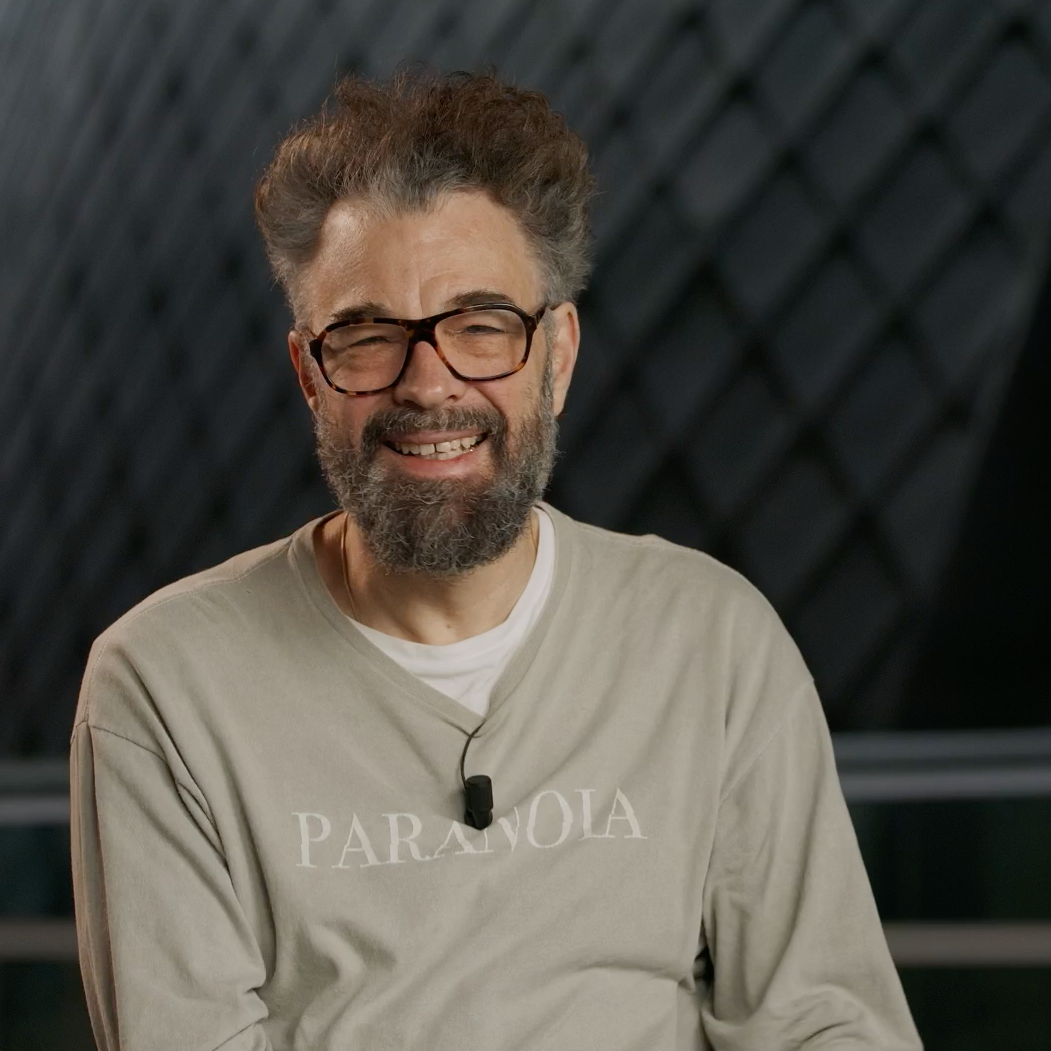
« Écouter les détails et à les laisser se développer d’eux-mêmes. »
Décomposer le processus d’écriture : des détails au général.
J’ai écrit des scénarios et des romans, j’ai réalisé quelques films et je suis, ce que l’on appelle aujourd’hui : showrunner. Showrunner a de nombreuses connotations et interprétations, notamment en Europe.
J’ai participé à un workshop organisé par des producteurs européens « The Creatives » qui questionnait la série, son existence dans le paysage de la création, la potentialité d’un réseau européen et plus précisément ce qu’est la narration européenne, en termes de série. Chacun de ces producteurs a demandé à un scénariste de ces différents pays de venir pour réfléchir, écouter, contribuer. Cette semaine a en quelque sorte révolutionné ma manière de penser, en termes de ce qu’est une idée et de la façon dont on peut inviter le hasard et aussi le collectif dans le processus de son développement.
Quand nous acquérons une certaine maturité professionnelle, nous nous développons souvent dans un sens où l’on sait déjà où l’on va. Un processus structurel que nous avons décomposé, du général aux détails. Nous avons appris à écouter les détails et à les laisser se développer d’eux-mêmes, d’une manière ou d’une autre. Je me suis distancé de mon propre processus industriel d’écriture alors que j’étais un peu coincé dans un chantier d’écriture sur 8 épisodes inhérents à un scandale financier. Une décomposition qui m’a vraiment beaucoup inspirée.
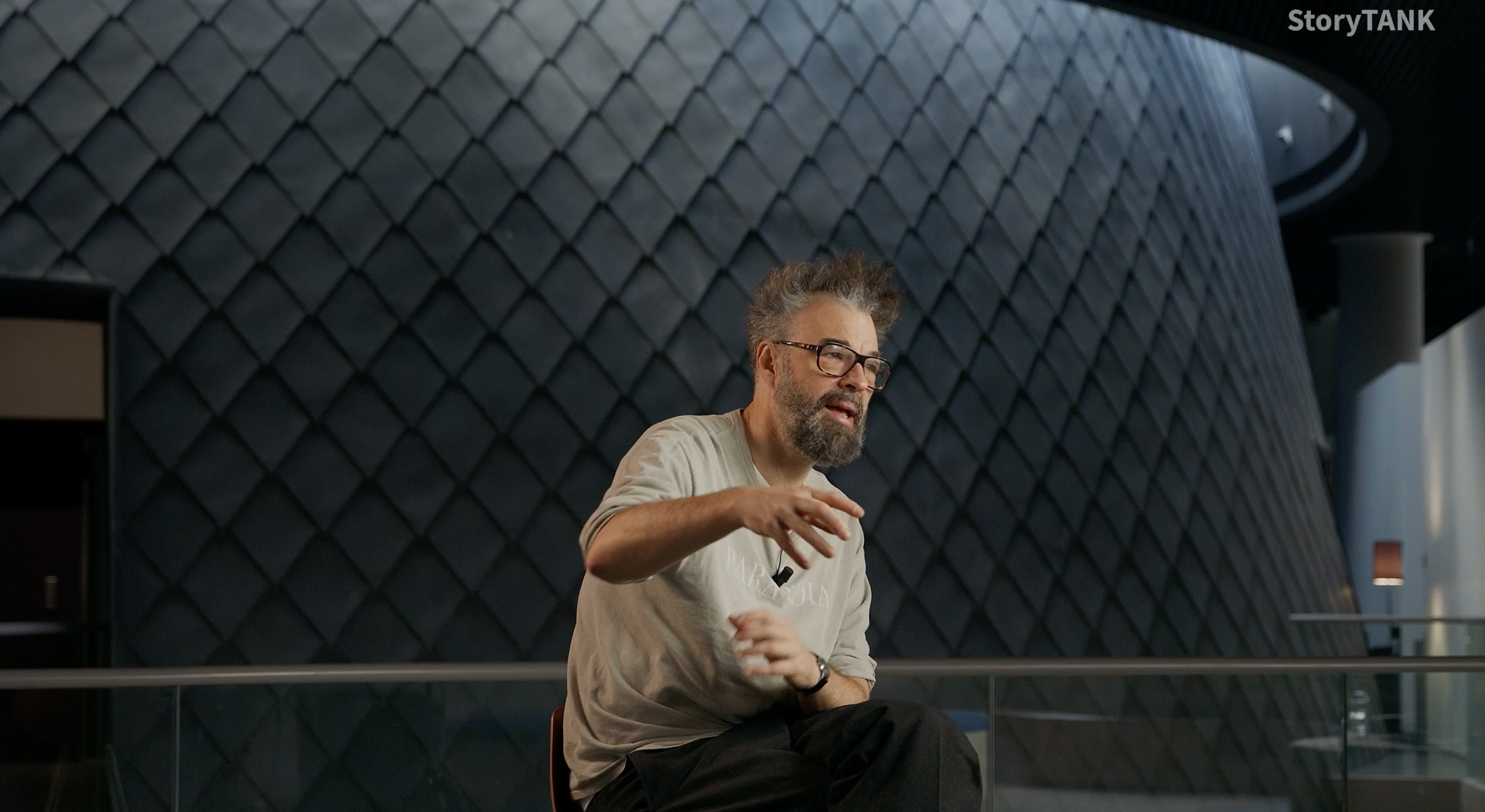
« La structuration de narration d’un film explique, en partie, pourquoi notre planète est là où elle est aujourd’hui, dans la mesure où l’individu est ultra-valorisé et le collectif, que trop peu. »
La structure dramatique classique et narcissique du récit.
Une histoire au cinéma est surtout vue comme un récit, à partir d’un personnage et l’identification du public inhérente liée souvent à un qui a un problème particulier. Il s’agit principalement de problèmes binaires qui apportent différents concepts dans la structure dramatique comme celui de “vouloir et avoir besoin”. Donc il y a un but que le personnage vise, mais une vérité plus profonde stimule potentiellement une autre finalité. Or, à différents égards, je ne pense pas qu’il y ait une vérité plus profonde et qu’il faille choisir entre ces deux aspirations comme l’impose, en quelque sorte, l’histoire d’un film. Un problème correspond à un personnage et nous suivons un personnage qui anticipe ce problème. Et d’une manière ou d’une autre, dans la plupart des films, le monde autour de ce personnage est organisé à travers ce problème. Tout ce qui se passe autour de lui, en arrière-plan, ajoute d’une manière ou d’une autre une complexité ou de l’aide à ce problème. Une organisation plutôt étrange et narcissique de voir le monde, qui, d’une certaine manière, serait donc organisé juste pour le personnage en question. J’ai le sentiment que cette structuration de narration explique, en partie, pourquoi notre planète est là où elle est aujourd’hui, dans la mesure où l’individu est ultra-valorisé et le collectif, que trop peu.
Toutes ces histoires fonctionnent comme des histoires de « messie », qui sont en quelque sorte des histoires « de Jésus », comme Harry Potter, Le Seigneur des anneaux, ou encore Star Wars : « OK, vous êtes maintenant responsable du destin du monde et vous êtes la personne la plus importante de la planète ». Ce qui déclenche un certain type de sentiment intense et en même temps, totalement suranné, totalement dépassé. D’une certaine manière, du moins pour moi, ces récits, précisément, ne correspondent pas à ce qu’est le monde en ce moment. Il a quelques exemples de récits qui ne fonctionnent pas nécessairement sur le même modèle. Et j’ai toujours été intéressé par ce genre de récits. Un exemple très étrange d’un récit qui fonctionne – dans un sens différent – est, par exemple : Pirates des Caraïbes. Dans la première partie de Pirates des Caraïbes, il est très clair qu’Orlando Bloom devrait être le personnage principal. Parce que son père était un pirate, il est lui, en tant que fils, du bon côté et tout le conflit dramatique est basé sur son personnage. Mais personne ne s’intéresse à son personnage parce que tout le monde aime regarder évoluer Jack Sparrow. Mais Jack Sparrow n’est pas un personnage dramatique au sens classique du terme. Il n’a pas de véritable développement, il n’a pas de conflit de ce genre. C’est juste un farceur qui est toujours un personnage secondaire normalement. Il y a tellement d’histoires qui ont une structure dramatique classique et qui sont vraiment mauvaises. Et il y en a quelques-unes qui sont vraiment incroyables car intenses et surprenantes… !
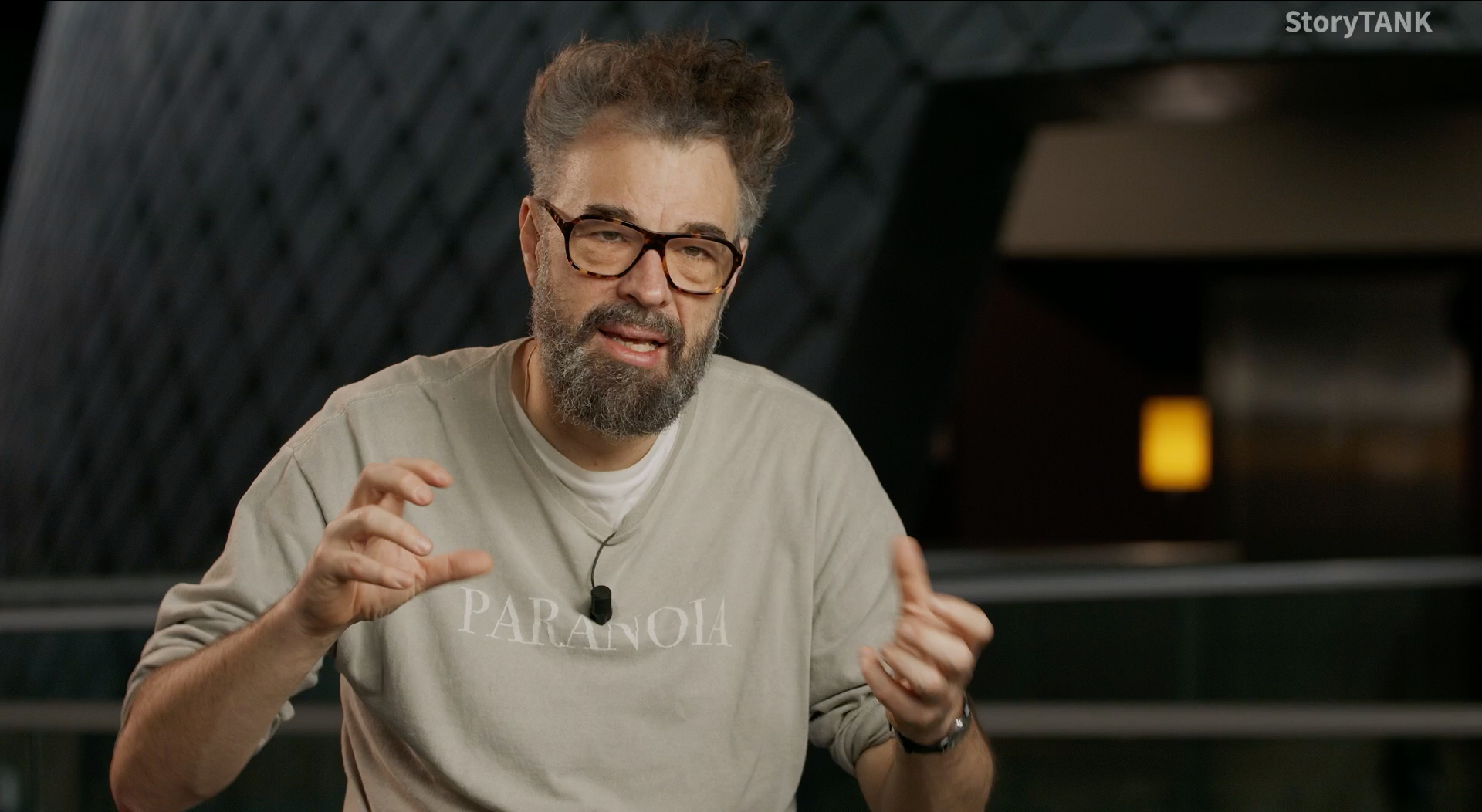
« Le conflit est juste un élément parmi toute la gamme des interactions humaines, du comportement humain, de ce qui nous intéresse dans un film. »
Le conflit dans le récit.
Lorsque j’écris pour une série, très souvent, le conflit n’est pas ce qui m’intéresse dans une scène. Parce qu’il y a tellement de gens qui donnent des notes sur les scénarios dans ce contexte industriel d’une série par exemple. Je dois écrire très vite, je sais que dans leur idée de structure, elle n’est pas encore configurée d’une manière classique mais quelque chose dans la scène me semble bon et n’est pas forcément le conflit. Telle une idée différente de la façon dont nous pourrions vivre ensemble peut-être. Les étapes suivantes me permettent de structurer le récit de cette scène, à ce qu’elle puisse être vue dans la structure classique.
Les frères Coen, par exemple, ont souvent une structure dramatique très spécifique. Par exemple, dans Fargo, les bons et les mauvais personnages ne se mélangent pas. Par exemple, McDormand n’a pas de côté obscur. Mais très souvent, à un moment donné, tout mène à une confrontation. Mais la confrontation n’a pas lieu. Il y a juste un vide et soudain, on voit deux personnages discuter pendant une demi-heure. Par exemple, dans la série que j’écris, il y a une procureure qui travaille, sur un temps long, pour que les gangsters soient jugés. Et enfin, il y a le grand procès. Il y a, normalement, une confrontation au tribunal, dans la scène du procès où elle souhaiterait prouver, devant tout l’audience, qu’ils sont coupables… Et cette procureure indique qu’elle n’aime pas être personnellement impliquée parce qu’il s’agit d’une idée collective de la loi appliquée et ce n’est pas un souhait, à titre personnel, de vouloir les punir. Elle ne se rendra pas au tribunal. Un collègue la remplacera. D’une certaine manière, avec cette alternative, on va ailleurs que dans la confrontation classique par exemple. J’ai le sentiment qu’il y a beaucoup de conflits. Le conflit est juste un élément parmi toute la gamme des interactions humaines, du comportement humain, de ce qui nous intéresse dans un film. Je n’ai rien contre les conflits, mais je pense qu’il y en a tellement, que le conflit rétrécit vraiment l’histoire. Alors qu’elle peut être, simplement, plus large.
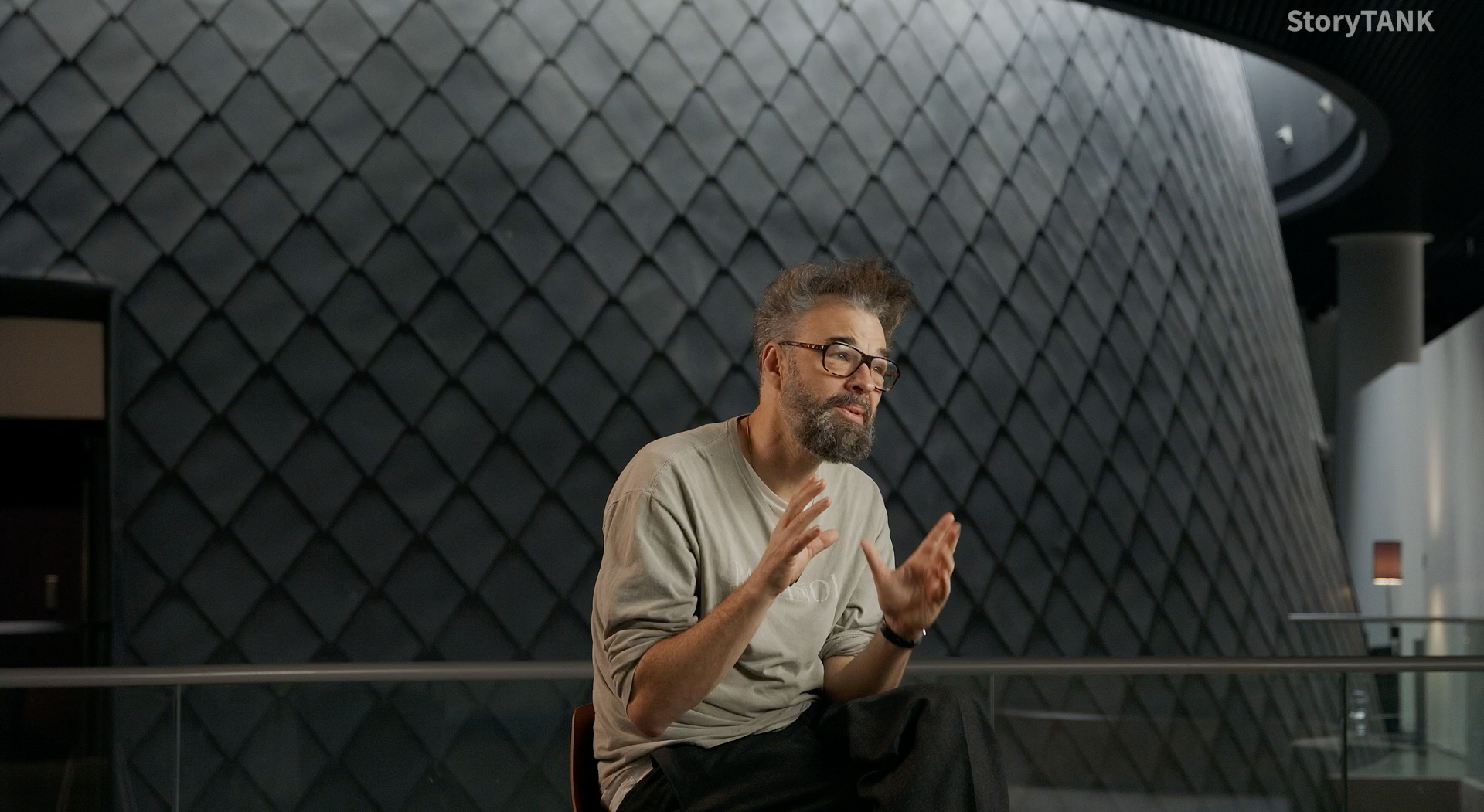
« Développer un récit à partir d’une logique d’interaction différente de celle de l’opposition. »
L’interaction dans le récit.
Il y a un certain type de récit qui émerge de différentes structures. Par exemple, si on considère une boîte vide, en quelque sorte, c’est également une boîte dans laquelle on met quelque chose. Si nous travaillons, à partir de la structure générale vers les détails, s’impose une certaine limitation. De même, à l’inverse, si nous travaillons uniquement, à partir des détails vers le général, s’impose également une certaine limitation. Les structures peuvent aider à être inspiré, mais je les considère comme des outils, utiles si vous êtes bloqués, hors du flux narratif. Si nous les considérons comme des règles, beaucoup de films se ressemblent et c’est un peu ennuyeux.
D’une certaine manière, dans le processus d’écriture, j’essaie d’entrer dans une sorte d’état hypnotique. À regarder les choses précises d’une scène définie : « Il y a quelqu’un assis là, quelqu’un descend là-bas… Oh, il y a un sac à dos. Y a-t’il quelque chose dans le sac à dos ? Quel est ce bruit ? » … J’essaie de méditer sur la situation à l’instant -t et d’étudier ce que l’endroit créé me demande. Pour ouvrir à d’autres idées, pour initier des tournants. J’ai le sentiment que les récits que nous composons devraient s’éloigner du principe : « ça c’est l’autre et ça c’est nous » qui crée une frontière entre les deux. Nous devrions raconter des histoires qui montrent comment cette frontière peut être franchie, comment nous pouvons avoir une logique d’interaction différente de celle de l’opposition. Ces grandes histoires dont je parlais plus tôt, comme Le Seigneur des anneaux, quand on le revoir aujourd’hui, pour moi, l’histoire est si mauvaise et, d’une certaine manière, l’histoire est fasciste, avec les seuls blancs qui sauvent la terre. C’est une histoire bizarre et cette opposition entre gens mauvais et gens bons est vraiment problématique.
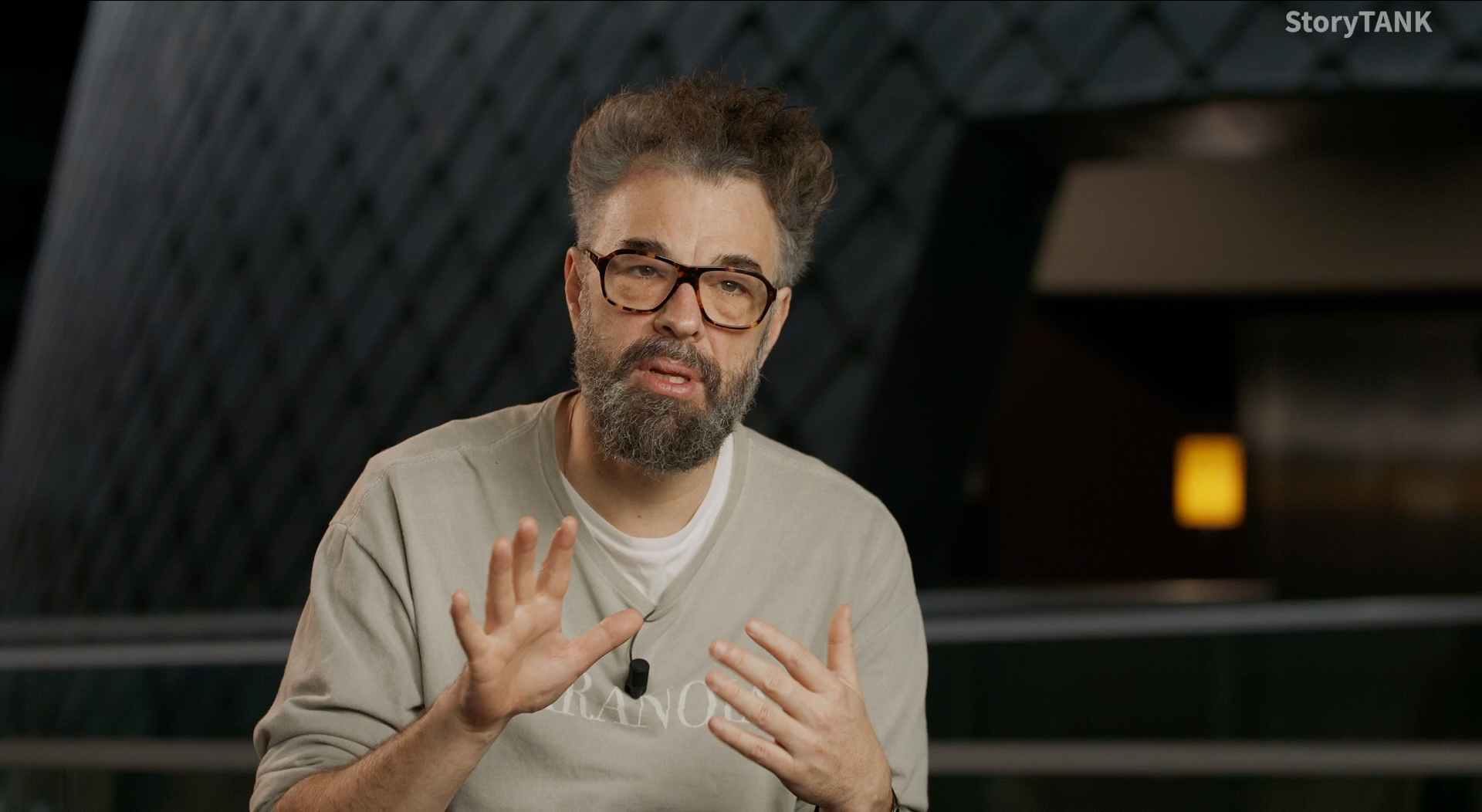
« L’art, en général, est aussi là pour mettre en lumière que le comportement humain, l’interaction humaine peuvent suivre une logique différente de celle, par exemple, de notre logique capitalistique ou guerrière. »
Le récit : une offre ouverte.
Je pense que l’art, en général, est aussi là pour mettre en lumière que le comportement humain, l’interaction humaine peuvent suivre une logique différente de celle, par exemple, de notre logique capitalistique ou guerrière. Et qu’il peut y avoir des visions, de la stupidité, de l’ironie, des absurdités… tout ce que la politique a perdu. En se plaçant en « forces de la raison », on considère comme totalement irrationnel et déraisonnable un grand nombre de pas de côté. Je pense que c’est pour moi l’une des principales raisons de raconter des histoires, en dehors du divertissement. Un récit est aussi principalement une offre : une offre ouverte. Je veux dire, bien sûr, si j’écris une scène, j’ai en quelque sorte une idée pour elle et j’ai également une sorte d’idée de ce qu’un spectateur en fera, de la façon dont elle ou il la percevra. Mais bien sûr, il est aussi possible qu’elle soit perçue totalement différemment. Personnellement, j’aime aussi un traitement ironique sur la même scène qui dirait : « Oh, mais c’est aussi l’inverse ! ». J’aime beaucoup quand les scènes sont en quelque sorte dialectiques et qu’elles démontrent les deux angles.
J’ai déjà fait un film sur une femme qui perd la mémoire et qui doit donc, reconstruire sa personnalité. À un moment donné, elle veut rencontrer sa mère, qu’elle a complètement oubliée. Elle se rend donc dans une maison de retraite et on apprend que sa mère souffre d’amnésie, de démence, d’Alzheimer. Elle rencontre cette femme, elles ne se souviennent pas l’une de l’autre, mais on remarque qu’il y a une sorte de connexion entre elles – génétique, biologique plus profonde. Et à un moment donné, une infirmière arrive et dit : « Oh, ce n’est pas votre mère. Vous vous êtes trompée. » La construction du récit amène cette scène qui peut donner un sentiment très intense, pluriel aux spectateurs. Un sentiment avec lequel j’aime jouer si possible.
« Ouvrir la porte à une autre perception de la réalité. »
La responsabilité du récit envers l’art.
J’aime beaucoup que les gens me racontent des/leurs histoires. Très souvent, l’inspiration émane de ces récits. J’aime écouter les gens parler de ce qu’ils ont vécu. Pour moi, écrire est une capacité à regarder et à écouter, à voir certaines choses devenir quelque chose de spécial. C’est plus une capacité à prendre un cadeau qu’à en créer un. Je pense qu’il s’agit surtout de regarder les gens et de les écouter. J’ai le sentiment qu’il est devenu un peu plus difficile de suivre un chemin « privé », intime dans la façon dont on raconte une histoire parce qu’il y a beaucoup de peur, non seulement chez les jeunes scénaristes mais également chez les producteurs et les distributeurs. Si nous parvenons à garder en nous toutes ces voix qui viennent à nous, nous parvenons à écouter, depuis l’intime, pour voir le monde d’une manière très unique. Beaucoup de jeunes essaient vraiment de s’intégrer dans ce qui existe déjà. L’intime est un endroit très fort et important pour les gens qui ont un angle privé. La seule responsabilité que nous avons est celle envers l’art et la logique de l’art. Une responsabilité politique, en quelque sorte, non pas dans le sens où nous sommes responsables de stopper le changement climatique ou autres mais dans celle d’ouvrir la porte à une autre perception de la réalité.
Hosted on Acast. See acast.com/privacy for more information.
]]>Jan Schomburg a écrit et réalisé des films (Above us only sky – 2011, Forget my Self – 2014, Divine – 2020), a écrit des scénarios avec Maria Schrader (Stefan Zweig – Farewell to Europe, I’m your man) et a écrit deux romans (Das Licht und die Geräusche – 2017, Die Möglichkeit eines Wunders,- 2024).
En secret, il a même écrit et réalisé des sketchs comiques pour la télévision allemande. Ses films ont été projetés à la Berlinale, à Locarno, à Rotterdam, à New York, entre autres. Il a reçu le prix du cinéma allemand pour le scénario de I’m your man, le film Stefan Zweig – Farewell to Europe a remporté le prix du public de l’Académie européenne du cinéma. En 2024, il est l’auteur principal et le showrunner de « L’argent des autres » (WT), une série télévisée internationale en huit parties pour ZDF et DR.
— un entretien réalisé par Guillaume Desjardins – auteur et réalisateur, membre de Les Parasites de films documentaires et enregistré aux Champs Libres (Rennes), en décembre 2023, dans le cadre de la saison 04 du StoryTANK : « Quelles histoires pour notre temps ? ».
« Écouter les détails et à les laisser se développer d’eux-mêmes. »
Décomposer le processus d’écriture : des détails au général.
J’ai écrit des scénarios et des romans, j’ai réalisé quelques films et je suis, ce que l’on appelle aujourd’hui : showrunner. Showrunner a de nombreuses connotations et interprétations, notamment en Europe.
J’ai participé à un workshop organisé par des producteurs européens « The Creatives » qui questionnait la série, son existence dans le paysage de la création, la potentialité d’un réseau européen et plus précisément ce qu’est la narration européenne, en termes de série. Chacun de ces producteurs a demandé à un scénariste de ces différents pays de venir pour réfléchir, écouter, contribuer. Cette semaine a en quelque sorte révolutionné ma manière de penser, en termes de ce qu’est une idée et de la façon dont on peut inviter le hasard et aussi le collectif dans le processus de son développement.
Quand nous acquérons une certaine maturité professionnelle, nous nous développons souvent dans un sens où l’on sait déjà où l’on va. Un processus structurel que nous avons décomposé, du général aux détails. Nous avons appris à écouter les détails et à les laisser se développer d’eux-mêmes, d’une manière ou d’une autre. Je me suis distancé de mon propre processus industriel d’écriture alors que j’étais un peu coincé dans un chantier d’écriture sur 8 épisodes inhérents à un scandale financier. Une décomposition qui m’a vraiment beaucoup inspirée.
« La structuration de narration d’un film explique, en partie, pourquoi notre planète est là où elle est aujourd’hui, dans la mesure où l’individu est ultra-valorisé et le collectif, que trop peu. »
La structure dramatique classique et narcissique du récit.
Une histoire au cinéma est surtout vue comme un récit, à partir d’un personnage et l’identification du public inhérente liée souvent à un qui a un problème particulier. Il s’agit principalement de problèmes binaires qui apportent différents concepts dans la structure dramatique comme celui de “vouloir et avoir besoin”. Donc il y a un but que le personnage vise, mais une vérité plus profonde stimule potentiellement une autre finalité. Or, à différents égards, je ne pense pas qu’il y ait une vérité plus profonde et qu’il faille choisir entre ces deux aspirations comme l’impose, en quelque sorte, l’histoire d’un film. Un problème correspond à un personnage et nous suivons un personnage qui anticipe ce problème. Et d’une manière ou d’une autre, dans la plupart des films, le monde autour de ce personnage est organisé à travers ce problème. Tout ce qui se passe autour de lui, en arrière-plan, ajoute d’une manière ou d’une autre une complexité ou de l’aide à ce problème. Une organisation plutôt étrange et narcissique de voir le monde, qui, d’une certaine manière, serait donc organisé juste pour le personnage en question. J’ai le sentiment que cette structuration de narration explique, en partie, pourquoi notre planète est là où elle est aujourd’hui, dans la mesure où l’individu est ultra-valorisé et le collectif, que trop peu.
Toutes ces histoires fonctionnent comme des histoires de « messie », qui sont en quelque sorte des histoires « de Jésus », comme Harry Potter, Le Seigneur des anneaux, ou encore Star Wars : « OK, vous êtes maintenant responsable du destin du monde et vous êtes la personne la plus importante de la planète ». Ce qui déclenche un certain type de sentiment intense et en même temps, totalement suranné, totalement dépassé. D’une certaine manière, du moins pour moi, ces récits, précisément, ne correspondent pas à ce qu’est le monde en ce moment. Il a quelques exemples de récits qui ne fonctionnent pas nécessairement sur le même modèle. Et j’ai toujours été intéressé par ce genre de récits. Un exemple très étrange d’un récit qui fonctionne – dans un sens différent – est, par exemple : Pirates des Caraïbes. Dans la première partie de Pirates des Caraïbes, il est très clair qu’Orlando Bloom devrait être le personnage principal. Parce que son père était un pirate, il est lui, en tant que fils, du bon côté et tout le conflit dramatique est basé sur son personnage. Mais personne ne s’intéresse à son personnage parce que tout le monde aime regarder évoluer Jack Sparrow. Mais Jack Sparrow n’est pas un personnage dramatique au sens classique du terme. Il n’a pas de véritable développement, il n’a pas de conflit de ce genre. C’est juste un farceur qui est toujours un personnage secondaire normalement. Il y a tellement d’histoires qui ont une structure dramatique classique et qui sont vraiment mauvaises. Et il y en a quelques-unes qui sont vraiment incroyables car intenses et surprenantes… !
« Le conflit est juste un élément parmi toute la gamme des interactions humaines, du comportement humain, de ce qui nous intéresse dans un film. »
Le conflit dans le récit.
Lorsque j’écris pour une série, très souvent, le conflit n’est pas ce qui m’intéresse dans une scène. Parce qu’il y a tellement de gens qui donnent des notes sur les scénarios dans ce contexte industriel d’une série par exemple. Je dois écrire très vite, je sais que dans leur idée de structure, elle n’est pas encore configurée d’une manière classique mais quelque chose dans la scène me semble bon et n’est pas forcément le conflit. Telle une idée différente de la façon dont nous pourrions vivre ensemble peut-être. Les étapes suivantes me permettent de structurer le récit de cette scène, à ce qu’elle puisse être vue dans la structure classique.
Les frères Coen, par exemple, ont souvent une structure dramatique très spécifique. Par exemple, dans Fargo, les bons et les mauvais personnages ne se mélangent pas. Par exemple, McDormand n’a pas de côté obscur. Mais très souvent, à un moment donné, tout mène à une confrontation. Mais la confrontation n’a pas lieu. Il y a juste un vide et soudain, on voit deux personnages discuter pendant une demi-heure. Par exemple, dans la série que j’écris, il y a une procureure qui travaille, sur un temps long, pour que les gangsters soient jugés. Et enfin, il y a le grand procès. Il y a, normalement, une confrontation au tribunal, dans la scène du procès où elle souhaiterait prouver, devant tout l’audience, qu’ils sont coupables… Et cette procureure indique qu’elle n’aime pas être personnellement impliquée parce qu’il s’agit d’une idée collective de la loi appliquée et ce n’est pas un souhait, à titre personnel, de vouloir les punir. Elle ne se rendra pas au tribunal. Un collègue la remplacera. D’une certaine manière, avec cette alternative, on va ailleurs que dans la confrontation classique par exemple. J’ai le sentiment qu’il y a beaucoup de conflits. Le conflit est juste un élément parmi toute la gamme des interactions humaines, du comportement humain, de ce qui nous intéresse dans un film. Je n’ai rien contre les conflits, mais je pense qu’il y en a tellement, que le conflit rétrécit vraiment l’histoire. Alors qu’elle peut être, simplement, plus large.
« Développer un récit à partir d’une logique d’interaction différente de celle de l’opposition. »
L’interaction dans le récit.
Il y a un certain type de récit qui émerge de différentes structures. Par exemple, si on considère une boîte vide, en quelque sorte, c’est également une boîte dans laquelle on met quelque chose. Si nous travaillons, à partir de la structure générale vers les détails, s’impose une certaine limitation. De même, à l’inverse, si nous travaillons uniquement, à partir des détails vers le général, s’impose également une certaine limitation. Les structures peuvent aider à être inspiré, mais je les considère comme des outils, utiles si vous êtes bloqués, hors du flux narratif. Si nous les considérons comme des règles, beaucoup de films se ressemblent et c’est un peu ennuyeux.
D’une certaine manière, dans le processus d’écriture, j’essaie d’entrer dans une sorte d’état hypnotique. À regarder les choses précises d’une scène définie : « Il y a quelqu’un assis là, quelqu’un descend là-bas… Oh, il y a un sac à dos. Y a-t’il quelque chose dans le sac à dos ? Quel est ce bruit ? » … J’essaie de méditer sur la situation à l’instant -t et d’étudier ce que l’endroit créé me demande. Pour ouvrir à d’autres idées, pour initier des tournants. J’ai le sentiment que les récits que nous composons devraient s’éloigner du principe : « ça c’est l’autre et ça c’est nous » qui crée une frontière entre les deux. Nous devrions raconter des histoires qui montrent comment cette frontière peut être franchie, comment nous pouvons avoir une logique d’interaction différente de celle de l’opposition. Ces grandes histoires dont je parlais plus tôt, comme Le Seigneur des anneaux, quand on le revoir aujourd’hui, pour moi, l’histoire est si mauvaise et, d’une certaine manière, l’histoire est fasciste, avec les seuls blancs qui sauvent la terre. C’est une histoire bizarre et cette opposition entre gens mauvais et gens bons est vraiment problématique.
« L’art, en général, est aussi là pour mettre en lumière que le comportement humain, l’interaction humaine peuvent suivre une logique différente de celle, par exemple, de notre logique capitalistique ou guerrière. »
Le récit : une offre ouverte.
Je pense que l’art, en général, est aussi là pour mettre en lumière que le comportement humain, l’interaction humaine peuvent suivre une logique différente de celle, par exemple, de notre logique capitalistique ou guerrière. Et qu’il peut y avoir des visions, de la stupidité, de l’ironie, des absurdités… tout ce que la politique a perdu. En se plaçant en « forces de la raison », on considère comme totalement irrationnel et déraisonnable un grand nombre de pas de côté. Je pense que c’est pour moi l’une des principales raisons de raconter des histoires, en dehors du divertissement. Un récit est aussi principalement une offre : une offre ouverte. Je veux dire, bien sûr, si j’écris une scène, j’ai en quelque sorte une idée pour elle et j’ai également une sorte d’idée de ce qu’un spectateur en fera, de la façon dont elle ou il la percevra. Mais bien sûr, il est aussi possible qu’elle soit perçue totalement différemment. Personnellement, j’aime aussi un traitement ironique sur la même scène qui dirait : « Oh, mais c’est aussi l’inverse ! ». J’aime beaucoup quand les scènes sont en quelque sorte dialectiques et qu’elles démontrent les deux angles.
J’ai déjà fait un film sur une femme qui perd la mémoire et qui doit donc, reconstruire sa personnalité. À un moment donné, elle veut rencontrer sa mère, qu’elle a complètement oubliée. Elle se rend donc dans une maison de retraite et on apprend que sa mère souffre d’amnésie, de démence, d’Alzheimer. Elle rencontre cette femme, elles ne se souviennent pas l’une de l’autre, mais on remarque qu’il y a une sorte de connexion entre elles – génétique, biologique plus profonde. Et à un moment donné, une infirmière arrive et dit : « Oh, ce n’est pas votre mère. Vous vous êtes trompée. » La construction du récit amène cette scène qui peut donner un sentiment très intense, pluriel aux spectateurs. Un sentiment avec lequel j’aime jouer si possible.
« Ouvrir la porte à une autre perception de la réalité. »
La responsabilité du récit envers l’art.
J’aime beaucoup que les gens me racontent des/leurs histoires. Très souvent, l’inspiration émane de ces récits. J’aime écouter les gens parler de ce qu’ils ont vécu. Pour moi, écrire est une capacité à regarder et à écouter, à voir certaines choses devenir quelque chose de spécial. C’est plus une capacité à prendre un cadeau qu’à en créer un. Je pense qu’il s’agit surtout de regarder les gens et de les écouter. J’ai le sentiment qu’il est devenu un peu plus difficile de suivre un chemin « privé », intime dans la façon dont on raconte une histoire parce qu’il y a beaucoup de peur, non seulement chez les jeunes scénaristes mais également chez les producteurs et les distributeurs. Si nous parvenons à garder en nous toutes ces voix qui viennent à nous, nous parvenons à écouter, depuis l’intime, pour voir le monde d’une manière très unique. Beaucoup de jeunes essaient vraiment de s’intégrer dans ce qui existe déjà. L’intime est un endroit très fort et important pour les gens qui ont un angle privé. La seule responsabilité que nous avons est celle envers l’art et la logique de l’art. Une responsabilité politique, en quelque sorte, non pas dans le sens où nous sommes responsables de stopper le changement climatique ou autres mais dans celle d’ouvrir la porte à une autre perception de la réalité.
Hosted on Acast. See acast.com/privacy for more information.
]]>Samah Karaki is a French-Lebanese neuroscientist. She founded and heads the Social Brain Institute (SBI), an association that uses knowledge from cognitive science to manage environmental and social issues.
Her first book, “Le talent est une fiction” (Talent is a fiction), was published in 2023 on the label Nouveaux Jours, by Lattès (Le Livre de Poche, 2024). She deconstructs the mythology surrounding individual success stories.
— an interview by Vassili Silovic, Writer and Director of documentary films, recorded at Les Champs Libres (Rennes) in December 2023 in the framework of the serie “What stories for our time?”.
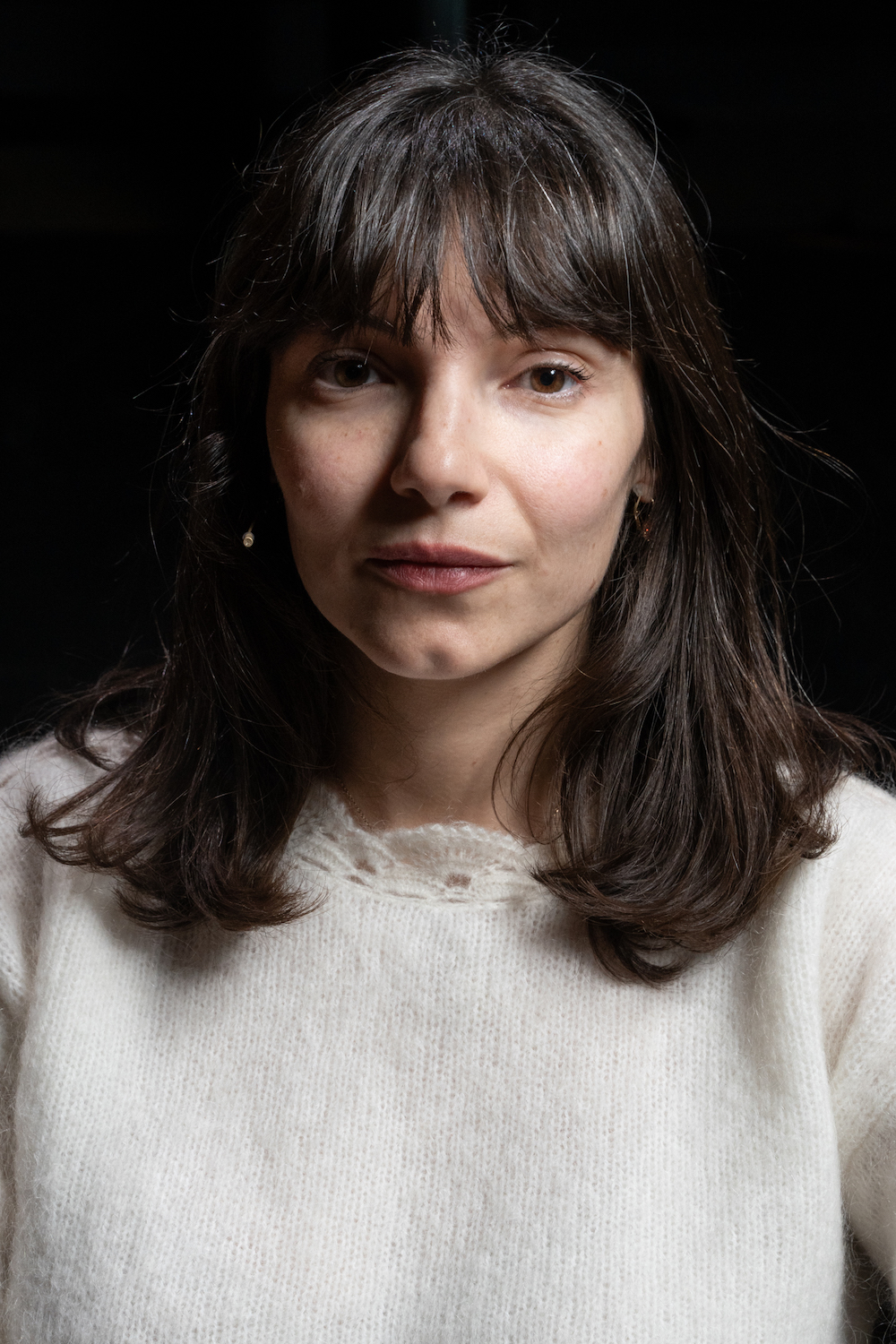
« The creative act is actually to swim against my own current. »
Accept the complexity of the story to accept the other.
We are all storytellers and what I mean by that is that the minute we open our eyes to the world, we are perceiving and creating images and meanings. The difficulty is to perceive the world differently from what I already stored as perceptions. It’s easy for me to talk about the pains that I’ve experienced, to talk about the pains that are similar to the ones that I’ve experienced. What’s more difficult is to be able to get into the perspective of someone that I don’t know, of a group of people that I don’t know, that I don’t have shared experiences with.
The creative act is actually to swim against my own current, in a way, my own flow. And maybe, if I tell it this way, it sounds like something that comes with effort. But it could come from effort if I decide actively to look inside my thoughts and think: “What would you say? How would you behave? What would be the reasons that would make you behave the way that I am considering wrong?” And it could also come from the implicit knowledge that I can get through knowing you, through just the act of meeting and listening. And it comes with love, I should also love your story. It doesn’t sound like effort when we’re listening to loved ones. This is how I understand love: that I consider you as a complex person, I consider your story as complex as I could consider mine.
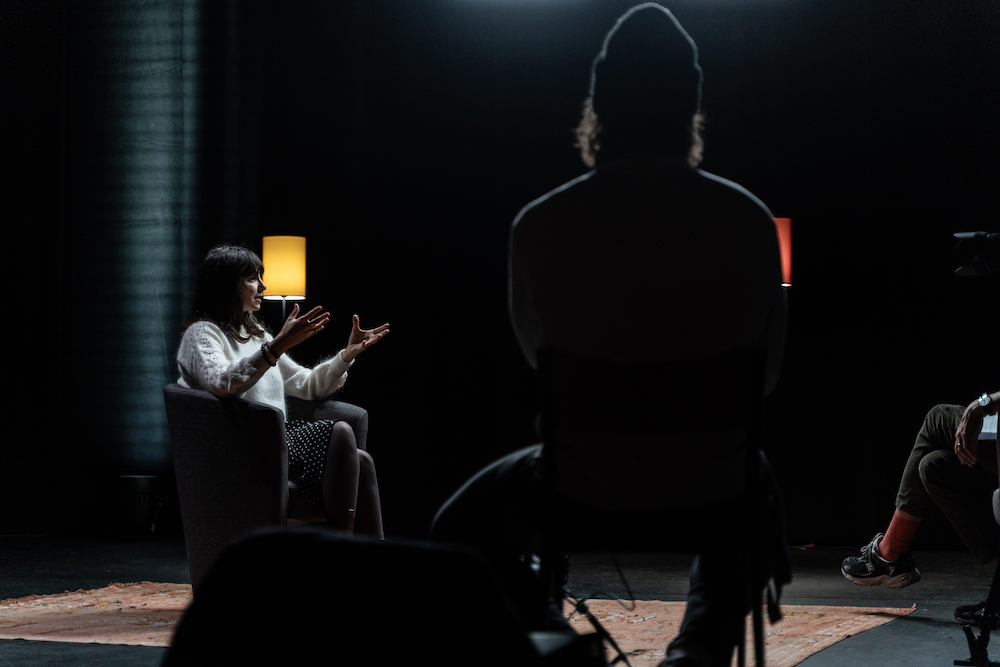
« Fiction can help me look at the external reasons that make people behave the way they do. And enlarges my empathy scale… »
The story: a shortcut to the existence and reality of the other.
I’m not doing it as a gift. I’m not living it as a gift. I’m doing it because I am sincerely open and interested in what you have to say. It doesn’t happen if I don’t meet you if I don’t ask you questions, if I don’t see you living around. And this can happen through literature, that I am delving into the reality of someone else. And the ability of fiction, actually, on us, that enlarges the perspective that we have of the world, because we kind of have a shortcut towards the existence and the reality of others.
The neuroscience and cognitive science, we have something called the fundamental attribution error. That when I behave, I see my behaviours with the external conditions. I explain my behaviours, putting them in the centre of conditions that led me to do stuff. But I have less compassion for others because I don’t see clearly the conditions, the external conditions. I attribute to their behaviour’s internal reasons, while I attribute to myself external ones.
Fiction can help me also look at the external reasons that make people behave the way they do. And enlarges my empathy scale to something that is larger than what I do usually for myself.
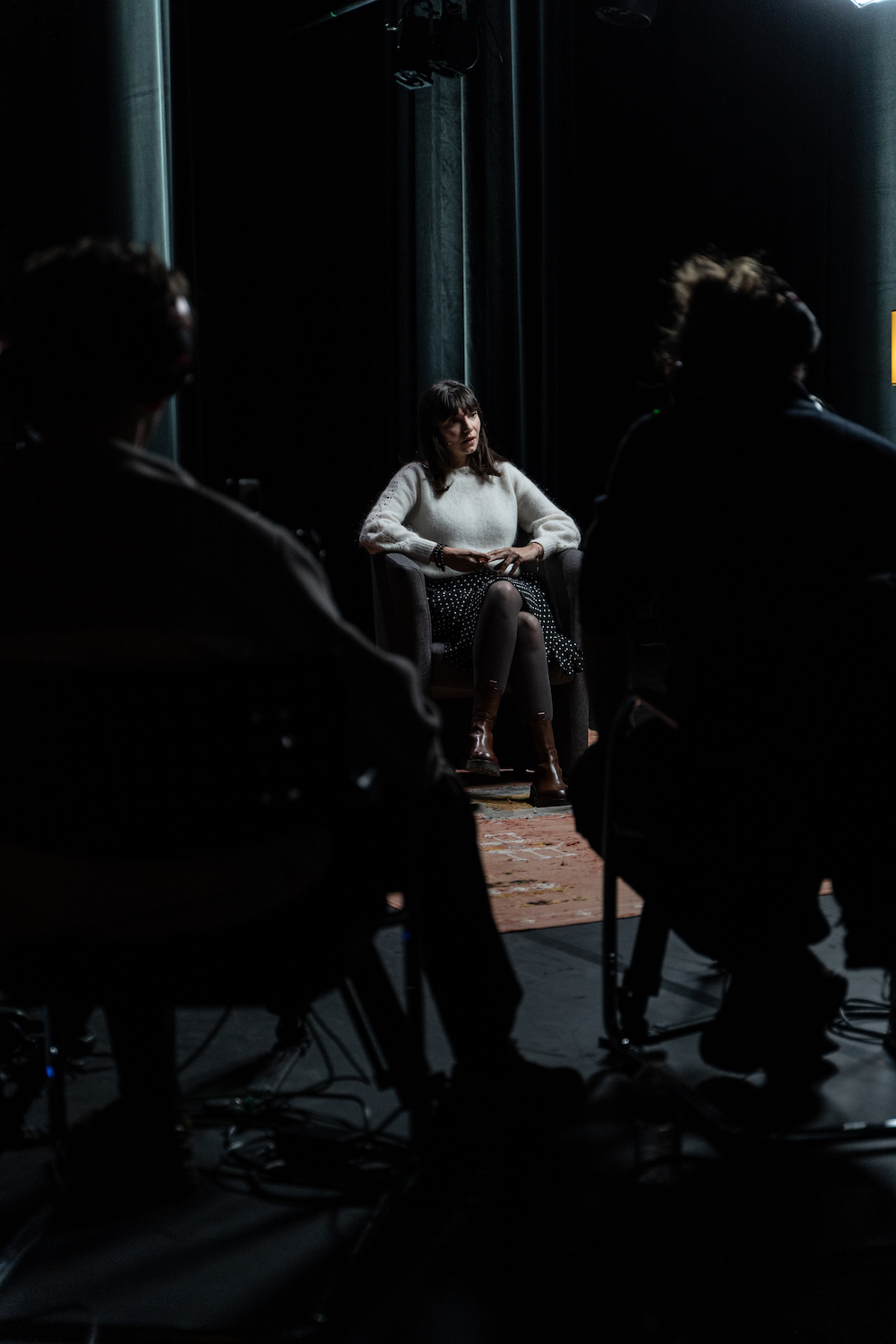
« I consider artists as people in the centre of life itself, and not at the corner of it. »
The art is political.
Artists are kind of engaged more than other people in this type of interaction with others. We have the idea of artists being narcissistic because they are delving continuously inside their own affects and their own feelings. But they actually are supposed to be sometimes getting out of their ego to be able to witness what also others around them experience. I think the art is political in the way that I should be able as an artist to go beyond my own experience and to see it situated somewhere. Even when I’m describing a family story, I’m placing this family inside its cultural and social network. That’s why it takes lots of knowledge to feel legitimate to talk about something. And this knowledge comes from life experiences themselves, from my openness and the openness of an artist to first accept that my perception is biased. And then to be humble enough to consider that anyone else than myself that didn’t have the same life as mine has something very interesting to teach me.
Tolstoï, who sometimes is a character somewhere in his book, but he works so hard to be able to, every time he gives the voice to another character, to completely shift the gaze to the young woman, to the child, to the man, to the military guy. And then he leaves a space for him to voice what he thinks about all of this. I kind of see it like as if Tolstoy said, “I want to say things. Okay, I’m going to put that voice inside the character so I don’t pollute the other gazes that should be around that character.” And that takes lots of humility, but it also takes lots of knowledge and lots of research. In order to create anything, we should also have a pool of experiences that cook somewhere, incubate, to call it incubation. And then we start experimenting because it doesn’t mean that I’m going to give this perception from nowhere. We experiment, we do trial and error, and then at some point I forget about myself. And at some point, I feel that this storytelling went beyond me. It takes lots of discipline.
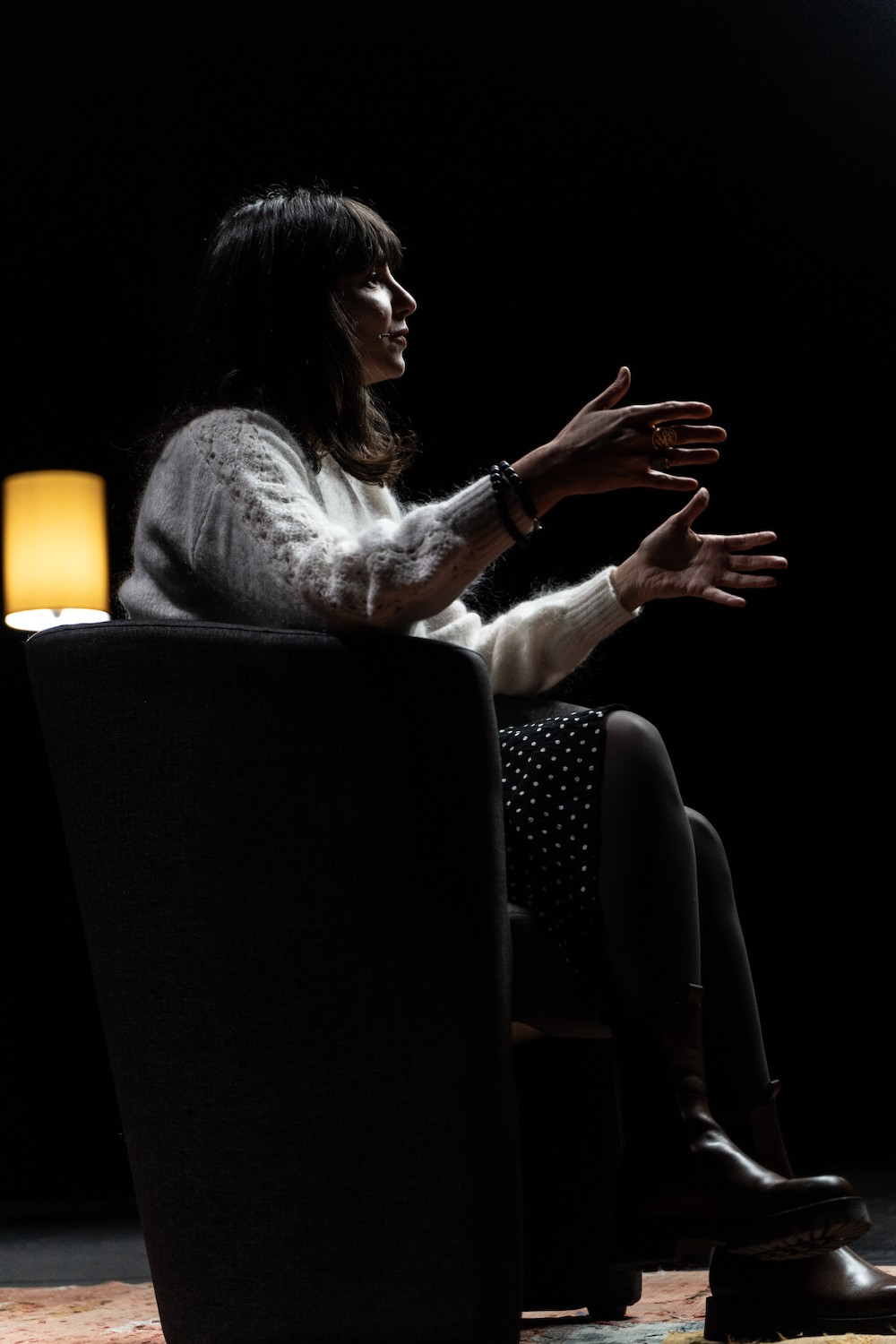
« It takes lots of discipline, and it’s maybe in opposition to what we consider the sudden inspiration that comes from nowhere. »
Creating the story: a complex process.
It takes lots of discipline, and it’s maybe in opposition to what we consider the sudden inspiration that comes from nowhere. And it’s actually just the same exact process as building anything, as building any thought. Scientists do the same thing. It’s a process that is complex, and that of course relies on your past experiences and expertise. But it’s also following the same exact processes as building any material objects. Because you process, you do pilots of it, then you see if it works, if it fits.
The creative process, if you look at it in the brain, it’s not in the left or right brain. It’s actually engaging many circuits, executive circuits, that kind of make sense of what I’m doing, the default network that delves into my past experiences, and it’s what we call the imagination networks. But also, my salient network that is constantly reading information coming from the body and coming also from the environment around me. And they are interacting continuously with each other. If you’re looking at somebody painting for seven hours, it doesn’t have to be a creative process. It could be a technical, a technical autonomous process. Then from time to time, you look at that, you look at that, and you shift it in a way that makes more sense. And then the product of this is actually the result of a very complex process.
We like to see artistic talent as something that comes with a potential, and then the product kind of emerges from this potential. But the process in this is a very complex one. There is effort, but there’s also lots of pleasure.
There is desperation. There is sometimes the feeling that I am too stuck in my ability to look inside, to look from another perspective. And then you keep that, you go do something else, you get back to it, and you incubate again, and then you experiment again, and then you do essays and errors, and then something comes out. And this product is judged by others, it doesn’t belong to you anymore. The inspiration is kind of a collective. The process is in itself collective. But also, the appreciation of artistic product is also collective, because the making sense of it doesn’t belong to the artist anymore, once it’s put in front of the senses of other people.
Writing is a result of training. It doesn’t come from a sudden inspiration again. It’s a discipline, and then this exercise becomes easier with time.
And then also the processing of the negative emotion that comes from this being stuck, you train on it also and you go beyond it at some point. The way you read books, it’s also an exercise. You know, like how do you get inspired when you hear somebody telling you a story? How do you take notes of that? It’s all tactics that could be taught also, and that could be modelled by other people that they have their own ways of dealing with this writing expertise. It’s not something magical. It’s not something that comes from nowhere. It’s a process that we can use better tools to organize our thoughts.
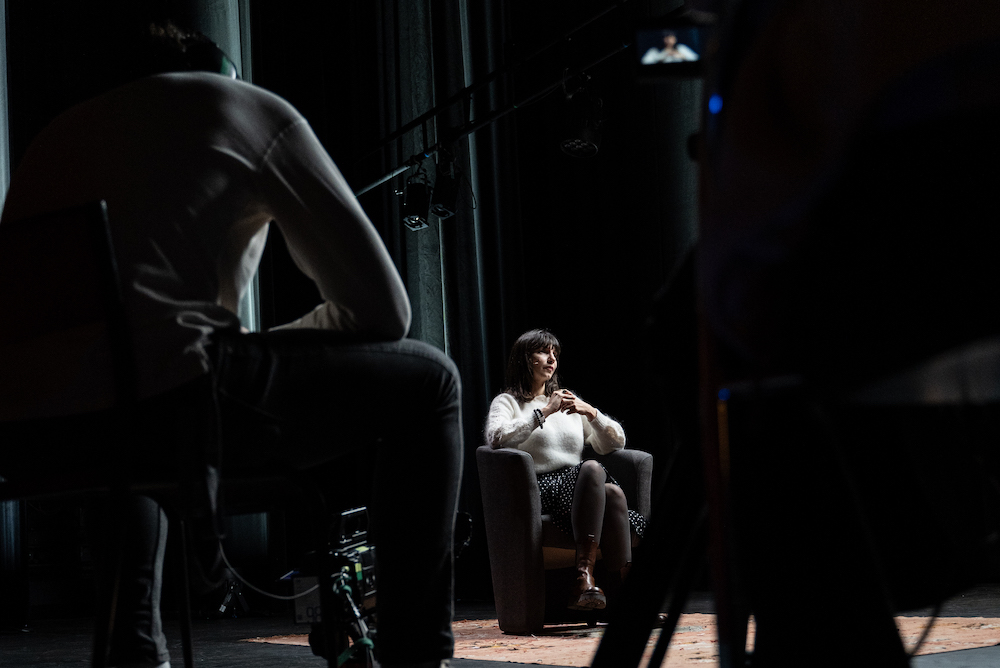
«When I’m faced with uncertainty, my brain doesn’t like this void, and it will give me an answer. It will give me a story. »
To surrender to uncertainty to feed the story.
I don’t know who said that: choosing vs. excluding. It’s like, what do I choose to put my eye on? I’m excluding all the other visual perception that I can get, and this is going to be part of what I’m going to build my fiction around.
If you have a clear idea of where you want to go, then you’re not creating anymore. Just building something, and you know what you’re building at the end. This is what actually makes art, science, entrepreneurship, what we call the uncertainty fields. Because the condition for it to be interesting is that you are open for it to be uncertain. And this takes, again, energy. This takes energy to accept uncertainty.
When I’m faced with uncertainty, my brain doesn’t like this void, and it will give me an answer. It will give me a story. Doing good science, or really being in the creative potential, is to refuse that first story that comes to my mind, and say I’m going to keep this uncertainty going.
It needs for you to let go of the obsession, of the quality of the product itself. You can get back to that later, but you have to surrender to the uncertainty of what would this process right now give. Surrender to it, and then judge it later. We cannot be at the same time letting go to the uncertainty of the creation and judging what it could be at the end of the way.
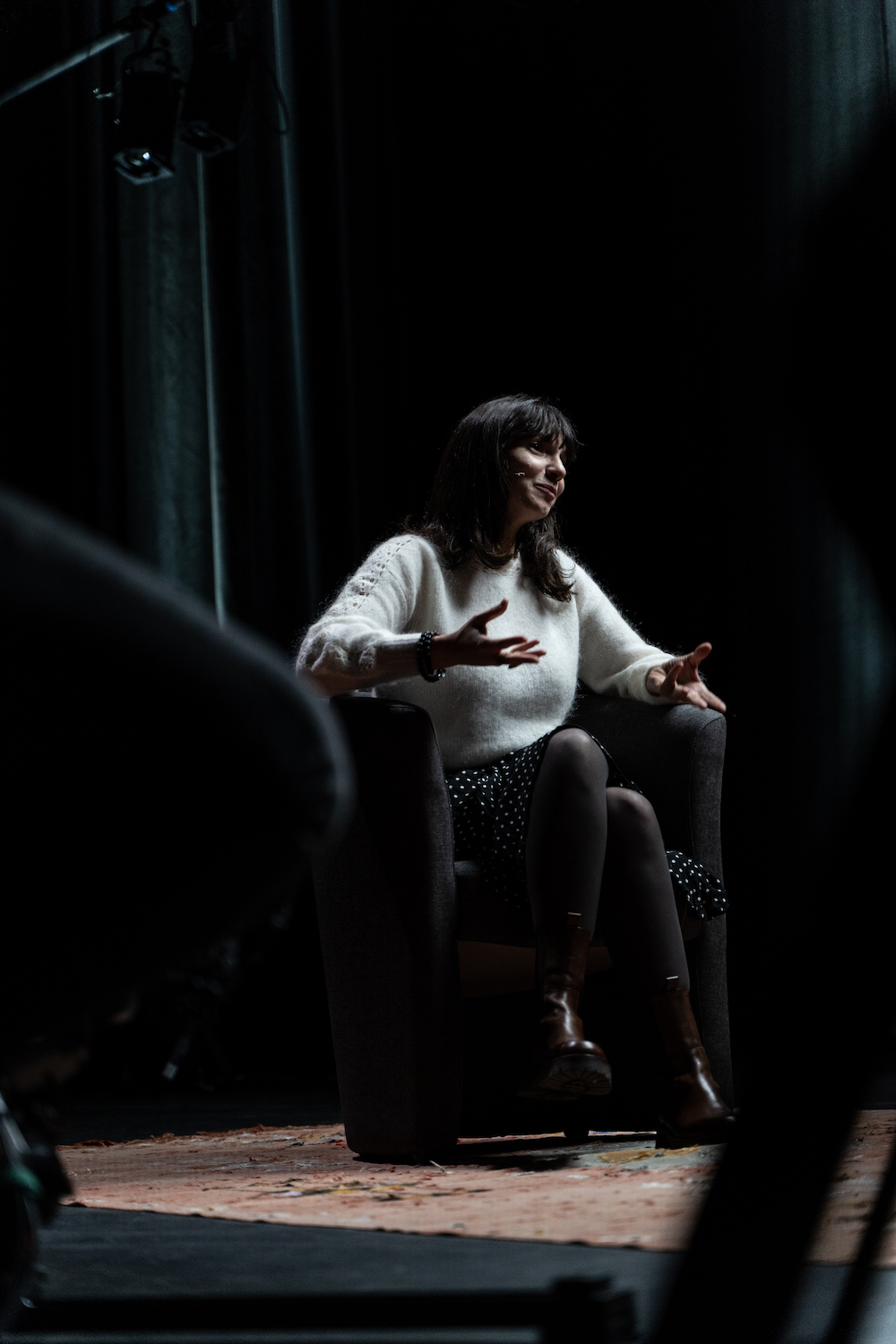
« Acknowledging that it’s impossible for us to separate the impact of predispositions, from the impact of the opportunity that we had to cultivate this potential… »
Context = the impact of creation.
If I think: “I have a creative genius”, or if I think that: “I don’t have the creative genius”, when would I create better? Actually, the answer is that when I forget about this question, that when I’m not wondering whether I have it or not. Because the fixed idea of what creative potential and what intelligence is, this is what pollutes our process of our learning process, our creative process. It’s considering that they are fixed traits that we have or we don’t.
And then another reason, so of course, is to demystify the fact that we have a gene for something, or we have a part of the brain for something. We know that it’s complex, that we are genetically wired, biologically wired, to be shaped by our life experiences, to be shaped by our environments, by our encounters.
We are, by definition, plastic beings, and our brains and our body that could have this genius are not isolated from the rest of what we could get or not get. Acknowledging that it’s impossible for us to separate the impact of predispositions, from the impact of the opportunity that we had to cultivate this potential, makes it clear that we should stop being obsessed with the question of whether we have talent or not. Because anyway, who’s going to judge for the product of that talent?
It’s always responding for a historical moment where we…I always think about Lionel Messi and the Renaissance, like how would you describe his talent? Because he would not be useful at that time. And that everything that we consider genius, every time that we delve into the stories, the life stories of those people, we realize that they were just there at the right moment, surrounded by the right people. They did something out of this privilege, but they were at the centre of what would make them able to create something that is different. There is no solitary genius, nowhere in the history of science, of art. They are always situated in an ecosystem that represents and inspires and make the access to the creation easier.
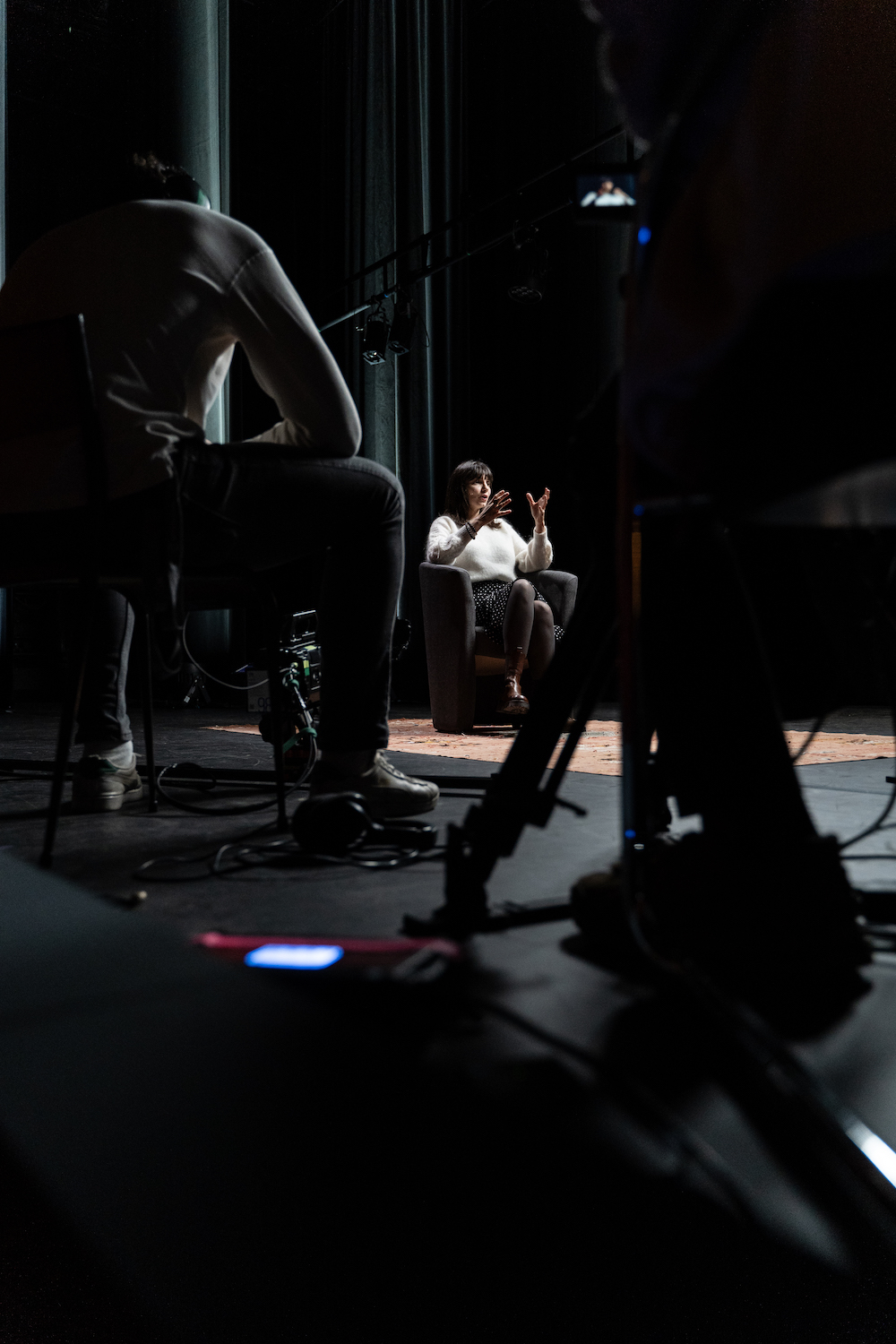
« Collective story building is maybe more tiring, but it could end up more interesting – if there is an equal access to the parole, an equal access to the creation, and if there is no hierarchy in considering that a voice is more valuable than others. »
The collective construction of the narrative.
And what’s interesting for me, is this hierarchy that is the main reason for us to let go of the effort of building something. Because if I believe that you’re better than me, that idea will top me from forgetting about this comparison. So again, we cannot be at the same time accepting the uncertainty of the creation, and at the same time obsessed by the question of social competition.
Even athletic champions, when they are on the field, they forget about the competition. They are completely in the flow of the action. Maybe the second before I was in the competition, but the minute I started running, my brain is in the flow of the action. I’m just a body, and I’m not seeing. People around me are just shapes. This is what makes us go beyond ourselves. This is how kids play. When you see a baby playing with this rug, he’s not interested in any performance, but he’s completely in the flow of observing and exploring it. So, he is perceiving and creating something.
There’s something interesting that happens in the brain when I am thinking in the presence of others. We see higher activation because the social representation circuits are activated. And it actually brings a better quality to the arguments I’m giving. It makes me more demanding of myself. It has been tested in many circumstances. For example, jurors that are going to judge for an end, and we give them the opportunities to share their arguments. And we put diverse people there. They’re not belonging so we are not falling in the group-think bias. We see that the more diverse they are, the more information they will share, and the quality of information will get better. They’re tired after that. Because if I am building a story with you would not always agree with me. I will actually be more demanding for the quality of how to convince you that this is how it should go.
And when we listen to ourselves talking to others, we become more precise. If you’re trying to let somebody else understand your thoughts, you are getting it better. You are understanding your thoughts better. So that’s why collective story building is maybe more tiring, but it could end up more interesting. If there is an equal access to the parole, an equal access to the creation, and if there is no hierarchy in considering that a voice is more valuable than others. It’s not enough to be there creating together. I also have to make sure that everybody there is not wondering whether you have more talent than I do. We forgot about this obsession of diagnosis and of hierarchy, and we are in the process of creation. So, it becomes richer because I am delving into the pool of experience that I have, but it’s also getting inside yours.
« You perceive and create constantly, and have to accept that it doesn’t have to be perfect… »
Ideation & creation.
I think that it’s a very dangerous trap to believe that once I’m going to put something into a paragraph, it has to be perfect. Again, it’s a process. It’s the same when you want to quit the habit. You quit it one time and then you relapse and then you analyse why you relapsed, and you try to shape your environment differently. This is how it goes in the brain.
You perceive and create, perceive and create constantly. To accept that it doesn’t have to be perfect, takes away all the psycho-emotional pressure of making it the right paragraph. This comes also with this myth of innate talent and genius that they heard it somewhere. If we come to the Greek mythology, to the idea that we have it today, that I got it and I put it just through the night, the morning I printed my book and I sent it to the editor.
Your perception of your own product is subjective and is related to sometimes your affective states, sometimes to your physiological states. I find it a bit dangerous to separate the ideation from the creation.
© Photos Brigitte Bouillot
Hosted on Acast. See acast.com/privacy for more information.
]]>Samah Karaki is a French-Lebanese neuroscientist. She founded and heads the Social Brain Institute (SBI), an association that uses knowledge from cognitive science to manage environmental and social issues.
Her first book, “Le talent est une fiction” (Talent is a fiction), was published in 2023 on the label Nouveaux Jours, by Lattès (Le Livre de Poche, 2024). She deconstructs the mythology surrounding individual success stories.
— an interview by Vassili Silovic, Writer and Director of documentary films, recorded at Les Champs Libres (Rennes) in December 2023 in the framework of the serie “What stories for our time?”.
« The creative act is actually to swim against my own current. »
Accept the complexity of the story to accept the other.
We are all storytellers and what I mean by that is that the minute we open our eyes to the world, we are perceiving and creating images and meanings. The difficulty is to perceive the world differently from what I already stored as perceptions. It’s easy for me to talk about the pains that I’ve experienced, to talk about the pains that are similar to the ones that I’ve experienced. What’s more difficult is to be able to get into the perspective of someone that I don’t know, of a group of people that I don’t know, that I don’t have shared experiences with.
The creative act is actually to swim against my own current, in a way, my own flow. And maybe, if I tell it this way, it sounds like something that comes with effort. But it could come from effort if I decide actively to look inside my thoughts and think: “What would you say? How would you behave? What would be the reasons that would make you behave the way that I am considering wrong?” And it could also come from the implicit knowledge that I can get through knowing you, through just the act of meeting and listening. And it comes with love, I should also love your story. It doesn’t sound like effort when we’re listening to loved ones. This is how I understand love: that I consider you as a complex person, I consider your story as complex as I could consider mine.
« Fiction can help me look at the external reasons that make people behave the way they do. And enlarges my empathy scale… »
The story: a shortcut to the existence and reality of the other.
I’m not doing it as a gift. I’m not living it as a gift. I’m doing it because I am sincerely open and interested in what you have to say. It doesn’t happen if I don’t meet you if I don’t ask you questions, if I don’t see you living around. And this can happen through literature, that I am delving into the reality of someone else. And the ability of fiction, actually, on us, that enlarges the perspective that we have of the world, because we kind of have a shortcut towards the existence and the reality of others.
The neuroscience and cognitive science, we have something called the fundamental attribution error. That when I behave, I see my behaviours with the external conditions. I explain my behaviours, putting them in the centre of conditions that led me to do stuff. But I have less compassion for others because I don’t see clearly the conditions, the external conditions. I attribute to their behaviour’s internal reasons, while I attribute to myself external ones.
Fiction can help me also look at the external reasons that make people behave the way they do. And enlarges my empathy scale to something that is larger than what I do usually for myself.
« I consider artists as people in the centre of life itself, and not at the corner of it. »
The art is political.
Artists are kind of engaged more than other people in this type of interaction with others. We have the idea of artists being narcissistic because they are delving continuously inside their own affects and their own feelings. But they actually are supposed to be sometimes getting out of their ego to be able to witness what also others around them experience. I think the art is political in the way that I should be able as an artist to go beyond my own experience and to see it situated somewhere. Even when I’m describing a family story, I’m placing this family inside its cultural and social network. That’s why it takes lots of knowledge to feel legitimate to talk about something. And this knowledge comes from life experiences themselves, from my openness and the openness of an artist to first accept that my perception is biased. And then to be humble enough to consider that anyone else than myself that didn’t have the same life as mine has something very interesting to teach me.
Tolstoï, who sometimes is a character somewhere in his book, but he works so hard to be able to, every time he gives the voice to another character, to completely shift the gaze to the young woman, to the child, to the man, to the military guy. And then he leaves a space for him to voice what he thinks about all of this. I kind of see it like as if Tolstoy said, “I want to say things. Okay, I’m going to put that voice inside the character so I don’t pollute the other gazes that should be around that character.” And that takes lots of humility, but it also takes lots of knowledge and lots of research. In order to create anything, we should also have a pool of experiences that cook somewhere, incubate, to call it incubation. And then we start experimenting because it doesn’t mean that I’m going to give this perception from nowhere. We experiment, we do trial and error, and then at some point I forget about myself. And at some point, I feel that this storytelling went beyond me. It takes lots of discipline.
« It takes lots of discipline, and it’s maybe in opposition to what we consider the sudden inspiration that comes from nowhere. »
Creating the story: a complex process.
It takes lots of discipline, and it’s maybe in opposition to what we consider the sudden inspiration that comes from nowhere. And it’s actually just the same exact process as building anything, as building any thought. Scientists do the same thing. It’s a process that is complex, and that of course relies on your past experiences and expertise. But it’s also following the same exact processes as building any material objects. Because you process, you do pilots of it, then you see if it works, if it fits.
The creative process, if you look at it in the brain, it’s not in the left or right brain. It’s actually engaging many circuits, executive circuits, that kind of make sense of what I’m doing, the default network that delves into my past experiences, and it’s what we call the imagination networks. But also, my salient network that is constantly reading information coming from the body and coming also from the environment around me. And they are interacting continuously with each other. If you’re looking at somebody painting for seven hours, it doesn’t have to be a creative process. It could be a technical, a technical autonomous process. Then from time to time, you look at that, you look at that, and you shift it in a way that makes more sense. And then the product of this is actually the result of a very complex process.
We like to see artistic talent as something that comes with a potential, and then the product kind of emerges from this potential. But the process in this is a very complex one. There is effort, but there’s also lots of pleasure.
There is desperation. There is sometimes the feeling that I am too stuck in my ability to look inside, to look from another perspective. And then you keep that, you go do something else, you get back to it, and you incubate again, and then you experiment again, and then you do essays and errors, and then something comes out. And this product is judged by others, it doesn’t belong to you anymore. The inspiration is kind of a collective. The process is in itself collective. But also, the appreciation of artistic product is also collective, because the making sense of it doesn’t belong to the artist anymore, once it’s put in front of the senses of other people.
Writing is a result of training. It doesn’t come from a sudden inspiration again. It’s a discipline, and then this exercise becomes easier with time.
And then also the processing of the negative emotion that comes from this being stuck, you train on it also and you go beyond it at some point. The way you read books, it’s also an exercise. You know, like how do you get inspired when you hear somebody telling you a story? How do you take notes of that? It’s all tactics that could be taught also, and that could be modelled by other people that they have their own ways of dealing with this writing expertise. It’s not something magical. It’s not something that comes from nowhere. It’s a process that we can use better tools to organize our thoughts.
«When I’m faced with uncertainty, my brain doesn’t like this void, and it will give me an answer. It will give me a story. »
To surrender to uncertainty to feed the story.
I don’t know who said that: choosing vs. excluding. It’s like, what do I choose to put my eye on? I’m excluding all the other visual perception that I can get, and this is going to be part of what I’m going to build my fiction around.
If you have a clear idea of where you want to go, then you’re not creating anymore. Just building something, and you know what you’re building at the end. This is what actually makes art, science, entrepreneurship, what we call the uncertainty fields. Because the condition for it to be interesting is that you are open for it to be uncertain. And this takes, again, energy. This takes energy to accept uncertainty.
When I’m faced with uncertainty, my brain doesn’t like this void, and it will give me an answer. It will give me a story. Doing good science, or really being in the creative potential, is to refuse that first story that comes to my mind, and say I’m going to keep this uncertainty going.
It needs for you to let go of the obsession, of the quality of the product itself. You can get back to that later, but you have to surrender to the uncertainty of what would this process right now give. Surrender to it, and then judge it later. We cannot be at the same time letting go to the uncertainty of the creation and judging what it could be at the end of the way.
« Acknowledging that it’s impossible for us to separate the impact of predispositions, from the impact of the opportunity that we had to cultivate this potential… »
Context = the impact of creation.
If I think: “I have a creative genius”, or if I think that: “I don’t have the creative genius”, when would I create better? Actually, the answer is that when I forget about this question, that when I’m not wondering whether I have it or not. Because the fixed idea of what creative potential and what intelligence is, this is what pollutes our process of our learning process, our creative process. It’s considering that they are fixed traits that we have or we don’t.
And then another reason, so of course, is to demystify the fact that we have a gene for something, or we have a part of the brain for something. We know that it’s complex, that we are genetically wired, biologically wired, to be shaped by our life experiences, to be shaped by our environments, by our encounters.
We are, by definition, plastic beings, and our brains and our body that could have this genius are not isolated from the rest of what we could get or not get. Acknowledging that it’s impossible for us to separate the impact of predispositions, from the impact of the opportunity that we had to cultivate this potential, makes it clear that we should stop being obsessed with the question of whether we have talent or not. Because anyway, who’s going to judge for the product of that talent?
It’s always responding for a historical moment where we…I always think about Lionel Messi and the Renaissance, like how would you describe his talent? Because he would not be useful at that time. And that everything that we consider genius, every time that we delve into the stories, the life stories of those people, we realize that they were just there at the right moment, surrounded by the right people. They did something out of this privilege, but they were at the centre of what would make them able to create something that is different. There is no solitary genius, nowhere in the history of science, of art. They are always situated in an ecosystem that represents and inspires and make the access to the creation easier.
« Collective story building is maybe more tiring, but it could end up more interesting – if there is an equal access to the parole, an equal access to the creation, and if there is no hierarchy in considering that a voice is more valuable than others. »
The collective construction of the narrative.
And what’s interesting for me, is this hierarchy that is the main reason for us to let go of the effort of building something. Because if I believe that you’re better than me, that idea will top me from forgetting about this comparison. So again, we cannot be at the same time accepting the uncertainty of the creation, and at the same time obsessed by the question of social competition.
Even athletic champions, when they are on the field, they forget about the competition. They are completely in the flow of the action. Maybe the second before I was in the competition, but the minute I started running, my brain is in the flow of the action. I’m just a body, and I’m not seeing. People around me are just shapes. This is what makes us go beyond ourselves. This is how kids play. When you see a baby playing with this rug, he’s not interested in any performance, but he’s completely in the flow of observing and exploring it. So, he is perceiving and creating something.
There’s something interesting that happens in the brain when I am thinking in the presence of others. We see higher activation because the social representation circuits are activated. And it actually brings a better quality to the arguments I’m giving. It makes me more demanding of myself. It has been tested in many circumstances. For example, jurors that are going to judge for an end, and we give them the opportunities to share their arguments. And we put diverse people there. They’re not belonging so we are not falling in the group-think bias. We see that the more diverse they are, the more information they will share, and the quality of information will get better. They’re tired after that. Because if I am building a story with you would not always agree with me. I will actually be more demanding for the quality of how to convince you that this is how it should go.
And when we listen to ourselves talking to others, we become more precise. If you’re trying to let somebody else understand your thoughts, you are getting it better. You are understanding your thoughts better. So that’s why collective story building is maybe more tiring, but it could end up more interesting. If there is an equal access to the parole, an equal access to the creation, and if there is no hierarchy in considering that a voice is more valuable than others. It’s not enough to be there creating together. I also have to make sure that everybody there is not wondering whether you have more talent than I do. We forgot about this obsession of diagnosis and of hierarchy, and we are in the process of creation. So, it becomes richer because I am delving into the pool of experience that I have, but it’s also getting inside yours.
« You perceive and create constantly, and have to accept that it doesn’t have to be perfect… »
Ideation & creation.
I think that it’s a very dangerous trap to believe that once I’m going to put something into a paragraph, it has to be perfect. Again, it’s a process. It’s the same when you want to quit the habit. You quit it one time and then you relapse and then you analyse why you relapsed, and you try to shape your environment differently. This is how it goes in the brain.
You perceive and create, perceive and create constantly. To accept that it doesn’t have to be perfect, takes away all the psycho-emotional pressure of making it the right paragraph. This comes also with this myth of innate talent and genius that they heard it somewhere. If we come to the Greek mythology, to the idea that we have it today, that I got it and I put it just through the night, the morning I printed my book and I sent it to the editor.
Your perception of your own product is subjective and is related to sometimes your affective states, sometimes to your physiological states. I find it a bit dangerous to separate the ideation from the creation.
© Photos Brigitte Bouillot
Hosted on Acast. See acast.com/privacy for more information.
]]>— conference recorded at Les Champs Libres (Rennes) in December 2023 in the framework of the series “What stories for our time?”, moderated by Yann Apperry – Screenwriter, Playwright and Novelist – and Nicolás Buenaventura – Writer-director and Storyteller.
Neuroscience sheds new light on the myth of Creative Genius.
Would we all be able to create streams of imaginary worlds and wild stories?
With Jan Schomburg – Screenwriter & Director (Germany), Samah Karaki – Neuroscience researcher (Lebanon & France) and Tamara Russell – Neuroscience researcher and Martial Arts specialist (UK) as well as Thomas Roze (France) – Osteopath and witness of this round-table.
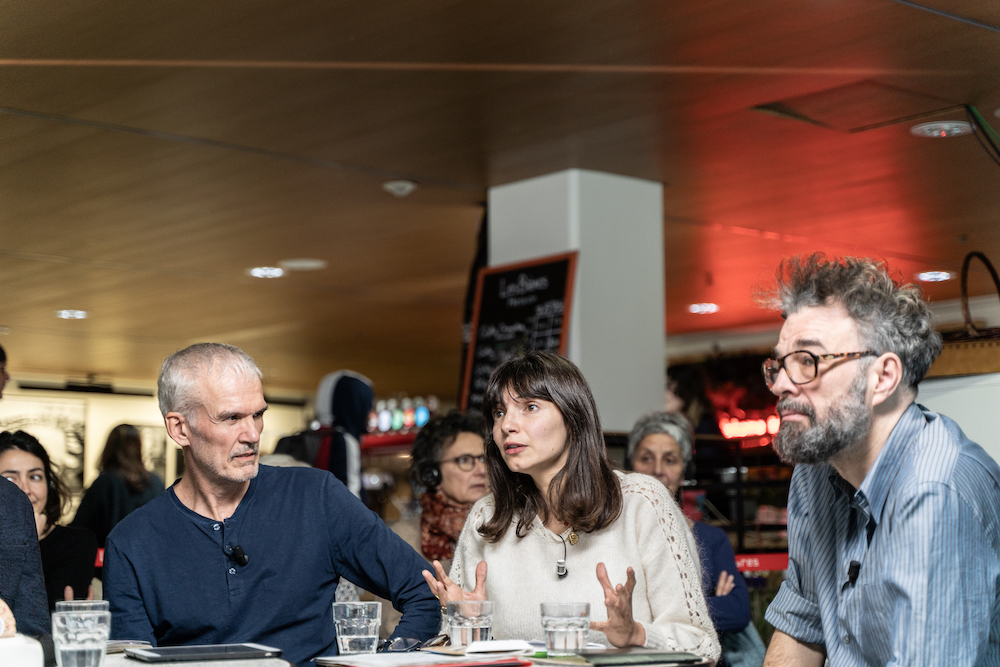
« And then the inspiration would come from the default network of the brain that actually stored all this, this salad of experiences. And instead of searching, it’s a cooking recipe. »
Automate to free us.
Right now, we are all doing lots of physiological mechanisms in a very automatic way.
You’re not aware that you’re breathing. Actually, you’re surviving each other second. You’re about to die, and then you breathe, and you’re alive again.
And you’re doing this because you are kind of relying on this autonomous nervous system that is telling you, I’m taking care of digesting your food and maintaining your body temperature and fighting any stranger germ coming into your body so that you can listen to these people talking, right? You are available to do something else. Your executive system is not aware, not preoccupied by all of these issues, right? So, what’s amazing in our brain that not only our survival issues are automatic, but also everything that you’ve been through.
The language I’m using, I’m not born speaking English and so, at some point, I had to automatize this language so that I can go beyond the symbols and bring meaning to what I’m saying. The way we walk, the way we sit, everything you’re doing right now is actually… you’re not processing this actively. We need to be first grateful to have a system that is allowing us to be available to do something else.
Accept the ambiguity and uncertainty of the world.
We rely on this automatic system because we don’t have enough energy to process the world every time we look at it. But bias is actually when this system fails.
For example, we’ve been a few hours together, but I already judged you based on my automatic cultural, social experience, past experiences of people that look like you, that behave like you, right? I need sometimes to say actually, “I don’t know you”. And I know that I’m having this because I’m having this judgment automatically. But I need also to accept that you are an ambiguous object. But it’s not OK for me to accept this for everybody here because it’s such a cognitive load to accept the ambiguity of the world and the uncertainty of the world.
I don’t want to sound like other neuroscientists asking people to have critical thinking and to always think against ourselves with this metacognitive issue. Because we don’t have enough energy for that. But if I want to delve into a creative process, then I must be doing what you talked about, Jan. I need to fight against my urge to describe the world the way I see it. It’s actually to forget about myself, which is kind of impossible, but we tend towards this. And maybe a trick that we can use is instead of me doing this work alone, is to question you, who you are. And that’s how it becomes collective narrative creating. Because I am actually accepting to hear your perspective and to give it the same exact place I give it to my interpretation of what you are. And also, another trick would be to share experiences because the more experiences we share, the richer my interpretation of who you are becomes.
Maximize collective intelligence.
But let’s say I belong to a school of thought that would defend another way of dealing with ourselves and would consider that we don’t have as much willpower as we think we do, that we don’t have any. That actually we are determined by our past experiences. But actually, this metacognitive, this you know me, looking at myself, I believe it’s more efficient when it’s done by others, when I’m allowing others to let them show me how they see what I’m looking at.
I believe also mental health is an issue of the quality of interactions we have with others. But also, our self-discourse and our sense of who we are and why we are doing the things we are doing them. How can we create default environments where actually what I’m seeing is complex, where I am facing the limits that I have in my perceptions with the complexity of the perceptions of others? If I think, for example, education.
Education that is based on willpower, on the illusion of willpower. And that’s why is it interesting to fight for social mixity? It’s because when I’m actually experiencing learning with others, I am kind of unconsciously, in very implicit ways, learning that the word is complex, when we speak different languages. We are not saying, oh, this could be called “cup” and “kub” (كوب) and “verre”. I just know it’s that truth can be called differently. I think that we should reflect on environments and social connections to develop critical thinking instead of relying on the individual efforts. Something that I guess we can connect to what Yann was talking about. I guess there are some collective intelligences.
Questioning racial biases and prejudices.
Let’s discover our racial biases and prejudices. Well, you can say, “yeah, I just had a racist thought.” You’re not going to change it. You don’t have the ability to go inside your habit system and say, “I’m not going to smoke anymore. I’m going to meditate. I’m going to do sports in the morning.” But your brain says, I like those ideas, but we don’t have energy to change that. But when does it become interesting? When we are actually faced with the diversity of others because my friends are diverse. Because the people I love are diverse. I don’t have even to question my biases. I’m actually building better automatisms. This is something that we reflect on collectively. How do we build districts? How do we reflect on the urban landscape? How do we imagine narratives that we share with others?
And this is maybe the responsibility of when we write. It’s about making it possible to show the complexity of the reasons why people do what they do. And I’ve read this sentence lately. Sarah Schulman, she’s a writer called “Conflict is Not Abuse”, which is like an amazing book about empathy and about understanding that people, even when they seem monsters to us, well they are not sleeping at night saying, “I’m a bastard”. They’re also sleeping saying, “I’ve done the best that I can do.” And to really acknowledge that people always have very good reasons to believe what they believe in and to behave the way they believe.
The free desire.
Like the neuroscience field already have positions regarding this idea of willpower and free will, showing from a neuro-scientific perspective meaning experiments done in a laboratory that are not close to being as complex as what we actually experience as decision making in our actual life. But it shows that even when we believe that I decided to say something or to behave or to move my hands, the brain already processed this information and took the decision in a very implicit way based on my past experience again and not my ancestors guiding me or whatever It’s based on my past.
I’m determined by my past experiences. And what comes after is my consciousness rationalizing the decision that I’ve taken. But then again, this is the context of the laboratory experiments. It’s not as complex. We talk about free want and not free will because I can observe myself on the verge of saying something that I refuse to say. My seven-year-old kid, sometimes he wants to say a big world and then he stops himself. So, he’s doing this free want. But we have to remember that this is costly, it takes energy. We can experience it from time to time. We all experience some kind of willpower against ourselves. But we don’t have to fall into the illusion that this work is continuous. And it’s a luxurious work. It’s something that takes lots of energy and lots of willing to accept that we’re wrong, which is again something because we are more attached to the feeling of coherence.
And that’s why, by the way, algorithms of social media are built. Are built the way to nourish these needs by creating the filter bubbles where you will actually only need the information that you already agreed on because we don’t want you to spend a bad time looking at your social media wall. I’m going to make you see what you already know and like. And that’s how we end up saying, “I don’t understand people who…” Right? It’s because you believe that they have willpower to decide on their decisions and actions again. And they are actually living in the same nature of this bubble that completely confirms what they have already as ideas and perceptions.
Caring for yourself to open up to others?
Effort can come with pleasure too. If you look at kids playing, sometimes I fetch my son at six, he says I’m too tired to go do some grocery shopping. But then if you go to the park, then he’s going to play for two hours and he’s going to sweat. So, it means that your abilities are kind of adapted to the level of difficulty of the task you’re doing.
But this is when you’ll be in this flow state where you finish your session of writing and you sleep like a baby. But then there’s something pleasurable that comes with it. And I hope that every one of you and myself experience that flow from time to time. It’s like kind of orgasmic states where we’re doing. It’s not comfort zone, but it comes with other also conditions.
When we analyse, what does it actually do in real life? All the work we do on ourselves in our individual sphere: if we look at the percentage of implication and engagement of these exact people, in the actual things happening to others, we see that the more you work on it in your individual sphere, the less you care about actually what’s going on around you because it becomes too violent.
And if we look now, it’s like the personal development sphere is the one that is less vocal about wars and about adversity around the world, because they want to be shielded, because they’re too sensitive for that anymore. It’s also interesting to see in real life when I think beyond my body posture, is it making me actually less narcissistic?
Inspiration is a constant connection.
There is a very similar question that was addressed in a letter to Rainer Maria Rilke. He said, when I’m stuck, what should the character do or what description of his character would be? And Rilke said: well, just go and live. Live. Visit cities, fall in love, fall out of love. Get hurt, you know, like meet… Just forget about that and go and live and trust that your brain will do something about it. He didn’t say it this way, but this actually what happens is that you will not sit and say: “what would my character do?” Sometimes writers let us to believe that this is how they work. Maybe you will. Like Dostoevsky. But actually, Dostoevsky was a very social person. He was out there meeting people, discussing his characters, other people. And then the inspiration would come from the default network of the brain that actually stored all this, this salad of experiences. And instead of searching, it’s a cooking recipe. And you should see it with the spice or not.
Confront perceptions.
This is, I think, a question that is very relevant to the care sphere, but also to the journalism sphere, to politics and to storytelling. Do I have to feel the pain, to know the pain, in order to talk about this? And you know, in journalism, we call it the death-kilometre bias. I have more empathy to the people that I know, other people that look like me. So, it’s not subject. But the question is, this is also what led people to talk about male gaze. It’s that because women said, “no, no we do not comb our hair this way.” It’s because you do not feel not only my pain, but you don’t feel the way I deal with my body. The way you’re depicting it is through your own perception again. Then we can also talk about colonial gaze. I don’t know if you’ve seen “The Crown”, the last season of “The Crown”, with Arab people depicted in a very biased way: we’re simple people, we only want occidental people to like us. But you know, only Arab people actually said: “hey, why are we always painted this way?” And Asian people say the same about how they are depicted in a very biased and very simplistic way.
So, do you have to be Arabic and Asian in order for you to tell non-biased storytelling? Again, the question is, can I feel legitimate to describe or to talk about certain people’s pain or joys if I see them as a group, as dispositions and not as complex as I see myself and my own group? And my answer would be, again, go out there, meet these people, hire them to tell you what they think about your gaze. And this is where also collective storytelling becomes interesting. It’s because I do not live 400 years and I sleep a lot as a human being also. So actually, the time that I have left for me to understand and apprehend the complexity is very limited. So that’s why it’s interesting to actually open up to other people also sharing their gaze and to let people describe, since we have this empathy bias, let people validate that what you’re talking about is actually, this is how I feel.
Understand the complexity of each character.
There’s a trap storyteller can fall into. It’s because they want to include as many as diverse characters inside their storytelling that sometimes it becomes a caricature of what they want. So, talk about what you know. I prefer not to have a gay character or an Arab character or whatever, if you are not going to show this character in its complexity. There is this black friend always being there but not being the main character and always being kind and funny and, you know… the cliché. So, either staying and not making it an intention to create diverse storytelling when you’re not actually able to really apprehend this complexity.
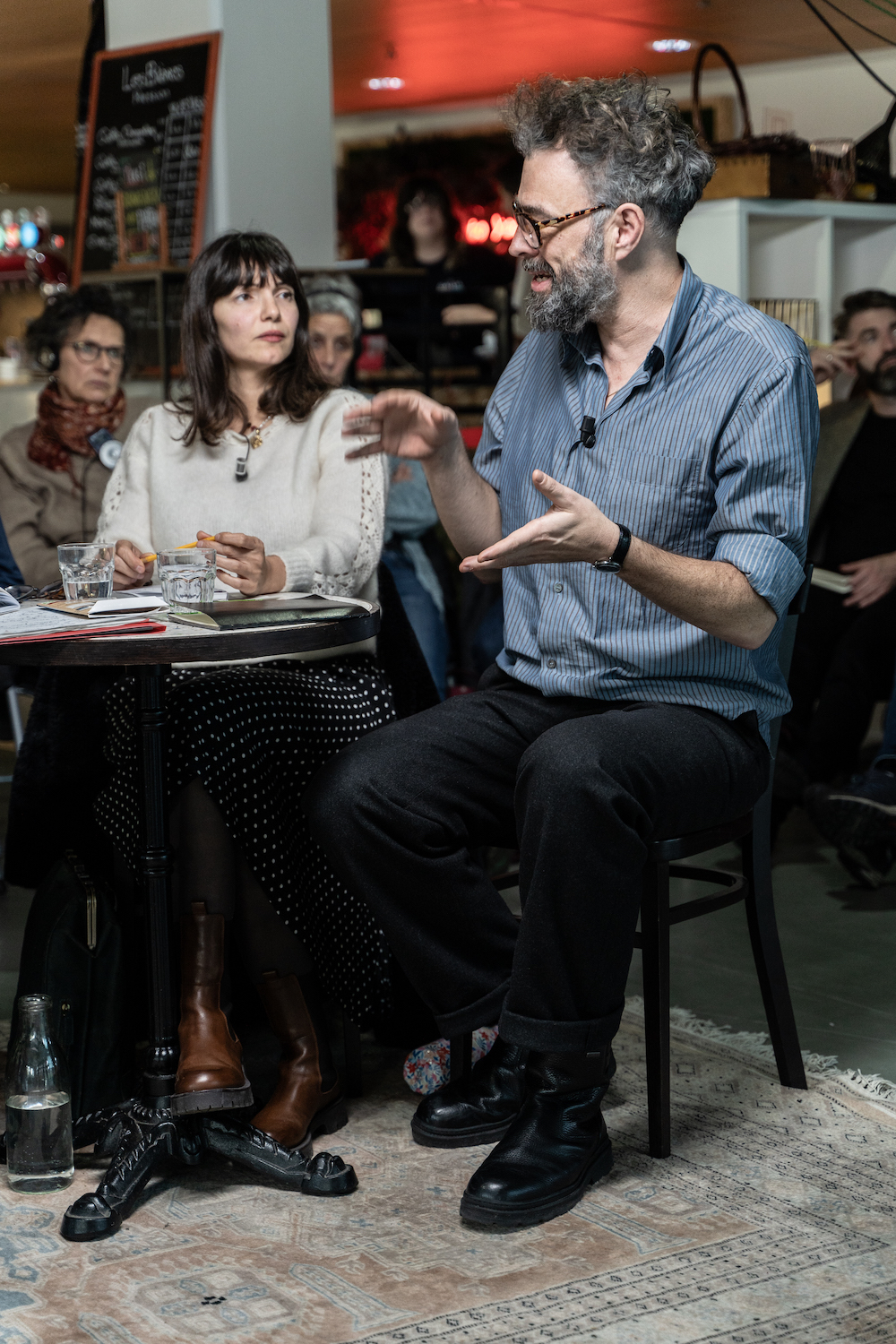
« At some point, you have to let go… But before that, I also feel you’re building little rivers where you can then flow. »
Letting go.
For me, as a writer, you have to be in a flow. I mean, at some point, you have to let go. And you have to give yourself to the universe. And you have to be in a connection. And then you are just like a helpless little thing that just gets thoughts. But before that, I also feel you’re building little rivers where you can then flow. In the Bartleby thought, I prefer “Nurture” is in writing, very important because, of course, very much the first impulse of doing something is also really bad. It’s mainly also to decide: “oh, this comes from… I’ve seen this in other movies, or this is like a bad idea.” I feel very close to that thought of watching from above, but also being inside at the same time while writing.
How I have been taking care of myself? I have Ritalin, which is a good drug to focus. And apart from that, I would like joyfully and vehemently disagree to you, Samah, when you say that it costs a lot of energy to go into this meta perspective, if I understood you right, and that it’s a luxurious thing. I have the feeling I see it in every kind of culture: I see certain people who have this ability and or some have also learned it. I don’t think it’s effort.
Collective stories.
What I’m dreaming of is a structural way of storytelling that is not bound to the protagonist. I’ve been working and thinking on that for really decades. And it’s really hard to find a way to do that. What would be a collective way of storytelling? And I’m not speaking about telling a collective like, of a protagonist. I’m speaking about structurally changing the way of storytelling.
A story is an idea.
We have aesthetic artistic views on filmmaking and stories to solve this “identity politics problem”. Because bad storytelling exists, that shallows character. And there are some things where you need a very good idea to do that. Like if I would now do something, for example, like a Spike Lee movie where only whites would play the black characters in Queens, I would have to have a very good idea of it. But we can all feel that it feels wrong in an artistic sense. But for example, we did a film about Stefan Zweig. My grandfather was SS. I’m not Jewish. My wife is not Jewish. But I think we had a really good idea about what is exile and what does it mean. We were telling a story about Europe, but it was set in South America… I think we had a good idea about it. It was a specific idea about this character. Then you can tell, as a grandchild of an SS officer, you can tell a story about a Jewish refugee. But you need a good idea, I think.
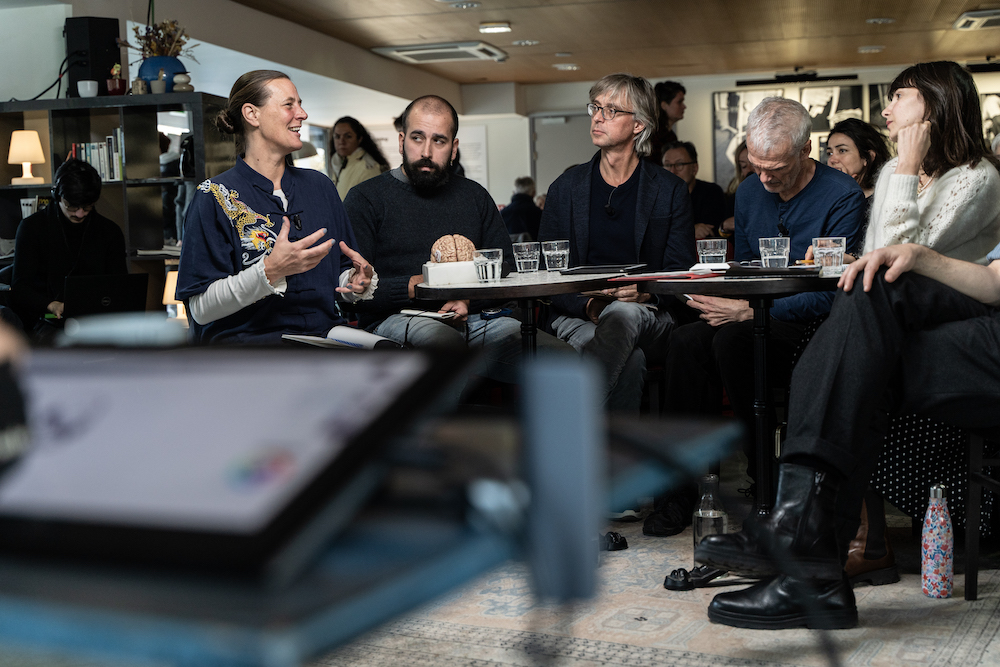
« Attention is a primary vehicle for how we experience the world. »
Unlearn to open the story.
I think the phrase that comes to my mind is unlearning. And that doesn’t mean throwing learning out, but it’s recognising that in that learning journey from these big wide-open eyes of a child funnelled into society, status, education, career, expertise, tribe, there’s a narrowing and that makes things more efficient. It allows us to take advantage of automaticity.
But maybe we reach a certain time in our lives when we realise that unlearning is going to bear more fruit. And this is perhaps when my approach is mindfulness based on ways of trying to open up the thinking, to enrich the memory banks with kind of new information and to maintain an awareness of more than just what’s on my mind. The brain is really awesome and is helping us to maintain relatively upright posture. But anybody who’s worked at a computer for a long time, the posture will go like this and then it’s like, OK, “how can I maintain that awareness of my body, keep that bodily information flowing into my brain, allow my decision making and creative process to draw on all sources of information?”
Take unmarked paths.
For me, what’s been really helpful is really keeping an eye out for the “I know” mental monkey. The minute I think I know, it’s not to dismiss the things I know, but it’s to then know that that’s a moment to just be careful. Because there’s a neural pathway that’s getting ready to fire that is smooth and deep and easy. It’s like being on the auto ban. And actually, there might be something more fruitful if I get my machete and I go this path, that isn’t well trodden.
We’re not even aware that we’re thinking, we’re just kind of in a thinking process. Then we have this opportunity to create the dyad of subject and object. So, it’s like, “oh, here is a thought”. And here is something that knows its thinking: homo sapiens sapiens. And what you’ve now got is a relationship and you’ve got options. But if I think about techniques like CBT: CBT then says, get back in there. But I want you to figure out why this thought is wrong. And I want you to be like a legal person and say, “no, that’s not right. No, that’s not.” It’s a bit hardcore. I’m exaggerating. It is Cognitive behavioural therapy.
Restructuring thoughts with a kind of arguing method. Versus in a more mindful, compassionate mode. Yes, there’s the effort of being aware of the thoughts. But we’re alert but relaxed. Not alert alert. Alert relaxed. And we say, “wow, look at that mind go. Isn’t that interesting?”
Self-abandonment in the narrative.
In terms of the energy, this idea that, “it’s a luxury to be able to train your brain…” : if I want my mind to be alert, relaxed, I make my body alert, relaxed. I get that we’ve got various ways of training in mindfulness. But my own kind of unique variant of that is we do it every day, we do it in every movement. Bruce Lee style, picking up the shopping, putting on a jacket, hashtag no cushion. We can do it in ways that are accessible to everybody, even a busy working mum or a health professional or someone in a psychotic break like.
I’ll say one more comment about the energy and I’ll draw maybe now more from a martial arts perspective. Yann was talking about that moment when you kind of surrender to the universe. And I suppose in martial arts and particularly in Qigong, which is the more healing, energetic aspects of martial arts, we talk about two different kinds of chi. If you’re going to a Qigong master, there’ll be one kind of Qigong master who is using their own chi to heal. There’s another kind of master that it’s almost like channelling. They remove themselves from the equation. They remove their egoic self from the equation in order to open to what they would call the universal chi. And at that point, the cosmos is doing the healing and the human is merely a vehicle. So maybe the inquiry is what is the role of surrender? What is the role of surrendering?
Better know myself to connect with the other.
My experience of practicing mindfulness, how does it benefit, I think will meet and will join because how it’s helped me is in human connection and presence and relationship and deepening those micro moments of connecting to a bus driver or a shopkeeper or a family member or a patient. And the kind of resilience and the robustness that has come from, getting to know my own emotional reactions, does increase sensitivity to what others are experiencing. And certainly, in mindfulness, the whole theory of that is turning towards that which is unbearable. It provides us with that capacity to actually really look at what is difficult, done well, done with supervision and guidance from a more senior person, but it’s that ability to stay with the terror, the pain, what somebody else might be sharing and then from there, who knows, but there’s at least possibility for dialogue sharing, problem solving, storytelling or whatever wants to come next.
Pay attention to experience the world.
What I would suggest is explore how your character might be different depending on their capacity to pay attention.
My mind went to attention deficit problems and you know, absolutely people with ADHD experience and interact with the world, learning, relationships, emotions in a different way from people who have a kind of normalized attention network. And I believe this is an important question for our time because there has been a tsunami of ADHD diagnoses, some of which may or may not be related to digital natives and the use of the technology that we have. My belief is that that attention is a primary vehicle for how we experience the world and therefore we must really honour it and value it and not give it to our devices and let people market it and make money from it. This is our most last precious gift that we have for our children. High quality, present moment, non-judgmental attention that ultimately has care as its core foundation. I just felt quite strongly to say that.
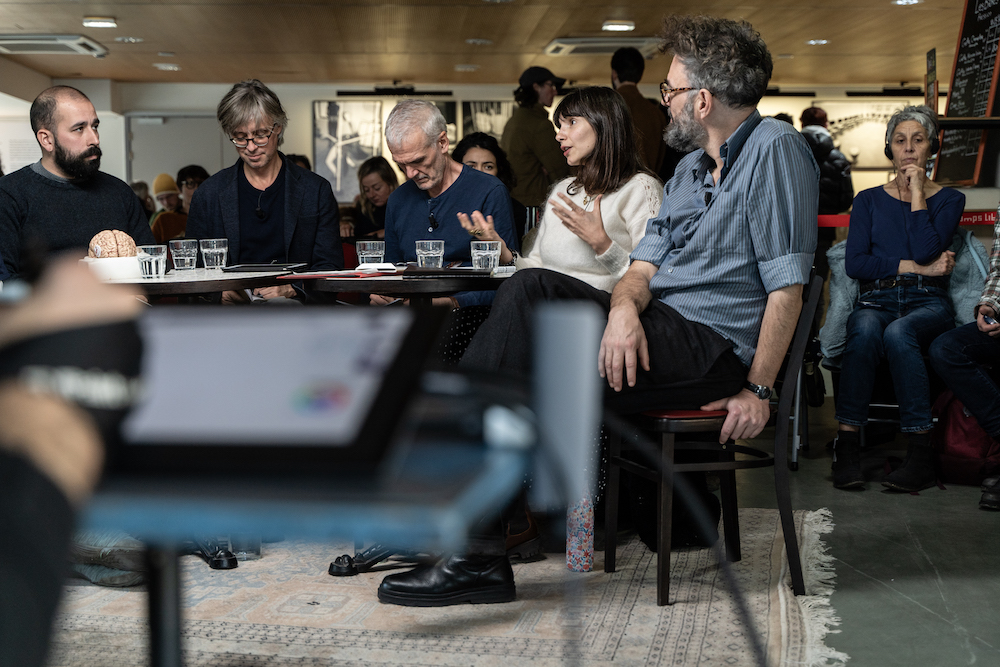
« Osteopathy has a lot of similarities with the martial arts, with the foot pressure, the feeling of your balance, your own balance in order to feel the patient’s balance: if you’re like this, you will not have the same availability of reception to your sensations. »
Experience to feel.
So, first of all, the main difficulty for me is to deal with my own perceptions of what the patient is telling of what I’m feeling because I’m working with my hands. It’s highly subjective ground. And I always have to go back and forth between what do I really feel, is it something that I want to feel or is it something that I really feel? And is this perception different from what the patient is experiencing? And it’s mainly about the main factor that we deal with is pain. And we have a lot of scales in order to graduate the pain and in order to kind of make it easy for us to identify which disease or which trauma can cause pain. And it’s mostly now about the suffering, the experience that the patient has.
And it’s sometimes difficult for us to have that kind of subjectivity towards what the patient is feeling. And I also sometimes feel that when I’m in pain, I’m far better to understand the patient pain. And when it’s been a long time that I don’t have any pain, it’s quite harder for me to see what the pain is doing to the patient. Why is he suffering from something that I would judge as not really important? And I lately spoke with my wife about it because she’s a midwife. And she said to me that she was speaking with a lot of her colleagues and that the fact that her colleagues had given birth completely changed their way of taking care of the patient. Because they had to be in the opposite situation and to experience it, it’s far easier to deal with my empathy and to quite understand what the patient is having.
About empathy, I’ve always told myself it’s a question that I have, I don’t know if you could answer it. My thinking is that sometimes when the patient is feeling pain or having a problem, it’s more that I’m trying to help myself, helping him. And it’s me that I try to comfort and to ease when I’m trying to ease the patient’s pain. And I don’t know if empathy is like a selfishness, which is something that would be quite hard for me to progress, but I can deal with it. Or if it’s really something that I’m trying to do to the patient that, yes, has the effect of helping me also.
Share, in duet, to heal.
I have to put my perceptions into the patient perspectives. I have to feel the things with the patient in order to make them also realize that maybe there’s something wrong there. And the interesting thing is that sometimes when we touch the body, when touching a zone, a certain area, the patient starts to talk about that zone which is a thing that he didn’t do during the interrogation part of the consultation. He wasn’t aware of it. And just by touching it, I don’t know if it’s that the patient starts to put his attention to the zone and starts remembering things and talking about it. But it’s always a mutual flow that we have to have in these relations. For example, with the sound of the voice, I sometimes see that I’m speaking a bit lower, a bit deeper. And the patient starts to ease and the movements come more fluid. And it’s really a two-work thing. Two people work thing.
There’s a lot of similarities with the martial arts, with the foot pressure, the feeling of your balance, your own balance in order to feel the patient’s balance. Because if you’re like this, you will not have the same availability of reception to your sensations. I’d say it’s going deeper in the body in terms of perception, but also to get away in terms of intellectual process and to just become the feeling and the sensation. Just no ideas, no “What am I going to eat this evening? My fridge is empty?” or all the kind of things that my mind does when I’m a bit tired. And just to be focused on the task.
© Photos Brigitte Bouillot
Hosted on Acast. See acast.com/privacy for more information.
]]>— conference recorded at Les Champs Libres (Rennes) in December 2023 in the framework of the series “What stories for our time?”, moderated by Yann Apperry – Screenwriter, Playwright and Novelist – and Nicolás Buenaventura – Writer-director and Storyteller.
Neuroscience sheds new light on the myth of Creative Genius.
Would we all be able to create streams of imaginary worlds and wild stories?
With Jan Schomburg – Screenwriter & Director (Germany), Samah Karaki – Neuroscience researcher (Lebanon & France) and Tamara Russell – Neuroscience researcher and Martial Arts specialist (UK) as well as Thomas Roze (France) – Osteopath and witness of this round-table.
« And then the inspiration would come from the default network of the brain that actually stored all this, this salad of experiences. And instead of searching, it’s a cooking recipe. »
Automate to free us.
Right now, we are all doing lots of physiological mechanisms in a very automatic way.
You’re not aware that you’re breathing. Actually, you’re surviving each other second. You’re about to die, and then you breathe, and you’re alive again.
And you’re doing this because you are kind of relying on this autonomous nervous system that is telling you, I’m taking care of digesting your food and maintaining your body temperature and fighting any stranger germ coming into your body so that you can listen to these people talking, right? You are available to do something else. Your executive system is not aware, not preoccupied by all of these issues, right? So, what’s amazing in our brain that not only our survival issues are automatic, but also everything that you’ve been through.
The language I’m using, I’m not born speaking English and so, at some point, I had to automatize this language so that I can go beyond the symbols and bring meaning to what I’m saying. The way we walk, the way we sit, everything you’re doing right now is actually… you’re not processing this actively. We need to be first grateful to have a system that is allowing us to be available to do something else.
Accept the ambiguity and uncertainty of the world.
We rely on this automatic system because we don’t have enough energy to process the world every time we look at it. But bias is actually when this system fails.
For example, we’ve been a few hours together, but I already judged you based on my automatic cultural, social experience, past experiences of people that look like you, that behave like you, right? I need sometimes to say actually, “I don’t know you”. And I know that I’m having this because I’m having this judgment automatically. But I need also to accept that you are an ambiguous object. But it’s not OK for me to accept this for everybody here because it’s such a cognitive load to accept the ambiguity of the world and the uncertainty of the world.
I don’t want to sound like other neuroscientists asking people to have critical thinking and to always think against ourselves with this metacognitive issue. Because we don’t have enough energy for that. But if I want to delve into a creative process, then I must be doing what you talked about, Jan. I need to fight against my urge to describe the world the way I see it. It’s actually to forget about myself, which is kind of impossible, but we tend towards this. And maybe a trick that we can use is instead of me doing this work alone, is to question you, who you are. And that’s how it becomes collective narrative creating. Because I am actually accepting to hear your perspective and to give it the same exact place I give it to my interpretation of what you are. And also, another trick would be to share experiences because the more experiences we share, the richer my interpretation of who you are becomes.
Maximize collective intelligence.
But let’s say I belong to a school of thought that would defend another way of dealing with ourselves and would consider that we don’t have as much willpower as we think we do, that we don’t have any. That actually we are determined by our past experiences. But actually, this metacognitive, this you know me, looking at myself, I believe it’s more efficient when it’s done by others, when I’m allowing others to let them show me how they see what I’m looking at.
I believe also mental health is an issue of the quality of interactions we have with others. But also, our self-discourse and our sense of who we are and why we are doing the things we are doing them. How can we create default environments where actually what I’m seeing is complex, where I am facing the limits that I have in my perceptions with the complexity of the perceptions of others? If I think, for example, education.
Education that is based on willpower, on the illusion of willpower. And that’s why is it interesting to fight for social mixity? It’s because when I’m actually experiencing learning with others, I am kind of unconsciously, in very implicit ways, learning that the word is complex, when we speak different languages. We are not saying, oh, this could be called “cup” and “kub” (كوب) and “verre”. I just know it’s that truth can be called differently. I think that we should reflect on environments and social connections to develop critical thinking instead of relying on the individual efforts. Something that I guess we can connect to what Yann was talking about. I guess there are some collective intelligences.
Questioning racial biases and prejudices.
Let’s discover our racial biases and prejudices. Well, you can say, “yeah, I just had a racist thought.” You’re not going to change it. You don’t have the ability to go inside your habit system and say, “I’m not going to smoke anymore. I’m going to meditate. I’m going to do sports in the morning.” But your brain says, I like those ideas, but we don’t have energy to change that. But when does it become interesting? When we are actually faced with the diversity of others because my friends are diverse. Because the people I love are diverse. I don’t have even to question my biases. I’m actually building better automatisms. This is something that we reflect on collectively. How do we build districts? How do we reflect on the urban landscape? How do we imagine narratives that we share with others?
And this is maybe the responsibility of when we write. It’s about making it possible to show the complexity of the reasons why people do what they do. And I’ve read this sentence lately. Sarah Schulman, she’s a writer called “Conflict is Not Abuse”, which is like an amazing book about empathy and about understanding that people, even when they seem monsters to us, well they are not sleeping at night saying, “I’m a bastard”. They’re also sleeping saying, “I’ve done the best that I can do.” And to really acknowledge that people always have very good reasons to believe what they believe in and to behave the way they believe.
The free desire.
Like the neuroscience field already have positions regarding this idea of willpower and free will, showing from a neuro-scientific perspective meaning experiments done in a laboratory that are not close to being as complex as what we actually experience as decision making in our actual life. But it shows that even when we believe that I decided to say something or to behave or to move my hands, the brain already processed this information and took the decision in a very implicit way based on my past experience again and not my ancestors guiding me or whatever It’s based on my past.
I’m determined by my past experiences. And what comes after is my consciousness rationalizing the decision that I’ve taken. But then again, this is the context of the laboratory experiments. It’s not as complex. We talk about free want and not free will because I can observe myself on the verge of saying something that I refuse to say. My seven-year-old kid, sometimes he wants to say a big world and then he stops himself. So, he’s doing this free want. But we have to remember that this is costly, it takes energy. We can experience it from time to time. We all experience some kind of willpower against ourselves. But we don’t have to fall into the illusion that this work is continuous. And it’s a luxurious work. It’s something that takes lots of energy and lots of willing to accept that we’re wrong, which is again something because we are more attached to the feeling of coherence.
And that’s why, by the way, algorithms of social media are built. Are built the way to nourish these needs by creating the filter bubbles where you will actually only need the information that you already agreed on because we don’t want you to spend a bad time looking at your social media wall. I’m going to make you see what you already know and like. And that’s how we end up saying, “I don’t understand people who…” Right? It’s because you believe that they have willpower to decide on their decisions and actions again. And they are actually living in the same nature of this bubble that completely confirms what they have already as ideas and perceptions.
Caring for yourself to open up to others?
Effort can come with pleasure too. If you look at kids playing, sometimes I fetch my son at six, he says I’m too tired to go do some grocery shopping. But then if you go to the park, then he’s going to play for two hours and he’s going to sweat. So, it means that your abilities are kind of adapted to the level of difficulty of the task you’re doing.
But this is when you’ll be in this flow state where you finish your session of writing and you sleep like a baby. But then there’s something pleasurable that comes with it. And I hope that every one of you and myself experience that flow from time to time. It’s like kind of orgasmic states where we’re doing. It’s not comfort zone, but it comes with other also conditions.
When we analyse, what does it actually do in real life? All the work we do on ourselves in our individual sphere: if we look at the percentage of implication and engagement of these exact people, in the actual things happening to others, we see that the more you work on it in your individual sphere, the less you care about actually what’s going on around you because it becomes too violent.
And if we look now, it’s like the personal development sphere is the one that is less vocal about wars and about adversity around the world, because they want to be shielded, because they’re too sensitive for that anymore. It’s also interesting to see in real life when I think beyond my body posture, is it making me actually less narcissistic?
Inspiration is a constant connection.
There is a very similar question that was addressed in a letter to Rainer Maria Rilke. He said, when I’m stuck, what should the character do or what description of his character would be? And Rilke said: well, just go and live. Live. Visit cities, fall in love, fall out of love. Get hurt, you know, like meet… Just forget about that and go and live and trust that your brain will do something about it. He didn’t say it this way, but this actually what happens is that you will not sit and say: “what would my character do?” Sometimes writers let us to believe that this is how they work. Maybe you will. Like Dostoevsky. But actually, Dostoevsky was a very social person. He was out there meeting people, discussing his characters, other people. And then the inspiration would come from the default network of the brain that actually stored all this, this salad of experiences. And instead of searching, it’s a cooking recipe. And you should see it with the spice or not.
Confront perceptions.
This is, I think, a question that is very relevant to the care sphere, but also to the journalism sphere, to politics and to storytelling. Do I have to feel the pain, to know the pain, in order to talk about this? And you know, in journalism, we call it the death-kilometre bias. I have more empathy to the people that I know, other people that look like me. So, it’s not subject. But the question is, this is also what led people to talk about male gaze. It’s that because women said, “no, no we do not comb our hair this way.” It’s because you do not feel not only my pain, but you don’t feel the way I deal with my body. The way you’re depicting it is through your own perception again. Then we can also talk about colonial gaze. I don’t know if you’ve seen “The Crown”, the last season of “The Crown”, with Arab people depicted in a very biased way: we’re simple people, we only want occidental people to like us. But you know, only Arab people actually said: “hey, why are we always painted this way?” And Asian people say the same about how they are depicted in a very biased and very simplistic way.
So, do you have to be Arabic and Asian in order for you to tell non-biased storytelling? Again, the question is, can I feel legitimate to describe or to talk about certain people’s pain or joys if I see them as a group, as dispositions and not as complex as I see myself and my own group? And my answer would be, again, go out there, meet these people, hire them to tell you what they think about your gaze. And this is where also collective storytelling becomes interesting. It’s because I do not live 400 years and I sleep a lot as a human being also. So actually, the time that I have left for me to understand and apprehend the complexity is very limited. So that’s why it’s interesting to actually open up to other people also sharing their gaze and to let people describe, since we have this empathy bias, let people validate that what you’re talking about is actually, this is how I feel.
Understand the complexity of each character.
There’s a trap storyteller can fall into. It’s because they want to include as many as diverse characters inside their storytelling that sometimes it becomes a caricature of what they want. So, talk about what you know. I prefer not to have a gay character or an Arab character or whatever, if you are not going to show this character in its complexity. There is this black friend always being there but not being the main character and always being kind and funny and, you know… the cliché. So, either staying and not making it an intention to create diverse storytelling when you’re not actually able to really apprehend this complexity.
« At some point, you have to let go… But before that, I also feel you’re building little rivers where you can then flow. »
Letting go.
For me, as a writer, you have to be in a flow. I mean, at some point, you have to let go. And you have to give yourself to the universe. And you have to be in a connection. And then you are just like a helpless little thing that just gets thoughts. But before that, I also feel you’re building little rivers where you can then flow. In the Bartleby thought, I prefer “Nurture” is in writing, very important because, of course, very much the first impulse of doing something is also really bad. It’s mainly also to decide: “oh, this comes from… I’ve seen this in other movies, or this is like a bad idea.” I feel very close to that thought of watching from above, but also being inside at the same time while writing.
How I have been taking care of myself? I have Ritalin, which is a good drug to focus. And apart from that, I would like joyfully and vehemently disagree to you, Samah, when you say that it costs a lot of energy to go into this meta perspective, if I understood you right, and that it’s a luxurious thing. I have the feeling I see it in every kind of culture: I see certain people who have this ability and or some have also learned it. I don’t think it’s effort.
Collective stories.
What I’m dreaming of is a structural way of storytelling that is not bound to the protagonist. I’ve been working and thinking on that for really decades. And it’s really hard to find a way to do that. What would be a collective way of storytelling? And I’m not speaking about telling a collective like, of a protagonist. I’m speaking about structurally changing the way of storytelling.
A story is an idea.
We have aesthetic artistic views on filmmaking and stories to solve this “identity politics problem”. Because bad storytelling exists, that shallows character. And there are some things where you need a very good idea to do that. Like if I would now do something, for example, like a Spike Lee movie where only whites would play the black characters in Queens, I would have to have a very good idea of it. But we can all feel that it feels wrong in an artistic sense. But for example, we did a film about Stefan Zweig. My grandfather was SS. I’m not Jewish. My wife is not Jewish. But I think we had a really good idea about what is exile and what does it mean. We were telling a story about Europe, but it was set in South America… I think we had a good idea about it. It was a specific idea about this character. Then you can tell, as a grandchild of an SS officer, you can tell a story about a Jewish refugee. But you need a good idea, I think.
« Attention is a primary vehicle for how we experience the world. »
Unlearn to open the story.
I think the phrase that comes to my mind is unlearning. And that doesn’t mean throwing learning out, but it’s recognising that in that learning journey from these big wide-open eyes of a child funnelled into society, status, education, career, expertise, tribe, there’s a narrowing and that makes things more efficient. It allows us to take advantage of automaticity.
But maybe we reach a certain time in our lives when we realise that unlearning is going to bear more fruit. And this is perhaps when my approach is mindfulness based on ways of trying to open up the thinking, to enrich the memory banks with kind of new information and to maintain an awareness of more than just what’s on my mind. The brain is really awesome and is helping us to maintain relatively upright posture. But anybody who’s worked at a computer for a long time, the posture will go like this and then it’s like, OK, “how can I maintain that awareness of my body, keep that bodily information flowing into my brain, allow my decision making and creative process to draw on all sources of information?”
Take unmarked paths.
For me, what’s been really helpful is really keeping an eye out for the “I know” mental monkey. The minute I think I know, it’s not to dismiss the things I know, but it’s to then know that that’s a moment to just be careful. Because there’s a neural pathway that’s getting ready to fire that is smooth and deep and easy. It’s like being on the auto ban. And actually, there might be something more fruitful if I get my machete and I go this path, that isn’t well trodden.
We’re not even aware that we’re thinking, we’re just kind of in a thinking process. Then we have this opportunity to create the dyad of subject and object. So, it’s like, “oh, here is a thought”. And here is something that knows its thinking: homo sapiens sapiens. And what you’ve now got is a relationship and you’ve got options. But if I think about techniques like CBT: CBT then says, get back in there. But I want you to figure out why this thought is wrong. And I want you to be like a legal person and say, “no, that’s not right. No, that’s not.” It’s a bit hardcore. I’m exaggerating. It is Cognitive behavioural therapy.
Restructuring thoughts with a kind of arguing method. Versus in a more mindful, compassionate mode. Yes, there’s the effort of being aware of the thoughts. But we’re alert but relaxed. Not alert alert. Alert relaxed. And we say, “wow, look at that mind go. Isn’t that interesting?”
Self-abandonment in the narrative.
In terms of the energy, this idea that, “it’s a luxury to be able to train your brain…” : if I want my mind to be alert, relaxed, I make my body alert, relaxed. I get that we’ve got various ways of training in mindfulness. But my own kind of unique variant of that is we do it every day, we do it in every movement. Bruce Lee style, picking up the shopping, putting on a jacket, hashtag no cushion. We can do it in ways that are accessible to everybody, even a busy working mum or a health professional or someone in a psychotic break like.
I’ll say one more comment about the energy and I’ll draw maybe now more from a martial arts perspective. Yann was talking about that moment when you kind of surrender to the universe. And I suppose in martial arts and particularly in Qigong, which is the more healing, energetic aspects of martial arts, we talk about two different kinds of chi. If you’re going to a Qigong master, there’ll be one kind of Qigong master who is using their own chi to heal. There’s another kind of master that it’s almost like channelling. They remove themselves from the equation. They remove their egoic self from the equation in order to open to what they would call the universal chi. And at that point, the cosmos is doing the healing and the human is merely a vehicle. So maybe the inquiry is what is the role of surrender? What is the role of surrendering?
Better know myself to connect with the other.
My experience of practicing mindfulness, how does it benefit, I think will meet and will join because how it’s helped me is in human connection and presence and relationship and deepening those micro moments of connecting to a bus driver or a shopkeeper or a family member or a patient. And the kind of resilience and the robustness that has come from, getting to know my own emotional reactions, does increase sensitivity to what others are experiencing. And certainly, in mindfulness, the whole theory of that is turning towards that which is unbearable. It provides us with that capacity to actually really look at what is difficult, done well, done with supervision and guidance from a more senior person, but it’s that ability to stay with the terror, the pain, what somebody else might be sharing and then from there, who knows, but there’s at least possibility for dialogue sharing, problem solving, storytelling or whatever wants to come next.
Pay attention to experience the world.
What I would suggest is explore how your character might be different depending on their capacity to pay attention.
My mind went to attention deficit problems and you know, absolutely people with ADHD experience and interact with the world, learning, relationships, emotions in a different way from people who have a kind of normalized attention network. And I believe this is an important question for our time because there has been a tsunami of ADHD diagnoses, some of which may or may not be related to digital natives and the use of the technology that we have. My belief is that that attention is a primary vehicle for how we experience the world and therefore we must really honour it and value it and not give it to our devices and let people market it and make money from it. This is our most last precious gift that we have for our children. High quality, present moment, non-judgmental attention that ultimately has care as its core foundation. I just felt quite strongly to say that.
« Osteopathy has a lot of similarities with the martial arts, with the foot pressure, the feeling of your balance, your own balance in order to feel the patient’s balance: if you’re like this, you will not have the same availability of reception to your sensations. »
Experience to feel.
So, first of all, the main difficulty for me is to deal with my own perceptions of what the patient is telling of what I’m feeling because I’m working with my hands. It’s highly subjective ground. And I always have to go back and forth between what do I really feel, is it something that I want to feel or is it something that I really feel? And is this perception different from what the patient is experiencing? And it’s mainly about the main factor that we deal with is pain. And we have a lot of scales in order to graduate the pain and in order to kind of make it easy for us to identify which disease or which trauma can cause pain. And it’s mostly now about the suffering, the experience that the patient has.
And it’s sometimes difficult for us to have that kind of subjectivity towards what the patient is feeling. And I also sometimes feel that when I’m in pain, I’m far better to understand the patient pain. And when it’s been a long time that I don’t have any pain, it’s quite harder for me to see what the pain is doing to the patient. Why is he suffering from something that I would judge as not really important? And I lately spoke with my wife about it because she’s a midwife. And she said to me that she was speaking with a lot of her colleagues and that the fact that her colleagues had given birth completely changed their way of taking care of the patient. Because they had to be in the opposite situation and to experience it, it’s far easier to deal with my empathy and to quite understand what the patient is having.
About empathy, I’ve always told myself it’s a question that I have, I don’t know if you could answer it. My thinking is that sometimes when the patient is feeling pain or having a problem, it’s more that I’m trying to help myself, helping him. And it’s me that I try to comfort and to ease when I’m trying to ease the patient’s pain. And I don’t know if empathy is like a selfishness, which is something that would be quite hard for me to progress, but I can deal with it. Or if it’s really something that I’m trying to do to the patient that, yes, has the effect of helping me also.
Share, in duet, to heal.
I have to put my perceptions into the patient perspectives. I have to feel the things with the patient in order to make them also realize that maybe there’s something wrong there. And the interesting thing is that sometimes when we touch the body, when touching a zone, a certain area, the patient starts to talk about that zone which is a thing that he didn’t do during the interrogation part of the consultation. He wasn’t aware of it. And just by touching it, I don’t know if it’s that the patient starts to put his attention to the zone and starts remembering things and talking about it. But it’s always a mutual flow that we have to have in these relations. For example, with the sound of the voice, I sometimes see that I’m speaking a bit lower, a bit deeper. And the patient starts to ease and the movements come more fluid. And it’s really a two-work thing. Two people work thing.
There’s a lot of similarities with the martial arts, with the foot pressure, the feeling of your balance, your own balance in order to feel the patient’s balance. Because if you’re like this, you will not have the same availability of reception to your sensations. I’d say it’s going deeper in the body in terms of perception, but also to get away in terms of intellectual process and to just become the feeling and the sensation. Just no ideas, no “What am I going to eat this evening? My fridge is empty?” or all the kind of things that my mind does when I’m a bit tired. And just to be focused on the task.
© Photos Brigitte Bouillot
Hosted on Acast. See acast.com/privacy for more information.
]]>Bohdan Piasecki est poète, né en Pologne, vivant aujourd’hui à Birmingham. Interprète engagé, il a transporté ses poèmes depuis la salle à l’étage d’un pub d’Eastbourne jusqu’à la scène principale du Birmingham Repertory Theatre, des clubs underground de Tokyo aux tramways de Paris, d’une librairie de Pékin à un aérodrome en Allemagne, de podcasts de niche à la radio BBC. Il apprécie autant le chaos créatif des grands festivals que la concentration composée d’événements littéraires. Bohdan Piasecki a reçu le Forward Prize du meilleur poème unique : interprété en 2023, année inaugurale de la catégorie.
Bohdan Piasecki a fondé le premier slam de poésie en Pologne avant de déménager au Royaume-Uni pour obtenir un doctorat en traduction. Il a travaillé en tant que directeur de l’éducation, dans le cadre d’un cours de maîtrise en création orale en éducation à la Goldsmiths University et a été producteur des Midlands pour Apples and Snakes entre 2010 et 2017. Il est professeur adjoint en écriture créative à l’Université de Birmingham. Il travaille également comme producteur créatif et siège au conseil d’administration du Poetry Translation Center.
— un entretien réalisé par Antoine Le Bos, scénariste et directeur artistique du Groupe Ouest et enregistré aux Champs Libres (Rennes), en décembre 2023, dans le cadre de la saison 04 du StoryTANK : « Quelles histoires pour notre temps ? ».
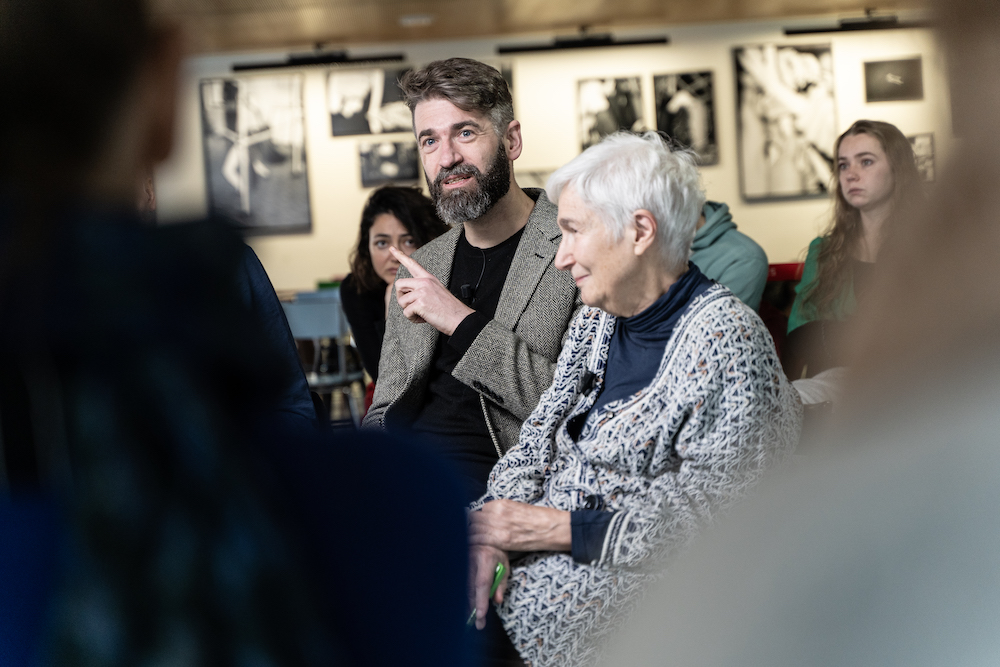
« Les traditions de narration orale nous apprennent à retenir l’attention, à identifier quelles formes fonctionnent. »
Le récit, entre les langues.
Je suis poète et je pratique également d’autres types d’écritures autour de/ou qui découlent de la poésie. Je suis un poète qui a toujours vécu entre les langues car je suis né en Pologne et j’y ai grandi. Mais je suis allé dans une école française et j’ai étudié la littérature anglaise. J’écris beaucoup pour la voix, pour la performance où les poèmes sont destinés à être entendus, même si j’écris aussi pour des poèmes qui seront lus. Et parce que je passe beaucoup de temps à parler aux gens, certaines des traditions dont je me suis inspiré étaient des traditions de narration orale. Là où l’on apprend à retenir l’attention, à identifier quelles formes fonctionnent. Les poèmes peuvent cependant parfois également être des histoires et parfois ne pas s’appuyer sur la narration.
« Même les poèmes – qui, comme je l’indiquais, ne s’appuient pas sur des récits – suivent un arc qui n’est pas différent de ce que l’on pourrait attendre d’une histoire. »
Le récit : une expérience absolue.
Je me considère comme un conteur et un poète. La poésie est complexe, elle peut se rapprocher de la définition du récit que nous pourrions tous adopter, à savoir que le poème raconte un récit. Sans forcément suivre le modèle standard, mais l’histoire déployée reste viable. D’ailleurs, même les poèmes – qui, comme je l’indiquais, ne s’appuient pas sur des récits – suivent un arc qui n’est pas différent de ce que l’on pourrait attendre d’une histoire. Dans la performance, un groupe est réuni dans une pièce, prêt à vivre une expérience. Un lien s’établit, des réactions sont stimulées, d’une manière très similaire à ce moment précis où sont racontées des histoires. Or, la proposition, qu’elle soit une séquence d’images ou autres, peut ne pas avoir d’interactions avec & sur ce groupe. Le lien n’est pas aussi facile que celui créé par la narration d’une histoire. L’ambition de la performance est de faire vivre une expérience similaire. Je dirais, donc, que oui : je raconte des histoires.
« Certaines pratiques poétiques peuvent être utiles dans l’exploration du récit. »
L’utilisation de la métaphore.
Un exemple que je pourrais vous donner, d’un outil très utilisé en poésie et qui peut être utilisé à des fins de découverte est l’utilisation de la métaphore, qui est courante dans toute histoire. Le langage est fait de métaphores. Mais ce à quoi nous nous attendons, souvent, lorsque nous parlons de métaphore dans l’écriture, est que l’écrivain propose une image intelligente qui nous raconte quelque chose de nouveau, qui rend un moment particulier : mémorable. Quel est son impact dans l’esprit du lecteur, du spectateur : sont-ils conviés ou même forcés à être actifs ? En découvrant quels sont les liens possibles entre l’objet et la chose, objet de la comparaison. Chacun trouvera des correspondances différentes. Si c’est une bonne métaphore : elle ouvre un espace où ils peuvent être actifs et créer du sens, de la beauté ou même créer un récit additionnel à celui initié. À l’inverse, quand on débute un travail sur un scénario, on débute la découverte des personnages et le monde dans lequel ils évoluent.
À ce moment précis : je peux tromper votre cerveau pour stimuler les définitions essentielles du récit : si je vous donne une métaphore forcée, pour que vous connaissiez un peu plus une de votre personnage, je peux prendre un objet au hasard – je ne sais pas : un vélo ! – et vous dire que votre personnage est comme un vélo. Votre cerveau, en raison de son fonctionnement et de la façon dont il cherche à donner un sens au monde, va immédiatement essayer de trouver des points de connexion : « Eh bien, mon personnage me transporte quelque part, mais je dois faire un effort pour y arriver. Ce n’est pas aussi rapide qu’une voiture, il me montrera quelque chose sur le monde. » Il s’agit d’un petit exemple très spécifique mais certaines pratiques poétiques peuvent être utiles dans l’exploration du récit. Je pense, souvent, qu’il est plus facile d’écrire de la poésie de manière exploratoire. J’écris souvent pour savoir ce que je veux écrire et que la liberté peut aussi être un outil utile.
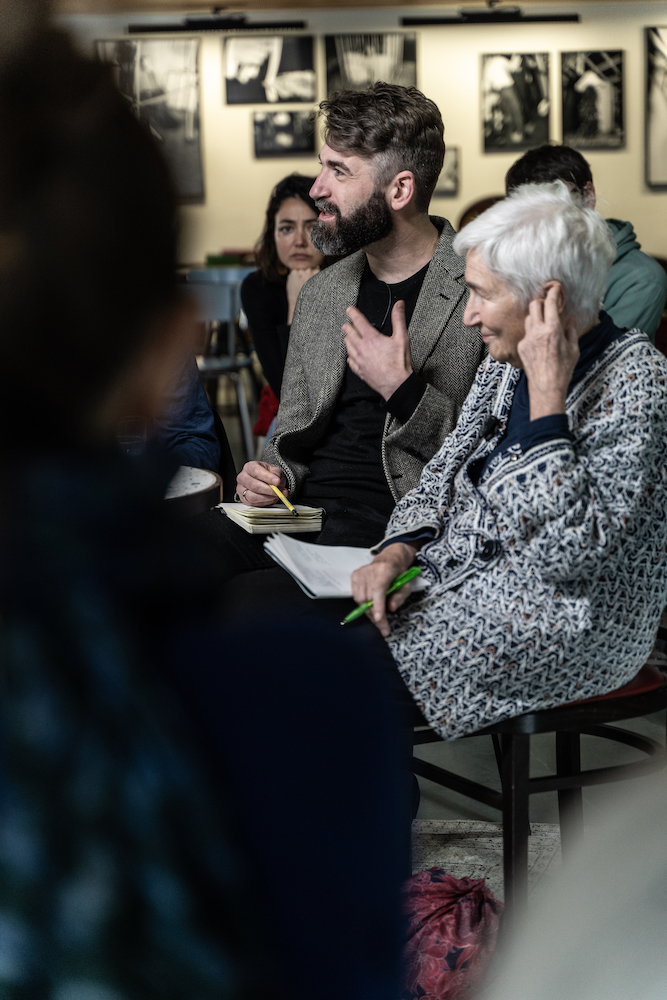
« La pensée et l’écriture poétique peuvent être des points de départ fantastiques pour les scénaristes. »
L’approche poétique pour libérer le récit.
La pensée et l’écriture poétique peuvent être des points de départ fantastiques pour les scénaristes, dans le cadre du développement d’un récit. L’approche poétique est libératrice en permettant – pour les scénaristes – de bousculer les habitudes créatives, en décalant la façon dont il est habitué à utiliser les mots. La démarche poétique modifie la perception sur notre propre monde, celui du récit que l’on a créé et les éléments qui lui sont constitutifs : le subvertir, le rendre étrange, en attribuant des valeurs différentes aux mots, en les séquençant d’une manière qui n’a rien à voir avec la structure de l’histoire initiée ou habituelle…
« L’approche poétique est un outil qui permettra de garder les options du récit ouvertes plus longtemps. »
La multiplicité de la poésie pour la pluralité du récit.
La poésie se déploie à travers sa multiplicité : la pluralité des sens que les lecteur·trice·s apportent à leur lecture.
Les poèmes trop normatifs, clairs sont moins passionnants parce qu’ils se rapprochent d’autres modes de discours plus classiques car déclaratifs.
En demandant de penser de manière poétique – dès le début du processus créatif : on apporte un outil qui permettra de garder les options du récit ouvertes plus longtemps, explorer idées, solutions et les articuler sans contrainte, sans jamais entrer dans ce tunnel, dont il est très difficile de sortir.
« S’ouvrir et être accompagné par les images, par le dialogue permettent de comprendre ce que l’histoire veut être, ce que le personnage peut être, de nommer ce qui est compliqué à expliciter. »
Avant la composition du récit : l’exploration du monde.
J’utilise également souvent des images – à travers des photographies par exemple – comme points de départ d’accompagnement à la découverte d’un au-delà : de l’intrigue, du personnage, au-delà du dialogue. Avant la composition du récit : l’exploration visuelle du monde avec la signification multiple d’une chose. S’ouvrir et être accompagné par les images, par le dialogue permettent de comprendre ce que l’histoire veut être, ce que le personnage peut être, de nommer ce qui est compliqué à expliciter.
C’est globalement, une question de confiance via l’ouverture aux autres, aux lecteur·trice·s, spectateur·trice·s pour encourager des pistes testées, ouvrir de nouvelles directions.
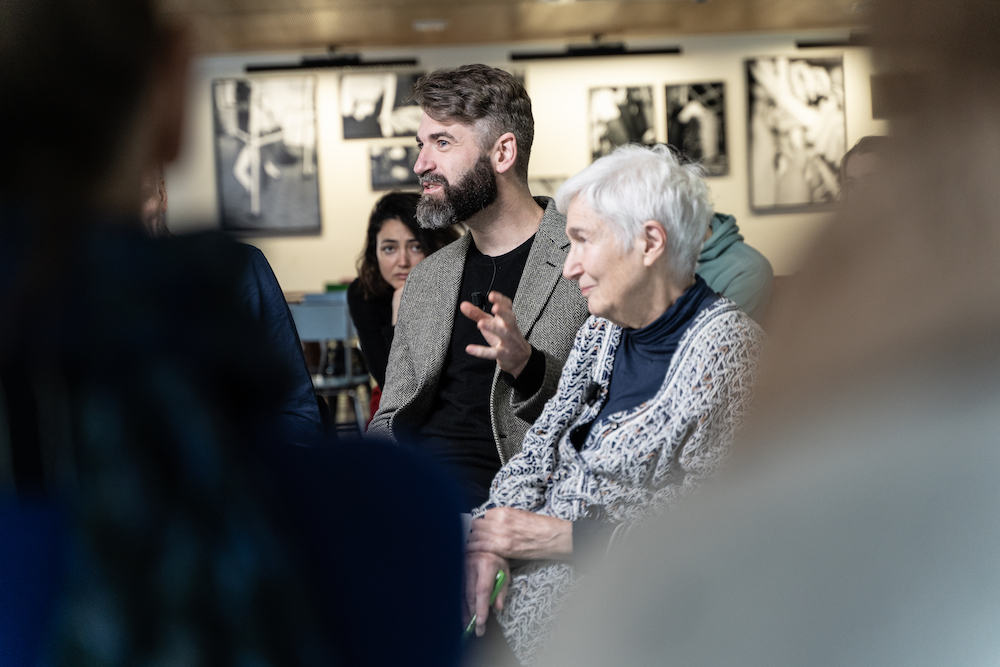
« Spontané, amusant et plaisir : un combo souvent sous-estimé dans le processus créatif. »
Nourrir le récit par l’improvisation, le jeu et le plaisir.
Au-delà de l’approche poétique pour approfondir différents processus de création et de décision, c’est l’apport d’outils additionnels comme la parole et la performance avec la force de l’improvisation. Or, la poésie intègre dans ses traditions les plus lointaines : la poésie improvisée qui est fascinante et peut s’apparenter à une logique de jeux. L’idée même de jouer est importante, encore une fois, pour aider à ne pas s’enfermer dans un ensemble de décisions et à garder les options ouvertes. On peut, bien entendu, jouer oralement, en utilisant particulièrement des contraintes de temps, avec des idées et des réponses immédiates pour une création donc instantanée, sur le moment. C’est à la fois spontané, amusant et source de plaisir. Un combo souvent sous-estimé dans le processus créatif. Dans le récit, demander aux scénaristes de jouer, de réagir rapidement, d’étudier des aspects du langage autres que le sens comme le son, le rythme : les situer et les diriger pour ouvrir les choses. Un exemple de jeu que j’utilise parfois, en groupes, consiste à inverser la règle standard de l’improvisation.
On y développe l’idée du “oui, et…” : construire une scène sans remettre en question ce que les autres construisent. Chacun apporte un élément supplémentaire, successif : le premier indique : « Nous sommes à l’hôpital » et le prochain ajoute « Oui, et je suis le médecin » et ainsi de suite. Il est agréable d’intervenir au moment où le récit se dotent d’histoires qui commencent à se cristalliser. Quelque part, il est demandé à l’autre de raconter l’histoire telle qu’elle existe déjà – mais elle a probablement encore beaucoup de questions à ouvrir – et le déroulement des histoires est fluide ou parfois, d’autres peuvent rejeter des éléments pré-établis avec le « Non, mais… ». Se réoriente alors le récit, dans des directions non anticipées-envisagées – en changeant soudainement de lieu ou en modifiant un point de décision clé ou en bouleversant ce qui pourrait devenir un point de l’intrigue, au fur et à mesure de son évolution.
« Tout est muable dans le récit ! »
Le laisser-aller pour débloquer le récit.
La clé du récit est est donc, ici, le jeu. Il est clair qu’aucun choix final ne peut être établi. Est mis en jeu tout ce qui a été défini dans le récit jusqu’à présent. Le jeu permet, pour les scénaristes, de moins apprécier le récit initié et développe un laisser-aller pour libérer l’imagination et analyser le récit, sous un angle différent. Le jeu permet de renforcer l’idée – parfois difficile à admettre, dans le processus de création – que tout peut encore être changé. Que tout est muable. Parfois, le récit peut donc se doter d’une version collective, étrange et bizarre vis-à-vis de ce qui avait été pré-établi. Ce qui était considéré comme axiomatique a été remis en question et le changement opéré a débloqué un élément en initiant une voie qui n’existait pas, préalablement.
« Décrire un film plutôt que de raconter une histoire : c’est ne pas être dans l’histoire. »
Ressentir le récit.
Lorsque je travaille avec des scénaristes, j’aime travailler le changement de perception. Ce qui est primordial est de les faire passer de la réflexion sur le film à la simple réflexion sur l’histoire. Je constate, très tôt, que si on leur demande sur quoi ils travaillent : ils décrivent un film plutôt qu’ils ne racontent une histoire. Et quand ils présentent cette histoire, même aux premiers stades, ils ne racontent pas l’histoire elle-même : ils ne sont pas dans l’histoire. Ils décrivent un film comme… « Nous suivons un personnage alors qu’il se promène dans la forêt. » Donc, déjà, je n’y suis pas. J’imagine un film. Je n’imagine pas le personnage. Je ne suis pas là et eux non plus. Présenter, ainsi, l’histoire oblige à penser selon des schémas, avec des codes qui sont les codes du cinéma plutôt que, pour l’instant, se focaliser sur l’élaboration d’une histoire.
J’utilise, alors, un ensemble de jeux et d’approches pour les ramener à la façon dont ils peuvent raconter une histoire, d’un point de vue humain et non techniquement cinématographique. Comment raconter cette histoire à des amis, dans un bar ou à un groupe de personnes qui sont ici pour écouter une histoire. Il est question de faire ressentir le récit aux scénaristes – qui peut sembler à la première approche, quelque peu abstrait. Mais tout conteur qui s’est produit devant un public indiquera que cette histoire n’est pas du tout abstraite. Ressentir à la fois l’histoire en soi et recevoir quelque chose de celles & ceux qui écoutent : qui vous aide à façonner très concrètement le récit, en le faisant évoluer. L’interaction provoquée permet de passer de l’analyse au profit de l’expérience du récit. Le processus de création peut être tué dans son essence, par une approche trop analytique.
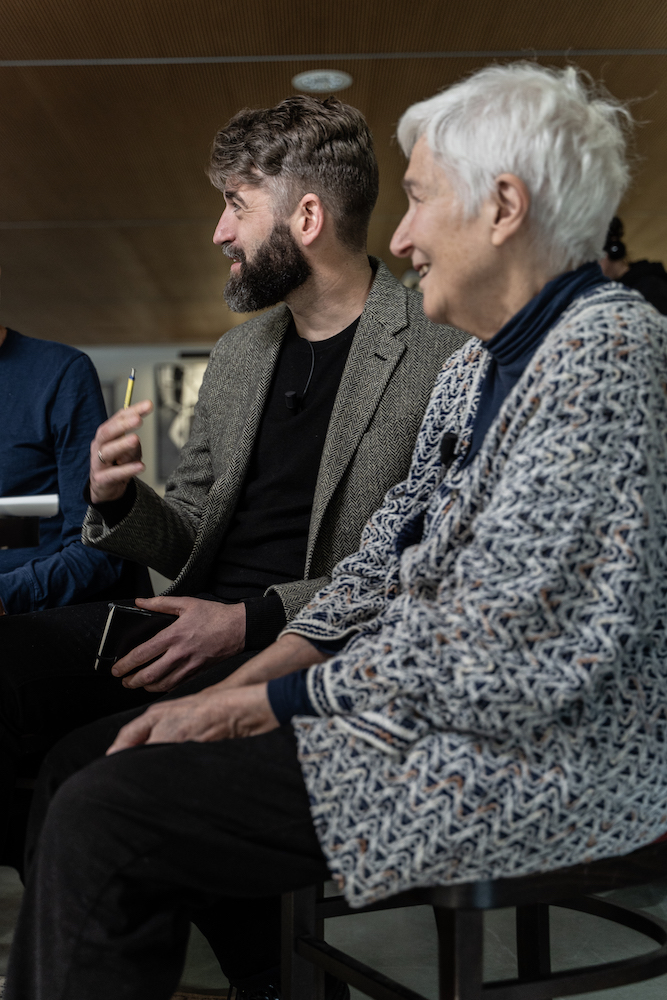
« En tant qu’auteur·trice·s, on a tendance à se prendre trop au sérieux. »
Enrichir le processus d’écriture par d’autres modes de créativité.
En tant qu’auteur·trice·s, on a tendance à se prendre trop au sérieux. Un sérieux qui ferme les voies du jeu et donc, de la découverte. Se réintégrer à un autre mode de créativité permet d’enlever, en quelque sorte, une certaine responsabilité et donc de s’ouvrir. Quand je demande d’écrire de manière poétique à des scénaristes-donc non poètes, je ressens chez eux : « Eh bien, bien sûr, cela va être mauvais parce que ce n’est pas mon métier. Ce n’est pas ce sur quoi j’ai travaillé. » Et souvent, le résultat est incroyable et est extrêmement précieux grâce à cette liberté de lâcher soudainement prise… Je parlais de l’approche analytique contraignante, mais plus globalement, le professionnalisme apporte davantage de cadrages, de structures et de règles rigides qui pourraient arriver plus tard dans le processus d’écriture, pour ne pas être préjudiciables aux idées et à la créativité. Le postulat de base est que : la matière créative développée est suffisamment invitante pour que d’autres émettent l’envie de jouer avec, en y apportant leurs propres compréhensions du langage, leurs fragments d’histoires, leurs identités, leurs passés et trouvent, ainsi, un espace non prédictif qui stimule et attire pour le nourrir.
« Se forcer à abandonner dans le récit : tout ce qui est présent, par défaut, les paramètres d’usine dans l’écriture. »
Stimuler le récit par la connexion.
Une autre façon de stimuler le récit est la connexion. La connexion permet de construire un pont entre l’auteur·trice et le lecteur·trice/spectateur·trice. Nous pouvons puiser en nous, en nos langages, nos voix, nos composantes existentielles pour créer des transmissions qui se transformeront en matières intéressantes : du beau, de l’intrigant, du déroutant avec lequel les autres voudront s’engager pour contribuer au récit. C’est quasi physique : un puzzle composé d’un certain ensemble de mots, disposés d’une certaine manière qui donne naissance à une composition non pré-établie. Avec une enveloppe plus littéraire, à travers les poèmes : les mots touchent de manière extrêmement profonde et souvent émotionnelle. Et cela n’a rien à voir avec le poème lui-même. Les lecteur·trice·s voient d’eux-mêmes refléter les mots, différemment car personnellement : comme ce qu’ils voient d’eux-mêmes à travers les yeux de l’autre.
Faire en sorte que cette connexion se produise entre deux humains est l’un des éléments fondamentaux qui expliquent pourquoi nous contons des histoires en premier lieu, qu’elles se manifestent dans la poésie, dans un roman, dans un scénario ou dans une pièce de théâtre. Il ne faut pas avoir peur de rechercher au sein d’un corpus très personnel, les composantes qui vous sont uniques et qui peuvent s’appuyer peut-être sur un texte antérieur, des sons, des rythmes. Ces enrichissements qui vous sont propres sont à intégrer. Et c’est à ce moment et à cet endroit précis que vous vous connecterez à l’autre, que votre voix et votre langage exprimeront ce que vous considérez intrinsèquement comme intéressant, beau, touchant, important, urgent. C’est la valeur du récit. C’est ce à quoi on aspire – sans le savoir généralement. Et donc, se forcer à abandonner dans le récit : tout ce qui est présent, par défaut, les paramètres d’usine dans l’écriture. Même si cela peut sembler étrange, inconfortable, enfantin et trop ludique : cela vaut la peine d’être poursuivi !
© Photos Brigitte Bouillot
Hosted on Acast. See acast.com/privacy for more information.
]]>Bohdan Piasecki est poète, né en Pologne, vivant aujourd’hui à Birmingham. Interprète engagé, il a transporté ses poèmes depuis la salle à l’étage d’un pub d’Eastbourne jusqu’à la scène principale du Birmingham Repertory Theatre, des clubs underground de Tokyo aux tramways de Paris, d’une librairie de Pékin à un aérodrome en Allemagne, de podcasts de niche à la radio BBC. Il apprécie autant le chaos créatif des grands festivals que la concentration composée d’événements littéraires. Bohdan Piasecki a reçu le Forward Prize du meilleur poème unique : interprété en 2023, année inaugurale de la catégorie.
Bohdan Piasecki a fondé le premier slam de poésie en Pologne avant de déménager au Royaume-Uni pour obtenir un doctorat en traduction. Il a travaillé en tant que directeur de l’éducation, dans le cadre d’un cours de maîtrise en création orale en éducation à la Goldsmiths University et a été producteur des Midlands pour Apples and Snakes entre 2010 et 2017. Il est professeur adjoint en écriture créative à l’Université de Birmingham. Il travaille également comme producteur créatif et siège au conseil d’administration du Poetry Translation Center.
— un entretien réalisé par Antoine Le Bos, scénariste et directeur artistique du Groupe Ouest et enregistré aux Champs Libres (Rennes), en décembre 2023, dans le cadre de la saison 04 du StoryTANK : « Quelles histoires pour notre temps ? ».
« Les traditions de narration orale nous apprennent à retenir l’attention, à identifier quelles formes fonctionnent. »
Le récit, entre les langues.
Je suis poète et je pratique également d’autres types d’écritures autour de/ou qui découlent de la poésie. Je suis un poète qui a toujours vécu entre les langues car je suis né en Pologne et j’y ai grandi. Mais je suis allé dans une école française et j’ai étudié la littérature anglaise. J’écris beaucoup pour la voix, pour la performance où les poèmes sont destinés à être entendus, même si j’écris aussi pour des poèmes qui seront lus. Et parce que je passe beaucoup de temps à parler aux gens, certaines des traditions dont je me suis inspiré étaient des traditions de narration orale. Là où l’on apprend à retenir l’attention, à identifier quelles formes fonctionnent. Les poèmes peuvent cependant parfois également être des histoires et parfois ne pas s’appuyer sur la narration.
« Même les poèmes – qui, comme je l’indiquais, ne s’appuient pas sur des récits – suivent un arc qui n’est pas différent de ce que l’on pourrait attendre d’une histoire. »
Le récit : une expérience absolue.
Je me considère comme un conteur et un poète. La poésie est complexe, elle peut se rapprocher de la définition du récit que nous pourrions tous adopter, à savoir que le poème raconte un récit. Sans forcément suivre le modèle standard, mais l’histoire déployée reste viable. D’ailleurs, même les poèmes – qui, comme je l’indiquais, ne s’appuient pas sur des récits – suivent un arc qui n’est pas différent de ce que l’on pourrait attendre d’une histoire. Dans la performance, un groupe est réuni dans une pièce, prêt à vivre une expérience. Un lien s’établit, des réactions sont stimulées, d’une manière très similaire à ce moment précis où sont racontées des histoires. Or, la proposition, qu’elle soit une séquence d’images ou autres, peut ne pas avoir d’interactions avec & sur ce groupe. Le lien n’est pas aussi facile que celui créé par la narration d’une histoire. L’ambition de la performance est de faire vivre une expérience similaire. Je dirais, donc, que oui : je raconte des histoires.
« Certaines pratiques poétiques peuvent être utiles dans l’exploration du récit. »
L’utilisation de la métaphore.
Un exemple que je pourrais vous donner, d’un outil très utilisé en poésie et qui peut être utilisé à des fins de découverte est l’utilisation de la métaphore, qui est courante dans toute histoire. Le langage est fait de métaphores. Mais ce à quoi nous nous attendons, souvent, lorsque nous parlons de métaphore dans l’écriture, est que l’écrivain propose une image intelligente qui nous raconte quelque chose de nouveau, qui rend un moment particulier : mémorable. Quel est son impact dans l’esprit du lecteur, du spectateur : sont-ils conviés ou même forcés à être actifs ? En découvrant quels sont les liens possibles entre l’objet et la chose, objet de la comparaison. Chacun trouvera des correspondances différentes. Si c’est une bonne métaphore : elle ouvre un espace où ils peuvent être actifs et créer du sens, de la beauté ou même créer un récit additionnel à celui initié. À l’inverse, quand on débute un travail sur un scénario, on débute la découverte des personnages et le monde dans lequel ils évoluent.
À ce moment précis : je peux tromper votre cerveau pour stimuler les définitions essentielles du récit : si je vous donne une métaphore forcée, pour que vous connaissiez un peu plus une de votre personnage, je peux prendre un objet au hasard – je ne sais pas : un vélo ! – et vous dire que votre personnage est comme un vélo. Votre cerveau, en raison de son fonctionnement et de la façon dont il cherche à donner un sens au monde, va immédiatement essayer de trouver des points de connexion : « Eh bien, mon personnage me transporte quelque part, mais je dois faire un effort pour y arriver. Ce n’est pas aussi rapide qu’une voiture, il me montrera quelque chose sur le monde. » Il s’agit d’un petit exemple très spécifique mais certaines pratiques poétiques peuvent être utiles dans l’exploration du récit. Je pense, souvent, qu’il est plus facile d’écrire de la poésie de manière exploratoire. J’écris souvent pour savoir ce que je veux écrire et que la liberté peut aussi être un outil utile.
« La pensée et l’écriture poétique peuvent être des points de départ fantastiques pour les scénaristes. »
L’approche poétique pour libérer le récit.
La pensée et l’écriture poétique peuvent être des points de départ fantastiques pour les scénaristes, dans le cadre du développement d’un récit. L’approche poétique est libératrice en permettant – pour les scénaristes – de bousculer les habitudes créatives, en décalant la façon dont il est habitué à utiliser les mots. La démarche poétique modifie la perception sur notre propre monde, celui du récit que l’on a créé et les éléments qui lui sont constitutifs : le subvertir, le rendre étrange, en attribuant des valeurs différentes aux mots, en les séquençant d’une manière qui n’a rien à voir avec la structure de l’histoire initiée ou habituelle…
« L’approche poétique est un outil qui permettra de garder les options du récit ouvertes plus longtemps. »
La multiplicité de la poésie pour la pluralité du récit.
La poésie se déploie à travers sa multiplicité : la pluralité des sens que les lecteur·trice·s apportent à leur lecture.
Les poèmes trop normatifs, clairs sont moins passionnants parce qu’ils se rapprochent d’autres modes de discours plus classiques car déclaratifs.
En demandant de penser de manière poétique – dès le début du processus créatif : on apporte un outil qui permettra de garder les options du récit ouvertes plus longtemps, explorer idées, solutions et les articuler sans contrainte, sans jamais entrer dans ce tunnel, dont il est très difficile de sortir.
« S’ouvrir et être accompagné par les images, par le dialogue permettent de comprendre ce que l’histoire veut être, ce que le personnage peut être, de nommer ce qui est compliqué à expliciter. »
Avant la composition du récit : l’exploration du monde.
J’utilise également souvent des images – à travers des photographies par exemple – comme points de départ d’accompagnement à la découverte d’un au-delà : de l’intrigue, du personnage, au-delà du dialogue. Avant la composition du récit : l’exploration visuelle du monde avec la signification multiple d’une chose. S’ouvrir et être accompagné par les images, par le dialogue permettent de comprendre ce que l’histoire veut être, ce que le personnage peut être, de nommer ce qui est compliqué à expliciter.
C’est globalement, une question de confiance via l’ouverture aux autres, aux lecteur·trice·s, spectateur·trice·s pour encourager des pistes testées, ouvrir de nouvelles directions.
« Spontané, amusant et plaisir : un combo souvent sous-estimé dans le processus créatif. »
Nourrir le récit par l’improvisation, le jeu et le plaisir.
Au-delà de l’approche poétique pour approfondir différents processus de création et de décision, c’est l’apport d’outils additionnels comme la parole et la performance avec la force de l’improvisation. Or, la poésie intègre dans ses traditions les plus lointaines : la poésie improvisée qui est fascinante et peut s’apparenter à une logique de jeux. L’idée même de jouer est importante, encore une fois, pour aider à ne pas s’enfermer dans un ensemble de décisions et à garder les options ouvertes. On peut, bien entendu, jouer oralement, en utilisant particulièrement des contraintes de temps, avec des idées et des réponses immédiates pour une création donc instantanée, sur le moment. C’est à la fois spontané, amusant et source de plaisir. Un combo souvent sous-estimé dans le processus créatif. Dans le récit, demander aux scénaristes de jouer, de réagir rapidement, d’étudier des aspects du langage autres que le sens comme le son, le rythme : les situer et les diriger pour ouvrir les choses. Un exemple de jeu que j’utilise parfois, en groupes, consiste à inverser la règle standard de l’improvisation.
On y développe l’idée du “oui, et…” : construire une scène sans remettre en question ce que les autres construisent. Chacun apporte un élément supplémentaire, successif : le premier indique : « Nous sommes à l’hôpital » et le prochain ajoute « Oui, et je suis le médecin » et ainsi de suite. Il est agréable d’intervenir au moment où le récit se dotent d’histoires qui commencent à se cristalliser. Quelque part, il est demandé à l’autre de raconter l’histoire telle qu’elle existe déjà – mais elle a probablement encore beaucoup de questions à ouvrir – et le déroulement des histoires est fluide ou parfois, d’autres peuvent rejeter des éléments pré-établis avec le « Non, mais… ». Se réoriente alors le récit, dans des directions non anticipées-envisagées – en changeant soudainement de lieu ou en modifiant un point de décision clé ou en bouleversant ce qui pourrait devenir un point de l’intrigue, au fur et à mesure de son évolution.
« Tout est muable dans le récit ! »
Le laisser-aller pour débloquer le récit.
La clé du récit est est donc, ici, le jeu. Il est clair qu’aucun choix final ne peut être établi. Est mis en jeu tout ce qui a été défini dans le récit jusqu’à présent. Le jeu permet, pour les scénaristes, de moins apprécier le récit initié et développe un laisser-aller pour libérer l’imagination et analyser le récit, sous un angle différent. Le jeu permet de renforcer l’idée – parfois difficile à admettre, dans le processus de création – que tout peut encore être changé. Que tout est muable. Parfois, le récit peut donc se doter d’une version collective, étrange et bizarre vis-à-vis de ce qui avait été pré-établi. Ce qui était considéré comme axiomatique a été remis en question et le changement opéré a débloqué un élément en initiant une voie qui n’existait pas, préalablement.
« Décrire un film plutôt que de raconter une histoire : c’est ne pas être dans l’histoire. »
Ressentir le récit.
Lorsque je travaille avec des scénaristes, j’aime travailler le changement de perception. Ce qui est primordial est de les faire passer de la réflexion sur le film à la simple réflexion sur l’histoire. Je constate, très tôt, que si on leur demande sur quoi ils travaillent : ils décrivent un film plutôt qu’ils ne racontent une histoire. Et quand ils présentent cette histoire, même aux premiers stades, ils ne racontent pas l’histoire elle-même : ils ne sont pas dans l’histoire. Ils décrivent un film comme… « Nous suivons un personnage alors qu’il se promène dans la forêt. » Donc, déjà, je n’y suis pas. J’imagine un film. Je n’imagine pas le personnage. Je ne suis pas là et eux non plus. Présenter, ainsi, l’histoire oblige à penser selon des schémas, avec des codes qui sont les codes du cinéma plutôt que, pour l’instant, se focaliser sur l’élaboration d’une histoire.
J’utilise, alors, un ensemble de jeux et d’approches pour les ramener à la façon dont ils peuvent raconter une histoire, d’un point de vue humain et non techniquement cinématographique. Comment raconter cette histoire à des amis, dans un bar ou à un groupe de personnes qui sont ici pour écouter une histoire. Il est question de faire ressentir le récit aux scénaristes – qui peut sembler à la première approche, quelque peu abstrait. Mais tout conteur qui s’est produit devant un public indiquera que cette histoire n’est pas du tout abstraite. Ressentir à la fois l’histoire en soi et recevoir quelque chose de celles & ceux qui écoutent : qui vous aide à façonner très concrètement le récit, en le faisant évoluer. L’interaction provoquée permet de passer de l’analyse au profit de l’expérience du récit. Le processus de création peut être tué dans son essence, par une approche trop analytique.
« En tant qu’auteur·trice·s, on a tendance à se prendre trop au sérieux. »
Enrichir le processus d’écriture par d’autres modes de créativité.
En tant qu’auteur·trice·s, on a tendance à se prendre trop au sérieux. Un sérieux qui ferme les voies du jeu et donc, de la découverte. Se réintégrer à un autre mode de créativité permet d’enlever, en quelque sorte, une certaine responsabilité et donc de s’ouvrir. Quand je demande d’écrire de manière poétique à des scénaristes-donc non poètes, je ressens chez eux : « Eh bien, bien sûr, cela va être mauvais parce que ce n’est pas mon métier. Ce n’est pas ce sur quoi j’ai travaillé. » Et souvent, le résultat est incroyable et est extrêmement précieux grâce à cette liberté de lâcher soudainement prise… Je parlais de l’approche analytique contraignante, mais plus globalement, le professionnalisme apporte davantage de cadrages, de structures et de règles rigides qui pourraient arriver plus tard dans le processus d’écriture, pour ne pas être préjudiciables aux idées et à la créativité. Le postulat de base est que : la matière créative développée est suffisamment invitante pour que d’autres émettent l’envie de jouer avec, en y apportant leurs propres compréhensions du langage, leurs fragments d’histoires, leurs identités, leurs passés et trouvent, ainsi, un espace non prédictif qui stimule et attire pour le nourrir.
« Se forcer à abandonner dans le récit : tout ce qui est présent, par défaut, les paramètres d’usine dans l’écriture. »
Stimuler le récit par la connexion.
Une autre façon de stimuler le récit est la connexion. La connexion permet de construire un pont entre l’auteur·trice et le lecteur·trice/spectateur·trice. Nous pouvons puiser en nous, en nos langages, nos voix, nos composantes existentielles pour créer des transmissions qui se transformeront en matières intéressantes : du beau, de l’intrigant, du déroutant avec lequel les autres voudront s’engager pour contribuer au récit. C’est quasi physique : un puzzle composé d’un certain ensemble de mots, disposés d’une certaine manière qui donne naissance à une composition non pré-établie. Avec une enveloppe plus littéraire, à travers les poèmes : les mots touchent de manière extrêmement profonde et souvent émotionnelle. Et cela n’a rien à voir avec le poème lui-même. Les lecteur·trice·s voient d’eux-mêmes refléter les mots, différemment car personnellement : comme ce qu’ils voient d’eux-mêmes à travers les yeux de l’autre.
Faire en sorte que cette connexion se produise entre deux humains est l’un des éléments fondamentaux qui expliquent pourquoi nous contons des histoires en premier lieu, qu’elles se manifestent dans la poésie, dans un roman, dans un scénario ou dans une pièce de théâtre. Il ne faut pas avoir peur de rechercher au sein d’un corpus très personnel, les composantes qui vous sont uniques et qui peuvent s’appuyer peut-être sur un texte antérieur, des sons, des rythmes. Ces enrichissements qui vous sont propres sont à intégrer. Et c’est à ce moment et à cet endroit précis que vous vous connecterez à l’autre, que votre voix et votre langage exprimeront ce que vous considérez intrinsèquement comme intéressant, beau, touchant, important, urgent. C’est la valeur du récit. C’est ce à quoi on aspire – sans le savoir généralement. Et donc, se forcer à abandonner dans le récit : tout ce qui est présent, par défaut, les paramètres d’usine dans l’écriture. Même si cela peut sembler étrange, inconfortable, enfantin et trop ludique : cela vaut la peine d’être poursuivi !
© Photos Brigitte Bouillot
Hosted on Acast. See acast.com/privacy for more information.
]]>Anne Querrien est une sociologue et urbaniste française. Ses recherches portent sur la politique de la ville et du logement social, mais aussi sur l’école comme « espace à libérer », ou encore sur le genre ou la dualité sexuelle.
Animatrice entre autres du Mouvement du 22 mars à Nanterre et à Paris en 1968, elle a été secrétaire générale du CERFI (Centre d’Études, de Recherches et de Formation Institutionnelles) créé par Félix Guattari dans les années 1970, où elle se lia d’amitié avec, entre autres, Guy Hocquenghem.
Elle participe à la rédaction des revues “Annales de la recherche urbaine”, “Chimères” et “Multitudes”.
— un entretien réalisé par Antoine Le Bos, scénariste et directeur artistique du Groupe Ouest, et enregistré aux Champs Libres (Rennes) dans le cadre de la série “Quels récits pour notre temps ?”.
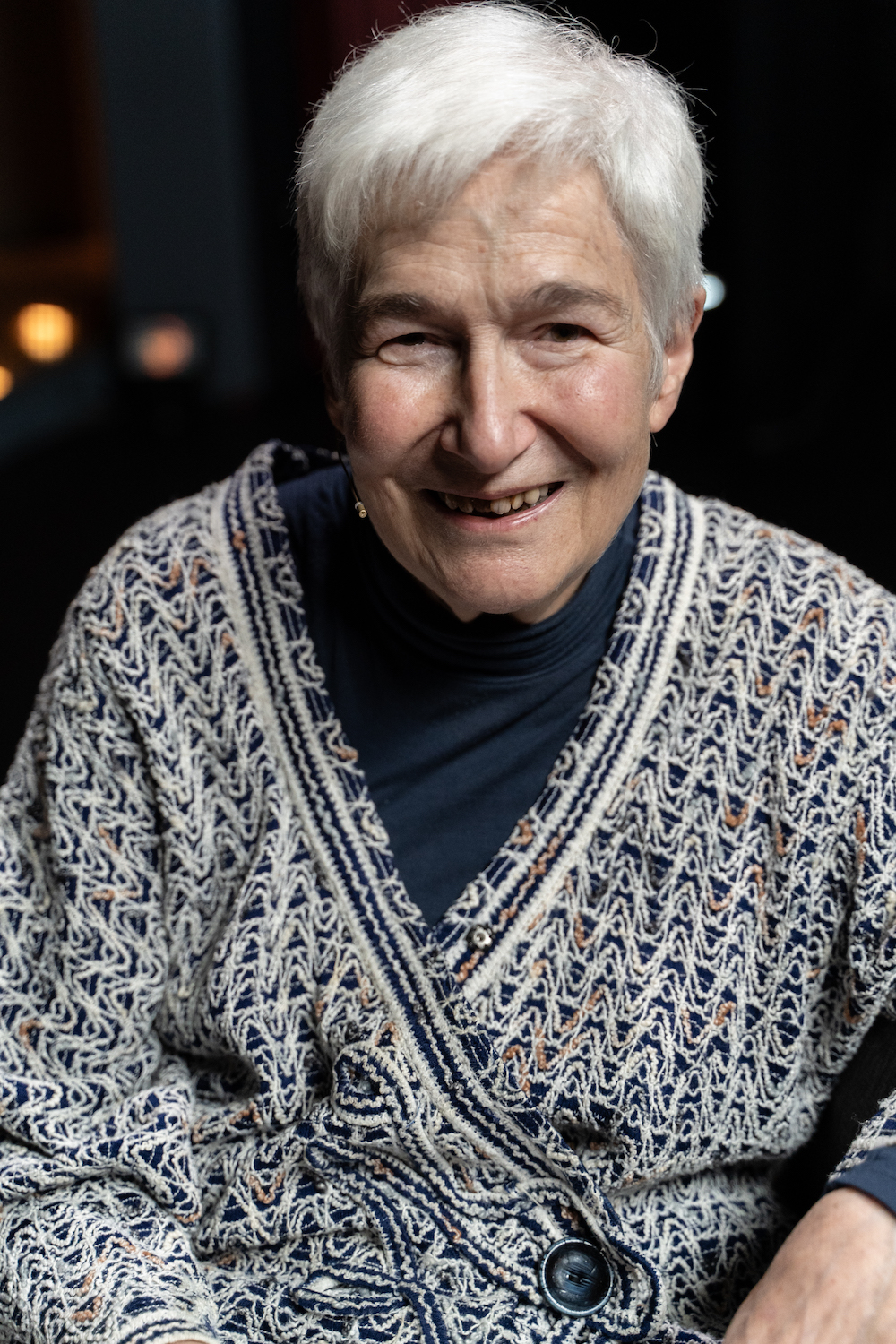
« Saisir un sucre en morceau que l’on puise dans le réel et que l’on va faire immerger dans autre univers »
Le concept pour donner plus de goût.
Un concept est comme une pince à sucre qui saisit un sucre en morceau que l’on puise dans le réel et que l’on va faire immerger dans autre univers, pour donner plus de goût, créer quelque chose de différent.
« Le rhizome se forme ainsi, en allant d’une plante à l’autre et non à partir d’une centralité. »
Le rhizome pour créer, en réseau & en horizontalité.
L’idée du rhizome est à relier à la psychanalyse : l’association d’idées non hiérarchiques. Le rhizome est une image dite végétale, celle du réseau, avec l’idée que l’on peut repiquer la plante, à partir de n’importe quelle partie de celle-ci, sans avoir besoin de la graine. C’est le fait de transplanter, comme on le fait avec le riz, ou de multiplier les pommes de terre, en utilisant les pousses sur la pomme de terre elle-même. Le rhizome s’oppose à la racine, pour les plus rigoristes, mais les plantes à rhizome ont aussi des racines. Le rhizome se forme ainsi, en allant d’une plante à l’autre et non à partir d’une centralité.
Dans la fable de La Fontaine « Le chêne et le roseau » : le rhizome du roseau résiste beaucoup mieux au vent que le chêne aux racines robustes – que l’on croit communément. Moi qui suis formé à la rhizomaticité : j’aime l’herbe, j’en vois partout. Hors, je me rends compte que, généralement, quand on parle de plantes, on ne pense qu’aux arbres. L’herbe n’étant pas considérée comme une plante noble. On continue à penser le végétal de manière hiérarchique. Le chêne, particulièrement en Europe, étant considéré comme une symbolique de la souveraineté.
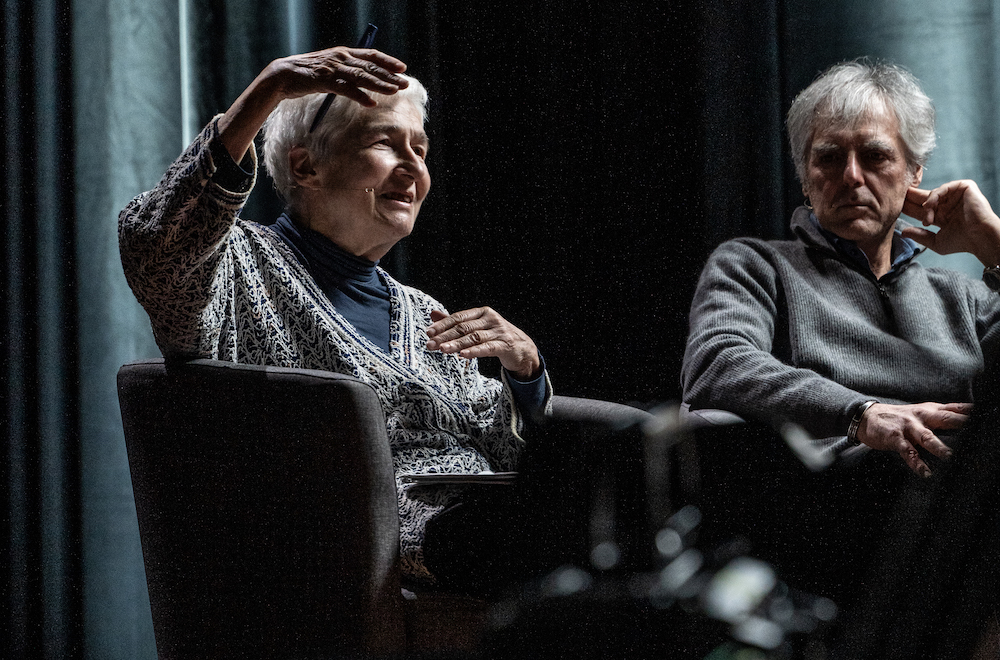
« Pas de téléologie. La vie ! »
La prolifération comme processus de création
La pensée deleuzienne, elle, est une pensée non souveraine. Guattari, qui s’est allié à Deleuze à un moment donné, s’intéressait beaucoup à la prolifération. Pas de téléologie. La vie ! Contrairement à beaucoup d’adeptes de Deleuze et de Guattari, qui sont actuellement préoccupés par l’effondrement… C’est justement la prolifération qui se développe, qui continue, en prenant des formes différentes.
« En s’enfermant dans un territoire existentiel, on ne peut pas vraiment créer. »
La déterritorialisation pour aller au-delà du territoire existentiel
Le concept qui me plaît le plus, et qui est lié à tout cela, c’est la déterritorialisation – que je trouve absolument fascinant. La déterritorialisation se rapporte à l’idée de flux : qui signifie que, dans le monde qui nous entoure, y compris dans cette matérialité apparemment rigide, les électrons circulent. Le flux est omniprésent, même dans le marbre sous nos pieds. Les psychothérapeutes indiquent que lorsqu’ils sont avec un patient, celui-ci est généralement déterritorialisé, dans le sens le plus trivial du terme. Le travail de la thérapie est de le reterritorialiser afin de restaurer ce que Guattari a appelé : le territoire existentiel, dans sa cartographie. L’idée était que la thérapie devait construire au-delà de ce territoire existentiel, permettre la communication avec d’autres productions humaines, pour créer autre chose, notamment dans les mondes artistiques et créatifs. En s’enfermant dans un territoire existentiel, on ne peut pas véritablement créer. On peut se sentir mieux, peut-être.
Pour Guattari et Deleuze – ce que je partage également -, la déterritorialisation est dans la matière physique et se transmet par l’esprit humain, d’abord par notre inconscient. Pour les schizophrènes, les « déments », pour celles & ceux qui ne sont pas reterritorialisés, dans les hôpitaux psychiatriques et autres, qui n’ont pas suffisamment exaspéré les autres, dans la société pour être reterritorialisés.
« Se déplacer dans un espace elliptique. »
La cartographie pour étudier le contact avec l’autre
La notion de cartographie est arrivée un peu par hasard. Guattari avait des liens avec Deligny. Deligny est allé à la clinique de La Borde à un moment où il ne pouvait plus rester dans les Cévennes, dans les années 1960. Je l’ai vu à La Borde en 1965. Et Deligny, pour vivre avec des enfants, pas seulement autistes au sens habituel, mais non verbaux – pour des raisons que les Américains diraient pathologiques, physiques -, pour vivre avec ces jeunes comme des êtres humains : a dû rompre avec l’hypothèse lacanienne selon laquelle ce qui caractérise l’être humain est le langage.
Comme je l’expliquais dans la table ronde — Deligny a littéralement pris, sous son aile, un petit garçon de 8 ans : Janmari, qui tournait sur lui-même en hurlant. Aucune institution ne voulait le garder, sauf s’il était attaché. Sa mère le confia à Deligny puisque la situation était complexe à La Borde, Deligny était là quand il est arrivé, Deligny l’a emmené dans les Cévennes, chez lui. Il a créé une petite communauté avec un certain Jacques Lin, qui est toujours là – dessinateur industriel et non, artiste. Deligny s’en prend alors à Jacques Lin, qui ne supportait pas Janmari, et lui propose : « Puisque tu es dessinateur, tu peux dessiner tous les mouvements de Janmari, tu le suis, et chaque fois qu’il crie et qu’il tourne sur lui-même, tu dessines un cercle sur sa carte de suivi. » Jacques Lin a commencé à travailler sur ces cartes.
Au début, ils se sont rendus compte que Janmari se déplaçait dans un espace elliptique qui tournait autour de la résidence de Deligny et de Jacques Lin. Il établissait avec eux un contact humain, autre que le simple fait de prendre des repas ensemble. Et même quand il disparaissait, c’était dans le cadre de ces ellipses, dans lesquelles il trouvait aussi des sources d’eau. Les cartes ont montré des résultats surprenants, dans la manière d’initier les chemins initiés par Janmari et d’autres enfants traités par Deligny… Il y avait les chemins fonctionnels qui les conduisaient là où ils mangeaient. Et Deligny a nommé comme coutumière l’organisation de l’espace fonctionnel quotidien, en montrant que ces enfants – cela rejoint la territorialité – avaient besoin d’un espace mental extrêmement répétitif, dans lequel ils créaient d’autres chemins, qu’il appelait des « lignes d’erre ». Nous n’avions aucune idée de ce à quoi servaient ces lignes d’erre, où elles allaient, mais elles étaient toutes contraintes dans le même espace global défini.
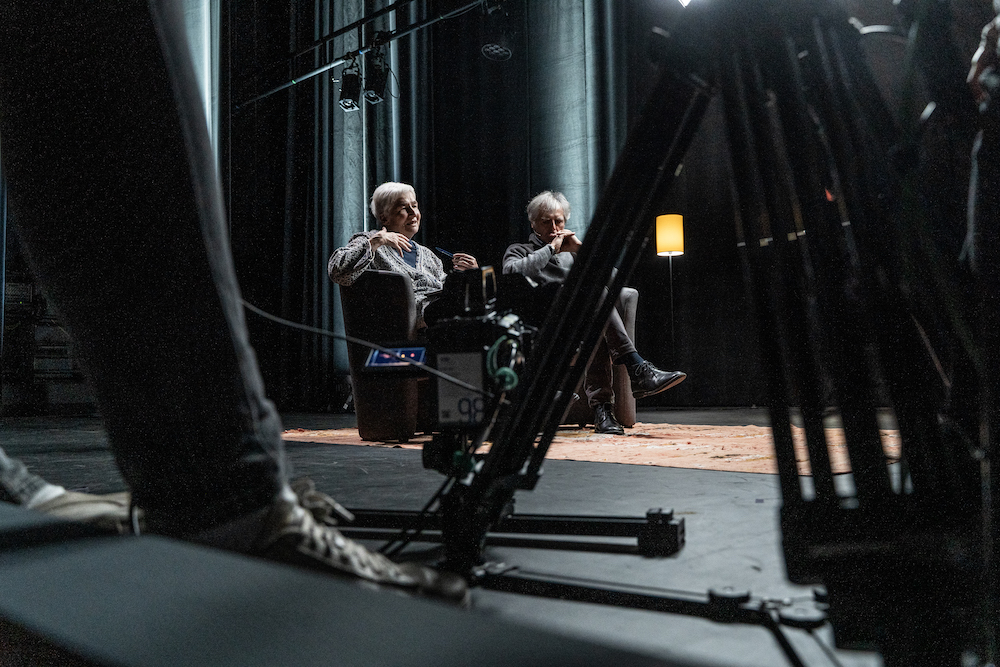
« Superposer les cartes pour découvrir la structure. »
Le calque comme outil de lecture de la carte
Guattari et Deleuze étaient intrigués par ces cartes. Elles ont été la base de tous les textes de Rhizome, ce qui me fait toujours me demander pourquoi ils ont si ardemment soutenu que les cartes et les calques n’étaient pas à mettre sur le même plan. Deligny avait pensé à superposer les cartes, qui étaient faites sur du papier calque. Et il a vu qu’il traçait les espaces dont je parlais tout à l’heure, en superposant les cartes. Et ils ont aussi fait une carte par enfant, et en superposant les cartes, ils ont découvert la structure. Pour moi, il n’y a pas cette opposition présente dans le texte entre le calque et la carte : le calque est un outil de lecture de la carte.
« La réalité dans les flux, le monde imaginaire dans le territoire existentiel, le symbolique et la machine. »
Une cartographie du monde
J’ai été fascinée par le texte de Guattari intitulé “Cartographies schizoanalytiques”. C’est une forme de cartographie qu’il – selon moi – utilisait dans ses thérapies, mais c’est, en fait, véritablement une cartographie du monde. Il y a quatre pôles : il y a les flux dans la matière physique – la matière à des flux, on en a parlé plus tôt. Il y a les territoires existentiels qui sont le résultat de la déterritorialisation puis de la reterritorialisation de cette matière.
Et via cette déterritorialisation puis cette reterritorialisation, à l’intérieur des territoires existentiels : on produit ce qu’il appelle des univers immatériels composés de toutes les productions civilisationnelles abstraites, générées par les humains – qui sont multiples et non uniques comme on nous l’a appris à l’école. Dans lesquelles il y a beaucoup à explorer… On a donc les trois pôles de Lacan : la réalité dans les flux, le monde imaginaire dans le territoire existentiel – c’est là que l’on revient aux histoires – et le symbolique, qui est tout ce que l’on produit, comme la musique, les mathématiques, la philosophie…
Et il y a un quatrième pôle – les purs guattariens seraient en opposition mis Guattari le nomme le phylo-machinique, c’est-à-dire que l’humanité et la matière combinées ont produit toute une série d’alliances matérielles et techniques : les machines, qui, en généalogie, sont un peu comme les espèces animales. L’intersection entre les univers immatériels, c’est-à-dire les diagrammes abstraits et les flux produits par les machines.
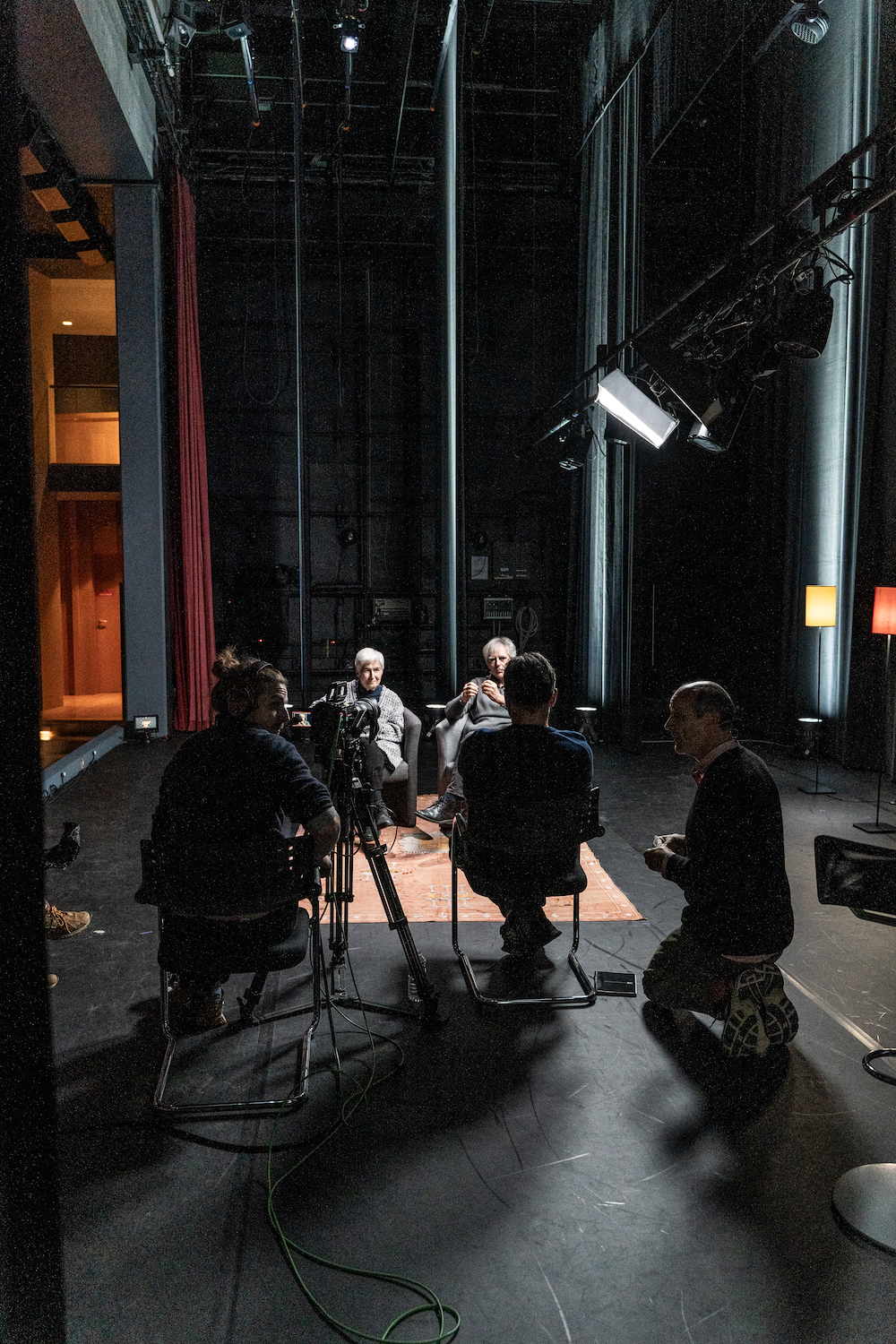
« Dans la vie, il y a toujours ces rencontres hétérogènes au cœur du monde réel, justement en concomitance, qui vont produire autre chose. »
La machine comme puissance de création
La notion de machine chez Guattari est assez particulière. Dans le livre intitulé “Psychanalyse et transversalité” – un recueil d’articles que Guattari avait publiés et qui ont été diffusés dans différentes revues – il y a un texte intitulé “Machine et structure“. Et dans ce texte, il y a la note numéro 1, où Guattari établit des séries avec des choses hétérogènes, qu’il associe à un troisième terme, que j’appelle une machine.
Je trouve ça remarquable, parce que ça donne, à la machine, la capacité de traiter un nombre énorme de situations, de la voiture à la centrale nucléaire… jusqu’aux relations. Disons – par exemple – ici, aux Champs Libres à Rennes, on a un planétarium et une exposition sur la paléontologie qui sont présentés ensemble et pour certains visiteurs, un lien va se créer entre ces deux idées qui pourrait aboutir à faire un film ou autre.
Dans la vie, il y a toujours ces rencontres hétérogènes au cœur du monde réel, justement en concomitance, qui vont produire autre chose, même si ce n’est qu’une image poétique, qui pourra être partagée dans le monde entier. D’autres viendront s’y ajouter et la transformer à l’aide d’autres objets. Je trouve ça très puissant. C’est une machine, très simple.
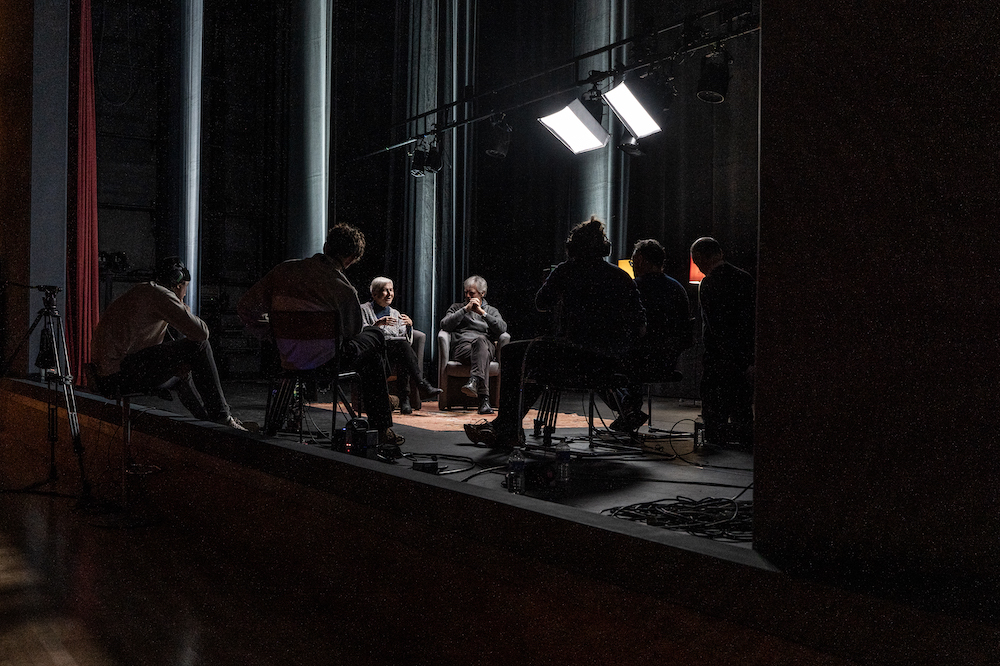
« Le corps-sans-organe, c’est l’émergence non fonctionnelle du désir. »
Le corps-sans-organe : un retour à l’œuf originel
Dans “L’Anti-Œdipe” et dans “Mille Plateaux” de Deleuze et Guattari, il y a la question de savoir comment composer un corps-sans-organe. Dans ce cas, un corps-sans-organe aussi lisse qu’un œuf – l’œuf étant la métaphore de la production, de la germination, de la naissance… Comment se débarrasser de toutes ces fonctionnalités, de ces composés organiques, pour se transformer en un œuf qui deviendra autre chose ?
Il y a le concept du devenir : devenir femme, devenir animal, devenir plante. C’est tout ceci que l’on retrouve dans “Mille Plateaux”. C’est un concept qui vient d’Artaud. Et Artaud était vraiment schizophrène. Les schizophrènes, de temps en temps, voient leur corps ou leurs mains partir ailleurs ou ils perçoivent, tout simplement, leur corps. Comme décrit dans “L’Anti-Œdipe” : comme un œuf sur lequel tout glisse et rien ne colle. Ce sont des sensations extrêmement violentes que l’on ne vit pas. Le corps-sans-organe, c’est l’émergence non fonctionnelle du désir. Le corps-sans-organe, c’est essentiellement un retour à l’œuf originel.
« Dans la musique classique, la ritournelle est un retour au thème. C’est ce que tout le monde attend. Pour moi, c’est l’inverse. »
La ritournelle comme une reterritorialisation
La ritournelle, par exemple, est un peu comme une reterritorialisation. Dans la musique classique, la ritournelle est un retour au thème. C’est ce que tout le monde attend. Pour moi, c’est l’inverse. J’attends toujours un nouveau thème. Je n’écoute pratiquement que de la musique contemporaine. Dès que j’ai entendu trois fois la dite ritournelle, je cherche autre chose !
© Photos Brigitte Bouillot
Hosted on Acast. See acast.com/privacy for more information.
]]>Anne Querrien est une sociologue et urbaniste française. Ses recherches portent sur la politique de la ville et du logement social, mais aussi sur l’école comme « espace à libérer », ou encore sur le genre ou la dualité sexuelle.
Animatrice entre autres du Mouvement du 22 mars à Nanterre et à Paris en 1968, elle a été secrétaire générale du CERFI (Centre d’Études, de Recherches et de Formation Institutionnelles) créé par Félix Guattari dans les années 1970, où elle se lia d’amitié avec, entre autres, Guy Hocquenghem.
Elle participe à la rédaction des revues “Annales de la recherche urbaine”, “Chimères” et “Multitudes”.
— un entretien réalisé par Antoine Le Bos, scénariste et directeur artistique du Groupe Ouest, et enregistré aux Champs Libres (Rennes) dans le cadre de la série “Quels récits pour notre temps ?”.
« Saisir un sucre en morceau que l’on puise dans le réel et que l’on va faire immerger dans autre univers »
Le concept pour donner plus de goût.
Un concept est comme une pince à sucre qui saisit un sucre en morceau que l’on puise dans le réel et que l’on va faire immerger dans autre univers, pour donner plus de goût, créer quelque chose de différent.
« Le rhizome se forme ainsi, en allant d’une plante à l’autre et non à partir d’une centralité. »
Le rhizome pour créer, en réseau & en horizontalité.
L’idée du rhizome est à relier à la psychanalyse : l’association d’idées non hiérarchiques. Le rhizome est une image dite végétale, celle du réseau, avec l’idée que l’on peut repiquer la plante, à partir de n’importe quelle partie de celle-ci, sans avoir besoin de la graine. C’est le fait de transplanter, comme on le fait avec le riz, ou de multiplier les pommes de terre, en utilisant les pousses sur la pomme de terre elle-même. Le rhizome s’oppose à la racine, pour les plus rigoristes, mais les plantes à rhizome ont aussi des racines. Le rhizome se forme ainsi, en allant d’une plante à l’autre et non à partir d’une centralité.
Dans la fable de La Fontaine « Le chêne et le roseau » : le rhizome du roseau résiste beaucoup mieux au vent que le chêne aux racines robustes – que l’on croit communément. Moi qui suis formé à la rhizomaticité : j’aime l’herbe, j’en vois partout. Hors, je me rends compte que, généralement, quand on parle de plantes, on ne pense qu’aux arbres. L’herbe n’étant pas considérée comme une plante noble. On continue à penser le végétal de manière hiérarchique. Le chêne, particulièrement en Europe, étant considéré comme une symbolique de la souveraineté.
« Pas de téléologie. La vie ! »
La prolifération comme processus de création
La pensée deleuzienne, elle, est une pensée non souveraine. Guattari, qui s’est allié à Deleuze à un moment donné, s’intéressait beaucoup à la prolifération. Pas de téléologie. La vie ! Contrairement à beaucoup d’adeptes de Deleuze et de Guattari, qui sont actuellement préoccupés par l’effondrement… C’est justement la prolifération qui se développe, qui continue, en prenant des formes différentes.
« En s’enfermant dans un territoire existentiel, on ne peut pas vraiment créer. »
La déterritorialisation pour aller au-delà du territoire existentiel
Le concept qui me plaît le plus, et qui est lié à tout cela, c’est la déterritorialisation – que je trouve absolument fascinant. La déterritorialisation se rapporte à l’idée de flux : qui signifie que, dans le monde qui nous entoure, y compris dans cette matérialité apparemment rigide, les électrons circulent. Le flux est omniprésent, même dans le marbre sous nos pieds. Les psychothérapeutes indiquent que lorsqu’ils sont avec un patient, celui-ci est généralement déterritorialisé, dans le sens le plus trivial du terme. Le travail de la thérapie est de le reterritorialiser afin de restaurer ce que Guattari a appelé : le territoire existentiel, dans sa cartographie. L’idée était que la thérapie devait construire au-delà de ce territoire existentiel, permettre la communication avec d’autres productions humaines, pour créer autre chose, notamment dans les mondes artistiques et créatifs. En s’enfermant dans un territoire existentiel, on ne peut pas véritablement créer. On peut se sentir mieux, peut-être.
Pour Guattari et Deleuze – ce que je partage également -, la déterritorialisation est dans la matière physique et se transmet par l’esprit humain, d’abord par notre inconscient. Pour les schizophrènes, les « déments », pour celles & ceux qui ne sont pas reterritorialisés, dans les hôpitaux psychiatriques et autres, qui n’ont pas suffisamment exaspéré les autres, dans la société pour être reterritorialisés.
« Se déplacer dans un espace elliptique. »
La cartographie pour étudier le contact avec l’autre
La notion de cartographie est arrivée un peu par hasard. Guattari avait des liens avec Deligny. Deligny est allé à la clinique de La Borde à un moment où il ne pouvait plus rester dans les Cévennes, dans les années 1960. Je l’ai vu à La Borde en 1965. Et Deligny, pour vivre avec des enfants, pas seulement autistes au sens habituel, mais non verbaux – pour des raisons que les Américains diraient pathologiques, physiques -, pour vivre avec ces jeunes comme des êtres humains : a dû rompre avec l’hypothèse lacanienne selon laquelle ce qui caractérise l’être humain est le langage.
Comme je l’expliquais dans la table ronde — Deligny a littéralement pris, sous son aile, un petit garçon de 8 ans : Janmari, qui tournait sur lui-même en hurlant. Aucune institution ne voulait le garder, sauf s’il était attaché. Sa mère le confia à Deligny puisque la situation était complexe à La Borde, Deligny était là quand il est arrivé, Deligny l’a emmené dans les Cévennes, chez lui. Il a créé une petite communauté avec un certain Jacques Lin, qui est toujours là – dessinateur industriel et non, artiste. Deligny s’en prend alors à Jacques Lin, qui ne supportait pas Janmari, et lui propose : « Puisque tu es dessinateur, tu peux dessiner tous les mouvements de Janmari, tu le suis, et chaque fois qu’il crie et qu’il tourne sur lui-même, tu dessines un cercle sur sa carte de suivi. » Jacques Lin a commencé à travailler sur ces cartes.
Au début, ils se sont rendus compte que Janmari se déplaçait dans un espace elliptique qui tournait autour de la résidence de Deligny et de Jacques Lin. Il établissait avec eux un contact humain, autre que le simple fait de prendre des repas ensemble. Et même quand il disparaissait, c’était dans le cadre de ces ellipses, dans lesquelles il trouvait aussi des sources d’eau. Les cartes ont montré des résultats surprenants, dans la manière d’initier les chemins initiés par Janmari et d’autres enfants traités par Deligny… Il y avait les chemins fonctionnels qui les conduisaient là où ils mangeaient. Et Deligny a nommé comme coutumière l’organisation de l’espace fonctionnel quotidien, en montrant que ces enfants – cela rejoint la territorialité – avaient besoin d’un espace mental extrêmement répétitif, dans lequel ils créaient d’autres chemins, qu’il appelait des « lignes d’erre ». Nous n’avions aucune idée de ce à quoi servaient ces lignes d’erre, où elles allaient, mais elles étaient toutes contraintes dans le même espace global défini.
« Superposer les cartes pour découvrir la structure. »
Le calque comme outil de lecture de la carte
Guattari et Deleuze étaient intrigués par ces cartes. Elles ont été la base de tous les textes de Rhizome, ce qui me fait toujours me demander pourquoi ils ont si ardemment soutenu que les cartes et les calques n’étaient pas à mettre sur le même plan. Deligny avait pensé à superposer les cartes, qui étaient faites sur du papier calque. Et il a vu qu’il traçait les espaces dont je parlais tout à l’heure, en superposant les cartes. Et ils ont aussi fait une carte par enfant, et en superposant les cartes, ils ont découvert la structure. Pour moi, il n’y a pas cette opposition présente dans le texte entre le calque et la carte : le calque est un outil de lecture de la carte.
« La réalité dans les flux, le monde imaginaire dans le territoire existentiel, le symbolique et la machine. »
Une cartographie du monde
J’ai été fascinée par le texte de Guattari intitulé “Cartographies schizoanalytiques”. C’est une forme de cartographie qu’il – selon moi – utilisait dans ses thérapies, mais c’est, en fait, véritablement une cartographie du monde. Il y a quatre pôles : il y a les flux dans la matière physique – la matière à des flux, on en a parlé plus tôt. Il y a les territoires existentiels qui sont le résultat de la déterritorialisation puis de la reterritorialisation de cette matière.
Et via cette déterritorialisation puis cette reterritorialisation, à l’intérieur des territoires existentiels : on produit ce qu’il appelle des univers immatériels composés de toutes les productions civilisationnelles abstraites, générées par les humains – qui sont multiples et non uniques comme on nous l’a appris à l’école. Dans lesquelles il y a beaucoup à explorer… On a donc les trois pôles de Lacan : la réalité dans les flux, le monde imaginaire dans le territoire existentiel – c’est là que l’on revient aux histoires – et le symbolique, qui est tout ce que l’on produit, comme la musique, les mathématiques, la philosophie…
Et il y a un quatrième pôle – les purs guattariens seraient en opposition mis Guattari le nomme le phylo-machinique, c’est-à-dire que l’humanité et la matière combinées ont produit toute une série d’alliances matérielles et techniques : les machines, qui, en généalogie, sont un peu comme les espèces animales. L’intersection entre les univers immatériels, c’est-à-dire les diagrammes abstraits et les flux produits par les machines.
« Dans la vie, il y a toujours ces rencontres hétérogènes au cœur du monde réel, justement en concomitance, qui vont produire autre chose. »
La machine comme puissance de création
La notion de machine chez Guattari est assez particulière. Dans le livre intitulé “Psychanalyse et transversalité” – un recueil d’articles que Guattari avait publiés et qui ont été diffusés dans différentes revues – il y a un texte intitulé “Machine et structure“. Et dans ce texte, il y a la note numéro 1, où Guattari établit des séries avec des choses hétérogènes, qu’il associe à un troisième terme, que j’appelle une machine.
Je trouve ça remarquable, parce que ça donne, à la machine, la capacité de traiter un nombre énorme de situations, de la voiture à la centrale nucléaire… jusqu’aux relations. Disons – par exemple – ici, aux Champs Libres à Rennes, on a un planétarium et une exposition sur la paléontologie qui sont présentés ensemble et pour certains visiteurs, un lien va se créer entre ces deux idées qui pourrait aboutir à faire un film ou autre.
Dans la vie, il y a toujours ces rencontres hétérogènes au cœur du monde réel, justement en concomitance, qui vont produire autre chose, même si ce n’est qu’une image poétique, qui pourra être partagée dans le monde entier. D’autres viendront s’y ajouter et la transformer à l’aide d’autres objets. Je trouve ça très puissant. C’est une machine, très simple.
« Le corps-sans-organe, c’est l’émergence non fonctionnelle du désir. »
Le corps-sans-organe : un retour à l’œuf originel
Dans “L’Anti-Œdipe” et dans “Mille Plateaux” de Deleuze et Guattari, il y a la question de savoir comment composer un corps-sans-organe. Dans ce cas, un corps-sans-organe aussi lisse qu’un œuf – l’œuf étant la métaphore de la production, de la germination, de la naissance… Comment se débarrasser de toutes ces fonctionnalités, de ces composés organiques, pour se transformer en un œuf qui deviendra autre chose ?
Il y a le concept du devenir : devenir femme, devenir animal, devenir plante. C’est tout ceci que l’on retrouve dans “Mille Plateaux”. C’est un concept qui vient d’Artaud. Et Artaud était vraiment schizophrène. Les schizophrènes, de temps en temps, voient leur corps ou leurs mains partir ailleurs ou ils perçoivent, tout simplement, leur corps. Comme décrit dans “L’Anti-Œdipe” : comme un œuf sur lequel tout glisse et rien ne colle. Ce sont des sensations extrêmement violentes que l’on ne vit pas. Le corps-sans-organe, c’est l’émergence non fonctionnelle du désir. Le corps-sans-organe, c’est essentiellement un retour à l’œuf originel.
« Dans la musique classique, la ritournelle est un retour au thème. C’est ce que tout le monde attend. Pour moi, c’est l’inverse. »
La ritournelle comme une reterritorialisation
La ritournelle, par exemple, est un peu comme une reterritorialisation. Dans la musique classique, la ritournelle est un retour au thème. C’est ce que tout le monde attend. Pour moi, c’est l’inverse. J’attends toujours un nouveau thème. Je n’écoute pratiquement que de la musique contemporaine. Dès que j’ai entendu trois fois la dite ritournelle, je cherche autre chose !
© Photos Brigitte Bouillot
Hosted on Acast. See acast.com/privacy for more information.
]]>— a conference recorded at Les Champs Libres (Rennes, Brittany) in December 2023 in the framework of the serie “What stories for our time”, moderated by Nicolás Buenaventura – writer-director and storyteller – and Yann Apperry – screenwriter, playwright and novelist.
Stories build complex worlds in which we find ourselves projected. In the footsteps of the “Theory of the Rhizome”, imaginary as a space of co-elaboration, a space of proliferation of possibilities…
With Bohdan Piasecki – Poet and Professor of Creative Writing, Nancy Murzilli – Philosopher and Literary Theorist, Anne Querrien – Sociologist and Urban planner and Manue Gaquère – Sports Teacher
« As Deleuze says so well in his book on painting in his lecture on Bacon: “Our imaginary is overrun with clichés, which we need to get rid of in order to create.” Mapping is another way of seeing the world, of following it, of philosophising… »
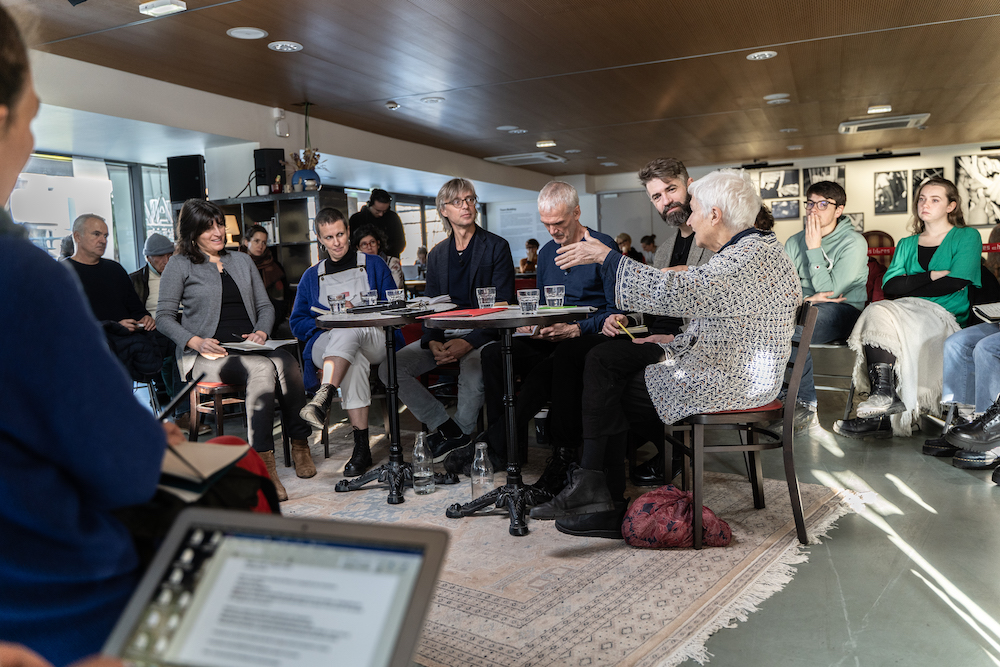
Narrative: a flow story.
In the teachings of Guattari or those of Lacan, creative workflows are highlighted that can be fluid, that “flow” but that can, very often get stuck. In French we say we “dry up”. We “dry up” or get stuck during exams, we get stuck on a poem, we block in our writing. So, we use cheat sheets to avoid these blocks. Generally, cheat sheets aren’t very useful, because it’s more a question of flow.
A mapping of the imaginary in the real.
The imaginary needs to be put in its place. There are the flows of reality… There’s the imaginary that, as Guattari says, creates existential territories. In fact, what we map out are certain real-life practices. And, if we’re stuck in these existential territories, we don’t create anything of interest, we create worthless stories, repetitive… Ritornellos.
Reality to feed the imagination.
Flow can take you beyond that, towards what Lacan calls: the symbolical. And what Guattari called: non-physical spheres. Which are music, maths, philosophy… all forms of collective human production, abstract collective productions. Guattari distinguished himself from Lacan, in saying all that draws on production, based on different technologies – the flow of successive technologies, machines which aren’t just technological – as in mechanical, made of metal, but also social, produced by humanity over time, inherited by all.
This is a quick resume but it’s necessary to provide this framework, because I’m sort of wary of narrative set exclusively in the imaginary. As Deleuze says so well in his book on painting in his lecture on Bacon: “Our imaginary is overrun with clichés, which we need to get rid of in order to create.” And it’s not that easy.
Heritage is an essential part of the story.
Regarding heritage, which is common to many, or for a family… for example, I have four sisters, we have the same family heritage, let’s say. In fact, often sidestepping occurs due to outside influences, not of our own making. What bothers me is, that everyone talks of stories as if they’re our own invention. For me they’re forged collectively between me and outside events.
Project the imaginary onto reality.
Deligny, was born in 1913 his father was killed in the 1914 war. So, he grew up without a father and became an educator for the young, initially delinquents then for increasingly for difficult autistic kids. He spent his last years in the Cévennes, with a young lad called Janmari. And when Janmari was brought to him, he drove everyone crazy because he spun round and round screaming. The father was unknown, it was the mother who brought him, so Deligny took him to the Cévennes to live with him because at the psychiatric clinic, la Borde, although very open, where this young man was brought, who, I think, was 8 at the time, no one could cope with him, his spinning round screaming. So, he goes to the Cévennes and is joined by a young man named Jacques Lin who he’d met near Paris, a draftsman at Hispano Suiza and he went to live there as an educator in this place for autistic children. Jacques Lin couldn’t cope with Janmari. So Deligny tells him: “Listen you can draw, every day you draw maps of his movements, not imaginary ones, his actual movements, maps of Janmari’s movements, and every time he spins and screams you draw a circle on the map.” After a while there were fewer and fewer circles on the map. And what Deligny told me was it didn’t mean that Janmari stopped spinning it meant that Jacques Lin was less irritated.
So, they established in their community a method of mapping the youngsters’ movements and made some interesting discoveries. For example, the autistic kids disappear, we don’t know where. And the educators obviously worry, where can they be, etc. Jacques Lin followed Janmari to do his maps, and they realised that Janmari was moving in ellipses around the adult living areas. There was an objective relationship, not an imaginary one, objective, between him and the group of adults looking after him. They also realised that when Janmari pooped like a dog on the ground, there was always water below. He became the community’s water diviner.
What I’m saying is that it’s not imaginary. It’s imaginary for others. We project onto reality what we imagine with different coordinates. I think that as a teacher we’re faced with these problems because students interpret what we say with their own stuff. Which has sometimes surprising results!
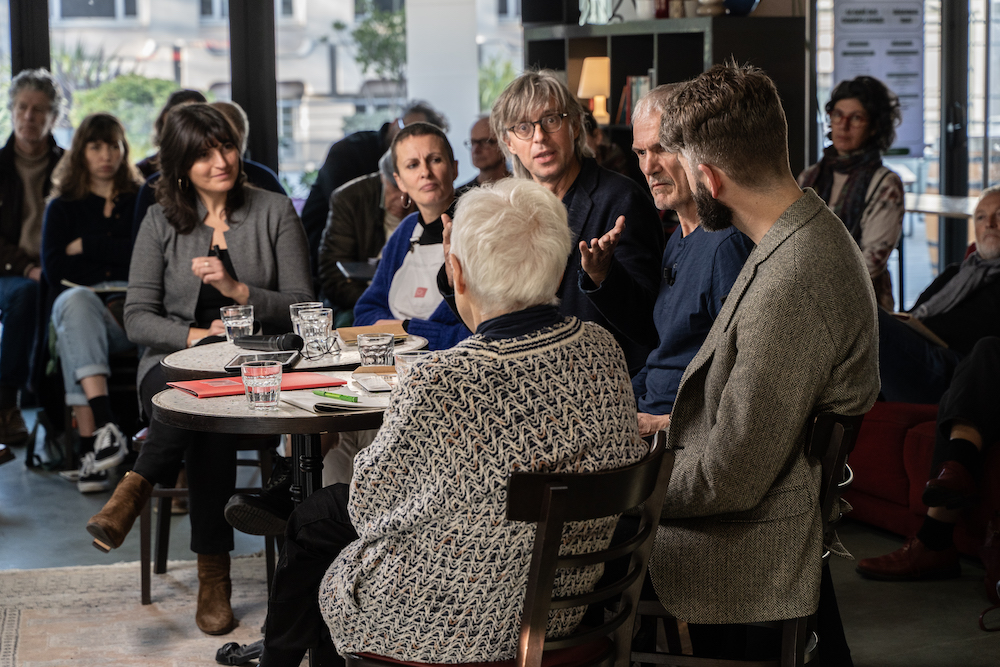
Map to unlock the story.
What a map can do, in my opinion, is to unblock characters. In fact, there is no confusion. And mapping, for example, and I’m probing here, to lay out this family territory over two, three, four, or five generations with the different characters, and their different points of view, and their different materiel frameworks, in which they lived.
Deploy the personal worlds of collective storytelling.
I’ll refer to my own experience, I was 2 years old, living in Guingamp. The toilet was at the back of the garden, not at all like the toilets here. So, when you experience this as a child it forges you differently to someone who has never seen toilets other than those of today. This trivial example is used a lot in Russian novels. Mapping is really about the unfolding of a world, what Guatarri called – he used it in Deleuze and Guatarri’s Kafka – arrangements of collective statements. Meaning, what is being articulated is a collective situation, it’s not just Bohdan alone, he’s just the scribe of a situation. And that’s already helpful because it explains a whole lot of divergences.
Mapping in the narrative, to go beyond the conventional wisdom.
Minor literature assumes that not everyone speaks the same language. People exchange in different languages and so, can exchange through the work of someone who maps or a scriptwriter, or a poet or whoever, who will sieve through all that and make something of it.
All Deligny’s work is on that. The young Janmari and other children Deligny helped, live outside the realm of language. For Lacan and the psychologists of the like, in mainstream thinking, humans are characterised by language. So, anything outside of language, is in the animal realm. So here was an opposing philosophical hypothesis which was that there are humans who don’t use language. Living with them, together we can shape this human, by using these maps which show, as I mentioned earlier, these children were considered as animals, running all over the place unaware of the adults around them. These maps prove the opposite they provide concrete evidence.
Mapping is a unique experience.
Mapping is not a set of IGN maps with their standardised categories. It’s not another model. It’s the monitoring of a person in proximity. And it’s not a model, there is no model. And it can’t be reproduced. Reproduction is out of the question. Each one is a unique experience – a psychoanalysis is unique for each individual. The big problem in psychoanalysis as, unfortunately, practiced in universities, is to have made models based on individual’s constructions. It’s another way of seeing the world, of following it, of philosophising…
Nancy Murzilli« As in divinatory practices, these agentive fictions, in rearranging the visible, reveal the invisible. What world prefigures our conception of what is meant by the term fiction? »
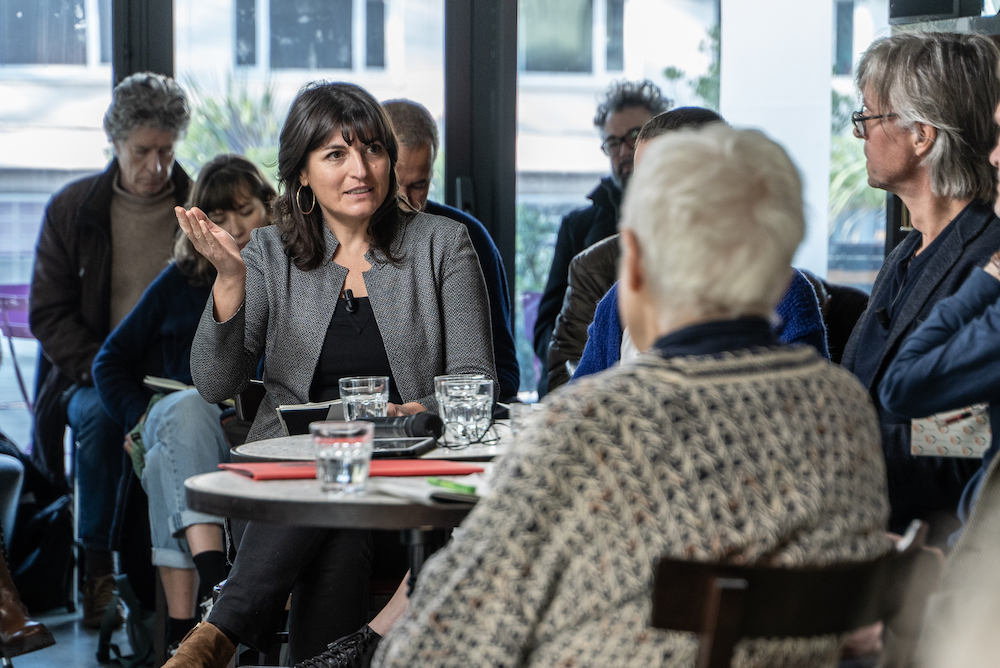
The agentivity of fiction.
I’m interested in what I’ve called ordinary fictions and their performative nature. The performative nature of fictions, considering the performativity of fiction, we then have to consider their agentivity and also their political, even subversive potential. As in divinatory practices, these agentive fictions, in rearranging the visible, reveal the invisible. As a result, fiction is no longer confined to spheres of artistic production and lighthearted games. It is no longer a mimetic model reflecting our lives. It’s a system we all use in daily life for which these artistic practices prepare us.
Dare fiction to transform the existing.
We might take fictions for fantasies, they can even manipulate us. But I also think there’s an approach, a remedy to this illusion, which is to confront fiction head on, embrace it as such, and allow it to transform existing states.
For example, until I was almost 30, I believed my family came from Sicily, because my father told me our ancestors were Sicilian, the mafia and all. He loved all that. So, I grew up with this illusion. Until… Not at all, we came from a small village in the Abruzzes in Italy.
My family had immigrated simply because they were extremely poor. It wasn’t quite the same adventure. But ultimately, my foundations are built on fiction, on that illusion.
The political dimension of fiction.
And this is where I join Anne’s proposal: If fiction has an effect on us it implies a form of responsibility. We might question two aspects. Firstly, what world prefigures our conception of what is meant by the term fiction? Because, I believe, this engages the political dimension of fiction. Secondly, is fiction always the best means for changing the world?
Blurred boundaries between reality and narrative.
We perceive things from the outside things we don’t understand therefore, it seems it can’t be objective. But in fact, it’s also a form of reality. And I think fiction is also that. It’s a mix between reality and fiction. And maybe sometimes something which is in principle a fiction, can become reality because we’ve understood it.
We can avoid the question of belief in the permanence of the dead, or not, simply by focusing on what is important to us. And what is important is perhaps to keep communication going with them one way or another. To keep a narrative going with them.
Bohdan Piasecki« Poetry invites plurality, it’s open for interpretation, it’s an invitation for emotional reactions, which often we can’t express verbally. »
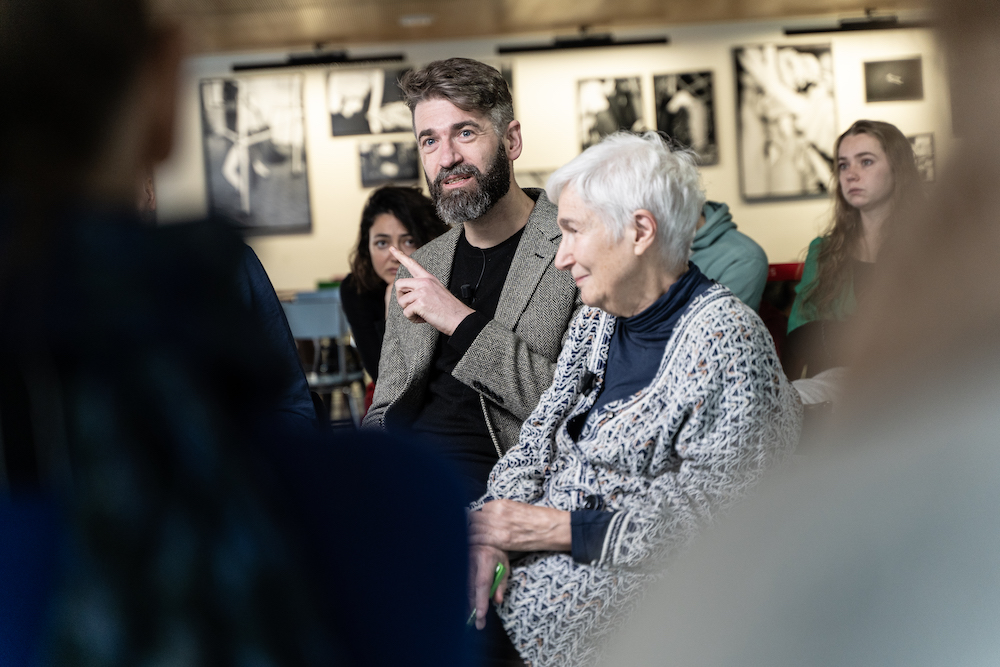
The multiplicities of the narrative.
I come from the world of poetry. I write poems which sometimes can be classified as fiction, sometimes they’re more narrative. And in poetry I think that we often take refuge in this notion that we’re a bit different, that we don’t tell simple stories, we can hide behind the multiplicities, we can create systems putting the responsibility of interpretation, or finding meaning in the hands of the reader.
Question the narrative through the notion of inheritance.
But poems are texts like any other. I question poems as active texts, it’s tied to the question of heritage. What I try to write, even if it’s anecdotal at present, is a collection of poems related to my own heritage, to my family history:
My grandfather, whom I never knew, he died before I was born, in Poland, where I’m from, was, before the war, leader of the Polish fascist movement, the Polish nationalist far-right party. Which was prohibited by the pre-war government in Poland. Later my grandfather fought against the Nazis – I’ll skip the details – After the war, when Poland fell under Soviet Union influence he believed it was impossible to resist that influence. And he sought political power by positioning himself as a kind of intermediary between the Stalinist government, initially, and then with those who came after: the Polish right wing, essentially the Catholic Church. Just to say that that he had a lot of enemies.
And that… his eldest son, whom I was named after, at the age of 15, was kidnapped at the school entrance and was murdered. He was found a year later, stabbed to death in a cellar. I was born in 1980, in a war-torn Poland. My parents sent me to school in France. That’s why I speak French. And I grew up somewhat cut off, removed from this story.
But when I started university in Poland, I observed, when I said my name: I’m Bogdan Piasecki, the professors said: that’s interesting, there was a Bohdan Piasecki. It’s a well know story in Poland, because the criminal case was never resolved. The murderers’ names were never revealed, they were never caught. So, when I went to the cemetery, to visit my family tomb, I heard the people behind me with all their conspiracy theories: “Oh yes, that’s Piasecki, it’s that group which killed his son. He pretended to kill his son, it was all his own doing.” On top of that, is the fact that, if I see a far-right protest march in Poland now, some of the protesters are wearing the emblem of my grandfather’s organisation.
To clarify, I don’t have any affinity with his political ideas. But it’s my family and it’s my name. And I know that if I write anything on this topic, which has nothing to do with my poetry. Stories I’ve written as a poet they’ll be read because of who I am. And this sense of responsibility comes from that and also the interrogations.
The liberation of shared narrative.
What I write is poetry. Poems which say only one thing, tell one story, or which propose a simple political argument, are often not great poems. I don’t claim the right to be the moral compass for anyone. But at the same time, is this our role? We have to multiply meanings, or we should address aesthetics? How can we use this technology you mentioned – this poetic system I’ve inherited – to tell a story which needs to be heard? Using poetry, which is probably not the best form.
There’s a form of responsibility in that, with a story we feel needs to be told, which is trying to exist. The responsibility I can accept is the responsibility towards the story trying to emerge, trying to exist. Not necessarily a, let’s say, social responsibility… But I find a sort of arrogance in that, the world is waiting for me to repair it with my poems. I’ve been given or a world I know that no one else is knows, that’s a responsibility I can understand. There’s a poet and novelist, I think from Chile, called Alejandro Zambra, who was talking about his poems, and he said… I’ll paraphrase, I don’t remember the citation but he said: I don’t know if my poems are good but they have a right to breath. They must be brought to life. Are they good? I have no idea.
I hold onto that.
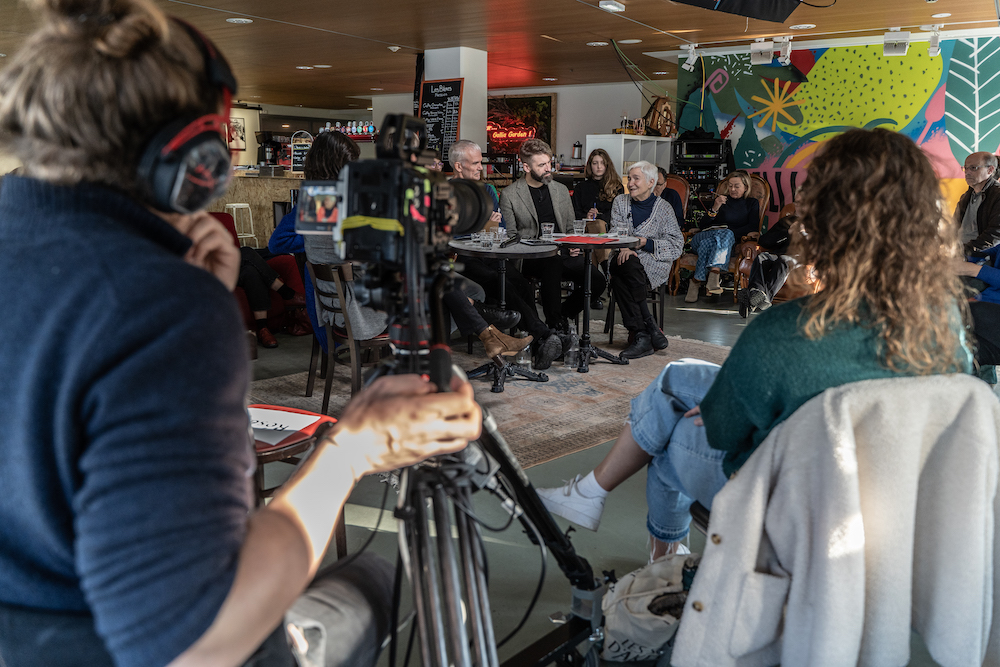
The author’s responsibility.
Because if we’re talking about responsibility, there are so many narratives intertwined from which I could extract a form of responsibility, it’s almost impossible to choose.
Who am I to be responsible? As a Polish? I haven’t lived in Poland for 17 years. I live in England. As an immigrant? It’s true there are often far-right wing movements among immigrants. There’s always a high risk of radicalization among Eastern European immigrants.
Responsibility as a poet? But towards whom? It’s very hard to identify. But I feel great responsibility towards the story, towards the words I choose to relate it. On a micro, not a macro scale, towards those I want to talk about, towards this boy, this 15-year-old Bohdan, who became a propaganda tool throughout Polish political spheres whose name resurfaces every 2 years but only in a crime context. Maybe he can become someone else, a more complex person, not so one-dimensional. I think it’s probably one of poetry’s strengths.
Should the story be definitive?
There’s a game I sometimes play with my students – I teach writing in England – I give them blocks of text, some are excerpts from novels, others are extracts from poems, I reformat them into paragraphs and I ask them to identify which are from novels or academic texts and which are poems. They always get it right. And when I ask: “how do you know?” It’s often because prose has a purpose, it aims to communicate something, either a story or some information. Poetry invites plurality, it’s open for interpretation, it’s an invitation for emotional reactions, which often we can’t express verbally. And it’s less definitive. And maybe we should head in this direction.
The complex choice of words to feel the story.
We were saying earlier that people don’t speak the same language and it’s presented as a problem. We imagine an ideal language shared by all. That’ll never happen. And as a translator I think the solution is not to aim for a single language to be shared by all, but to find value in the multiplicity of languages.
Even with words, what you’re describing is fantastic. Even with words I believe we can create freer spaces letting words “roll around on the floor”. To demand more from words than usual. And discover that their definitions can vary. There’s nothing new in what I’m saying, but perhaps for children, and even for us, we develop habits and they make us lazy with words, with language. That’s what poetry does, it demands more from a word than usual.
Maybe that’s what they do, in scriptwriting, in creating interaction between words and images. Stopping the words from time to time. We often do that with students: We can start by taking away the first words. If you’re writing about joy, you make a long list of words… Everything that makes you think of joy, make a long list of everything and you put it away… Then you say: “Now you write about joy but all those words are not permitted. You have to find other ones.”
But otherwise, and this goes back to this idea of a language. Living in England, with English as such a dominant language which doesn’t leave much room for others, I’ve written several poems in Polish for the English. They’re meant to be perceived not necessarily understood according to the way a dictionary might define it. More perceived I guess. Like music or dance.
Control of the body through the narrative.
Comme le dit Anne, la cartographie consiste à trouver des alliances transversales dans le récit avec d’autres domaines, disciplines, écosystèmes.
About finding those associations or recognizing that perhaps the categories we work within are too restrictive. I find that we tend to separate dance from writing. In my work, I write for voice a lot, for live performance. Poetry is physical. I’m here, in the present. My body is present. It’s not just words on a page. Even for poetry we read from a book.
There’s an American poetry critic, Robert Pinsky, who wrote a very short but very interesting book on sounds in poetry. In the introduction, he explains that for him, poetry is a dance, that to read a poem that someone else has written stirs the air column, activates the articulators. The poem takes control of your body. The difference being you’re not watching a professional dancer, they’re amateurs performing the poem’s dance. This is also interesting because he had a very democratic approach to poetry which I highly appreciate.
Manue Gaquère« Using the body to relate this story they created collectively, surprise themselves. »
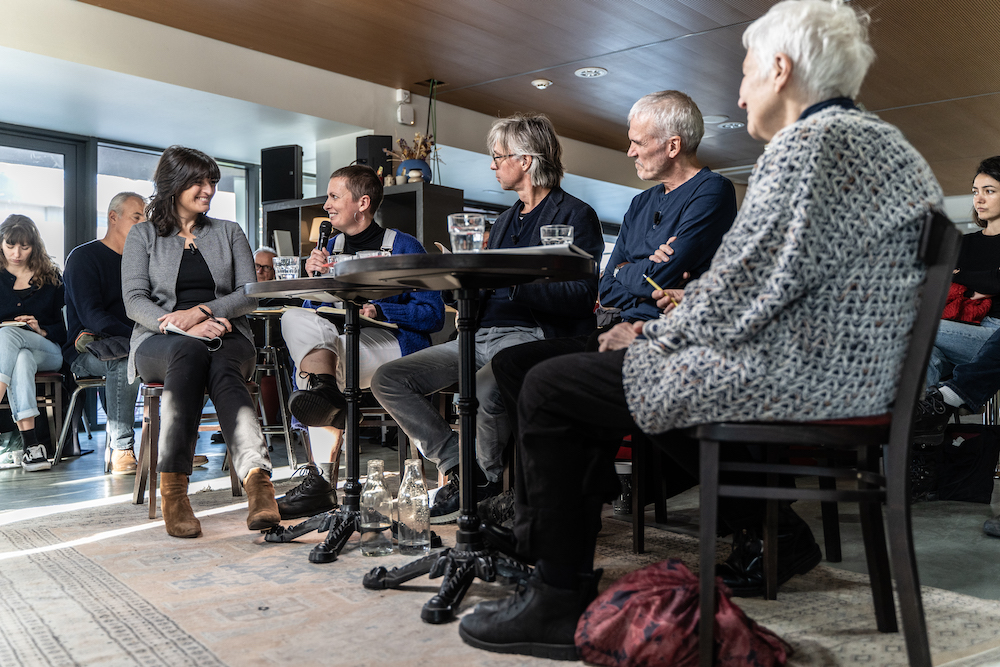
Feeding the story through the unknown.
Before coming, I reflected on the association between mapping and the imaginary. And I thought, in fact I would never have thought of associating them.
Mapping, when reflecting on it in regards to my young students, I thought of mapping as unfolding our personal story at a point in time. So, what does that mean for an 11-year-old, to map out their life up until their 11th year, with everything they’ve received from their parents, from the children they’ve grown up with, from their teachers. I wondered what the imaginary associated with mapping, for an 11-year-old, might that mean. Regarding the imaginary, sometimes I think there’s not much room left in the way of imaginary for children. That’s what I try to offer in my work particularly through dance.
I’d like to quote a theatre play called “I dance because I’m wary of words”. My question is: Can we tell stories, create narratives with elements other than words? My answer is, yes, of course. And this idea of mapping, what interests me with younger children who haven’t had much life experience is precisely about discovering unfamiliar territories. And from my position, it’s about how, as a teacher, do I implement the conditions which will allow these children to express themselves, be it through their bodies or through words. What can I do? What protocol, which creative process can I set up with these children to enable them to discover these territories and learn about themselves maybe?
Collectively invent a new world.
I can take a very recent exercise. I try to work with inter-disciplinarity using experiences they’ve had elsewhere, not with me. The children went to a story-telling festival called “The High Tide Festival” which takes place in Brest. And they saw a performance called “Le piment des squelettes”. And so, I began my dance cycle and started my lesson, the other day, telling a story with words a story I started to tell then they continued. They invented a whole new world taking it in turns to tell.
Translate the story, by the body.
So, the next lesson will be using the body to relate this story they created collectively. It’ll be an exercise in translating the telling of a story into a choreographic gesture. We will back and forth and we also use writing, drawing. I try to combine different activities. And I’ve already seen joy. It’s magical to see them surprise themselves, to see how they respond to something proposed by someone else. They manage to produce results they didn’t think themselves capable of.
Free oneself from words to allow horizontality.
I do question my position among the children when I’m with them.
The verticality we find in teaching at times. We’ve talked about this. I try to tip the line towards something more horizontal. I think that helps them to free up. That is to say, of course in certain situations we propose there are creative constraints but these will enable them to discover other things.
In classrooms we have non-verbal children, we’ve got children who are all language, too verbal, and who prevent others from expressing themselves. When you have a class of 30, we have to deal with all these children. And I find that, sometimes, using body language, freeing up from the words, helps put everyone on equal footing, let’s say.
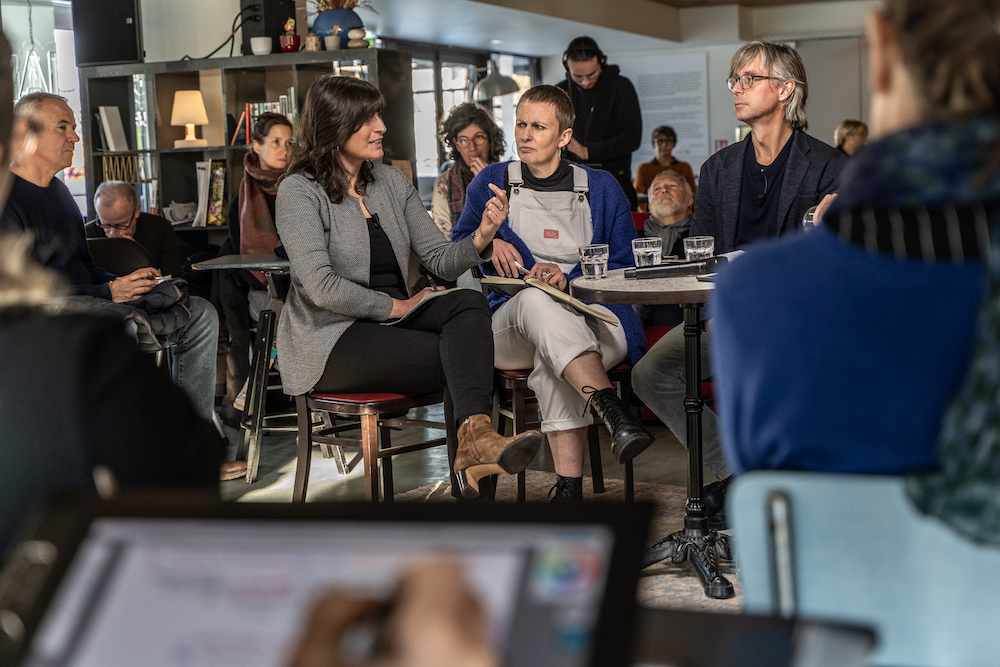
© Photos Brigitte Bouillot
Hosted on Acast. See acast.com/privacy for more information.
]]>— a conference recorded at Les Champs Libres (Rennes, Brittany) in December 2023 in the framework of the serie “What stories for our time”, moderated by Nicolás Buenaventura – writer-director and storyteller – and Yann Apperry – screenwriter, playwright and novelist.
Stories build complex worlds in which we find ourselves projected. In the footsteps of the “Theory of the Rhizome”, imaginary as a space of co-elaboration, a space of proliferation of possibilities…
With Bohdan Piasecki – Poet and Professor of Creative Writing, Nancy Murzilli – Philosopher and Literary Theorist, Anne Querrien – Sociologist and Urban planner and Manue Gaquère – Sports Teacher
« As Deleuze says so well in his book on painting in his lecture on Bacon: “Our imaginary is overrun with clichés, which we need to get rid of in order to create.” Mapping is another way of seeing the world, of following it, of philosophising… »
Narrative: a flow story.
In the teachings of Guattari or those of Lacan, creative workflows are highlighted that can be fluid, that “flow” but that can, very often get stuck. In French we say we “dry up”. We “dry up” or get stuck during exams, we get stuck on a poem, we block in our writing. So, we use cheat sheets to avoid these blocks. Generally, cheat sheets aren’t very useful, because it’s more a question of flow.
A mapping of the imaginary in the real.
The imaginary needs to be put in its place. There are the flows of reality… There’s the imaginary that, as Guattari says, creates existential territories. In fact, what we map out are certain real-life practices. And, if we’re stuck in these existential territories, we don’t create anything of interest, we create worthless stories, repetitive… Ritornellos.
Reality to feed the imagination.
Flow can take you beyond that, towards what Lacan calls: the symbolical. And what Guattari called: non-physical spheres. Which are music, maths, philosophy… all forms of collective human production, abstract collective productions. Guattari distinguished himself from Lacan, in saying all that draws on production, based on different technologies – the flow of successive technologies, machines which aren’t just technological – as in mechanical, made of metal, but also social, produced by humanity over time, inherited by all.
This is a quick resume but it’s necessary to provide this framework, because I’m sort of wary of narrative set exclusively in the imaginary. As Deleuze says so well in his book on painting in his lecture on Bacon: “Our imaginary is overrun with clichés, which we need to get rid of in order to create.” And it’s not that easy.
Heritage is an essential part of the story.
Regarding heritage, which is common to many, or for a family… for example, I have four sisters, we have the same family heritage, let’s say. In fact, often sidestepping occurs due to outside influences, not of our own making. What bothers me is, that everyone talks of stories as if they’re our own invention. For me they’re forged collectively between me and outside events.
Project the imaginary onto reality.
Deligny, was born in 1913 his father was killed in the 1914 war. So, he grew up without a father and became an educator for the young, initially delinquents then for increasingly for difficult autistic kids. He spent his last years in the Cévennes, with a young lad called Janmari. And when Janmari was brought to him, he drove everyone crazy because he spun round and round screaming. The father was unknown, it was the mother who brought him, so Deligny took him to the Cévennes to live with him because at the psychiatric clinic, la Borde, although very open, where this young man was brought, who, I think, was 8 at the time, no one could cope with him, his spinning round screaming. So, he goes to the Cévennes and is joined by a young man named Jacques Lin who he’d met near Paris, a draftsman at Hispano Suiza and he went to live there as an educator in this place for autistic children. Jacques Lin couldn’t cope with Janmari. So Deligny tells him: “Listen you can draw, every day you draw maps of his movements, not imaginary ones, his actual movements, maps of Janmari’s movements, and every time he spins and screams you draw a circle on the map.” After a while there were fewer and fewer circles on the map. And what Deligny told me was it didn’t mean that Janmari stopped spinning it meant that Jacques Lin was less irritated.
So, they established in their community a method of mapping the youngsters’ movements and made some interesting discoveries. For example, the autistic kids disappear, we don’t know where. And the educators obviously worry, where can they be, etc. Jacques Lin followed Janmari to do his maps, and they realised that Janmari was moving in ellipses around the adult living areas. There was an objective relationship, not an imaginary one, objective, between him and the group of adults looking after him. They also realised that when Janmari pooped like a dog on the ground, there was always water below. He became the community’s water diviner.
What I’m saying is that it’s not imaginary. It’s imaginary for others. We project onto reality what we imagine with different coordinates. I think that as a teacher we’re faced with these problems because students interpret what we say with their own stuff. Which has sometimes surprising results!
Map to unlock the story.
What a map can do, in my opinion, is to unblock characters. In fact, there is no confusion. And mapping, for example, and I’m probing here, to lay out this family territory over two, three, four, or five generations with the different characters, and their different points of view, and their different materiel frameworks, in which they lived.
Deploy the personal worlds of collective storytelling.
I’ll refer to my own experience, I was 2 years old, living in Guingamp. The toilet was at the back of the garden, not at all like the toilets here. So, when you experience this as a child it forges you differently to someone who has never seen toilets other than those of today. This trivial example is used a lot in Russian novels. Mapping is really about the unfolding of a world, what Guatarri called – he used it in Deleuze and Guatarri’s Kafka – arrangements of collective statements. Meaning, what is being articulated is a collective situation, it’s not just Bohdan alone, he’s just the scribe of a situation. And that’s already helpful because it explains a whole lot of divergences.
Mapping in the narrative, to go beyond the conventional wisdom.
Minor literature assumes that not everyone speaks the same language. People exchange in different languages and so, can exchange through the work of someone who maps or a scriptwriter, or a poet or whoever, who will sieve through all that and make something of it.
All Deligny’s work is on that. The young Janmari and other children Deligny helped, live outside the realm of language. For Lacan and the psychologists of the like, in mainstream thinking, humans are characterised by language. So, anything outside of language, is in the animal realm. So here was an opposing philosophical hypothesis which was that there are humans who don’t use language. Living with them, together we can shape this human, by using these maps which show, as I mentioned earlier, these children were considered as animals, running all over the place unaware of the adults around them. These maps prove the opposite they provide concrete evidence.
Mapping is a unique experience.
Mapping is not a set of IGN maps with their standardised categories. It’s not another model. It’s the monitoring of a person in proximity. And it’s not a model, there is no model. And it can’t be reproduced. Reproduction is out of the question. Each one is a unique experience – a psychoanalysis is unique for each individual. The big problem in psychoanalysis as, unfortunately, practiced in universities, is to have made models based on individual’s constructions. It’s another way of seeing the world, of following it, of philosophising…
Nancy Murzilli« As in divinatory practices, these agentive fictions, in rearranging the visible, reveal the invisible. What world prefigures our conception of what is meant by the term fiction? »
The agentivity of fiction.
I’m interested in what I’ve called ordinary fictions and their performative nature. The performative nature of fictions, considering the performativity of fiction, we then have to consider their agentivity and also their political, even subversive potential. As in divinatory practices, these agentive fictions, in rearranging the visible, reveal the invisible. As a result, fiction is no longer confined to spheres of artistic production and lighthearted games. It is no longer a mimetic model reflecting our lives. It’s a system we all use in daily life for which these artistic practices prepare us.
Dare fiction to transform the existing.
We might take fictions for fantasies, they can even manipulate us. But I also think there’s an approach, a remedy to this illusion, which is to confront fiction head on, embrace it as such, and allow it to transform existing states.
For example, until I was almost 30, I believed my family came from Sicily, because my father told me our ancestors were Sicilian, the mafia and all. He loved all that. So, I grew up with this illusion. Until… Not at all, we came from a small village in the Abruzzes in Italy.
My family had immigrated simply because they were extremely poor. It wasn’t quite the same adventure. But ultimately, my foundations are built on fiction, on that illusion.
The political dimension of fiction.
And this is where I join Anne’s proposal: If fiction has an effect on us it implies a form of responsibility. We might question two aspects. Firstly, what world prefigures our conception of what is meant by the term fiction? Because, I believe, this engages the political dimension of fiction. Secondly, is fiction always the best means for changing the world?
Blurred boundaries between reality and narrative.
We perceive things from the outside things we don’t understand therefore, it seems it can’t be objective. But in fact, it’s also a form of reality. And I think fiction is also that. It’s a mix between reality and fiction. And maybe sometimes something which is in principle a fiction, can become reality because we’ve understood it.
We can avoid the question of belief in the permanence of the dead, or not, simply by focusing on what is important to us. And what is important is perhaps to keep communication going with them one way or another. To keep a narrative going with them.
Bohdan Piasecki« Poetry invites plurality, it’s open for interpretation, it’s an invitation for emotional reactions, which often we can’t express verbally. »
The multiplicities of the narrative.
I come from the world of poetry. I write poems which sometimes can be classified as fiction, sometimes they’re more narrative. And in poetry I think that we often take refuge in this notion that we’re a bit different, that we don’t tell simple stories, we can hide behind the multiplicities, we can create systems putting the responsibility of interpretation, or finding meaning in the hands of the reader.
Question the narrative through the notion of inheritance.
But poems are texts like any other. I question poems as active texts, it’s tied to the question of heritage. What I try to write, even if it’s anecdotal at present, is a collection of poems related to my own heritage, to my family history:
My grandfather, whom I never knew, he died before I was born, in Poland, where I’m from, was, before the war, leader of the Polish fascist movement, the Polish nationalist far-right party. Which was prohibited by the pre-war government in Poland. Later my grandfather fought against the Nazis – I’ll skip the details – After the war, when Poland fell under Soviet Union influence he believed it was impossible to resist that influence. And he sought political power by positioning himself as a kind of intermediary between the Stalinist government, initially, and then with those who came after: the Polish right wing, essentially the Catholic Church. Just to say that that he had a lot of enemies.
And that… his eldest son, whom I was named after, at the age of 15, was kidnapped at the school entrance and was murdered. He was found a year later, stabbed to death in a cellar. I was born in 1980, in a war-torn Poland. My parents sent me to school in France. That’s why I speak French. And I grew up somewhat cut off, removed from this story.
But when I started university in Poland, I observed, when I said my name: I’m Bogdan Piasecki, the professors said: that’s interesting, there was a Bohdan Piasecki. It’s a well know story in Poland, because the criminal case was never resolved. The murderers’ names were never revealed, they were never caught. So, when I went to the cemetery, to visit my family tomb, I heard the people behind me with all their conspiracy theories: “Oh yes, that’s Piasecki, it’s that group which killed his son. He pretended to kill his son, it was all his own doing.” On top of that, is the fact that, if I see a far-right protest march in Poland now, some of the protesters are wearing the emblem of my grandfather’s organisation.
To clarify, I don’t have any affinity with his political ideas. But it’s my family and it’s my name. And I know that if I write anything on this topic, which has nothing to do with my poetry. Stories I’ve written as a poet they’ll be read because of who I am. And this sense of responsibility comes from that and also the interrogations.
The liberation of shared narrative.
What I write is poetry. Poems which say only one thing, tell one story, or which propose a simple political argument, are often not great poems. I don’t claim the right to be the moral compass for anyone. But at the same time, is this our role? We have to multiply meanings, or we should address aesthetics? How can we use this technology you mentioned – this poetic system I’ve inherited – to tell a story which needs to be heard? Using poetry, which is probably not the best form.
There’s a form of responsibility in that, with a story we feel needs to be told, which is trying to exist. The responsibility I can accept is the responsibility towards the story trying to emerge, trying to exist. Not necessarily a, let’s say, social responsibility… But I find a sort of arrogance in that, the world is waiting for me to repair it with my poems. I’ve been given or a world I know that no one else is knows, that’s a responsibility I can understand. There’s a poet and novelist, I think from Chile, called Alejandro Zambra, who was talking about his poems, and he said… I’ll paraphrase, I don’t remember the citation but he said: I don’t know if my poems are good but they have a right to breath. They must be brought to life. Are they good? I have no idea.
I hold onto that.
The author’s responsibility.
Because if we’re talking about responsibility, there are so many narratives intertwined from which I could extract a form of responsibility, it’s almost impossible to choose.
Who am I to be responsible? As a Polish? I haven’t lived in Poland for 17 years. I live in England. As an immigrant? It’s true there are often far-right wing movements among immigrants. There’s always a high risk of radicalization among Eastern European immigrants.
Responsibility as a poet? But towards whom? It’s very hard to identify. But I feel great responsibility towards the story, towards the words I choose to relate it. On a micro, not a macro scale, towards those I want to talk about, towards this boy, this 15-year-old Bohdan, who became a propaganda tool throughout Polish political spheres whose name resurfaces every 2 years but only in a crime context. Maybe he can become someone else, a more complex person, not so one-dimensional. I think it’s probably one of poetry’s strengths.
Should the story be definitive?
There’s a game I sometimes play with my students – I teach writing in England – I give them blocks of text, some are excerpts from novels, others are extracts from poems, I reformat them into paragraphs and I ask them to identify which are from novels or academic texts and which are poems. They always get it right. And when I ask: “how do you know?” It’s often because prose has a purpose, it aims to communicate something, either a story or some information. Poetry invites plurality, it’s open for interpretation, it’s an invitation for emotional reactions, which often we can’t express verbally. And it’s less definitive. And maybe we should head in this direction.
The complex choice of words to feel the story.
We were saying earlier that people don’t speak the same language and it’s presented as a problem. We imagine an ideal language shared by all. That’ll never happen. And as a translator I think the solution is not to aim for a single language to be shared by all, but to find value in the multiplicity of languages.
Even with words, what you’re describing is fantastic. Even with words I believe we can create freer spaces letting words “roll around on the floor”. To demand more from words than usual. And discover that their definitions can vary. There’s nothing new in what I’m saying, but perhaps for children, and even for us, we develop habits and they make us lazy with words, with language. That’s what poetry does, it demands more from a word than usual.
Maybe that’s what they do, in scriptwriting, in creating interaction between words and images. Stopping the words from time to time. We often do that with students: We can start by taking away the first words. If you’re writing about joy, you make a long list of words… Everything that makes you think of joy, make a long list of everything and you put it away… Then you say: “Now you write about joy but all those words are not permitted. You have to find other ones.”
But otherwise, and this goes back to this idea of a language. Living in England, with English as such a dominant language which doesn’t leave much room for others, I’ve written several poems in Polish for the English. They’re meant to be perceived not necessarily understood according to the way a dictionary might define it. More perceived I guess. Like music or dance.
Control of the body through the narrative.
Comme le dit Anne, la cartographie consiste à trouver des alliances transversales dans le récit avec d’autres domaines, disciplines, écosystèmes.
About finding those associations or recognizing that perhaps the categories we work within are too restrictive. I find that we tend to separate dance from writing. In my work, I write for voice a lot, for live performance. Poetry is physical. I’m here, in the present. My body is present. It’s not just words on a page. Even for poetry we read from a book.
There’s an American poetry critic, Robert Pinsky, who wrote a very short but very interesting book on sounds in poetry. In the introduction, he explains that for him, poetry is a dance, that to read a poem that someone else has written stirs the air column, activates the articulators. The poem takes control of your body. The difference being you’re not watching a professional dancer, they’re amateurs performing the poem’s dance. This is also interesting because he had a very democratic approach to poetry which I highly appreciate.
Manue Gaquère« Using the body to relate this story they created collectively, surprise themselves. »
Feeding the story through the unknown.
Before coming, I reflected on the association between mapping and the imaginary. And I thought, in fact I would never have thought of associating them.
Mapping, when reflecting on it in regards to my young students, I thought of mapping as unfolding our personal story at a point in time. So, what does that mean for an 11-year-old, to map out their life up until their 11th year, with everything they’ve received from their parents, from the children they’ve grown up with, from their teachers. I wondered what the imaginary associated with mapping, for an 11-year-old, might that mean. Regarding the imaginary, sometimes I think there’s not much room left in the way of imaginary for children. That’s what I try to offer in my work particularly through dance.
I’d like to quote a theatre play called “I dance because I’m wary of words”. My question is: Can we tell stories, create narratives with elements other than words? My answer is, yes, of course. And this idea of mapping, what interests me with younger children who haven’t had much life experience is precisely about discovering unfamiliar territories. And from my position, it’s about how, as a teacher, do I implement the conditions which will allow these children to express themselves, be it through their bodies or through words. What can I do? What protocol, which creative process can I set up with these children to enable them to discover these territories and learn about themselves maybe?
Collectively invent a new world.
I can take a very recent exercise. I try to work with inter-disciplinarity using experiences they’ve had elsewhere, not with me. The children went to a story-telling festival called “The High Tide Festival” which takes place in Brest. And they saw a performance called “Le piment des squelettes”. And so, I began my dance cycle and started my lesson, the other day, telling a story with words a story I started to tell then they continued. They invented a whole new world taking it in turns to tell.
Translate the story, by the body.
So, the next lesson will be using the body to relate this story they created collectively. It’ll be an exercise in translating the telling of a story into a choreographic gesture. We will back and forth and we also use writing, drawing. I try to combine different activities. And I’ve already seen joy. It’s magical to see them surprise themselves, to see how they respond to something proposed by someone else. They manage to produce results they didn’t think themselves capable of.
Free oneself from words to allow horizontality.
I do question my position among the children when I’m with them.
The verticality we find in teaching at times. We’ve talked about this. I try to tip the line towards something more horizontal. I think that helps them to free up. That is to say, of course in certain situations we propose there are creative constraints but these will enable them to discover other things.
In classrooms we have non-verbal children, we’ve got children who are all language, too verbal, and who prevent others from expressing themselves. When you have a class of 30, we have to deal with all these children. And I find that, sometimes, using body language, freeing up from the words, helps put everyone on equal footing, let’s say.
© Photos Brigitte Bouillot
Hosted on Acast. See acast.com/privacy for more information.
]]>Tamara Russell a aidé des personnes du monde entier à transformer leur vie, en utilisant ses techniques révolutionnaires de pleine conscience, conçues pour le cerveau. Ces outils neuroscientifiques translationnels permettent à chacun de prendre de meilleures décisions, en accord avec ses valeurs fondamentales et de bien vivre.
Titulaire de deux doctorats et ceinture noire de Shaolin Kung Fu, Tamara Russell intègre l’esprit, le cerveau et le corps dans une approche totalement unique du bien-être et de l’épanouissement qui combine le mouvement, les neurosciences et la créativité. Ses trois programmes de pleine conscience appliquée comprennent Body in Mind Training, Tools to Transform et The Dragon Way to Mental Wealth (et pour les familles et les jeunes : What Colour is Your Dragon ?)
Tamara Russell participe à des recherches internationales sur la manière dont la pleine conscience modifie la structure du cerveau. Elle enseigne les neurosciences et la pleine conscience au King’s College de Londres.
Tamara Russell est la fondatrice et la co-directrice d’une organisation à but non lucratif : le Mindfulness Centre of Excellence. Cette organisation a été fondée en 2011, après avoir partagé la scène avec Sa Sainteté le Dalaï Lama à Sao Paulo, au Brésil, lors d’un symposium explorant la manière dont les anciennes technologies contemplatives peuvent contribuer à relever les défis de la vie moderne.
Tamara est l’auteur de trois livres : Mindfulness in Motion, #whatismindfulness et What Colour is Your Dragon.
— un entretien réalisé par Vassili Silovic, auteur et réalisateur de films documentaires, et enregistré aux Champs Libres (Rennes) dans le cadre de la série “Quels récits pour notre temps ?”.

Entraîner le cerveau, comme le corps.
Être humain nous permet de penser, ressentir, créer. Et ce, grâce à notre cerveau. Mais nous ne connaissons vraiment que peu de choses à son sujet. Il y a eu certes beaucoup de progrès, au cours des dernières décennies, mais il y a encore tellement d’éléments encore méconnus, parmi lesquels : la conscience.
Est-ce que nous surestimons ou surestimons ou sous-estimons notre cerveau ? Probablement les deux.
Nous surestimons en termes de croyance ce que notre cerveau nous dit, ce qui peut être problématique dans de nombreux cas. Mais nous sous-estimons son potentiel et, en particulier, le potentiel permis grâce à son entraînement. Nous pensons aller à la salle de sport et à l’entraînement de notre corps. Pour beaucoup, c’est une obsession. Hors, concernant notre cerveau, qu’en est-il de nos séances d’entraînement ?
Stimuler l’attention.
Il y a de multiples façons d’entraîner le cerveau. Celles permettant de stimuler l’attention sont primordiales. Particulièrement dans notre culture moderne, où notre attention est constamment accaparée par les écrans et notre rythme de vie effréné. Nous pouvons nous entraîner à prendre conscience des capacités d’ouverture de notre attention — quand et comment elle se rétrécit et s’élargit. Un entraînement est utile pour stimuler et provoquer l’ouverture ou la fermeture de l’objet précis sur lequel nous souhaitons nous concentrer. Comme nous procédons avec l’œil ou avec l’appareil photo.
“Zoomer” vs. “Dézoomer”.
Lorsque nous travaillons – en particulier dans la création -, il y a un mouvement systématique que l’on entreprend : nous décidons de “zoomer”, d’avoir une attention focalisée et soutenue – car particulière à un fragment, un détail. Une concentration étroite qui est souvent source de blocage. Nous sommes en quelque sorte, « coincés ». La créativité est, alors, stoppée.
Se déconcentrer pour libérer le processus créatif.
Dans le cas de blocages, ce qui aide souvent est, par exemple, d’aller se promener, de prendre une douche. On libère, alors, la focale de l’attention grâce aux ressentis du vent sur le visage, de l’eau sur la peau ou encore l’odeur du savon. La clé de la concentration est de protéger des temps ultra-concentrés et des temps d’ouverture à l’autre, à ce qui nous entoure. On augmente ainsi les chances, aux idées enfouies : d’émerger et, ainsi, de donner corps au génie créatif.
Nos sensations et leurs impacts sur la créativité.
Notre activité cérébrale est modulée par énormément d’informations à traiter, comme maintenir la position de notre corps, veiller à son équilibre, ne pas bouger. Ce qui est humain. La nervosité, les sensations ressenties dans notre corps ont un impact sur notre créativité. Il faut en avoir conscience.
Écouter son corps.
La plupart du temps, nous sommes – très souvent -, dans ce que l’on peut appeler : “dans nos têtes”. On pense à des choses ou à nous-mêmes, on se souvient, on planifie, on imagine. Il est agréable d’y consacrer du temps, mais à une échelle respectable. “Se laisser tomber dans notre corps” : en invitant le corps à prendre le pouvoir, en nous indiquant que nous avons besoin de faire une pause ou de s’asseoir devant un ordinateur et d’essayer d’écrire quelque chose pendant cinq heures. Entre besoins primaires ou plus complexes. C’est aussi une forme de sagesse.
Dé-conditionner pour créer.
Il est important d’étudier nos propres expériences. Nous sommes conditionnés à penser, à agir : je dois écrire quelque chose, alors je vais m’asseoir devant l’ordinateur ou encore : je vais partir avec mon bloc-notes, je dois trouver des idées. J’encourage à explorer et à expérimenter les mouvements, les postures qui stimulent le processus créatif. S’asseoir sur une chaise, un tabouret ou sur le bureau ? Quels sont les environnements qui favorisent le processus créatif ? La bibliothèque ? Sous un arbre ? Dans un train ? Le silence ou au contraire un lieu très animé ? Cette étude provoque le mouvement, le déplacement. Il s’agit souvent de mélanger les contextes, les outils, les lieux, les environnements.
Différentes attentions en fonction des générations.
Nous devons, chacun, trouver notre propre voie stimulatrice de création. Je pense que pour les jeunes générations – natives du numérique : leur cerveau a un autre fonctionnement et je les encourage vraiment à se déplacer et à voir ce qui est déclencheur pour eux. Une école de pensée dit que les natifs du numérique ont fondamentalement des réseaux cérébraux qui ont structuré des réseaux d’attention, façonnés et sculptés par l’environnement numérique. C’est logique car le cerveau est hydroplastique — le réseau de l’attention est, en particulier, très plastique. Les pessimistes diront plutôt que les jeunes ne peuvent pas être attentifs : ils ne peuvent pas rester assis, consommer des médias qui durent plus de trois minutes, ou suivre une vidéo TikTok de plus de 15 secondes. Ils reçoivent constamment des informations et leur traitement de ces données est superficiel. Je suis plus optimiste, en me disant : peut-être s’agit-il de cerveaux qui sont en train de s’adapter aux nouvelles technologies, qui se préparent aux défis à venir. En fait, c’est peut-être notre cerveau qui n’est pas adapté aux défis de la création, à comment créer et sculpter ce nouveau monde, en interaction avec les technologies.
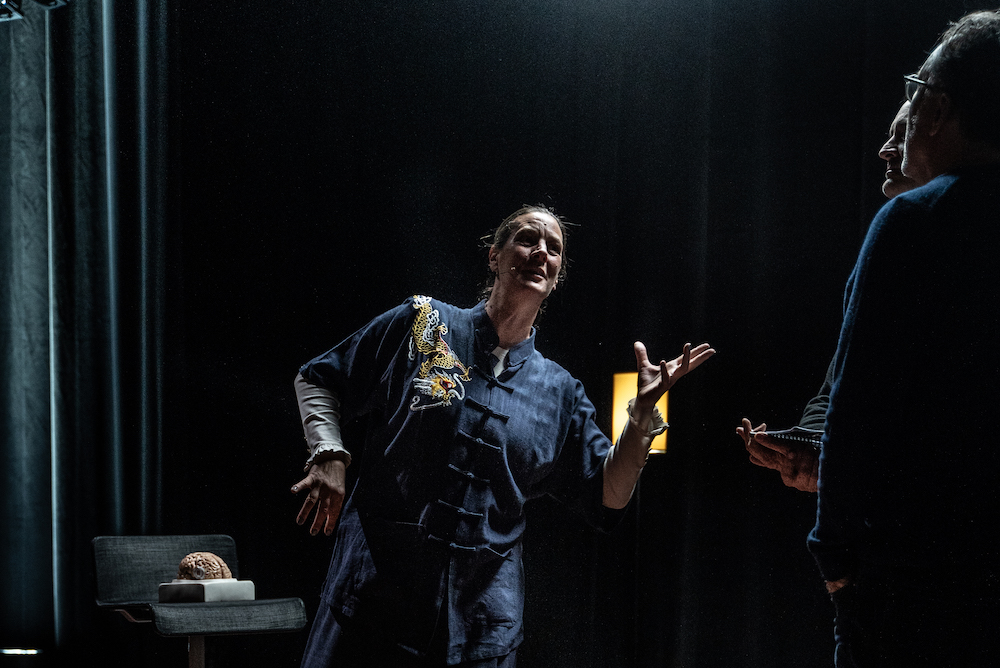
Attention & émotions.
En tant que psychologue clinicienne, une des problématiques que je traite est celle du croisement de l’attention avec la régulation des émotions. Ce que j’ai découvert, en travaillant avec, notamment, les plus jeunes, dans le cadre d’entraînements de l’attention : leur capacité à réguler leurs émotions semble être plus importante. Ils sont vigilants à cette régulation notamment, en lien avec leur santé mentale qui affecte beaucoup de jeunes, en ce moment.
Trouver les mots par le corps.
Le corps est important pour trouver les mots. Et je suppose qu’en ce moment, pour de nombreuses personnes, il est difficile de trouver les mots ou même de ressentir ce qui se passe dans le monde — un sentiment de confusion et de perte est possible. L’exploration consiste en une invitation à laisser parler le corps et à laisser s’exprimer les émotions. Ouvrir les bras signifie l’ouverture, ouvrir son cœur, créer de l’espace, s’autoriser à ressentir. L’esprit peut s’ouvrir beaucoup plus largement que le corps mais le corps aide l’esprit à s’ouvrir.
Ressentir pour garder le contrôle sur le récit.
Ressentir la douleur, la perte, la confusion, la compassion. Réchauffer le cœur, sentir le son de l’étreinte. Quand nous ressentons, à la fois l’esprit et le corps, le mouvement et le cœur, nous nous sentons davantage maîtres du récit, de la situation, même lorsque nous avons l’impression que nous n’avons plus aucun contrôle. Où est mon pouvoir dans ce monde où je me sens si impuissant ? Avoir le choix d’ouvrir mon cœur, avec courage et gentillesse, compassion et curiosité.
Être conscient de notre environnement.
L’enjeu est d’être pleinement conscient de ce qui nous entoure – en ayant conscience de nos premières pensées, premières impressions. On découvre que l’endroit pensé, où l’on était fixé et même, parfois, bloqué n’existe pas.
La mémoire des sensations.
Les scénaristes, dans le cadre du processus de développement d’un personnage peuvent avoir une attention focalisée sur des détails. Un mouvement utile est celui de la mise en distance, en repartant de l’esprit et du corps, en utilisant la mémoire des sensations. Une écoute du corps autant que de l’esprit.
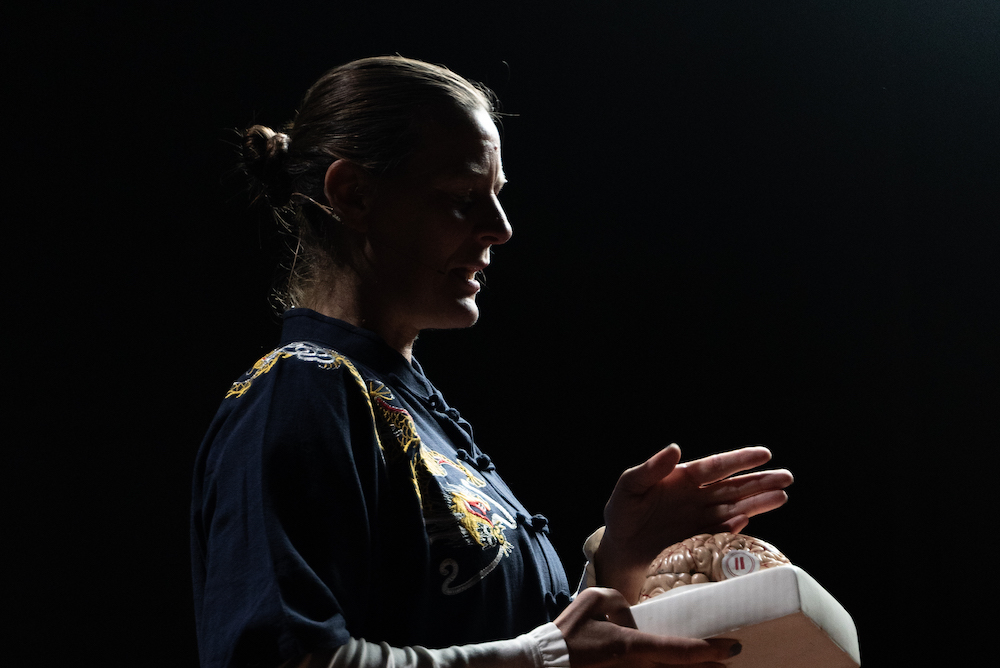
Cultiver l’imagination, sous un arbre.
Des recherches ont montré que passer du temps dans la nature, observer autour de soi, réinitialisent le réseau d’attention du cerveau. Se promener, se poser sous un arbre aident donc à cultiver l’imagination.
Cartographier nos paysages imaginaires.
En cartographiant notre paysage mental, nous puisons dans notre propre histoire, augmentée de personnages imaginaires, de lieux, de dilemmes, de défis, de croyances, de désirs et d’intentions. En fonction de la vitesse à laquelle nous entrons dans nos paysages imaginaires, nous pouvons passer à côté d’éléments importants pour la narration. Idéalement, avec le mouvement du corps, on peut accéder d’une manière lente, réfléchie, consciente et intentionnelle. En marchant, par exemple. À travers la promenade, nous nous donnons la possibilité d’identifier le personnage, sous différentes dimensions. Si nous allons trop vite et que nous avons un objectif en tête – en anticipant à ce qu’il devrait ressembler : on ne prête pas attention. Être ouvert à tout ce qui nous vient à l’esprit. Cultiver notre curiosité d’enfant.
Questionner les personnages.
Travailler l’attention nourrit le récit, en questionnant, par exemple, à travers la définition en cours d’un personnage : comment un enfant le percevrait ? Quels seraient les mouvements du personnage ? Avec notamment des “zooms” avant et arrière pour une prise de recul sur l’ensemble du récit. On ajuste, en quelque sorte, notre “focale” : le cœur de nombreuses pratiques de pleine conscience et de méditation. Ou encore se mettre dans la peau du personnage : être le personnage qui analyse – de son point de vue – l’histoire, dans sa globalité.
Le jeu pour libérer la créativité.
Lorsque nous jouons, le cerveau est beaucoup plus libre pour explorer. Jouons avec les personnages ! Comment le personnage bouge-t-il ? Comment utilise t-il son corps, se déplace-t-il ? Le jeu implique que nous nous sentions en sécurité. Ce qui sous-entend de gérer nos émotions.
Une traversée intime & ludique, au-sein de l’histoire.
Parcourir l’histoire, en tant que scénariste, c’est mettre le doigt sur ce qui attire l’attention au sein de son propre récit. Par exemple : dois-je simplement passer devant la fleur ? Est-ce que je remarque cette fleur ? Puis-je me mettre à la place de la fleur ? En s’intéressant à la fleur, on essaie de comprendre ces mouvements, sa croissance, son évolution avec le soleil, son lien à la terre.
Le récit tel un jeu de pistes.
Toutes les informations à glaner autour de nous sont là, en permanence, pour nous inspirer. S’éloigner, se perdre, pour enrichir les personnages. Se perdre est une exploration intérieure du récit.
S’ouvrir aux potentialités.
S’ouvrir aux potentialités est primordial. Hors, le monde contemporain influe sur la constitution de notre cerveau humain : nous sommes aimantés par nos habitudes, nos schémas et nos préjugés. C’est presque comme si nous commencions le récit par l’hypothèse que ce n’est probablement pas ce que vous ce que nous pensons, au fond de nous mêmes.
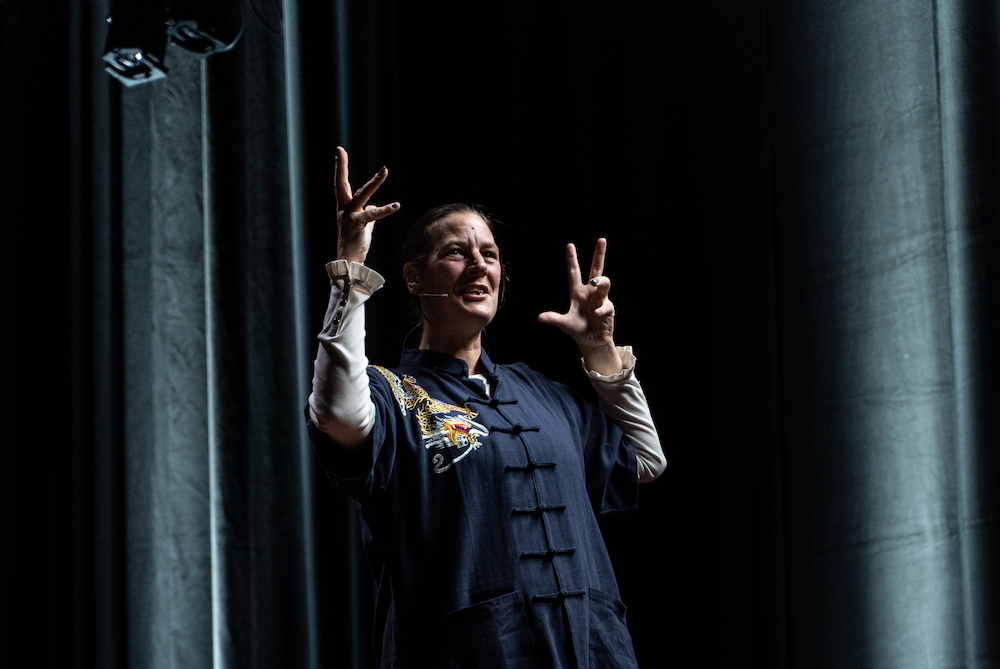
Le lâcher prise pour dépasser les freins du récit.
L’individu est devenu personnellement trop connecté à ce qu’il pense qu’il devrait arriver. Ce qui correspond au “mode par défaut” dans le réseau cérébral, dans le lobe frontal du cerveau : qui regroupe la mémoire de notre histoire. Il ne faut pas avoir peur du lâcher prise, de l’échec, du jugement, de se tromper. Ainsi, dans les arts martiaux, nous faisons beaucoup d’exercices où nous provoquons délibérément la peur, pour la ressentir. Dans le cadre d’un entraînement : se battre avec un bandeau sur les yeux, par exemple. Hors, il ne peut vraiment rien arriver de mal parce que le professeur est là, les collègues également mais la peur est tout de même ressentie. Il y a un retour au corps, à la masse et à l’incertitude du corps. Être dans une dynamique de l’esprit, dans “sa” tête rend la perception du corps très effrayante et les mots manquent pour caractériser les ressentis inhérents.
Le mouvement & le jeu pour libérer le récit.
Dans le cadre de mes recherches, il est clairement établi que le cerveau apprend mieux par le mouvement et le jeu. Notamment, dans l’apprentissage, dès le plus jeune âge. Mais pour être ouvert au mouvement et au jeu, l’espace mental doit être relativement détendu et calme, sans être agité ou indiscipliné. Le mouvement aide à atteindre cet état de pleine conscience, en déconditionnant et en évacuant la peur d’être vraiment créatif. Avant une présentation orale collective, je préconise, par exemple, toujours de rouler des épaules. Souvent, la plupart des gens sont gênés pour bouger leur corps. Or il faut surmonter cette émotion. Le mouvement libère les possibles, c’est prouvé.
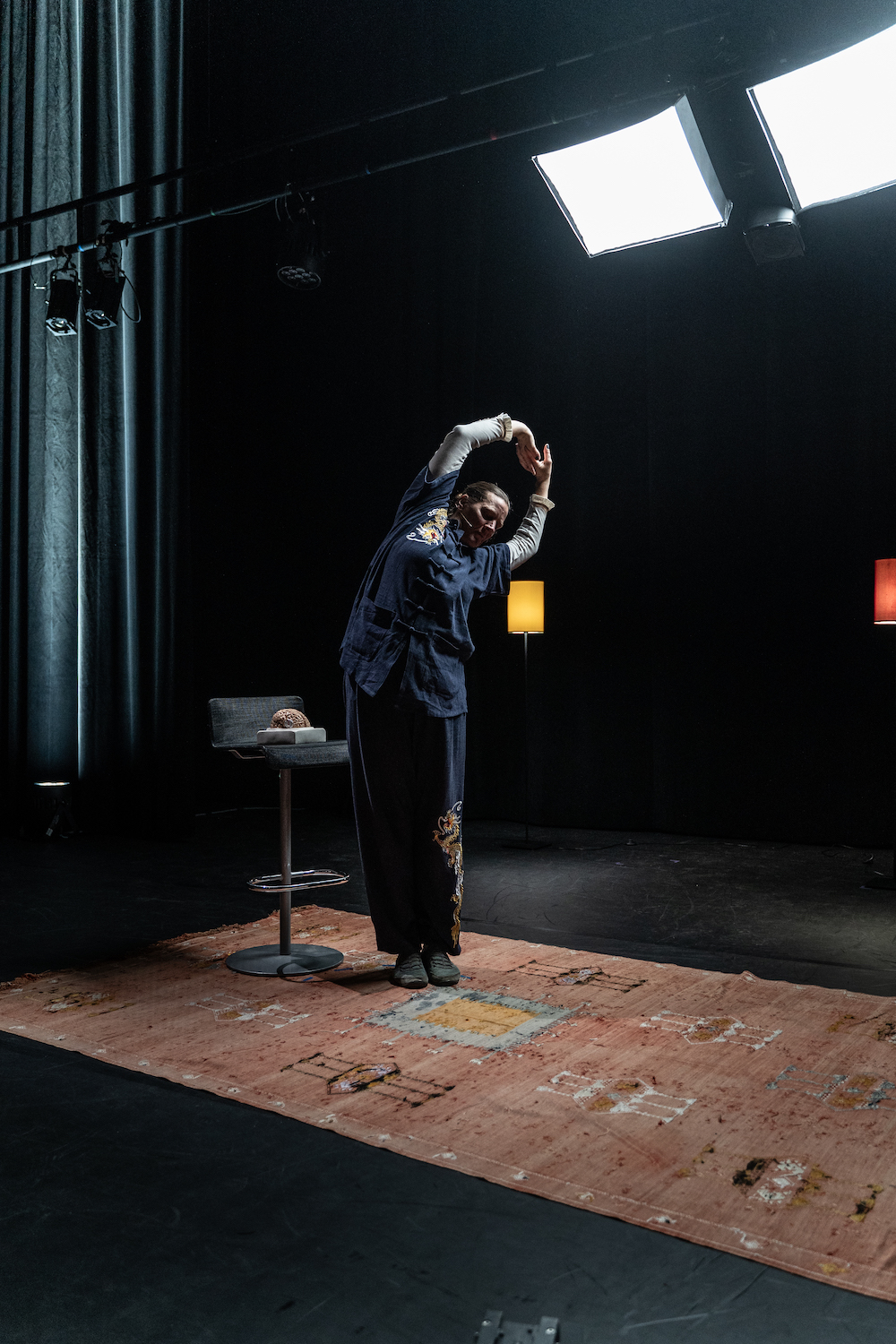
© Photos Brigitte Bouillot
Hosted on Acast. See acast.com/privacy for more information.
]]>Tamara Russell a aidé des personnes du monde entier à transformer leur vie, en utilisant ses techniques révolutionnaires de pleine conscience, conçues pour le cerveau. Ces outils neuroscientifiques translationnels permettent à chacun de prendre de meilleures décisions, en accord avec ses valeurs fondamentales et de bien vivre.
Titulaire de deux doctorats et ceinture noire de Shaolin Kung Fu, Tamara Russell intègre l’esprit, le cerveau et le corps dans une approche totalement unique du bien-être et de l’épanouissement qui combine le mouvement, les neurosciences et la créativité. Ses trois programmes de pleine conscience appliquée comprennent Body in Mind Training, Tools to Transform et The Dragon Way to Mental Wealth (et pour les familles et les jeunes : What Colour is Your Dragon ?)
Tamara Russell participe à des recherches internationales sur la manière dont la pleine conscience modifie la structure du cerveau. Elle enseigne les neurosciences et la pleine conscience au King’s College de Londres.
Tamara Russell est la fondatrice et la co-directrice d’une organisation à but non lucratif : le Mindfulness Centre of Excellence. Cette organisation a été fondée en 2011, après avoir partagé la scène avec Sa Sainteté le Dalaï Lama à Sao Paulo, au Brésil, lors d’un symposium explorant la manière dont les anciennes technologies contemplatives peuvent contribuer à relever les défis de la vie moderne.
Tamara est l’auteur de trois livres : Mindfulness in Motion, #whatismindfulness et What Colour is Your Dragon.
— un entretien réalisé par Vassili Silovic, auteur et réalisateur de films documentaires, et enregistré aux Champs Libres (Rennes) dans le cadre de la série “Quels récits pour notre temps ?”.
Entraîner le cerveau, comme le corps.
Être humain nous permet de penser, ressentir, créer. Et ce, grâce à notre cerveau. Mais nous ne connaissons vraiment que peu de choses à son sujet. Il y a eu certes beaucoup de progrès, au cours des dernières décennies, mais il y a encore tellement d’éléments encore méconnus, parmi lesquels : la conscience.
Est-ce que nous surestimons ou surestimons ou sous-estimons notre cerveau ? Probablement les deux.
Nous surestimons en termes de croyance ce que notre cerveau nous dit, ce qui peut être problématique dans de nombreux cas. Mais nous sous-estimons son potentiel et, en particulier, le potentiel permis grâce à son entraînement. Nous pensons aller à la salle de sport et à l’entraînement de notre corps. Pour beaucoup, c’est une obsession. Hors, concernant notre cerveau, qu’en est-il de nos séances d’entraînement ?
Stimuler l’attention.
Il y a de multiples façons d’entraîner le cerveau. Celles permettant de stimuler l’attention sont primordiales. Particulièrement dans notre culture moderne, où notre attention est constamment accaparée par les écrans et notre rythme de vie effréné. Nous pouvons nous entraîner à prendre conscience des capacités d’ouverture de notre attention — quand et comment elle se rétrécit et s’élargit. Un entraînement est utile pour stimuler et provoquer l’ouverture ou la fermeture de l’objet précis sur lequel nous souhaitons nous concentrer. Comme nous procédons avec l’œil ou avec l’appareil photo.
“Zoomer” vs. “Dézoomer”.
Lorsque nous travaillons – en particulier dans la création -, il y a un mouvement systématique que l’on entreprend : nous décidons de “zoomer”, d’avoir une attention focalisée et soutenue – car particulière à un fragment, un détail. Une concentration étroite qui est souvent source de blocage. Nous sommes en quelque sorte, « coincés ». La créativité est, alors, stoppée.
Se déconcentrer pour libérer le processus créatif.
Dans le cas de blocages, ce qui aide souvent est, par exemple, d’aller se promener, de prendre une douche. On libère, alors, la focale de l’attention grâce aux ressentis du vent sur le visage, de l’eau sur la peau ou encore l’odeur du savon. La clé de la concentration est de protéger des temps ultra-concentrés et des temps d’ouverture à l’autre, à ce qui nous entoure. On augmente ainsi les chances, aux idées enfouies : d’émerger et, ainsi, de donner corps au génie créatif.
Nos sensations et leurs impacts sur la créativité.
Notre activité cérébrale est modulée par énormément d’informations à traiter, comme maintenir la position de notre corps, veiller à son équilibre, ne pas bouger. Ce qui est humain. La nervosité, les sensations ressenties dans notre corps ont un impact sur notre créativité. Il faut en avoir conscience.
Écouter son corps.
La plupart du temps, nous sommes – très souvent -, dans ce que l’on peut appeler : “dans nos têtes”. On pense à des choses ou à nous-mêmes, on se souvient, on planifie, on imagine. Il est agréable d’y consacrer du temps, mais à une échelle respectable. “Se laisser tomber dans notre corps” : en invitant le corps à prendre le pouvoir, en nous indiquant que nous avons besoin de faire une pause ou de s’asseoir devant un ordinateur et d’essayer d’écrire quelque chose pendant cinq heures. Entre besoins primaires ou plus complexes. C’est aussi une forme de sagesse.
Dé-conditionner pour créer.
Il est important d’étudier nos propres expériences. Nous sommes conditionnés à penser, à agir : je dois écrire quelque chose, alors je vais m’asseoir devant l’ordinateur ou encore : je vais partir avec mon bloc-notes, je dois trouver des idées. J’encourage à explorer et à expérimenter les mouvements, les postures qui stimulent le processus créatif. S’asseoir sur une chaise, un tabouret ou sur le bureau ? Quels sont les environnements qui favorisent le processus créatif ? La bibliothèque ? Sous un arbre ? Dans un train ? Le silence ou au contraire un lieu très animé ? Cette étude provoque le mouvement, le déplacement. Il s’agit souvent de mélanger les contextes, les outils, les lieux, les environnements.
Différentes attentions en fonction des générations.
Nous devons, chacun, trouver notre propre voie stimulatrice de création. Je pense que pour les jeunes générations – natives du numérique : leur cerveau a un autre fonctionnement et je les encourage vraiment à se déplacer et à voir ce qui est déclencheur pour eux. Une école de pensée dit que les natifs du numérique ont fondamentalement des réseaux cérébraux qui ont structuré des réseaux d’attention, façonnés et sculptés par l’environnement numérique. C’est logique car le cerveau est hydroplastique — le réseau de l’attention est, en particulier, très plastique. Les pessimistes diront plutôt que les jeunes ne peuvent pas être attentifs : ils ne peuvent pas rester assis, consommer des médias qui durent plus de trois minutes, ou suivre une vidéo TikTok de plus de 15 secondes. Ils reçoivent constamment des informations et leur traitement de ces données est superficiel. Je suis plus optimiste, en me disant : peut-être s’agit-il de cerveaux qui sont en train de s’adapter aux nouvelles technologies, qui se préparent aux défis à venir. En fait, c’est peut-être notre cerveau qui n’est pas adapté aux défis de la création, à comment créer et sculpter ce nouveau monde, en interaction avec les technologies.
Attention & émotions.
En tant que psychologue clinicienne, une des problématiques que je traite est celle du croisement de l’attention avec la régulation des émotions. Ce que j’ai découvert, en travaillant avec, notamment, les plus jeunes, dans le cadre d’entraînements de l’attention : leur capacité à réguler leurs émotions semble être plus importante. Ils sont vigilants à cette régulation notamment, en lien avec leur santé mentale qui affecte beaucoup de jeunes, en ce moment.
Trouver les mots par le corps.
Le corps est important pour trouver les mots. Et je suppose qu’en ce moment, pour de nombreuses personnes, il est difficile de trouver les mots ou même de ressentir ce qui se passe dans le monde — un sentiment de confusion et de perte est possible. L’exploration consiste en une invitation à laisser parler le corps et à laisser s’exprimer les émotions. Ouvrir les bras signifie l’ouverture, ouvrir son cœur, créer de l’espace, s’autoriser à ressentir. L’esprit peut s’ouvrir beaucoup plus largement que le corps mais le corps aide l’esprit à s’ouvrir.
Ressentir pour garder le contrôle sur le récit.
Ressentir la douleur, la perte, la confusion, la compassion. Réchauffer le cœur, sentir le son de l’étreinte. Quand nous ressentons, à la fois l’esprit et le corps, le mouvement et le cœur, nous nous sentons davantage maîtres du récit, de la situation, même lorsque nous avons l’impression que nous n’avons plus aucun contrôle. Où est mon pouvoir dans ce monde où je me sens si impuissant ? Avoir le choix d’ouvrir mon cœur, avec courage et gentillesse, compassion et curiosité.
Être conscient de notre environnement.
L’enjeu est d’être pleinement conscient de ce qui nous entoure – en ayant conscience de nos premières pensées, premières impressions. On découvre que l’endroit pensé, où l’on était fixé et même, parfois, bloqué n’existe pas.
La mémoire des sensations.
Les scénaristes, dans le cadre du processus de développement d’un personnage peuvent avoir une attention focalisée sur des détails. Un mouvement utile est celui de la mise en distance, en repartant de l’esprit et du corps, en utilisant la mémoire des sensations. Une écoute du corps autant que de l’esprit.
Cultiver l’imagination, sous un arbre.
Des recherches ont montré que passer du temps dans la nature, observer autour de soi, réinitialisent le réseau d’attention du cerveau. Se promener, se poser sous un arbre aident donc à cultiver l’imagination.
Cartographier nos paysages imaginaires.
En cartographiant notre paysage mental, nous puisons dans notre propre histoire, augmentée de personnages imaginaires, de lieux, de dilemmes, de défis, de croyances, de désirs et d’intentions. En fonction de la vitesse à laquelle nous entrons dans nos paysages imaginaires, nous pouvons passer à côté d’éléments importants pour la narration. Idéalement, avec le mouvement du corps, on peut accéder d’une manière lente, réfléchie, consciente et intentionnelle. En marchant, par exemple. À travers la promenade, nous nous donnons la possibilité d’identifier le personnage, sous différentes dimensions. Si nous allons trop vite et que nous avons un objectif en tête – en anticipant à ce qu’il devrait ressembler : on ne prête pas attention. Être ouvert à tout ce qui nous vient à l’esprit. Cultiver notre curiosité d’enfant.
Questionner les personnages.
Travailler l’attention nourrit le récit, en questionnant, par exemple, à travers la définition en cours d’un personnage : comment un enfant le percevrait ? Quels seraient les mouvements du personnage ? Avec notamment des “zooms” avant et arrière pour une prise de recul sur l’ensemble du récit. On ajuste, en quelque sorte, notre “focale” : le cœur de nombreuses pratiques de pleine conscience et de méditation. Ou encore se mettre dans la peau du personnage : être le personnage qui analyse – de son point de vue – l’histoire, dans sa globalité.
Le jeu pour libérer la créativité.
Lorsque nous jouons, le cerveau est beaucoup plus libre pour explorer. Jouons avec les personnages ! Comment le personnage bouge-t-il ? Comment utilise t-il son corps, se déplace-t-il ? Le jeu implique que nous nous sentions en sécurité. Ce qui sous-entend de gérer nos émotions.
Une traversée intime & ludique, au-sein de l’histoire.
Parcourir l’histoire, en tant que scénariste, c’est mettre le doigt sur ce qui attire l’attention au sein de son propre récit. Par exemple : dois-je simplement passer devant la fleur ? Est-ce que je remarque cette fleur ? Puis-je me mettre à la place de la fleur ? En s’intéressant à la fleur, on essaie de comprendre ces mouvements, sa croissance, son évolution avec le soleil, son lien à la terre.
Le récit tel un jeu de pistes.
Toutes les informations à glaner autour de nous sont là, en permanence, pour nous inspirer. S’éloigner, se perdre, pour enrichir les personnages. Se perdre est une exploration intérieure du récit.
S’ouvrir aux potentialités.
S’ouvrir aux potentialités est primordial. Hors, le monde contemporain influe sur la constitution de notre cerveau humain : nous sommes aimantés par nos habitudes, nos schémas et nos préjugés. C’est presque comme si nous commencions le récit par l’hypothèse que ce n’est probablement pas ce que vous ce que nous pensons, au fond de nous mêmes.
Le lâcher prise pour dépasser les freins du récit.
L’individu est devenu personnellement trop connecté à ce qu’il pense qu’il devrait arriver. Ce qui correspond au “mode par défaut” dans le réseau cérébral, dans le lobe frontal du cerveau : qui regroupe la mémoire de notre histoire. Il ne faut pas avoir peur du lâcher prise, de l’échec, du jugement, de se tromper. Ainsi, dans les arts martiaux, nous faisons beaucoup d’exercices où nous provoquons délibérément la peur, pour la ressentir. Dans le cadre d’un entraînement : se battre avec un bandeau sur les yeux, par exemple. Hors, il ne peut vraiment rien arriver de mal parce que le professeur est là, les collègues également mais la peur est tout de même ressentie. Il y a un retour au corps, à la masse et à l’incertitude du corps. Être dans une dynamique de l’esprit, dans “sa” tête rend la perception du corps très effrayante et les mots manquent pour caractériser les ressentis inhérents.
Le mouvement & le jeu pour libérer le récit.
Dans le cadre de mes recherches, il est clairement établi que le cerveau apprend mieux par le mouvement et le jeu. Notamment, dans l’apprentissage, dès le plus jeune âge. Mais pour être ouvert au mouvement et au jeu, l’espace mental doit être relativement détendu et calme, sans être agité ou indiscipliné. Le mouvement aide à atteindre cet état de pleine conscience, en déconditionnant et en évacuant la peur d’être vraiment créatif. Avant une présentation orale collective, je préconise, par exemple, toujours de rouler des épaules. Souvent, la plupart des gens sont gênés pour bouger leur corps. Or il faut surmonter cette émotion. Le mouvement libère les possibles, c’est prouvé.
© Photos Brigitte Bouillot
Hosted on Acast. See acast.com/privacy for more information.
]]>Roberto Beneduce, psychiatre et anthropologue, est professeur d’Anthropologie Médicale au Département de Cultures, Politique et Sociétés (Université de Turin) & Directeur du Centre Frantz Fanon, qu’il a fondé en 1996 dans le but de construire une ethnopsychiatrie critique.
Son travail clinique et ses recherches ethnographiques concernent la condition des immigrés et des réfugiés ainsi que la prise en charge des victimes de torture, l’anthropologie de la violence sociale et politique en Afrique sub-saharienne (Cameroun, Mali, République démocratique du Congo), les changements des savoirs thérapeutiques locaux (églises de la guérison).
— un entretien réalisé par Vassili Silovic, auteur et réalisateur de films documentaires, et enregistré aux Champs Libres (Rennes) dans le cadre de la série “Quels récits pour notre temps ?”.
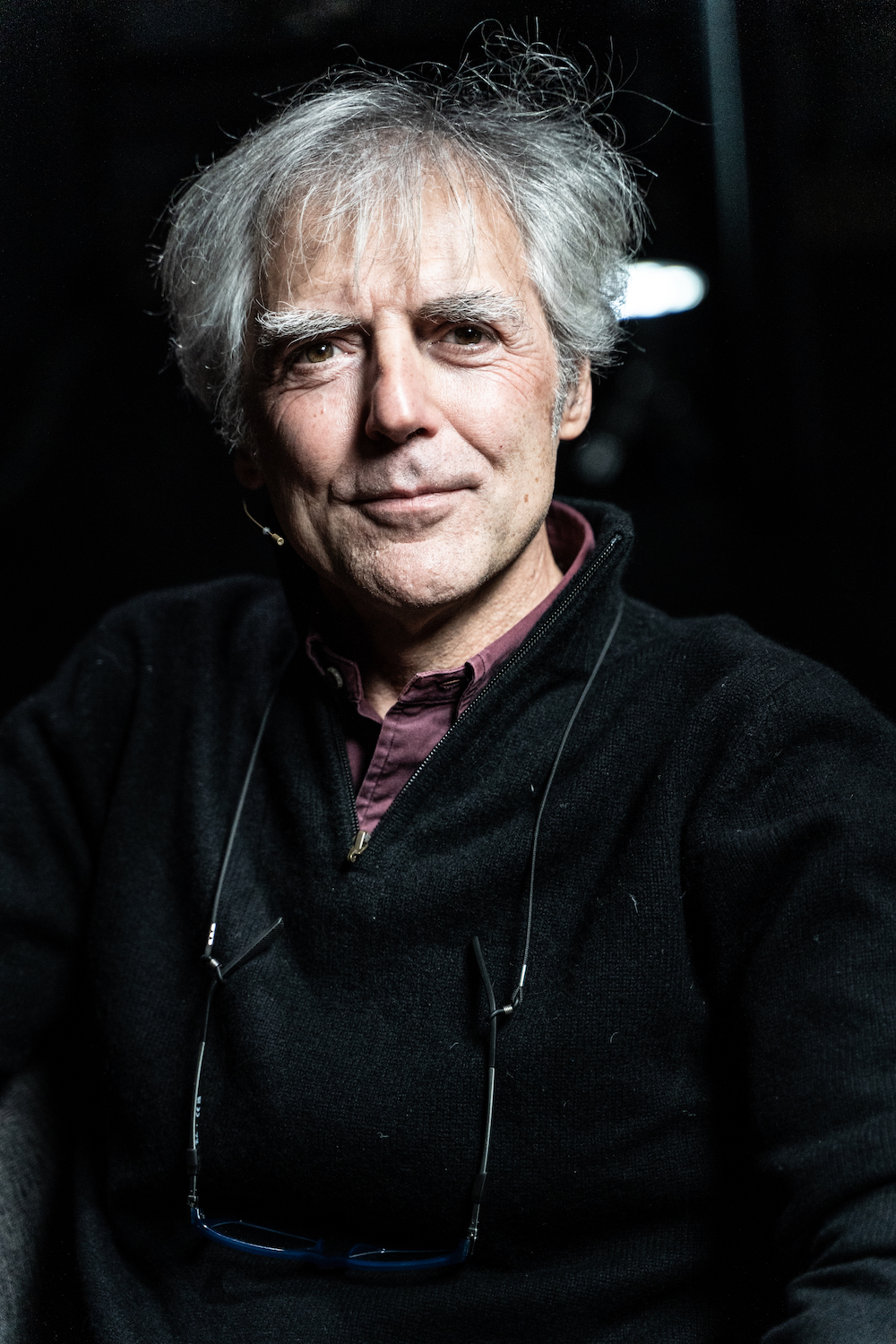
Raconter pour lutter.
Aujourd’hui pour être reconnu comme des demandeurs d’asile ayant droit à la protection internationale internationale : il existe une véritable lutte de vérités. Il faut lutter, pour être reconnues comme des personnes sincères qui expriment la vérité et qui n’inventent rien.
Questionner le récit.
Face aux migrants, aux demandeurs d’asile : nous nous reconnaissons ignorants, nous ne connaissons presque rien de leurs trajectoires humaines, politiques, religieuses. Nous, en tant que travailleurs sociaux et cliniciens, nous connaissons, a minima, à partir d’ici, quelque chose du pays d’origine. Peut-être, quelques mots de leur langue, rien de leur histoire. Le soupçon consistant à penser qu’ils ne disent pas la vérité est le reflet de notre anxiété épistémique. Face à cette zone grise, la première réaction est notamment, ce soupçon.
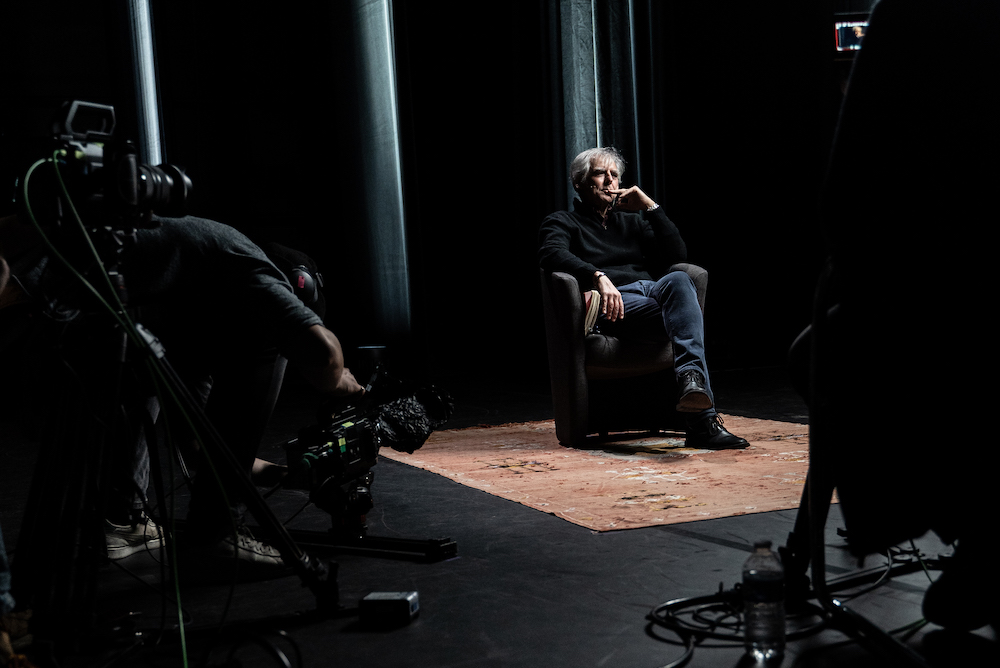
Croire le récit.
À mesure que l’on recueille leurs récits personnels, leurs mémoires se transmettent dans une quasi totale opacité, avec souvent le temps qui a fait son chemin et donc dans le passé. Marginalisés, ils ne sont pas crus. Une situation que l’on retrouve à travers les colonies. Au sein de l’anthropologie de l’époque coloniale, il est souvent souligné qu’il est difficile d’avoir des rapports de confiance, directs. L’État nation bâtit des systèmes de vérité de reconnaissance de l’individu d’un point de vue définition bureaucratique.
L’opacité du récit.
Quand cette bureaucratie traite et avance sur les dossiers, sont mis en lumière des faiblesses dans le récit qui peuvent hâter les processus. Abdelmalek Sayad (sociologue 1933-1998) indiquait la nécessité de retrouver l’opacité du discours authentique, le vrai qui est intrinsèquement, toujours en partie, opaque.
On veut généralement « tout » savoir précisément, « tout » voir, clairement.
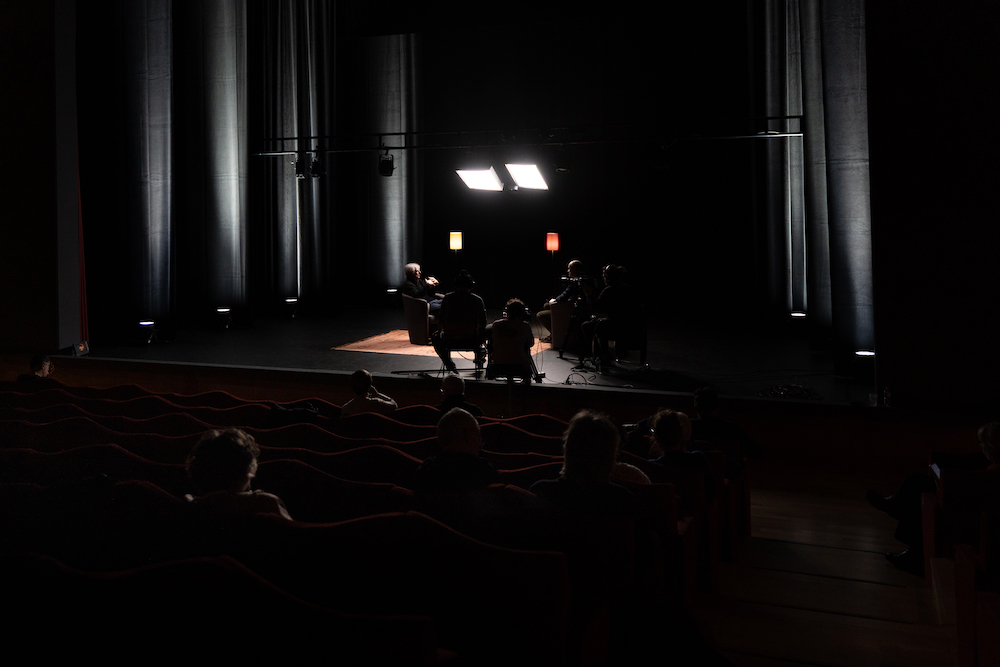
Confronter la cohérence du récit.
Les migrants qui arrivent en Europe connaissent très bien cette épreuve de l’examen de la vérité. Ils se préparent à cette confrontation, au-sein d’un système à exprimer et narrer leurs vérités, selon « nos » critères de crédibilité.
L’histoire doit alors être qualifiée de cohérente. Elle doit intégrer une certaine succession de « bonnes » raisons pour quitter le pays : des expériences traumatiques qu’il faut, alors, démontrer après, la fuite et selon une succession linéaire — que comme on peut l’imaginer n’existe pas dans la vie réelle. Le choix de quitter son pays est un choix complexe. Si seulement, nous considérons – en pleine conscience – les risques d’atteinte à sa propre vie : nous pouvons concevoir que dans l’ensemble des choix et ceux qui les précèdent : les variables sont nombreuses.
Notre définition de la cohérence du récit est un acte de violence. Même au sein du protocole d’Istanbul – pensé pour les victimes de torture – une phrase stipule qu’il y a le risque d’embellissement des histoires pour les rendre plus intéressantes, plus cohérentes.
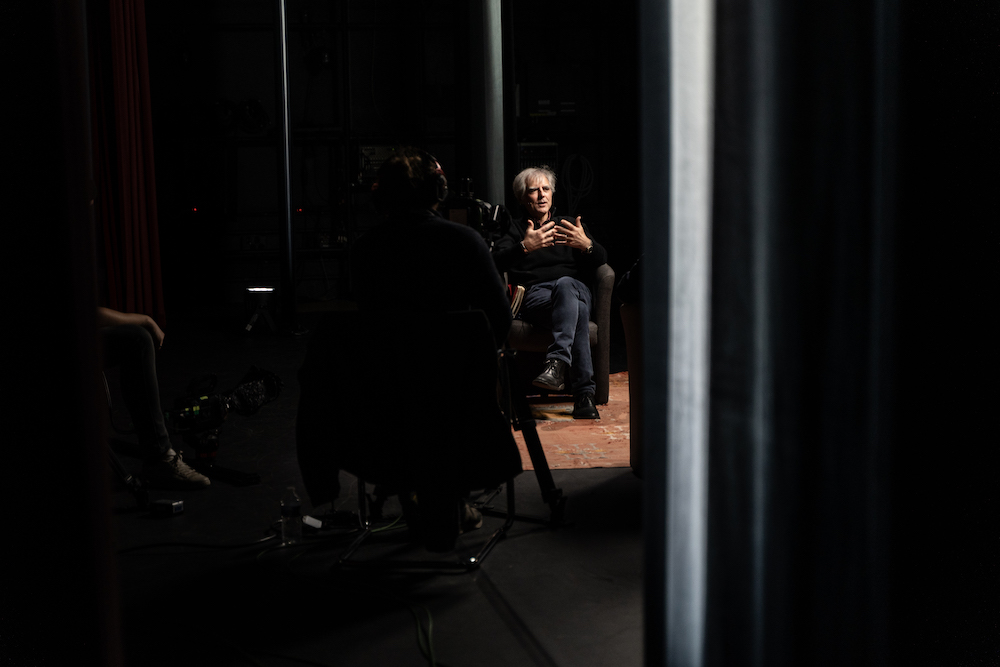
Le récit imposé d’une vérité contrainte.
Comment avons-nous la capacité de qualifier le récit de ces personnes qui cherchent, de quelque manière que ce soit, à trouver un lieu-refuge pour vivre ou survivre ? Le mensonge est présent dans nos sociétés, à travers même nos différentes politiques gouvernementales nationales d’accueil avec des choix humains dictés par les enjeux économiques.
Ces mensonges nourrissent et deviennent arguments des discours de défense des intérêts nationaux dans des situations internationales parfois tragiques et qui viennent autoriser des agissements terribles. La souveraineté de ces pays est alors effacée et alors, face à ces mensonges : les « petits mensonges » des migrants n’ont aucun poids.
Nos gouvernements – plus que les demandeurs d’asile sont de vrais scénaristes ! Il nous faut nommer différemment mensonges et mensonges donc. Nous avons d’ailleurs érigé une division entre les immigrés économiques et les immigrés politiques. Pour nos sociétés, la misère est un tout autre registre que la violence en tant que telle. Il existe une grande hypocrisie de notre système capitaliste néolibéral – qui ne souhaite pas reconnaître que l’économie est le lieu pourvoyeur des violences et que la misère est la première source de souffrances. Échapper à cette violence est un droit.
Le fait de distinguer les profils de migrants a poussé ceux-ci à composer un récit, en fonction des critères et de passer d’immigrés économiques à politiques. La misère économique entraîne un non accès à la nourriture, aux soins, à l’éducation. Cette division est ridicule.
Dans ce contexte, il y aura toujours une personne qui aura bien le droit de mentir pour être cohérente et en phase avec « nos » critères. Dans la presque totalité des cas, les histoires sont vraies. On y reconnaît la souffrance. Il est difficile de mentir sur sa propre souffrance. Les personnes qui s’écroulent, sont hantées par les images des morts, de leurs disparus.
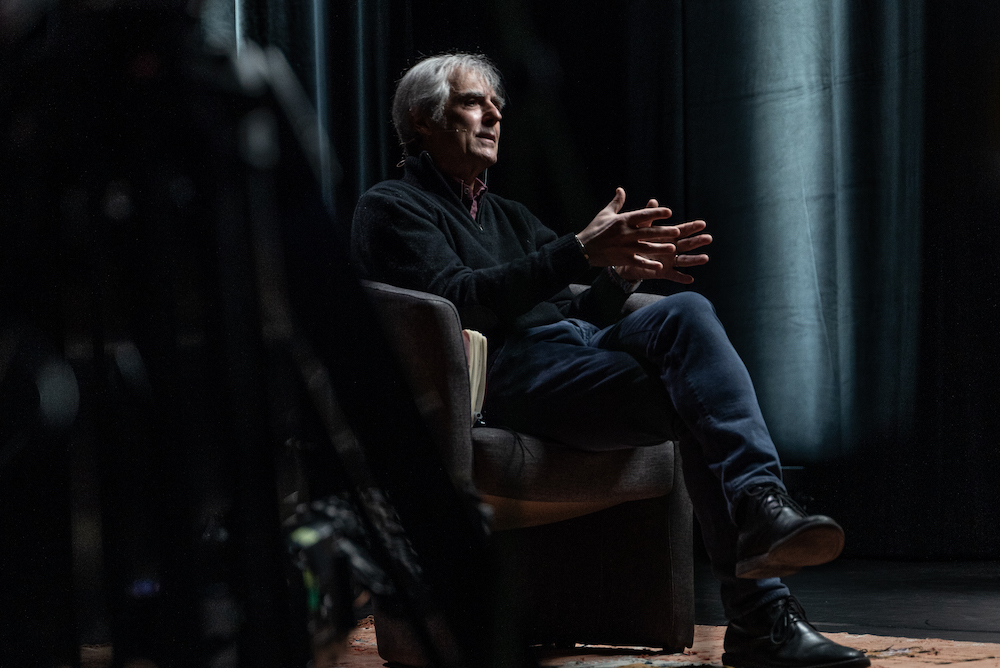
La banalisation du récit, par son contexte.
J’entends des centaines d’histoires où des personnes se disent confrontées à de la sorcellerie, victimes d’un sortilège. Ces histoires naïves sont des histoires de personnes crédules qui doivent être recomposées, à partir de la complexité de leur société, leur monde culturel. Ce sont des personnes qui sont en train de lutter contre la menace, contre les hostilités, contre les jalousies : ce sont des victimes.
Ce récit épique est à recevoir, à condition de reconnaître toute l’histoire complexe intégrant les malentendus et la banalisation pour eux de ce qu’ils vivent. Un processus de contextualisation qui nécessite un travail systémique, à la fois clinique et politique. Tout récit d’une expérience à une valeur, à condition que le récit soit écouté et que cette expérience soit reconnue comme une expérience certes parfois, épiques, toujours, complexes dont la reconnaissance de la vérité historique prévaut sur la réalité de l’expérience précise.
La dimension épique du récit.
Une histoire est épique quand, en quelque sorte, on est héroïne ou héros de sa propre expérience. Dans le cas d’une misère extrême, la dimension épique du récit est aussi inhérente au contraste de luttes que vivent ces personnes migrantes : on ne leur donne pas le droit d’être agressifs mais d’être victimes.
La perspective victimisante – qui domine dans nos discours – implique que l’accueil est accepté à condition que la personne soit traumatisée, « domesticable ». La dimension épique du récit est aussi de permettre de faire surgir un discours souverain et un discours agressif. C’est d’ailleurs l’endroit précis où le travail clinique et celui du scénariste se rejoignent : les personnages ne doivent pas forcément être en cohérence et en fidélité de ce que l’on attend. Les personnages peuvent être aussi capable de révéler les zones obscures de nos sociétés, de la structuration de nos relations, de nos familles.
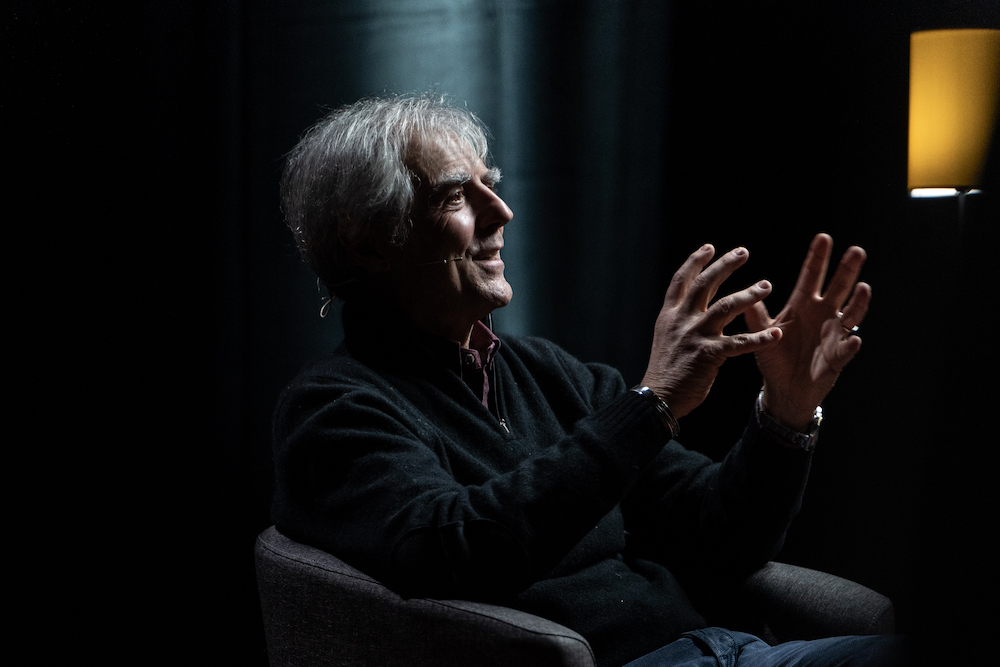
Le récit, sa mutation, son archivage.
Il faut renverser la propension côté écosystèmes cliniques, judiciaires de reproduire à l’infini des postures issues d’archives qui cumulent une quantité de tragédies, d’histoires imparfaites, incohérentes, confuses. Les dossiers cliniques d’aujourd’hui seront, peut-être, dans les siècles à venir, des archives remarquables de la crise contemporaine relative à nos rapports avec les frontières, avec la citoyenneté. Comment renverser le discours pour devenir un récit thérapeutique, un contre récit.
Nous nous devons de ne pas nous contenter d’indiquer : demandeur d’asile croyable car traumatisé mais plutôt, demandeur d’asile venant d’un pays dont on connaît la violence générée par des intérêts intérieurs ou internationaux. Avec le temps, les catégories sont re-classifiées, la manière d’accueillir les demandeurs d’asile, les migrants en général est repensée.
La responsabilité des scénaristes.
Pour les scénaristes qui doivent bâtir un récit, à partir des expériences vécues ont une très grande responsabilité. La responsabilité de composer, ensemble avec des experts et d’autres témoins pour analyser – dans ce cas précis – la violence intérieure des personnages, la possibilité finalement de combattre avec le récit, le mal, le pire mal : l’indifférence.
© Photos Brigitte Bouillot
Hosted on Acast. See acast.com/privacy for more information.
]]>Roberto Beneduce, psychiatre et anthropologue, est professeur d’Anthropologie Médicale au Département de Cultures, Politique et Sociétés (Université de Turin) & Directeur du Centre Frantz Fanon, qu’il a fondé en 1996 dans le but de construire une ethnopsychiatrie critique.
Son travail clinique et ses recherches ethnographiques concernent la condition des immigrés et des réfugiés ainsi que la prise en charge des victimes de torture, l’anthropologie de la violence sociale et politique en Afrique sub-saharienne (Cameroun, Mali, République démocratique du Congo), les changements des savoirs thérapeutiques locaux (églises de la guérison).
— un entretien réalisé par Vassili Silovic, auteur et réalisateur de films documentaires, et enregistré aux Champs Libres (Rennes) dans le cadre de la série “Quels récits pour notre temps ?”.
Raconter pour lutter.
Aujourd’hui pour être reconnu comme des demandeurs d’asile ayant droit à la protection internationale internationale : il existe une véritable lutte de vérités. Il faut lutter, pour être reconnues comme des personnes sincères qui expriment la vérité et qui n’inventent rien.
Questionner le récit.
Face aux migrants, aux demandeurs d’asile : nous nous reconnaissons ignorants, nous ne connaissons presque rien de leurs trajectoires humaines, politiques, religieuses. Nous, en tant que travailleurs sociaux et cliniciens, nous connaissons, a minima, à partir d’ici, quelque chose du pays d’origine. Peut-être, quelques mots de leur langue, rien de leur histoire. Le soupçon consistant à penser qu’ils ne disent pas la vérité est le reflet de notre anxiété épistémique. Face à cette zone grise, la première réaction est notamment, ce soupçon.
Croire le récit.
À mesure que l’on recueille leurs récits personnels, leurs mémoires se transmettent dans une quasi totale opacité, avec souvent le temps qui a fait son chemin et donc dans le passé. Marginalisés, ils ne sont pas crus. Une situation que l’on retrouve à travers les colonies. Au sein de l’anthropologie de l’époque coloniale, il est souvent souligné qu’il est difficile d’avoir des rapports de confiance, directs. L’État nation bâtit des systèmes de vérité de reconnaissance de l’individu d’un point de vue définition bureaucratique.
L’opacité du récit.
Quand cette bureaucratie traite et avance sur les dossiers, sont mis en lumière des faiblesses dans le récit qui peuvent hâter les processus. Abdelmalek Sayad (sociologue 1933-1998) indiquait la nécessité de retrouver l’opacité du discours authentique, le vrai qui est intrinsèquement, toujours en partie, opaque.
On veut généralement « tout » savoir précisément, « tout » voir, clairement.
Confronter la cohérence du récit.
Les migrants qui arrivent en Europe connaissent très bien cette épreuve de l’examen de la vérité. Ils se préparent à cette confrontation, au-sein d’un système à exprimer et narrer leurs vérités, selon « nos » critères de crédibilité.
L’histoire doit alors être qualifiée de cohérente. Elle doit intégrer une certaine succession de « bonnes » raisons pour quitter le pays : des expériences traumatiques qu’il faut, alors, démontrer après, la fuite et selon une succession linéaire — que comme on peut l’imaginer n’existe pas dans la vie réelle. Le choix de quitter son pays est un choix complexe. Si seulement, nous considérons – en pleine conscience – les risques d’atteinte à sa propre vie : nous pouvons concevoir que dans l’ensemble des choix et ceux qui les précèdent : les variables sont nombreuses.
Notre définition de la cohérence du récit est un acte de violence. Même au sein du protocole d’Istanbul – pensé pour les victimes de torture – une phrase stipule qu’il y a le risque d’embellissement des histoires pour les rendre plus intéressantes, plus cohérentes.
Le récit imposé d’une vérité contrainte.
Comment avons-nous la capacité de qualifier le récit de ces personnes qui cherchent, de quelque manière que ce soit, à trouver un lieu-refuge pour vivre ou survivre ? Le mensonge est présent dans nos sociétés, à travers même nos différentes politiques gouvernementales nationales d’accueil avec des choix humains dictés par les enjeux économiques.
Ces mensonges nourrissent et deviennent arguments des discours de défense des intérêts nationaux dans des situations internationales parfois tragiques et qui viennent autoriser des agissements terribles. La souveraineté de ces pays est alors effacée et alors, face à ces mensonges : les « petits mensonges » des migrants n’ont aucun poids.
Nos gouvernements – plus que les demandeurs d’asile sont de vrais scénaristes ! Il nous faut nommer différemment mensonges et mensonges donc. Nous avons d’ailleurs érigé une division entre les immigrés économiques et les immigrés politiques. Pour nos sociétés, la misère est un tout autre registre que la violence en tant que telle. Il existe une grande hypocrisie de notre système capitaliste néolibéral – qui ne souhaite pas reconnaître que l’économie est le lieu pourvoyeur des violences et que la misère est la première source de souffrances. Échapper à cette violence est un droit.
Le fait de distinguer les profils de migrants a poussé ceux-ci à composer un récit, en fonction des critères et de passer d’immigrés économiques à politiques. La misère économique entraîne un non accès à la nourriture, aux soins, à l’éducation. Cette division est ridicule.
Dans ce contexte, il y aura toujours une personne qui aura bien le droit de mentir pour être cohérente et en phase avec « nos » critères. Dans la presque totalité des cas, les histoires sont vraies. On y reconnaît la souffrance. Il est difficile de mentir sur sa propre souffrance. Les personnes qui s’écroulent, sont hantées par les images des morts, de leurs disparus.
La banalisation du récit, par son contexte.
J’entends des centaines d’histoires où des personnes se disent confrontées à de la sorcellerie, victimes d’un sortilège. Ces histoires naïves sont des histoires de personnes crédules qui doivent être recomposées, à partir de la complexité de leur société, leur monde culturel. Ce sont des personnes qui sont en train de lutter contre la menace, contre les hostilités, contre les jalousies : ce sont des victimes.
Ce récit épique est à recevoir, à condition de reconnaître toute l’histoire complexe intégrant les malentendus et la banalisation pour eux de ce qu’ils vivent. Un processus de contextualisation qui nécessite un travail systémique, à la fois clinique et politique. Tout récit d’une expérience à une valeur, à condition que le récit soit écouté et que cette expérience soit reconnue comme une expérience certes parfois, épiques, toujours, complexes dont la reconnaissance de la vérité historique prévaut sur la réalité de l’expérience précise.
La dimension épique du récit.
Une histoire est épique quand, en quelque sorte, on est héroïne ou héros de sa propre expérience. Dans le cas d’une misère extrême, la dimension épique du récit est aussi inhérente au contraste de luttes que vivent ces personnes migrantes : on ne leur donne pas le droit d’être agressifs mais d’être victimes.
La perspective victimisante – qui domine dans nos discours – implique que l’accueil est accepté à condition que la personne soit traumatisée, « domesticable ». La dimension épique du récit est aussi de permettre de faire surgir un discours souverain et un discours agressif. C’est d’ailleurs l’endroit précis où le travail clinique et celui du scénariste se rejoignent : les personnages ne doivent pas forcément être en cohérence et en fidélité de ce que l’on attend. Les personnages peuvent être aussi capable de révéler les zones obscures de nos sociétés, de la structuration de nos relations, de nos familles.
Le récit, sa mutation, son archivage.
Il faut renverser la propension côté écosystèmes cliniques, judiciaires de reproduire à l’infini des postures issues d’archives qui cumulent une quantité de tragédies, d’histoires imparfaites, incohérentes, confuses. Les dossiers cliniques d’aujourd’hui seront, peut-être, dans les siècles à venir, des archives remarquables de la crise contemporaine relative à nos rapports avec les frontières, avec la citoyenneté. Comment renverser le discours pour devenir un récit thérapeutique, un contre récit.
Nous nous devons de ne pas nous contenter d’indiquer : demandeur d’asile croyable car traumatisé mais plutôt, demandeur d’asile venant d’un pays dont on connaît la violence générée par des intérêts intérieurs ou internationaux. Avec le temps, les catégories sont re-classifiées, la manière d’accueillir les demandeurs d’asile, les migrants en général est repensée.
La responsabilité des scénaristes.
Pour les scénaristes qui doivent bâtir un récit, à partir des expériences vécues ont une très grande responsabilité. La responsabilité de composer, ensemble avec des experts et d’autres témoins pour analyser – dans ce cas précis – la violence intérieure des personnages, la possibilité finalement de combattre avec le récit, le mal, le pire mal : l’indifférence.
© Photos Brigitte Bouillot
Hosted on Acast. See acast.com/privacy for more information.
]]>Julie Budtz Sørensen graduated from The National Film School of Denmark in 2015. She is the head-writer of the Viaplay Original series WHERE WERE YOU? (HÅBER DU KOM GODT HJEM, 2022), based on her fictional podcast DET MED LIV, for which she won the award for best European Radio Fiction Series at Prix Europe in 2018.
She has worked on several TV series, including as part of the writers’ team on the Netflix Originals THE RAIN (2018) and CHOSEN (2022), as a co-writer on the second season of LIMBOLAND (2020), and as part of the writers’ team on an upcoming mini-series adapted from Tove Ditlevsen’s autobiography GIFT (DEPENDENCY).
Julie is currently developing two drama shows with Nimbus Film and has a feature film in development with The Danish National Film institute.
— an interview by Guillaume Desjardins, Writer-director, member of Les Parasites, recorded at Les Champs Libres (Rennes) in December 2023 in the framework of the serie “What stories for our time?”.
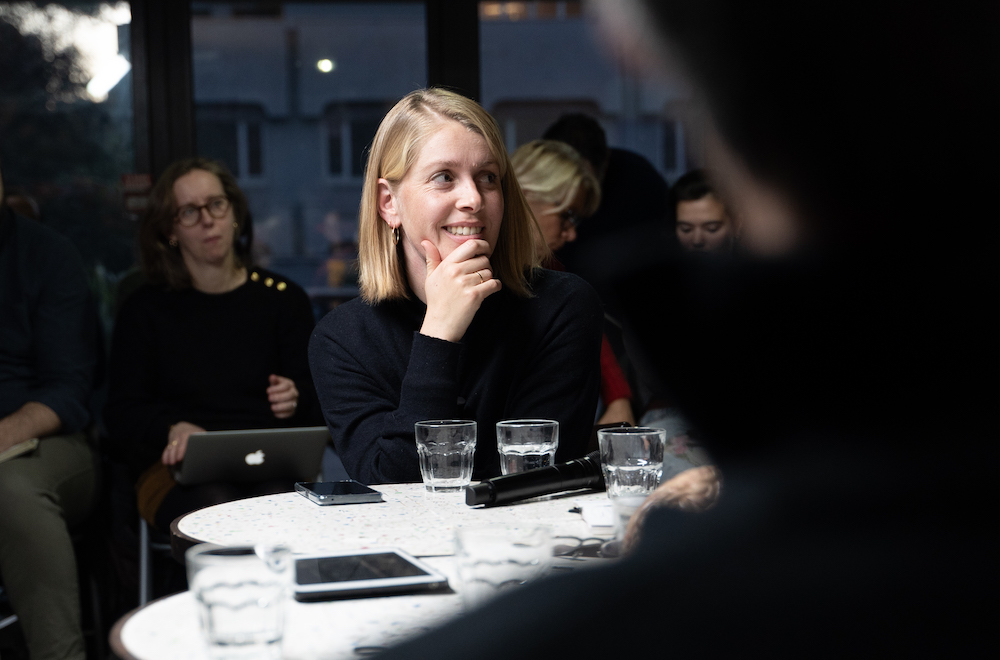
From Denmark.
I’m from Denmark, I’m a scriptwriter and I’m working with TV shows and also developing some films.
I started working with cinema when I was 15 in my hometown Aarhus in Denmark, where I was a part of an Atelier during my first short films. I kept working with film while I studied at university, Modern Philosophy in France. After that I was accepted to the Danish Film School on the screenwriting selection, and that was a two-year formation at the time.
Since then I’ve been working in Danish film industry, writing in the beginning as an episode writer, so working for a creator on shows like “The Rain” that was made for Netflix. And also developing new TV show for the Danish broadcasted TV2 and working on feature films with the Danish Film Institute.
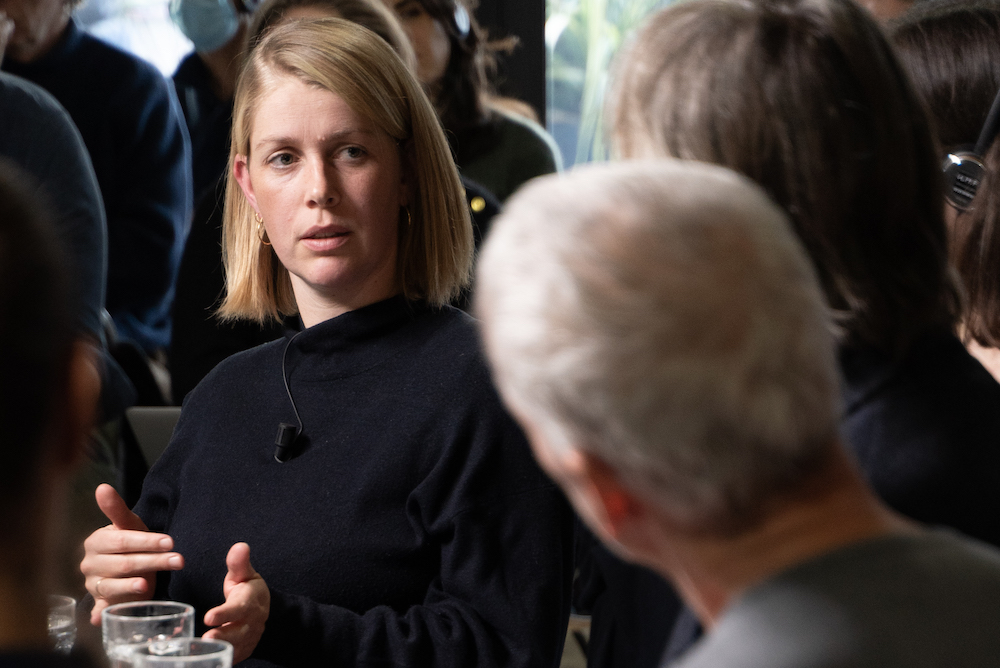
Saying something about society and modern life.
I think that I do try in my work to push something to be a bit different, especially when it comes to TV shows. It’s not like I want to revolutionise anything, but take small steps of… I definitely want to do something that is not only for entertaining, that has a level of saying something about society and modern life.
Believe in your idea and deploy it.
When I get an idea I don’t write it down. If it comes back and it gets more, there’s more and more substance by playing with the idea in my head, then I will think this is important enough for me to tell it. I won’t be afraid that it doesn’t have any sense. I’m more like, I think this has meaning, is this the right way to tell it? Is it enough… Does it have enough material, can there be enough characters in this for it to be a real story?
“When I get an idea I don’t write it down.
If it is not important, I think I will just forget it.”
— Julie Budtz Sørensen —
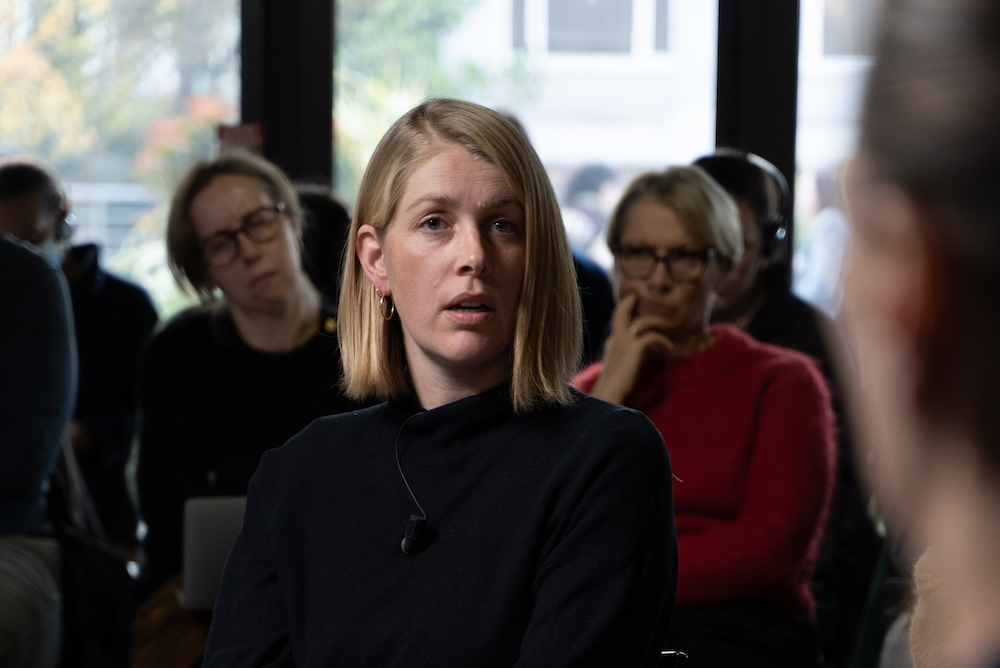
Our experiences to feed the characters’ experiences.
My own life experiences I think give me more and more material to write on, and I’m definitely way more open.
I think when I was a young student I was more like thinking about what the filmmakers that I admired were doing.
Whereas now I’m more like way more using my life experiences and people I meet to create the stories. I have worked for others, for creators as an episode writer, and that’s completely different from creating your own shows.
Collaboration in the construction of the story.
When I’m working for others, we will have a lot of time talking about all kinds of stuff, everyone is bringing their ideas, but ultimately it’s the creator who has the vision, or she.
For my own shows, when there are few episodes, I prefer to write myself, but have the director very involved in it, not writing, but giving a lot of notes. And we have days where we put it up on a board and we talk about it.
The choice of people is the most important thing, if you have to work together. Not that you necessarily are alike, actually you shouldn’t, I think, you have to be able to challenge each other. But it’s like casting, it’s like finding a director, it’s very important, the collaboration… And it can be difficult to know in the beginning who you can work with.
In the States there are completely different ways of doing it, there are so many more people – I think there can be 10 to 12, and everyone has a very specific role. In Denmark we’ve been maximum 5 in a room.
So defining the roles is important too. And then spending a lot of time together, and be generous about talking about your own life and where you come from, private things that help to build a relationship.
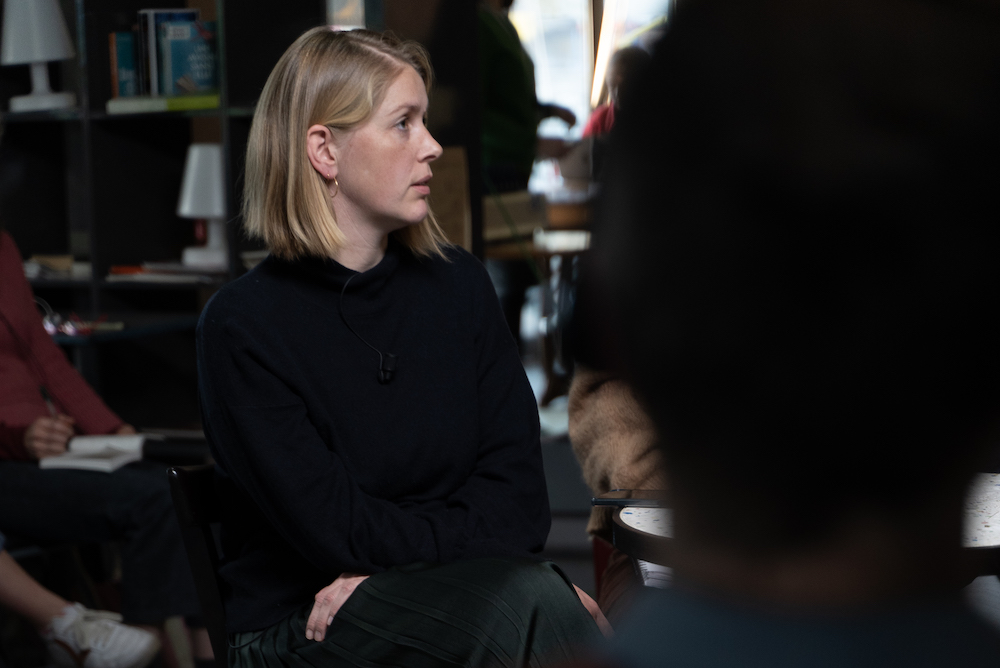
Open the World of Possibilities.
I have a really good producer who is always like, this sounds great, and it’s like, at the beginning it is “the world of possibilities”. And then when you start writing: you have to write a synopsis and a treatment, and you have to go sell it.
And then I think for me, a lot of stuff happens when you start writing a script. And I think my teacher used to call it “a vomit draft”, the first draft, because you just get everything out, and you don’t think about structure.
And then you read it again and some things are really bad, and then some of them are quite good, or they have some things like a scene that can become key to you about what the story is about. And then you start working around that.
Intuition and structure of the story.
I always think, in of course every episode, there have to be some scenes that I truly love. Then I start editing it, and it is when I am more structural and more intuitive. When I write an episode, I think about some things that should be in it. Often I will work with a cliffhanger because I want the audience to keep watching.
The story is a game of clues.
I think that actually a good part of writing a TV show is that it’s a bit more vast, and you can digress, and you can follow a character more in one episode. For me it’s still more playful, or at least that’s why I like it.
But when scriptwriters work together, in a writers room, I think none of us have the same idea of what it actually means to use this structure. Everyone will be like, “this is definitely the first plot point of the story”. And it’s a bit arbitrary, because then we’re not agreeing on it even.
But if you have a story and you can sense somehow that something is lacking, then you can look at it more schematically and say what is the first turning point or the midpoint of the story?
But I think it’s always like a crutch, it’s like when you reach some kind of dead end, where you can’t continue, it can help you.
The more you know about your characters, the more you know about the story, it’s easier to write it without looking so much at this model.
The Premise.
I think you need to, deep inside of you, know kind of the message of your story. I think it’s better to become aware, even though you’re not saying it to your audience. And I think you’re still saying it kind of. So to think about, what it is you actually want to say with your story.
And I don’t think that’s the same as the premise. The premise is more difficult to work around.
“I guess there’s some kind of question you ask at the beginning of your story that has to be big enough to be explored from different perspectives. I think you need to know, deep inside of you, what is the message of your story.”
— Julie Budtz Sørensen —
Story & Collective.
And often you will be surprised in the end… I mean after editing, and maybe even after.
Now if I rewatch the show I made one year ago I will be surprised about some things, about what it ended up being about. When I read the reviews I was surprised also about what people got out of it. So yeah, it’s a long process to know what the story was, I think.
Not to forget that I’m not doing it alone at all, so the question will always be refined by first a co-writer, a producer… The director will for me be the most important partner in it because he or she will will direct it and direct actors and have another perspective on it that I have.
Listen and be humble.
The collaborative part of it will help of course to be more clear on what you’re trying to say.
I think even sometimes you get annoying questions, from people who are financing, but I think like most questions even if you find them stupid, there’s most of the time something true to it.
Even though they’re pinpointing something and you don’t want to go that way, what they’re saying is probably like some kind of lack in your story.
So I think also very important is to be kind of humble to understand you don’t know everything. The more experience you get the more you will also be able to see that in the process of writing.
Open the scope of the story.
I thought I was never going to do TV shows, because I wasn’t that into it or even the TV shows I like was very far from something I wanted to do.
But now I think what I really want is to try to tell something, what would you say, important for a broad audience. Not just a few.
The engagement of the viewer through genre.
TV show I’m making now has this element of thriller and crime. Also the one I’m working on now has a courtroom drama in it. So, a thriller has a grammar and a courtroom drama has a grammar that engages you as an audience to follow the story. But it can be a really good way to tell about some characters, because you have a motor driving the story like: “who did the crime?”, “what happened in the past? a mystery or something?”… that creates suspense.

The intimate and collective experiences of the characters.
My favorite TV show is “Twin Peaks”.
If you cut it to the bone it’s just about who killed the girl. A very simple question for a crime show.
And when it’s a show, because it’s many episodes, you will know – “I’ll need a suspect in this episode, I will need the mystery to go further, but still I want to tell about all these characters and their lives.” – these things can help a lot. It’s a motor driving the whole thing.
A bit of arrogance…
I mean, experience is like really gold. I used to write for others, and I’m sure I was pretty arrogant when I was young and making short films. And I think maybe you need that arrogance also to succeed. But sometimes maybe to really listen to other people because you don’t always have the right answer yourself.
Ressentir pour raconter.
The main idea has to be something you so strongly feel yourself somehow – whether it’s about death or survival or love between a mother and her child or whatever – you have to feel it strong enough to be able to tell it.
© Photos Brigitte Bouillot
Hosted on Acast. See acast.com/privacy for more information.
]]>Julie Budtz Sørensen graduated from The National Film School of Denmark in 2015. She is the head-writer of the Viaplay Original series WHERE WERE YOU? (HÅBER DU KOM GODT HJEM, 2022), based on her fictional podcast DET MED LIV, for which she won the award for best European Radio Fiction Series at Prix Europe in 2018.
She has worked on several TV series, including as part of the writers’ team on the Netflix Originals THE RAIN (2018) and CHOSEN (2022), as a co-writer on the second season of LIMBOLAND (2020), and as part of the writers’ team on an upcoming mini-series adapted from Tove Ditlevsen’s autobiography GIFT (DEPENDENCY).
Julie is currently developing two drama shows with Nimbus Film and has a feature film in development with The Danish National Film institute.
— an interview by Guillaume Desjardins, Writer-director, member of Les Parasites, recorded at Les Champs Libres (Rennes) in December 2023 in the framework of the serie “What stories for our time?”.
From Denmark.
I’m from Denmark, I’m a scriptwriter and I’m working with TV shows and also developing some films.
I started working with cinema when I was 15 in my hometown Aarhus in Denmark, where I was a part of an Atelier during my first short films. I kept working with film while I studied at university, Modern Philosophy in France. After that I was accepted to the Danish Film School on the screenwriting selection, and that was a two-year formation at the time.
Since then I’ve been working in Danish film industry, writing in the beginning as an episode writer, so working for a creator on shows like “The Rain” that was made for Netflix. And also developing new TV show for the Danish broadcasted TV2 and working on feature films with the Danish Film Institute.
Saying something about society and modern life.
I think that I do try in my work to push something to be a bit different, especially when it comes to TV shows. It’s not like I want to revolutionise anything, but take small steps of… I definitely want to do something that is not only for entertaining, that has a level of saying something about society and modern life.
Believe in your idea and deploy it.
When I get an idea I don’t write it down. If it comes back and it gets more, there’s more and more substance by playing with the idea in my head, then I will think this is important enough for me to tell it. I won’t be afraid that it doesn’t have any sense. I’m more like, I think this has meaning, is this the right way to tell it? Is it enough… Does it have enough material, can there be enough characters in this for it to be a real story?
“When I get an idea I don’t write it down.
If it is not important, I think I will just forget it.”
— Julie Budtz Sørensen —
Our experiences to feed the characters’ experiences.
My own life experiences I think give me more and more material to write on, and I’m definitely way more open.
I think when I was a young student I was more like thinking about what the filmmakers that I admired were doing.
Whereas now I’m more like way more using my life experiences and people I meet to create the stories. I have worked for others, for creators as an episode writer, and that’s completely different from creating your own shows.
Collaboration in the construction of the story.
When I’m working for others, we will have a lot of time talking about all kinds of stuff, everyone is bringing their ideas, but ultimately it’s the creator who has the vision, or she.
For my own shows, when there are few episodes, I prefer to write myself, but have the director very involved in it, not writing, but giving a lot of notes. And we have days where we put it up on a board and we talk about it.
The choice of people is the most important thing, if you have to work together. Not that you necessarily are alike, actually you shouldn’t, I think, you have to be able to challenge each other. But it’s like casting, it’s like finding a director, it’s very important, the collaboration… And it can be difficult to know in the beginning who you can work with.
In the States there are completely different ways of doing it, there are so many more people – I think there can be 10 to 12, and everyone has a very specific role. In Denmark we’ve been maximum 5 in a room.
So defining the roles is important too. And then spending a lot of time together, and be generous about talking about your own life and where you come from, private things that help to build a relationship.
Open the World of Possibilities.
I have a really good producer who is always like, this sounds great, and it’s like, at the beginning it is “the world of possibilities”. And then when you start writing: you have to write a synopsis and a treatment, and you have to go sell it.
And then I think for me, a lot of stuff happens when you start writing a script. And I think my teacher used to call it “a vomit draft”, the first draft, because you just get everything out, and you don’t think about structure.
And then you read it again and some things are really bad, and then some of them are quite good, or they have some things like a scene that can become key to you about what the story is about. And then you start working around that.
Intuition and structure of the story.
I always think, in of course every episode, there have to be some scenes that I truly love. Then I start editing it, and it is when I am more structural and more intuitive. When I write an episode, I think about some things that should be in it. Often I will work with a cliffhanger because I want the audience to keep watching.
The story is a game of clues.
I think that actually a good part of writing a TV show is that it’s a bit more vast, and you can digress, and you can follow a character more in one episode. For me it’s still more playful, or at least that’s why I like it.
But when scriptwriters work together, in a writers room, I think none of us have the same idea of what it actually means to use this structure. Everyone will be like, “this is definitely the first plot point of the story”. And it’s a bit arbitrary, because then we’re not agreeing on it even.
But if you have a story and you can sense somehow that something is lacking, then you can look at it more schematically and say what is the first turning point or the midpoint of the story?
But I think it’s always like a crutch, it’s like when you reach some kind of dead end, where you can’t continue, it can help you.
The more you know about your characters, the more you know about the story, it’s easier to write it without looking so much at this model.
The Premise.
I think you need to, deep inside of you, know kind of the message of your story. I think it’s better to become aware, even though you’re not saying it to your audience. And I think you’re still saying it kind of. So to think about, what it is you actually want to say with your story.
And I don’t think that’s the same as the premise. The premise is more difficult to work around.
“I guess there’s some kind of question you ask at the beginning of your story that has to be big enough to be explored from different perspectives. I think you need to know, deep inside of you, what is the message of your story.”
— Julie Budtz Sørensen —
Story & Collective.
And often you will be surprised in the end… I mean after editing, and maybe even after.
Now if I rewatch the show I made one year ago I will be surprised about some things, about what it ended up being about. When I read the reviews I was surprised also about what people got out of it. So yeah, it’s a long process to know what the story was, I think.
Not to forget that I’m not doing it alone at all, so the question will always be refined by first a co-writer, a producer… The director will for me be the most important partner in it because he or she will will direct it and direct actors and have another perspective on it that I have.
Listen and be humble.
The collaborative part of it will help of course to be more clear on what you’re trying to say.
I think even sometimes you get annoying questions, from people who are financing, but I think like most questions even if you find them stupid, there’s most of the time something true to it.
Even though they’re pinpointing something and you don’t want to go that way, what they’re saying is probably like some kind of lack in your story.
So I think also very important is to be kind of humble to understand you don’t know everything. The more experience you get the more you will also be able to see that in the process of writing.
Open the scope of the story.
I thought I was never going to do TV shows, because I wasn’t that into it or even the TV shows I like was very far from something I wanted to do.
But now I think what I really want is to try to tell something, what would you say, important for a broad audience. Not just a few.
The engagement of the viewer through genre.
TV show I’m making now has this element of thriller and crime. Also the one I’m working on now has a courtroom drama in it. So, a thriller has a grammar and a courtroom drama has a grammar that engages you as an audience to follow the story. But it can be a really good way to tell about some characters, because you have a motor driving the story like: “who did the crime?”, “what happened in the past? a mystery or something?”… that creates suspense.
The intimate and collective experiences of the characters.
My favorite TV show is “Twin Peaks”.
If you cut it to the bone it’s just about who killed the girl. A very simple question for a crime show.
And when it’s a show, because it’s many episodes, you will know – “I’ll need a suspect in this episode, I will need the mystery to go further, but still I want to tell about all these characters and their lives.” – these things can help a lot. It’s a motor driving the whole thing.
A bit of arrogance…
I mean, experience is like really gold. I used to write for others, and I’m sure I was pretty arrogant when I was young and making short films. And I think maybe you need that arrogance also to succeed. But sometimes maybe to really listen to other people because you don’t always have the right answer yourself.
Ressentir pour raconter.
The main idea has to be something you so strongly feel yourself somehow – whether it’s about death or survival or love between a mother and her child or whatever – you have to feel it strong enough to be able to tell it.
© Photos Brigitte Bouillot
Hosted on Acast. See acast.com/privacy for more information.
]]>— conference recorded at Les Champs Libres (Rennes) in December 2023 in the framework of the series “What stories for our time?”, moderated by Yann Apperry – Screenwriter, Playwright and Novelist – and Nicolás Buenaventura – Writer-director and Storyteller.
While the stories of a world in crisis are hitting us, how can we not fall into madness?
Can we think of stories as way to re-weave ourselves, as an individual and collective reconstruction?
With Roberto Beneduce – ethnopsychiatrist and anthropologist, Julie Budtz Sørensen – Danish screenwriter, Tamara Russell – neuroscience and martial arts specialist & Mathilde Delespine – Midwife, coordinator of the Maison des femmes Gisèle Halimi at Rennes University Hospital
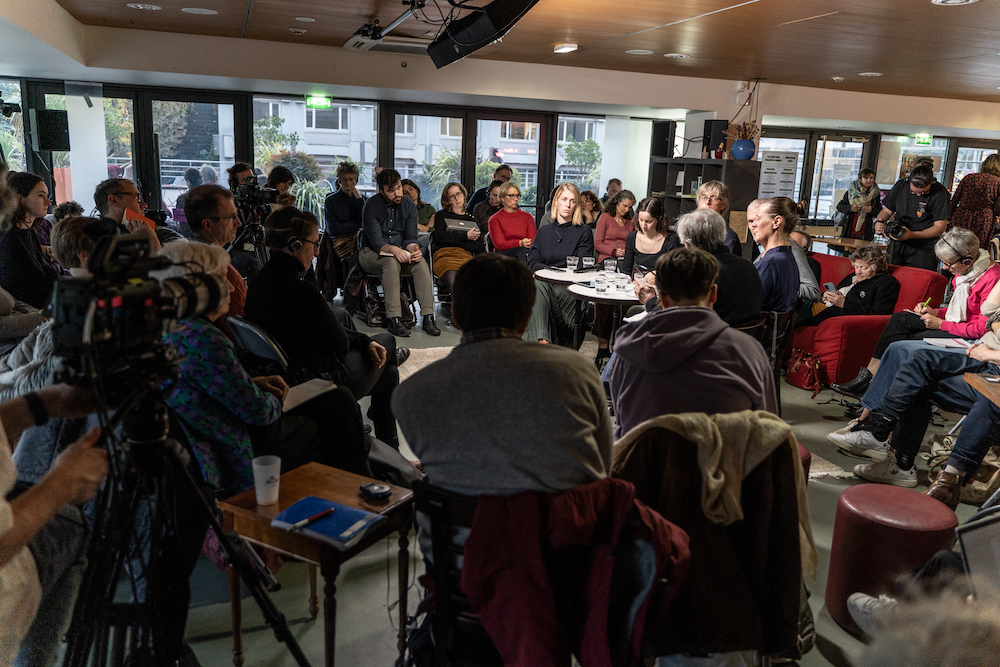
From the “we” to the “I”.
So I suppose the thing that’s been preoccupying me, as I engage with the world through the lens that I have, which is neuroscience and martial arts, is trying to think about the conception of a story in terms of, is it a thought? Is it a movement? Is it a mental movement that comes from he imagination? Is it a heart movement that inspires us through feeling and sensing, and the role of the physical body and the physical movements as part of that conceiving of a story?
The place where I often come back to, particularly when I’m struck and pained by the state of the world, a collective psychosis, some have referred to it as a madness, that we’ve become trapped in or stuck in, is, again, where does that reside in us as individuals?
Because my sense is, if we need to curate collective stories, there’s a self-responsibility that we first examine our own stories as individuals.
So in that movement from I to “we”, we don’t just jump over the “I” and suddenly go to the we and discover that we’re carrying a lot of our own wounds and pains and biases with us.
And if I think about healing stories and healing journeys, what the martial arts has taught me is there’s a lot we can do for our own healing if you’re able to feel into your own wounds, whether those are physical, psychological, or mental.
From the inner to the outer.
So, this idea of being a researcher of our own experience through sensing, through touch, allowing us to contact our own wounds and pains, which then opens that doorway to be more compassionate when we’re engaging with the wounds and the pains of others around us.
Listening to make sense.
What happens when information comes into our brain when we’re listening? Very naturally, our brain is trying to organize and make sense of that information. And quite quickly, it brings up as many of the experiences that we can connect to as possible, because it’s kind of sorting through and trying to make sense, like, do I have an experience of this? Can I connect to this in some way? So we have this natural propensity to try to make sense of that information in relation to our own experience. And that’s not wrong or bad, but the awareness of that and the power that may come from that, particularly if you’re in a hierarchical position as a therapist or as a doctor.
Open listening to stay connected.
How do I listen without problem solving?
How do I listen without sort of pre-emptively diagnosing? And I mean, for me, mindfulness practice, meditation practice has been essential for that, because I’m able to sort of spot it arising more quickly and mostly able to deal with it.
Body and words.
I think the body, for me, is always a teacher and a tool, and especially important when words are hard to find, which may be for a variety of reasons. And for me, there’s an interesting practice, which is really tuning in to the intention to make a movement and trying to observe how that decision, which is made by our frontal lobe, starts to then prepare the body, that thing that the brain does, which is bringing up past experiences and coding all the information for how to make the movement, before then sending the movement out into the body.
References and potential.
How can I make a movement that I’ve never made before? What you’re actually activating at the brain level is something that the neuroscientists refer to as “free won’t”. So, it’s not about free will. It’s about the letting go to create the space for the potentiality. Think of a baby, how they begin to explore the world. They haven’t yet got the movement of walking. They’re trying every different adaptation of foot placement and angle and hip and head, super focused concentration. And slowly that becomes honed into an automatic movement that can be made without awareness. But can we as adults practice walking as if walking for the first time? Intention, attention, awareness, sensing the world, mindful walking…
Automatisms and first times.
When we meet somebody that our brain is like, I’ve got no reference for this. I’m like really stuck and I’m going to just fill it with all my preconceptions and prejudices because I’ve got nothing. Those for me are moments when moving together: following, mirroring, we’re activating the brain’s mirror neurons. Part of that network, social network of empathy and bonding.
Respect for the appropriation of the narrative.
We’ve talked about the language of safety, whether that’s safety for the characters and the performers, even, of a show or a film.
What’s safe enough to expose people to? Through a work of art or through storytelling. And recognizing that the fear experienced in the Congo Republic may be different from the fear experienced by someone walking down the streets of New York. But the fear is the fear in the brain, it’s a very particular constellation of neural networks that will activate in certain ways when cortisol is flooding the brain.
To put in safety to open the consciences.
I can feel safe with you. How do we create safe enough spaces and containers that can allow us then to stretch a little bit more the brain salience network? The salience network is activated, it’s got different tones to it and there’s maybe some nuance there. Like if we want to open awareness, you know, it doesn’t have to be that big fist of shocking violence and gore, the more implicit, the subtler.
The micro-details of the narrative.
It’s in the micro. It’s in the micro moments of connection. It’s in the micro moments of a smile or a gesture or a touch. In the screenwriting, too, it’s that little thing that maybe half the audience missed. But there was that little clue that something shifted.
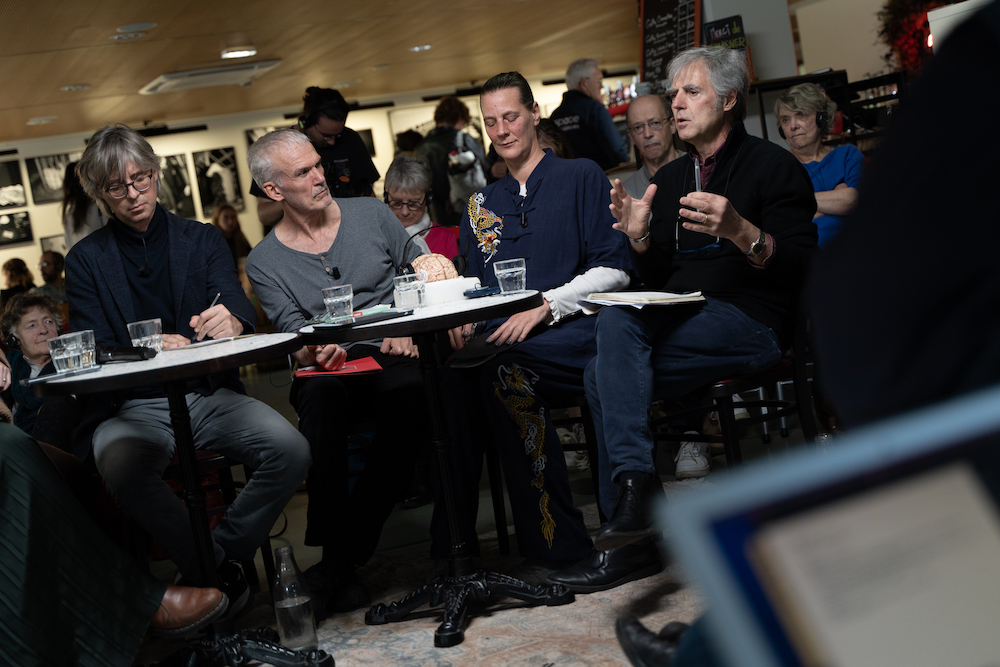
Linguistic hegemony: a danger of our time.
I started resisting the violence of a single language when I started to work with the mad people in a peripheral area of my birth town Naples. I entered the forest of different languages and stories. They were mad people, but they were poor men and women too. I think that people were victims of this linguistic violence when obliged to speak about themselves in the language of psychiatry. I think that we have to consider this violence of linguistic hegemony as a danger of our time. It is an example of linguistic terrorism, obliging people to reduce their experience, their multiplicity of languages to one dominant language. And this experience was for me the first time when I started to question the relationship between my knowledge and the experience of other people.
Healing the other: co-writing.
The question “how stories, words can heal”: I think that we have to put first another question. Are we ready to hear the words of people? Are we ready to hear other ways of narrating time, experience, body, and so on?
When I started to study anthropology and I took my PhD and worked in West Africa, this experience amplified, became more and more complex because I worked with local healers, working with mental disorders.
And for me, this was another forest of languages, symbols, strategies, worlds. In this case, too, I learned my ignorance and it was an important experience. Healing the other is not giving them a truth, but co-writing a truth and co-imagining a story.
Listening again and again.
The experience realized during my last 28 years with migrants was for me another bomb because I was obliged to, again, to reimagine the way of hearing their truth, their lies, their experience.
Multiply the language.
We have to multiply the language, including in our job as clinicians, as scholars, as writers, poets, as always, other codes.
The colors of our words.
The first thing to recognize is the fact that in our language, there are many, many levels, profiles. And if I want to construct, to build, another setting, I have to be aware about what my words hide. It is an effort with myself to control my words as well as to control my eyes, because even my look can be violent and a powerful look.
The fragmented language.
The powerless language is characterized by its ontological fragility, its ontological lack of consistency.
Many times, people speak, and the first comment is: “I don’t understand. She speaks about too many things together.” People speak as they live. Life is without any consistency. Migrant people try to save all their life in another language, obliged to translate their body, their gesture in another world. The language of powerless people is a shy language. It’s a language characterized by a sort of a “shame”. It is a shameful language, hesitant language. Even when people cry with aggressively, they are shameful, because their cry is a desperation language.
Recognize fragments of the unknown.
A scenario that wants to give, to resituate this richness, must recognize these fragments, reimagining their place and their definition. The cries, the lack of consistency maybe is a shortcut for a myth, for a cultural perspective, for a cultural memory that we completely ignore.
Time is the secret of a successful story.
Step by step, I enter another world. This means that we need time. And another disease of how our time is the lack of time for hearing people. Again, are we ready to hear other narratives, other stories? This is the challenge.
Each kind of story, I think, is a sort of architecture, a new architecture of time, a sort of blockage of time, a suspension of time. Even the series you prepare give another time. It is important, because if you consider that even therapeutic rituals operate with the same logic, blocking the time. In this blocked time, people can imagine another experience, project, wait for another story. So, this way of working with time is the secret of each successful therapy, the secret of each successful story,
Story-sellers
Today, there are many, many story-sellers, you know, in migration field, story-sellers multiplied: these people whose profession is to sell against money a narrative to the migrant before he or she stands before… To be credible. To receive the humanitarian protection. I think that it is a new field to reimagine our way of considering story, epic, narrative, novel, and so on.
The symbolism of the first name.
Unfreeze words, detrivialize words.
If you consider the first name, stay about your first name and make the story about your first name.
In West Africa, touching the first name is touching a secret, you touch a danger, you touch a rule, a story of a village.
Metaphors to create bridges between time and place.
Working by metaphors means that you create an imaginative code. And this is obvious because metaphors are able to “connect”, making bridges between times and places. And we know that places have memories. But usually, we speak about our body, our individuality, and we forget the relationship between my body and the spaces and the places that we touched before. For instance, I was speaking with a woman coming from DRC, Lake Goma. And she was blocked because she was raped near the lake. And when I told her, “I know this lake, I know this town. In that town, you prepare a very good fish.” She smiled. And she started again to imagine a possibility for her body to live in this world, even if this world is a world of violence, death, humiliation. So it is a continuing work where we have to discover step by step with the other people, where place themselves, where place ourselves in this movement.
Increase the semiotic orientation.
I think that when people prepare a scenario for TV, for cinema, they multiply these signs because they don’t want to give people a complete story. They give the possibility of identifying themselves in this forest of science of semiotic.
The narrative paradigm in society.
In many cases, we are not ready to listen to traumatic experiences coming from other countries, from other regions of the world. A colleague of mine coming from Africa said, “you Europeans, you Westerners, you are not ready for our trauma.” And I think he was right. Because what happens in many parts of the world, we just translate in our categories. So, we watch them, we translate in medical terms, but the problem remains invisible.
I think that trauma doesn’t need to be to be saved, to be made explicit. Living under the empire of narrative paradigm in our society, we think that we have to say all things. It is not necessary. The clinical work, the very fine research is to be placed next to things, next to an experience, not necessarily explicit them, cutting them. This is a surgery work, not psychological, psychotropic work. What is important is communicating to other people that we are there, ready to listen, ready to help.
The collective narrative for individual metamorphoses.
The story to reintegrate our world.
The first metamorphosis, an effective story has to realize is reconnecting the individual, the people, to someone else. Recreating a minimum of shared memory and link. If the healer, if the clinician, is the only one, it is just important to reimagine a micro community between me and you. We are recreating the first minimal exchange and reintegration. And step by step, this reintegration is the metamorphosis being again in a possible world against the end of the world, against the risk of apocalypse.
Today, all of us know the anxiety of distrust. People, migrants came here and they are object of suspicion and reciprocally, they distrust our world. How you can heal these people if you are not able to reconstruct a minimum of community? This reintegration is the first step of a metamorphosis.
An epic and not tragic story.
Our effort is toward humiliated people. The effort of making an epic story about their miserable story. “You are not just a victim. You are not just ill people. You are not just a disparate man.” We have to transform in an epic sense, his or her trajectory. Each therapy has to realize this metamorphosis.
We can introduce to these humiliated, wounded, shamed bodies, a word of grace. We have to introduce these little miracles in our stories.
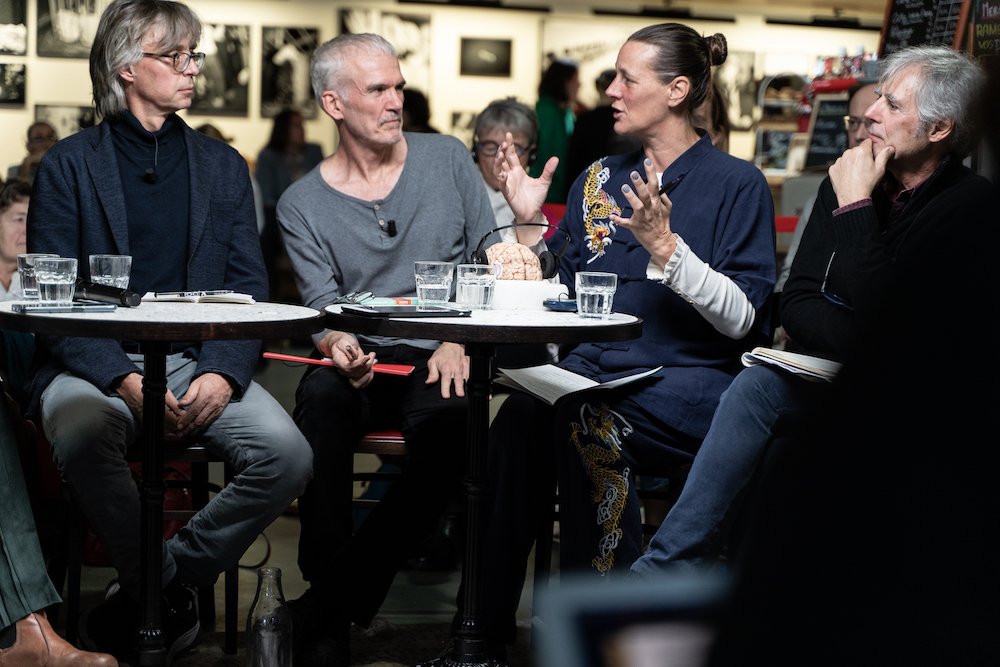
Intimate and collective.
As a scriptwriter working with cinema, mostly with television, I’m trying to find the bridge between these two worlds that are quite different: intimate and collective.
Lars von Trier, the Danish director, he said once – “a movie or a show should be like a pebble in the shoe” – and how to put that into the world of television and keep this idea while being a part of an entertainment industry that in many ways wants to get what it already has. I’m juggling this thing to make something for a broad audience that still says something about society and about some people that the viewer is maybe not that used to see in fiction or in television and cinema.
Empathy for fictional characters.
A story that I want to tell, is of course the result of a dialogue with my producers about it, but I also is a dialogue with the broadcaster, about how to tell the story in a proper way.
I think, especially in Denmark, people are quite addicted to spending their two hours on Netflix every night.
You’re following characters, and you engage in their lives. I think that is a great opportunity to learn something and feel empathetic about some fictitious characters.
The questioning of worldviews.
But it can have the opposite effect on people: becoming almost anti-social, preferring the world of fiction also because it resonates with the world view you already have. Right now, maybe there’s not that many initiatives to challenge the spectator of viewers’ world vision.
A common grammar for a common language?
We work in writers’ rooms, and we have to have a common language. And we’re taught a certain way in school with a grammar of – well, it’s back to Aristotle, but also American tradition of how to tell the story in a film, the turning points and point of no return and this… And they’re good at scratches, but if they become determining of the story, you begin there, it’s a big problem because you will always know where the story is going. But also, it’s a comfort for the viewer to watch a story you know where it’s going.
Move “under the skin” of the character.
I think in this way of connecting with what someone coming with a different story, it can be through emotions. Working with long running TV shows, it has the potential to follow a character for a long time and get under this person’s skin. So, I see it as a good challenge to be able to introduce people who come with new stories and kind of force the viewer, that sounds wrong, but to spend time with these people, because eventually you will hopefully get under their skin.
Multiply the angles for the same character.
I think also in that way, the language of cinema, like the more classical way of telling a story and using tricks like cliff-hangers and suspense, can be useful to, a bit, manipulate the viewer, but in a good way to be engaged with someone that normally they wouldn’t be engaged with. Without moralizing. So of course, it’s an exercise for me when I’m writing. But hopefully also for the people I write for, to see things from different angles. And I think in that way, for me, it’s very satisfying to work with long running format, because you can really explore different perspectives.
Collectively re-create a unique world.
What I love about working with cinema is that it’s a collaborative work. No one does it by themselves. And it resonates a bit with what you said also. You start with a vision, but it will be challenged by so many people in the process. And I think it’s extremely important, obviously, to be open to that, because it’s such a long process from the idea to the finished work. And even, of course, when you are finishing sound, even you will still be recreating the narrative of the story. Actually, I think one of the most pleasurable things is editing, because for a writer, with the editor, if you’re working with them, which you often do on a show, you are reconstructing your story with new limitations. You have the material, but it’s like a completely different way of creativity.
Addiction in storytelling.
Today, there is a junkie’s attachment to a product, a series or something. And we were wondering if addiction, isn’t a form of trauma? Are we, scriptwriters, drug dealers or are we providers of another spectrum of substances?
Tell the trauma.
I made a whole television show about a rape and a girl being raped and the main character was her best friend. I think one of the ways of me to find it like, I guess, OK to tell the story as if it was from the perspective of her friend and some perspectives that I could understand. But it’s a dilemma always. You want to tell this story, but how to tell it in a respectful way.
The story to re-create the link.
The story for sharing experiences.
In our work, in my work as a midwife more incipient, helping pregnant women to become mothers, couples to become parents. And work as a midwife helping women and their health, in the broadest sense, beyond just their pregnancy. And also helping women, victims of violence, help with her health issues, help with her rights, her legal and social rights.
We help her also establish connections with others beyond our professional team. Establishing connections with other women.
The story for mutual recognition.
It is important to allow mutual recognition, to put it simply, they will be able to feel understood, identify positively with other women.
Bodies and minds mistreated, to be rebuilt.
These women feel ashamed, because the shame of the violence they endured. Their bodies are numbed, disassociated: these women are disconnected from their bodies. So, we try to do this by creating a zone of security and trust, we adapt a lot to each consultation.
We, as health professionals, within a malfunctioning system, we also can be disconnected from our bodies. We can neglect our bodies, neglect our sleep, our health.
The story for resurrection.
We hear a lot of interpersonal violence and a lot of systemic violence. Systemic violence is the non-welcoming of people in exile who flee, as we would flee what they have fled. If we’d suffered what they’d undergone no doubt we would choose to flee also, if we had their courage. There are also women born here who suffer violence from the system which doesn’t sufficiently protect women victims of violence, children victims of violence.
We experience many emotions sometimes we share theirs, their anger, indignation…
Some women need to be resuscitated, medically, socially, legally, and they need to be boosted. Because when you undergo all that it’s so staggering it’s hard to believe.
The trauma destroys the representation of the world.
Trauma destroys our representation of the world and destroys meaning. That’s why it’s violent. It’s incomprehensible. It shouldn’t happen to a human being. So sometimes we see women who are almost lifeless yet they are alive. They’ stand there before us. But something has died.
Storytelling for integration.
And yet sometimes violence is also dealing with very contradictory rules. You have to integrate French life, you have to speak French, but the French classes are full. You have to be a useful refugee, be very knowledgeable, be useful to society. But as a refugee, I’m not allowed to work. The law forbids it. I’m allowed to do voluntary work.
It’s the big paradox: we do what we can, the best we can, with great commitment – because these women oblige us – with their resistance. Human beings are extremely adaptable and every day we see people who resist, who stand tall, we have no idea how. Of course, they motivate us.
Resilience & hope through speech & movement.
The co-animation of the talk groups or the therapy workshops with karate, theatre, art therapy or dance, there are also incredible moments very positive, joyful. We laugh sometimes during a consultation. Because it’s a thread of life. We have to go on living in spite of everything and that prevents violence from triumphing.
The possibility of telling, the power of listening.
Allowing these women to tell their story one way or another, when we try to just listen to them without being just health professionals who only write prescriptions, or jurists who only give advice, but first and foremost really listen, we’re trained to ask open questions. It’s not the victim of violence’s words freeing them, It’s our increasing ability to listen.
Opening the story.
We ask: “how are you?” Rather than say: “are you better today, Madame?” A simple example.
Confidence to free words.
The story begins when we say hello. It starts with her physical attitude. Because sometimes they can be very withdrawn with the slightest form of expression the story can start. When does it start? Certain women say: “with this baby, I want to start my life over. I won’t accept what I’ve endured ‘til now anymore.” And often the body expresses this. That’s when we see a new story.
Bifurcate to start a new story.
The perinatal period is so great because we know that traumas, stories of violence can be repeated from one generation to another. I wrote down “bifurcate”. We talked about that. What we try to do in creating this quality relationship with them as we try to help them feel that they deserve to be well treated, is to allow them to bifurcate onto a path of safety. So, they can maybe start new story – it won’t wipe out their past, what they’ve endured – but it can initiate a new way of relating to others, with the ability to act, with no submission or domination. Without being abandoned. That’s why we have to deliver, together.
The story: a seed to be sown.
The story begins as soon as we meet. But we need to be patient, we don’t always see a result from our efforts straight away. It’s like sowing a seed, sometimes it germinates immediately because the soil is ready. Sometimes not. You prepare the soil and it might be a colleague or a caring companion or a friend or a group of her peers who will sow the seed. She is the principle gardener. We’re there just to help her.
© Photos Brigitte Bouillot
Hosted on Acast. See acast.com/privacy for more information.
]]>— conference recorded at Les Champs Libres (Rennes) in December 2023 in the framework of the series “What stories for our time?”, moderated by Yann Apperry – Screenwriter, Playwright and Novelist – and Nicolás Buenaventura – Writer-director and Storyteller.
While the stories of a world in crisis are hitting us, how can we not fall into madness?
Can we think of stories as way to re-weave ourselves, as an individual and collective reconstruction?
With Roberto Beneduce – ethnopsychiatrist and anthropologist, Julie Budtz Sørensen – Danish screenwriter, Tamara Russell – neuroscience and martial arts specialist & Mathilde Delespine – Midwife, coordinator of the Maison des femmes Gisèle Halimi at Rennes University Hospital
From the “we” to the “I”.
So I suppose the thing that’s been preoccupying me, as I engage with the world through the lens that I have, which is neuroscience and martial arts, is trying to think about the conception of a story in terms of, is it a thought? Is it a movement? Is it a mental movement that comes from he imagination? Is it a heart movement that inspires us through feeling and sensing, and the role of the physical body and the physical movements as part of that conceiving of a story?
The place where I often come back to, particularly when I’m struck and pained by the state of the world, a collective psychosis, some have referred to it as a madness, that we’ve become trapped in or stuck in, is, again, where does that reside in us as individuals?
Because my sense is, if we need to curate collective stories, there’s a self-responsibility that we first examine our own stories as individuals.
So in that movement from I to “we”, we don’t just jump over the “I” and suddenly go to the we and discover that we’re carrying a lot of our own wounds and pains and biases with us.
And if I think about healing stories and healing journeys, what the martial arts has taught me is there’s a lot we can do for our own healing if you’re able to feel into your own wounds, whether those are physical, psychological, or mental.
From the inner to the outer.
So, this idea of being a researcher of our own experience through sensing, through touch, allowing us to contact our own wounds and pains, which then opens that doorway to be more compassionate when we’re engaging with the wounds and the pains of others around us.
Listening to make sense.
What happens when information comes into our brain when we’re listening? Very naturally, our brain is trying to organize and make sense of that information. And quite quickly, it brings up as many of the experiences that we can connect to as possible, because it’s kind of sorting through and trying to make sense, like, do I have an experience of this? Can I connect to this in some way? So we have this natural propensity to try to make sense of that information in relation to our own experience. And that’s not wrong or bad, but the awareness of that and the power that may come from that, particularly if you’re in a hierarchical position as a therapist or as a doctor.
Open listening to stay connected.
How do I listen without problem solving?
How do I listen without sort of pre-emptively diagnosing? And I mean, for me, mindfulness practice, meditation practice has been essential for that, because I’m able to sort of spot it arising more quickly and mostly able to deal with it.
Body and words.
I think the body, for me, is always a teacher and a tool, and especially important when words are hard to find, which may be for a variety of reasons. And for me, there’s an interesting practice, which is really tuning in to the intention to make a movement and trying to observe how that decision, which is made by our frontal lobe, starts to then prepare the body, that thing that the brain does, which is bringing up past experiences and coding all the information for how to make the movement, before then sending the movement out into the body.
References and potential.
How can I make a movement that I’ve never made before? What you’re actually activating at the brain level is something that the neuroscientists refer to as “free won’t”. So, it’s not about free will. It’s about the letting go to create the space for the potentiality. Think of a baby, how they begin to explore the world. They haven’t yet got the movement of walking. They’re trying every different adaptation of foot placement and angle and hip and head, super focused concentration. And slowly that becomes honed into an automatic movement that can be made without awareness. But can we as adults practice walking as if walking for the first time? Intention, attention, awareness, sensing the world, mindful walking…
Automatisms and first times.
When we meet somebody that our brain is like, I’ve got no reference for this. I’m like really stuck and I’m going to just fill it with all my preconceptions and prejudices because I’ve got nothing. Those for me are moments when moving together: following, mirroring, we’re activating the brain’s mirror neurons. Part of that network, social network of empathy and bonding.
Respect for the appropriation of the narrative.
We’ve talked about the language of safety, whether that’s safety for the characters and the performers, even, of a show or a film.
What’s safe enough to expose people to? Through a work of art or through storytelling. And recognizing that the fear experienced in the Congo Republic may be different from the fear experienced by someone walking down the streets of New York. But the fear is the fear in the brain, it’s a very particular constellation of neural networks that will activate in certain ways when cortisol is flooding the brain.
To put in safety to open the consciences.
I can feel safe with you. How do we create safe enough spaces and containers that can allow us then to stretch a little bit more the brain salience network? The salience network is activated, it’s got different tones to it and there’s maybe some nuance there. Like if we want to open awareness, you know, it doesn’t have to be that big fist of shocking violence and gore, the more implicit, the subtler.
The micro-details of the narrative.
It’s in the micro. It’s in the micro moments of connection. It’s in the micro moments of a smile or a gesture or a touch. In the screenwriting, too, it’s that little thing that maybe half the audience missed. But there was that little clue that something shifted.
Linguistic hegemony: a danger of our time.
I started resisting the violence of a single language when I started to work with the mad people in a peripheral area of my birth town Naples. I entered the forest of different languages and stories. They were mad people, but they were poor men and women too. I think that people were victims of this linguistic violence when obliged to speak about themselves in the language of psychiatry. I think that we have to consider this violence of linguistic hegemony as a danger of our time. It is an example of linguistic terrorism, obliging people to reduce their experience, their multiplicity of languages to one dominant language. And this experience was for me the first time when I started to question the relationship between my knowledge and the experience of other people.
Healing the other: co-writing.
The question “how stories, words can heal”: I think that we have to put first another question. Are we ready to hear the words of people? Are we ready to hear other ways of narrating time, experience, body, and so on?
When I started to study anthropology and I took my PhD and worked in West Africa, this experience amplified, became more and more complex because I worked with local healers, working with mental disorders.
And for me, this was another forest of languages, symbols, strategies, worlds. In this case, too, I learned my ignorance and it was an important experience. Healing the other is not giving them a truth, but co-writing a truth and co-imagining a story.
Listening again and again.
The experience realized during my last 28 years with migrants was for me another bomb because I was obliged to, again, to reimagine the way of hearing their truth, their lies, their experience.
Multiply the language.
We have to multiply the language, including in our job as clinicians, as scholars, as writers, poets, as always, other codes.
The colors of our words.
The first thing to recognize is the fact that in our language, there are many, many levels, profiles. And if I want to construct, to build, another setting, I have to be aware about what my words hide. It is an effort with myself to control my words as well as to control my eyes, because even my look can be violent and a powerful look.
The fragmented language.
The powerless language is characterized by its ontological fragility, its ontological lack of consistency.
Many times, people speak, and the first comment is: “I don’t understand. She speaks about too many things together.” People speak as they live. Life is without any consistency. Migrant people try to save all their life in another language, obliged to translate their body, their gesture in another world. The language of powerless people is a shy language. It’s a language characterized by a sort of a “shame”. It is a shameful language, hesitant language. Even when people cry with aggressively, they are shameful, because their cry is a desperation language.
Recognize fragments of the unknown.
A scenario that wants to give, to resituate this richness, must recognize these fragments, reimagining their place and their definition. The cries, the lack of consistency maybe is a shortcut for a myth, for a cultural perspective, for a cultural memory that we completely ignore.
Time is the secret of a successful story.
Step by step, I enter another world. This means that we need time. And another disease of how our time is the lack of time for hearing people. Again, are we ready to hear other narratives, other stories? This is the challenge.
Each kind of story, I think, is a sort of architecture, a new architecture of time, a sort of blockage of time, a suspension of time. Even the series you prepare give another time. It is important, because if you consider that even therapeutic rituals operate with the same logic, blocking the time. In this blocked time, people can imagine another experience, project, wait for another story. So, this way of working with time is the secret of each successful therapy, the secret of each successful story,
Story-sellers
Today, there are many, many story-sellers, you know, in migration field, story-sellers multiplied: these people whose profession is to sell against money a narrative to the migrant before he or she stands before… To be credible. To receive the humanitarian protection. I think that it is a new field to reimagine our way of considering story, epic, narrative, novel, and so on.
The symbolism of the first name.
Unfreeze words, detrivialize words.
If you consider the first name, stay about your first name and make the story about your first name.
In West Africa, touching the first name is touching a secret, you touch a danger, you touch a rule, a story of a village.
Metaphors to create bridges between time and place.
Working by metaphors means that you create an imaginative code. And this is obvious because metaphors are able to “connect”, making bridges between times and places. And we know that places have memories. But usually, we speak about our body, our individuality, and we forget the relationship between my body and the spaces and the places that we touched before. For instance, I was speaking with a woman coming from DRC, Lake Goma. And she was blocked because she was raped near the lake. And when I told her, “I know this lake, I know this town. In that town, you prepare a very good fish.” She smiled. And she started again to imagine a possibility for her body to live in this world, even if this world is a world of violence, death, humiliation. So it is a continuing work where we have to discover step by step with the other people, where place themselves, where place ourselves in this movement.
Increase the semiotic orientation.
I think that when people prepare a scenario for TV, for cinema, they multiply these signs because they don’t want to give people a complete story. They give the possibility of identifying themselves in this forest of science of semiotic.
The narrative paradigm in society.
In many cases, we are not ready to listen to traumatic experiences coming from other countries, from other regions of the world. A colleague of mine coming from Africa said, “you Europeans, you Westerners, you are not ready for our trauma.” And I think he was right. Because what happens in many parts of the world, we just translate in our categories. So, we watch them, we translate in medical terms, but the problem remains invisible.
I think that trauma doesn’t need to be to be saved, to be made explicit. Living under the empire of narrative paradigm in our society, we think that we have to say all things. It is not necessary. The clinical work, the very fine research is to be placed next to things, next to an experience, not necessarily explicit them, cutting them. This is a surgery work, not psychological, psychotropic work. What is important is communicating to other people that we are there, ready to listen, ready to help.
The collective narrative for individual metamorphoses.
The story to reintegrate our world.
The first metamorphosis, an effective story has to realize is reconnecting the individual, the people, to someone else. Recreating a minimum of shared memory and link. If the healer, if the clinician, is the only one, it is just important to reimagine a micro community between me and you. We are recreating the first minimal exchange and reintegration. And step by step, this reintegration is the metamorphosis being again in a possible world against the end of the world, against the risk of apocalypse.
Today, all of us know the anxiety of distrust. People, migrants came here and they are object of suspicion and reciprocally, they distrust our world. How you can heal these people if you are not able to reconstruct a minimum of community? This reintegration is the first step of a metamorphosis.
An epic and not tragic story.
Our effort is toward humiliated people. The effort of making an epic story about their miserable story. “You are not just a victim. You are not just ill people. You are not just a disparate man.” We have to transform in an epic sense, his or her trajectory. Each therapy has to realize this metamorphosis.
We can introduce to these humiliated, wounded, shamed bodies, a word of grace. We have to introduce these little miracles in our stories.
Intimate and collective.
As a scriptwriter working with cinema, mostly with television, I’m trying to find the bridge between these two worlds that are quite different: intimate and collective.
Lars von Trier, the Danish director, he said once – “a movie or a show should be like a pebble in the shoe” – and how to put that into the world of television and keep this idea while being a part of an entertainment industry that in many ways wants to get what it already has. I’m juggling this thing to make something for a broad audience that still says something about society and about some people that the viewer is maybe not that used to see in fiction or in television and cinema.
Empathy for fictional characters.
A story that I want to tell, is of course the result of a dialogue with my producers about it, but I also is a dialogue with the broadcaster, about how to tell the story in a proper way.
I think, especially in Denmark, people are quite addicted to spending their two hours on Netflix every night.
You’re following characters, and you engage in their lives. I think that is a great opportunity to learn something and feel empathetic about some fictitious characters.
The questioning of worldviews.
But it can have the opposite effect on people: becoming almost anti-social, preferring the world of fiction also because it resonates with the world view you already have. Right now, maybe there’s not that many initiatives to challenge the spectator of viewers’ world vision.
A common grammar for a common language?
We work in writers’ rooms, and we have to have a common language. And we’re taught a certain way in school with a grammar of – well, it’s back to Aristotle, but also American tradition of how to tell the story in a film, the turning points and point of no return and this… And they’re good at scratches, but if they become determining of the story, you begin there, it’s a big problem because you will always know where the story is going. But also, it’s a comfort for the viewer to watch a story you know where it’s going.
Move “under the skin” of the character.
I think in this way of connecting with what someone coming with a different story, it can be through emotions. Working with long running TV shows, it has the potential to follow a character for a long time and get under this person’s skin. So, I see it as a good challenge to be able to introduce people who come with new stories and kind of force the viewer, that sounds wrong, but to spend time with these people, because eventually you will hopefully get under their skin.
Multiply the angles for the same character.
I think also in that way, the language of cinema, like the more classical way of telling a story and using tricks like cliff-hangers and suspense, can be useful to, a bit, manipulate the viewer, but in a good way to be engaged with someone that normally they wouldn’t be engaged with. Without moralizing. So of course, it’s an exercise for me when I’m writing. But hopefully also for the people I write for, to see things from different angles. And I think in that way, for me, it’s very satisfying to work with long running format, because you can really explore different perspectives.
Collectively re-create a unique world.
What I love about working with cinema is that it’s a collaborative work. No one does it by themselves. And it resonates a bit with what you said also. You start with a vision, but it will be challenged by so many people in the process. And I think it’s extremely important, obviously, to be open to that, because it’s such a long process from the idea to the finished work. And even, of course, when you are finishing sound, even you will still be recreating the narrative of the story. Actually, I think one of the most pleasurable things is editing, because for a writer, with the editor, if you’re working with them, which you often do on a show, you are reconstructing your story with new limitations. You have the material, but it’s like a completely different way of creativity.
Addiction in storytelling.
Today, there is a junkie’s attachment to a product, a series or something. And we were wondering if addiction, isn’t a form of trauma? Are we, scriptwriters, drug dealers or are we providers of another spectrum of substances?
Tell the trauma.
I made a whole television show about a rape and a girl being raped and the main character was her best friend. I think one of the ways of me to find it like, I guess, OK to tell the story as if it was from the perspective of her friend and some perspectives that I could understand. But it’s a dilemma always. You want to tell this story, but how to tell it in a respectful way.
The story to re-create the link.
The story for sharing experiences.
In our work, in my work as a midwife more incipient, helping pregnant women to become mothers, couples to become parents. And work as a midwife helping women and their health, in the broadest sense, beyond just their pregnancy. And also helping women, victims of violence, help with her health issues, help with her rights, her legal and social rights.
We help her also establish connections with others beyond our professional team. Establishing connections with other women.
The story for mutual recognition.
It is important to allow mutual recognition, to put it simply, they will be able to feel understood, identify positively with other women.
Bodies and minds mistreated, to be rebuilt.
These women feel ashamed, because the shame of the violence they endured. Their bodies are numbed, disassociated: these women are disconnected from their bodies. So, we try to do this by creating a zone of security and trust, we adapt a lot to each consultation.
We, as health professionals, within a malfunctioning system, we also can be disconnected from our bodies. We can neglect our bodies, neglect our sleep, our health.
The story for resurrection.
We hear a lot of interpersonal violence and a lot of systemic violence. Systemic violence is the non-welcoming of people in exile who flee, as we would flee what they have fled. If we’d suffered what they’d undergone no doubt we would choose to flee also, if we had their courage. There are also women born here who suffer violence from the system which doesn’t sufficiently protect women victims of violence, children victims of violence.
We experience many emotions sometimes we share theirs, their anger, indignation…
Some women need to be resuscitated, medically, socially, legally, and they need to be boosted. Because when you undergo all that it’s so staggering it’s hard to believe.
The trauma destroys the representation of the world.
Trauma destroys our representation of the world and destroys meaning. That’s why it’s violent. It’s incomprehensible. It shouldn’t happen to a human being. So sometimes we see women who are almost lifeless yet they are alive. They’ stand there before us. But something has died.
Storytelling for integration.
And yet sometimes violence is also dealing with very contradictory rules. You have to integrate French life, you have to speak French, but the French classes are full. You have to be a useful refugee, be very knowledgeable, be useful to society. But as a refugee, I’m not allowed to work. The law forbids it. I’m allowed to do voluntary work.
It’s the big paradox: we do what we can, the best we can, with great commitment – because these women oblige us – with their resistance. Human beings are extremely adaptable and every day we see people who resist, who stand tall, we have no idea how. Of course, they motivate us.
Resilience & hope through speech & movement.
The co-animation of the talk groups or the therapy workshops with karate, theatre, art therapy or dance, there are also incredible moments very positive, joyful. We laugh sometimes during a consultation. Because it’s a thread of life. We have to go on living in spite of everything and that prevents violence from triumphing.
The possibility of telling, the power of listening.
Allowing these women to tell their story one way or another, when we try to just listen to them without being just health professionals who only write prescriptions, or jurists who only give advice, but first and foremost really listen, we’re trained to ask open questions. It’s not the victim of violence’s words freeing them, It’s our increasing ability to listen.
Opening the story.
We ask: “how are you?” Rather than say: “are you better today, Madame?” A simple example.
Confidence to free words.
The story begins when we say hello. It starts with her physical attitude. Because sometimes they can be very withdrawn with the slightest form of expression the story can start. When does it start? Certain women say: “with this baby, I want to start my life over. I won’t accept what I’ve endured ‘til now anymore.” And often the body expresses this. That’s when we see a new story.
Bifurcate to start a new story.
The perinatal period is so great because we know that traumas, stories of violence can be repeated from one generation to another. I wrote down “bifurcate”. We talked about that. What we try to do in creating this quality relationship with them as we try to help them feel that they deserve to be well treated, is to allow them to bifurcate onto a path of safety. So, they can maybe start new story – it won’t wipe out their past, what they’ve endured – but it can initiate a new way of relating to others, with the ability to act, with no submission or domination. Without being abandoned. That’s why we have to deliver, together.
The story: a seed to be sown.
The story begins as soon as we meet. But we need to be patient, we don’t always see a result from our efforts straight away. It’s like sowing a seed, sometimes it germinates immediately because the soil is ready. Sometimes not. You prepare the soil and it might be a colleague or a caring companion or a friend or a group of her peers who will sow the seed. She is the principle gardener. We’re there just to help her.
© Photos Brigitte Bouillot
Hosted on Acast. See acast.com/privacy for more information.
]]>David Le Breton is a professor of sociology at the University of Strasbourg, senior member of the Institut universitaire de France, member of the Institute for Advanced Studies of the University of Strasbourg (USIAS). He is the author of a considerable work, with among others: “Walking life. A quiet art of happiness”, “Laughing. An anthropology of the laughing”, and “The taste of the world”.
— an interview conducted by Vassili Silovic, author and director of documentary films, and recorded at Les Champs Libres (Rennes) as part of the series “What stories for our time?”.
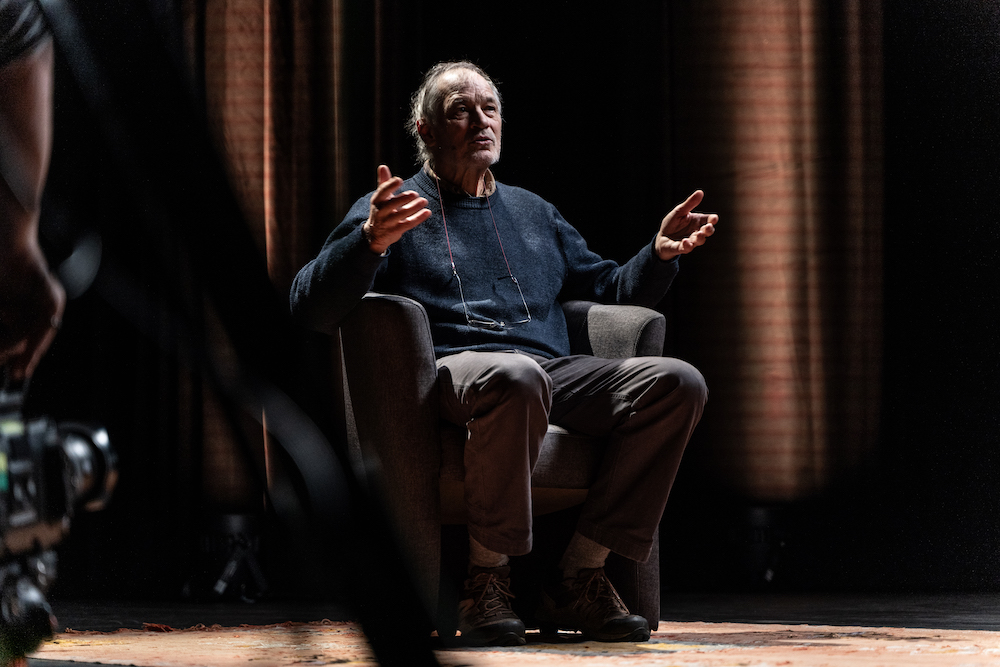
An infinitely plural world
David Le Breton – Obviously I’m not in a position to lecture on how to write a script or film because each creative person develops their own method.
That said, I think we live in an infinitely plural world. That’s why I define myself as an anthropologist of contemporary worlds, because there are countless worlds within the same world. Sometimes these worlds are irreconcilable, coexisting more or less peacefully, not without violence, not without intimidation, sometimes with more consent and mutual recognition, but it’s a world which has become very complex.
« In the 90s, everything that used to connect people disappears. It’s a period, when the “king persona”, the “tyrant persona” emerges »The emergence of individualism
David Le Breton – I think it all began, let’s say today’s world, began in the 1990s, for our Western societies. The 90s roughly mark the disparition of class culture, regional and political cultures.
In France, it’s the end of the Communist Party, the beginning of the end of the Socialist Party. So, forms of alternatives and narratives for the future collapse.
It’s also the beginning of the end for religious identities and like.
However, everything that used to connect people disappears. It’s a period, when the “king persona”, the “tyrant persona” emerges. It’s the emergence of individualism in our Western societies.
When I say individualism, I am using a sociological concept. I don’t mean the emergence of selfishness, that would be nonsense, obviously. Individualism is also the emergence of freedom and a lot of leeway, which we had less of in the 70s, 80s, and so on. At the same time, it’s a society where people live isolated from one another.
We’re less and less together, living parallel next to each other in a form of self-withdrawal. There’s a dislocation of past forms of solidarity, of alliances, communities, etc.
The decline of the grand narratives of collective identities
David Le Breton – It’s the emergence of a world where everyone claims to be right and therefore to dominate others in a way, not just to reason with them, but to block, confine, and impose one’s point of view. With the decline of the grand narratives of these collective identities which our world has been founded on for countless generations.
This fragmentation of the social bond that we’re experiencing today, this individualisation of the social bond, requires that, to exist, we create our story: “I was born at this time, I did this, I did that, etc.” There’s a proliferation of minor stories nowadays which structure our identity, which Paul Ricœur aptly calls “narrative identity”. We use narrative identities because there’s no option.
Communication or conversation
David Le Breton – The world of communication has taken over the world of bringing together, of conversing, and memory also. Because we will remember only the trivial details. So we no longer know where we stand.
Of course for future generations, it’s obvious they’ll be communicating remotely… I’m somewhere between two worlds, I know what we have lost. And it’s not nostalgia.
I recall the profundity of our encounters the intensity of our relationships, which, as a movie lover, I find when I watch films from the great classics, I realise we’ll never exchange in the same way again. The voices aren’t the same, nor the way we touch or look at each other, the situations…
Loneliness at the heart of our societies
David Le Breton – If we take two or three films from the 40s, 50s, and two or three films from recent years, we’d see a striking anthropological shift. Suffering has never been so prevalent in our contemporary societies, be it the risk behaviour of the young, which proliferates today, or the hardship among the elderly, which is also absolutely terrifying.
And the number of people in distress, who are unhappy in their lives, ill at ease with themselves, regardless of age. Ultimately, this world’s legacy isn’t the best. I’m not saying that the start of the 20th century was great either. But this is what today’s technologies provoke. Namely, a vast feeling of loneliness, abandonment, isolation… Solitude can also be a choice. But particularly isolation.
« The movement of the body allows changing one’s familiar horizon, exposing oneself to the new, to the unknown »Walking as resistance & opening
David Le Breton – That said, there are alternatives. I’ve often written on walking. I believe it is, today, a form of resistance to all that, a resistance to mobile phones, to urgency, to speed, expected availability, we’re permanently on call.
Those who walk, are men or women who set out open to opportunities. I like to refer to them as “Artists of opportunity”. Walking is “the body in motion”. It’s about changing one’s familiar horizon, exposing oneself to the new, to the unknown. The movement of the body implies movement in the mind.
When we’re at home or when a group of scriptwriters work together, we tend to ruminate, to go round in circles. Because we’re in the same room, the landmarks around us are familiar.

New horizons for healing
David Le Breton – It’s clear that when we stand up we’re no longer part of seated humanity, it’s humanity standing, moving forward, getting out of the car or leaving a familiar environment. As a result, ideas are set in motion. Then suddenly, we open up to the wide world, to the great outdoors. And that’s when the ideas come.
We’re no longer focused on the idea of “how do we get out of this scenario, out of this situation?” We have no idea. We struggle for an hour trying to find something of interest. When we go out, we stop asking these questions, because we’re standing, we see the sun or the threatening rain etc. We take our first steps, we see the sea. Our environment has radically changed. At that point, without thinking, we find solutions.
Walking always presents a healing aspect. It’s a way of provoking intuition, new ways of thinking.
The history of cinema and literature as remedies
David Le Breton – We have to rediscover the horizon. So what are “forms of healing” that we might find in movies, literature, or elsewhere?
There’s the whole history of cinema. There’s the whole history of literature.
When we watch a John Ford film or the like, we’re struck by their absolute humanism. We learn from them. Even a film like “The Searchers”, which, as a movie-lover is, the greatest film. It’s an extraordinary lesson on revival, love, friendship, all those things. We can draw on that.
Fiction to take a step back from the world that is ours
David Le Breton – But it’s difficult because we have to avoid complacency.
When people tell me I’m a pessimist and that I should tell happier stories, it doesn’t make sense. It’s like practicing the Coué Method saying “All is bad, but let’s be happy anyway”.
“I believe that today’s fiction, even if it aims to remedy, it should address today’s sufferings, today’s existential distress, which allow the audience to analyse, to understand and appropriate them in order to maybe change something in their own lives. Otherwise, what’s the point of fiction if it doesn’t help us live, if it doesn’t help us gain perspective on the world around us?”
– David Le Breton
« If we’re tackling a sensitive subject, I don’t think we should be afraid of pointing out the ambivalences of today’s world »
Ambivalence and Unformatted
David Le Breton – There’s an astonishing standardisation of scripts today, especially with American blockbusters, which have completely dominated the market.
So, if we want to reflect on the world, with all its ambivalence, complexities, etc., we should turn towards filmmakers who even with much smaller budgets make films… Or Clint Eastwood films with bigger budgets whom I consider a filmmaker who deals with ambivalence, complexity, ambiguity, etc.
© Photos Brigitte Bouillot
Hosted on Acast. See acast.com/privacy for more information.
]]>David Le Breton is a professor of sociology at the University of Strasbourg, senior member of the Institut universitaire de France, member of the Institute for Advanced Studies of the University of Strasbourg (USIAS). He is the author of a considerable work, with among others: “Walking life. A quiet art of happiness”, “Laughing. An anthropology of the laughing”, and “The taste of the world”.
— an interview conducted by Vassili Silovic, author and director of documentary films, and recorded at Les Champs Libres (Rennes) as part of the series “What stories for our time?”.
An infinitely plural world
David Le Breton – Obviously I’m not in a position to lecture on how to write a script or film because each creative person develops their own method.
That said, I think we live in an infinitely plural world. That’s why I define myself as an anthropologist of contemporary worlds, because there are countless worlds within the same world. Sometimes these worlds are irreconcilable, coexisting more or less peacefully, not without violence, not without intimidation, sometimes with more consent and mutual recognition, but it’s a world which has become very complex.
« In the 90s, everything that used to connect people disappears. It’s a period, when the “king persona”, the “tyrant persona” emerges »The emergence of individualism
David Le Breton – I think it all began, let’s say today’s world, began in the 1990s, for our Western societies. The 90s roughly mark the disparition of class culture, regional and political cultures.
In France, it’s the end of the Communist Party, the beginning of the end of the Socialist Party. So, forms of alternatives and narratives for the future collapse.
It’s also the beginning of the end for religious identities and like.
However, everything that used to connect people disappears. It’s a period, when the “king persona”, the “tyrant persona” emerges. It’s the emergence of individualism in our Western societies.
When I say individualism, I am using a sociological concept. I don’t mean the emergence of selfishness, that would be nonsense, obviously. Individualism is also the emergence of freedom and a lot of leeway, which we had less of in the 70s, 80s, and so on. At the same time, it’s a society where people live isolated from one another.
We’re less and less together, living parallel next to each other in a form of self-withdrawal. There’s a dislocation of past forms of solidarity, of alliances, communities, etc.
The decline of the grand narratives of collective identities
David Le Breton – It’s the emergence of a world where everyone claims to be right and therefore to dominate others in a way, not just to reason with them, but to block, confine, and impose one’s point of view. With the decline of the grand narratives of these collective identities which our world has been founded on for countless generations.
This fragmentation of the social bond that we’re experiencing today, this individualisation of the social bond, requires that, to exist, we create our story: “I was born at this time, I did this, I did that, etc.” There’s a proliferation of minor stories nowadays which structure our identity, which Paul Ricœur aptly calls “narrative identity”. We use narrative identities because there’s no option.
Communication or conversation
David Le Breton – The world of communication has taken over the world of bringing together, of conversing, and memory also. Because we will remember only the trivial details. So we no longer know where we stand.
Of course for future generations, it’s obvious they’ll be communicating remotely… I’m somewhere between two worlds, I know what we have lost. And it’s not nostalgia.
I recall the profundity of our encounters the intensity of our relationships, which, as a movie lover, I find when I watch films from the great classics, I realise we’ll never exchange in the same way again. The voices aren’t the same, nor the way we touch or look at each other, the situations…
Loneliness at the heart of our societies
David Le Breton – If we take two or three films from the 40s, 50s, and two or three films from recent years, we’d see a striking anthropological shift. Suffering has never been so prevalent in our contemporary societies, be it the risk behaviour of the young, which proliferates today, or the hardship among the elderly, which is also absolutely terrifying.
And the number of people in distress, who are unhappy in their lives, ill at ease with themselves, regardless of age. Ultimately, this world’s legacy isn’t the best. I’m not saying that the start of the 20th century was great either. But this is what today’s technologies provoke. Namely, a vast feeling of loneliness, abandonment, isolation… Solitude can also be a choice. But particularly isolation.
« The movement of the body allows changing one’s familiar horizon, exposing oneself to the new, to the unknown »Walking as resistance & opening
David Le Breton – That said, there are alternatives. I’ve often written on walking. I believe it is, today, a form of resistance to all that, a resistance to mobile phones, to urgency, to speed, expected availability, we’re permanently on call.
Those who walk, are men or women who set out open to opportunities. I like to refer to them as “Artists of opportunity”. Walking is “the body in motion”. It’s about changing one’s familiar horizon, exposing oneself to the new, to the unknown. The movement of the body implies movement in the mind.
When we’re at home or when a group of scriptwriters work together, we tend to ruminate, to go round in circles. Because we’re in the same room, the landmarks around us are familiar.
New horizons for healing
David Le Breton – It’s clear that when we stand up we’re no longer part of seated humanity, it’s humanity standing, moving forward, getting out of the car or leaving a familiar environment. As a result, ideas are set in motion. Then suddenly, we open up to the wide world, to the great outdoors. And that’s when the ideas come.
We’re no longer focused on the idea of “how do we get out of this scenario, out of this situation?” We have no idea. We struggle for an hour trying to find something of interest. When we go out, we stop asking these questions, because we’re standing, we see the sun or the threatening rain etc. We take our first steps, we see the sea. Our environment has radically changed. At that point, without thinking, we find solutions.
Walking always presents a healing aspect. It’s a way of provoking intuition, new ways of thinking.
The history of cinema and literature as remedies
David Le Breton – We have to rediscover the horizon. So what are “forms of healing” that we might find in movies, literature, or elsewhere?
There’s the whole history of cinema. There’s the whole history of literature.
When we watch a John Ford film or the like, we’re struck by their absolute humanism. We learn from them. Even a film like “The Searchers”, which, as a movie-lover is, the greatest film. It’s an extraordinary lesson on revival, love, friendship, all those things. We can draw on that.
Fiction to take a step back from the world that is ours
David Le Breton – But it’s difficult because we have to avoid complacency.
When people tell me I’m a pessimist and that I should tell happier stories, it doesn’t make sense. It’s like practicing the Coué Method saying “All is bad, but let’s be happy anyway”.
“I believe that today’s fiction, even if it aims to remedy, it should address today’s sufferings, today’s existential distress, which allow the audience to analyse, to understand and appropriate them in order to maybe change something in their own lives. Otherwise, what’s the point of fiction if it doesn’t help us live, if it doesn’t help us gain perspective on the world around us?”
– David Le Breton
« If we’re tackling a sensitive subject, I don’t think we should be afraid of pointing out the ambivalences of today’s world »
Ambivalence and Unformatted
David Le Breton – There’s an astonishing standardisation of scripts today, especially with American blockbusters, which have completely dominated the market.
So, if we want to reflect on the world, with all its ambivalence, complexities, etc., we should turn towards filmmakers who even with much smaller budgets make films… Or Clint Eastwood films with bigger budgets whom I consider a filmmaker who deals with ambivalence, complexity, ambiguity, etc.
© Photos Brigitte Bouillot
Hosted on Acast. See acast.com/privacy for more information.
]]>[Podcast in French / English subtitles available on the video]
Doctor of Philosophy at Aix-Marseille University, Nancy Murzilli is a lecturer at the Université Paris 8.
She is interested in literature and its power of action on the real, individuals and society. Her research also focuses on the encounter of literature with other artistic forms.
Her latest essay is entitled “Changing Life with Our Ordinary Fictions. From Tarot to Daydreaming, How We Put Our Futures in Play” / “Changer la vie par nos fictions ordinaires. Du tarot aux rêves éveillés, comment nous mettons nos avenirs en jeu”.
— an interview conducted by Vassili Silovic, author and director of documentary films, and recorded at Les Champs Libres (Rennes) as part of the series “What stories for our time?”.
Tarot cards play a major role in all your reflections inherent to the narrative. Can you explain how the cards interact with possible narratives?
The fiction of reality, between past and future – through ritual
Tarot cards have been used in my research work on fiction in a completely parallel way, as part of regular exchanges with my mother who draws the tarot cards. We don’t see each other very often and, twice a year, when we do see each other, there is this ritual: she draws the cards!
One day, after a session, I feel and share with her that through the tarot, something touches fiction – my research subject. Sharing this intuition, touching with my finger what I have been looking for for a very long time, I then wish to deepen my reflection.
There is a kind of inversion that occurs in relation to the study of fiction as artistic production. With the tarot, with my mother, we are producing an ordinary fiction finally between us in the kitchen. But it really consists of a form of dramaturgy, with the initiated ritual or even the rules of the game. In the exchange, the cards allow us to build a story and that story will attach itself to my life. It will produce effects. And I have always been interested in how fictions act in our lives and I then wondered about “how can fiction have an effect on the real?”.
And there, precisely, it seemed to me that something was being articulated at the very moment when we were building the story in duet. The identical duo between a fiction author or a writer who builds this story together, with the viewer or the reader. Once you have read or seen, you leave, you return to your life, with this experience become totally real even if fictional.
This articulation of the narrative that is built on the moment is truly performative: from the moment that this narrative exists, it becomes part of our experiences like any other experience. We’re carrying it with us.
The tarot card game is a way to tell stories of things that have already happened or to tell a future.
Storytelling through co-construction
“What happens now, spiritually and practically, with the cards?“
– Vassili Silovic
“If you want to consult the tarot: do you have a question concerning your private life, or a question concerning your creation? Maybe they’re both connected? Maybe there’s a question haunting you which you’ll find in all your scripts? We can question the tarot on this.
There’s already a whole process in formulating the question which is important and which is also important when creating, when writing a script.”
– Nancy Murzilli
If I haven’t taken the time to formulate the question, then we can do it together. That’s where co-construction begins. The idea of writing together, like all fiction that inhabits us. A chapter in my book is about how to talk with our dead. It is a permanent dialogue. We are inhabited by these fictions that we build with our dead as well as with the living.
Let’s stay on the side of the living! In fiction, it is a living being who is in a story.
The enrichment of the narrative by the imbalance
As in any story, there is a moment of blockage. That very moment when you come to see a tarot reader is a moment of crisis. The story is built on this very moment. The classical ternary structure of the narrative is a state of equilibrium broken by a triggering event. Everything else is then a mishap that seeks to restore this balance.
In the context of your current work, on your side: what is this crisis, what particular object puts your story into crisis, what problem does your character have?
My character is an architect, he is facing his most beautiful project: everything is possible for him, for the first time. A very important commitment including physically. And he realizes that in fact, he can’t potentially carry out what he’s doing and at this precise moment, I don’t know – as an author – what will happen to this man.
You could then ask the tarot how to go further in this story, for example. What question should be asked? You will tell me if this formulation suits you: how will the architect be able to carry out his project, or will he carry out his project?
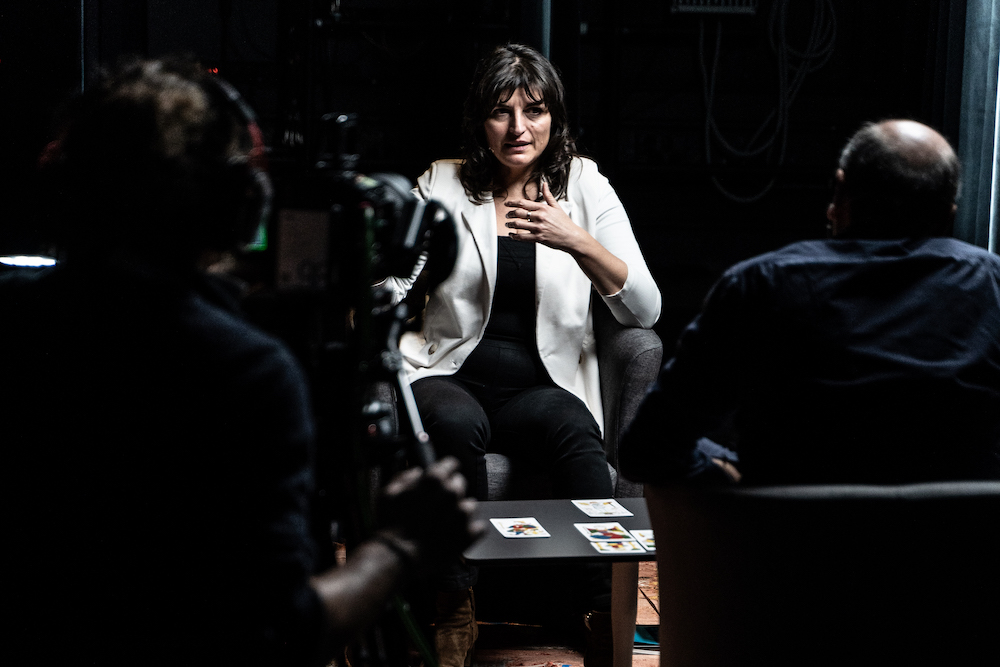
Yes, what obstacles will he have to overcome – internal and external, for example?
We’ll try it.
So you’re going to draw five cards, one after the other. I usually use a game called the Tarot of heroes, which is quite similar to Joseph Campbell’s “Hero’s Journey” that you probably know – as far as scriptwriters are concerned – because it is a kind of wheel that goes through all the adventures of a character.
… So interesting, here we have: The Consultant.
The Consultant is your architect. Your architect’s goal is to do his life’s work here, and the obstacles he will have to face and overcome here, and the key to achieving it there.
I would invite people in the room who want to speak later to give us their interpretation or to supplement it. The story is built by several people. If there are more than two of us, it’s even better.
Here we have: Death.
I would say that he is at a turning point in his life, with great changes. Because Death also represents a great change. It’s the end and also the beginning. Maybe that’s a sign of the impasse he’s in. He is truly facing a complete transformation with his goal of building his great work.
Here we see that the two characters turn their backs, but the Emperor looks to the future and it is a good sign. It is a powerful work, as an ideal. And at the level of its obstacles so, there, we have: The Popess.
She often represents the study, the withdrawal to oneself. So there is a time of reflection, of maturation perhaps of writing his project. In any case, he will have to work, study or write since she has a book on her lap.
Here we have: The Hanged.
It is perhaps, at the same time, a moment in suspense but also the fact of looking at things differently, therefore, to change perspective and the Hanged looks at the world upside down.
The key is The Devil.
And that is the desire. In other words, it is by taking pleasure in doing what he wants that he will succeed in overcoming his obstacles.
That’s a quick and simple explanation, which we could enrich, of course.
If I were really a writer who comes to see you or works with cards: how would you see the rest of this adventure, how can it help me?
The question as a key to the story.
Risk taking as the impulse of the story.
It’s all going to depend on the question you ask, but the cards are there, I think, to trigger. They may be able to steer your story differently, bringing potential new elements into your script, new ideas.
The general issue of cards and, this is also the role of fiction, is to move the gaze by being a way out of our logical frameworks, pre-established rules that frame us, frame us and prevent us. Getting out of our difficulties, how to overcome them.
The deck of cards moves us. It is chance that directs the drawn card. I put myself in the hands of chance to decide. We are constantly in risk taking. To rely on the unknown, through the question you are going to ask me – which I do not know in advance and the cards that help me answer. The cards give us a boost, move our eyes. We observe and then feel something that will give me an idea. This something is a determinant of fiction.
Is it the ordinary fiction, as you mentioned?
The interweaving of ordinary and artistic fictions
When I talk about ordinary fiction, I am talking about the ability that we have and develop as a child, which we educate through storytelling through tales, for example.
These are games that allow us to project situations and it is a question then, in a way, of survival. To be able to project situations, first in these protected spaces that allow fiction to develop. I do not distinguish fiction from the real, the real feeds on fiction and vice versa. We are constantly being taught by one another but ordinary fictions are the fictions that we project into our daily lives to continue living, to plan the future and to imagine what is going to happen or could happen.
The fictions that are produced in cinema and literature have something of this order. There is indeed a continuity of ordinary fictions or artistic fictions. I would even say: they are our fictions. “All is fiction” does not mean that everything is unreal or illusory but that this coming and going is necessary, between the part of imagination and the part of narrative that is built thanks to, precisely, all these narratives that inhabit us. In the tarot, by combining the cards, we can find and build a story.
Thanks to the characters on the cards. With the cards that are placed here, we have already begun to tell a story. I could take your question and reinterpret it. Using a card for example, which intrigues you more than another and a new card that will question it.
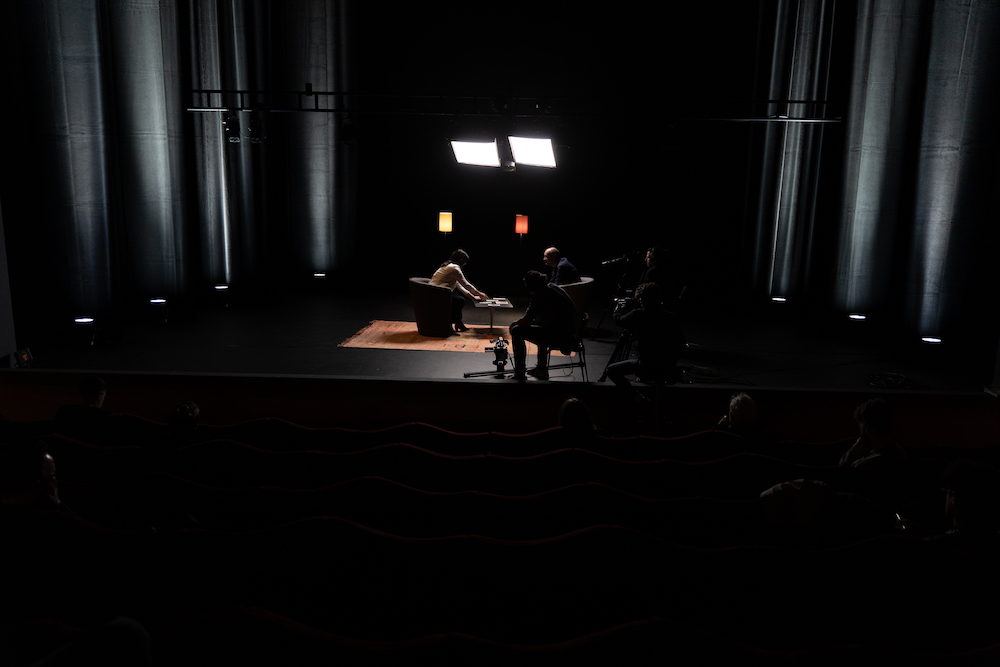
Yes, it is the Hanged Man that I question then. So I draw a card.
Ah The Justice!
It’s interesting: to look at the world upside down or change perspective / point of view, but do it with justly, staying fair, balanced – does that speak to you, in relation to your character?
Yes! I can quite recognize it.
I feel that he is a character who is, more or less, ready to do anything to achieve his goal. At this particular moment, it is the work that counts and nothing else.
We could interpret The Hanged Man in the light of Justice.
Justice looks straight, but upside down, and so the risk is to end up… hanged, in fact!
How far will you push your character to take risks?
In the story, what matters to us is not so much finding answers to the question but above all being able, in the end, to arrive at reformulating this question differently. By having clearer ideas, perhaps. In relation to the narrative, if we start from the idea that our fictions are ordinary and that we are all bearers of fictions, we are also all authors. We are part of what is being built. Yes, the scenario exists but it is more a component of what will happen.
We are surrounded by ordinary and non-ordinary fiction. Do we still need a writer?
Between fiction and reality: different temporalities for multiple experiences
I think what is interesting about artistic fiction is that it allows us to live in a reduced temporality, a full experience. While in our lives, we are conducting a set of experiments on different temporalities and sometimes they are interrupted and then resumed. We know, for example, that a friendship is a long-term experience in life, with very different temporalities according to the friendships. Seeing or reading a story of friendship allows us to make it a complete experience and thus to equip ourselves with a new possible story.
Thank you very much Nancy, thanks for the cards!
© Photos Brigitte Bouillot
Hosted on Acast. See acast.com/privacy for more information.
]]>[Podcast in French / English subtitles available on the video]
Doctor of Philosophy at Aix-Marseille University, Nancy Murzilli is a lecturer at the Université Paris 8.
She is interested in literature and its power of action on the real, individuals and society. Her research also focuses on the encounter of literature with other artistic forms.
Her latest essay is entitled “Changing Life with Our Ordinary Fictions. From Tarot to Daydreaming, How We Put Our Futures in Play” / “Changer la vie par nos fictions ordinaires. Du tarot aux rêves éveillés, comment nous mettons nos avenirs en jeu”.
— an interview conducted by Vassili Silovic, author and director of documentary films, and recorded at Les Champs Libres (Rennes) as part of the series “What stories for our time?”.
Tarot cards play a major role in all your reflections inherent to the narrative. Can you explain how the cards interact with possible narratives?
The fiction of reality, between past and future – through ritual
Tarot cards have been used in my research work on fiction in a completely parallel way, as part of regular exchanges with my mother who draws the tarot cards. We don’t see each other very often and, twice a year, when we do see each other, there is this ritual: she draws the cards!
One day, after a session, I feel and share with her that through the tarot, something touches fiction – my research subject. Sharing this intuition, touching with my finger what I have been looking for for a very long time, I then wish to deepen my reflection.
There is a kind of inversion that occurs in relation to the study of fiction as artistic production. With the tarot, with my mother, we are producing an ordinary fiction finally between us in the kitchen. But it really consists of a form of dramaturgy, with the initiated ritual or even the rules of the game. In the exchange, the cards allow us to build a story and that story will attach itself to my life. It will produce effects. And I have always been interested in how fictions act in our lives and I then wondered about “how can fiction have an effect on the real?”.
And there, precisely, it seemed to me that something was being articulated at the very moment when we were building the story in duet. The identical duo between a fiction author or a writer who builds this story together, with the viewer or the reader. Once you have read or seen, you leave, you return to your life, with this experience become totally real even if fictional.
This articulation of the narrative that is built on the moment is truly performative: from the moment that this narrative exists, it becomes part of our experiences like any other experience. We’re carrying it with us.
The tarot card game is a way to tell stories of things that have already happened or to tell a future.
Storytelling through co-construction
“What happens now, spiritually and practically, with the cards?“
– Vassili Silovic
“If you want to consult the tarot: do you have a question concerning your private life, or a question concerning your creation? Maybe they’re both connected? Maybe there’s a question haunting you which you’ll find in all your scripts? We can question the tarot on this.
There’s already a whole process in formulating the question which is important and which is also important when creating, when writing a script.”
– Nancy Murzilli
If I haven’t taken the time to formulate the question, then we can do it together. That’s where co-construction begins. The idea of writing together, like all fiction that inhabits us. A chapter in my book is about how to talk with our dead. It is a permanent dialogue. We are inhabited by these fictions that we build with our dead as well as with the living.
Let’s stay on the side of the living! In fiction, it is a living being who is in a story.
The enrichment of the narrative by the imbalance
As in any story, there is a moment of blockage. That very moment when you come to see a tarot reader is a moment of crisis. The story is built on this very moment. The classical ternary structure of the narrative is a state of equilibrium broken by a triggering event. Everything else is then a mishap that seeks to restore this balance.
In the context of your current work, on your side: what is this crisis, what particular object puts your story into crisis, what problem does your character have?
My character is an architect, he is facing his most beautiful project: everything is possible for him, for the first time. A very important commitment including physically. And he realizes that in fact, he can’t potentially carry out what he’s doing and at this precise moment, I don’t know – as an author – what will happen to this man.
You could then ask the tarot how to go further in this story, for example. What question should be asked? You will tell me if this formulation suits you: how will the architect be able to carry out his project, or will he carry out his project?
Yes, what obstacles will he have to overcome – internal and external, for example?
We’ll try it.
So you’re going to draw five cards, one after the other. I usually use a game called the Tarot of heroes, which is quite similar to Joseph Campbell’s “Hero’s Journey” that you probably know – as far as scriptwriters are concerned – because it is a kind of wheel that goes through all the adventures of a character.
… So interesting, here we have: The Consultant.
The Consultant is your architect. Your architect’s goal is to do his life’s work here, and the obstacles he will have to face and overcome here, and the key to achieving it there.
I would invite people in the room who want to speak later to give us their interpretation or to supplement it. The story is built by several people. If there are more than two of us, it’s even better.
Here we have: Death.
I would say that he is at a turning point in his life, with great changes. Because Death also represents a great change. It’s the end and also the beginning. Maybe that’s a sign of the impasse he’s in. He is truly facing a complete transformation with his goal of building his great work.
Here we see that the two characters turn their backs, but the Emperor looks to the future and it is a good sign. It is a powerful work, as an ideal. And at the level of its obstacles so, there, we have: The Popess.
She often represents the study, the withdrawal to oneself. So there is a time of reflection, of maturation perhaps of writing his project. In any case, he will have to work, study or write since she has a book on her lap.
Here we have: The Hanged.
It is perhaps, at the same time, a moment in suspense but also the fact of looking at things differently, therefore, to change perspective and the Hanged looks at the world upside down.
The key is The Devil.
And that is the desire. In other words, it is by taking pleasure in doing what he wants that he will succeed in overcoming his obstacles.
That’s a quick and simple explanation, which we could enrich, of course.
If I were really a writer who comes to see you or works with cards: how would you see the rest of this adventure, how can it help me?
The question as a key to the story.
Risk taking as the impulse of the story.
It’s all going to depend on the question you ask, but the cards are there, I think, to trigger. They may be able to steer your story differently, bringing potential new elements into your script, new ideas.
The general issue of cards and, this is also the role of fiction, is to move the gaze by being a way out of our logical frameworks, pre-established rules that frame us, frame us and prevent us. Getting out of our difficulties, how to overcome them.
The deck of cards moves us. It is chance that directs the drawn card. I put myself in the hands of chance to decide. We are constantly in risk taking. To rely on the unknown, through the question you are going to ask me – which I do not know in advance and the cards that help me answer. The cards give us a boost, move our eyes. We observe and then feel something that will give me an idea. This something is a determinant of fiction.
Is it the ordinary fiction, as you mentioned?
The interweaving of ordinary and artistic fictions
When I talk about ordinary fiction, I am talking about the ability that we have and develop as a child, which we educate through storytelling through tales, for example.
These are games that allow us to project situations and it is a question then, in a way, of survival. To be able to project situations, first in these protected spaces that allow fiction to develop. I do not distinguish fiction from the real, the real feeds on fiction and vice versa. We are constantly being taught by one another but ordinary fictions are the fictions that we project into our daily lives to continue living, to plan the future and to imagine what is going to happen or could happen.
The fictions that are produced in cinema and literature have something of this order. There is indeed a continuity of ordinary fictions or artistic fictions. I would even say: they are our fictions. “All is fiction” does not mean that everything is unreal or illusory but that this coming and going is necessary, between the part of imagination and the part of narrative that is built thanks to, precisely, all these narratives that inhabit us. In the tarot, by combining the cards, we can find and build a story.
Thanks to the characters on the cards. With the cards that are placed here, we have already begun to tell a story. I could take your question and reinterpret it. Using a card for example, which intrigues you more than another and a new card that will question it.
Yes, it is the Hanged Man that I question then. So I draw a card.
Ah The Justice!
It’s interesting: to look at the world upside down or change perspective / point of view, but do it with justly, staying fair, balanced – does that speak to you, in relation to your character?
Yes! I can quite recognize it.
I feel that he is a character who is, more or less, ready to do anything to achieve his goal. At this particular moment, it is the work that counts and nothing else.
We could interpret The Hanged Man in the light of Justice.
Justice looks straight, but upside down, and so the risk is to end up… hanged, in fact!
How far will you push your character to take risks?
In the story, what matters to us is not so much finding answers to the question but above all being able, in the end, to arrive at reformulating this question differently. By having clearer ideas, perhaps. In relation to the narrative, if we start from the idea that our fictions are ordinary and that we are all bearers of fictions, we are also all authors. We are part of what is being built. Yes, the scenario exists but it is more a component of what will happen.
We are surrounded by ordinary and non-ordinary fiction. Do we still need a writer?
Between fiction and reality: different temporalities for multiple experiences
I think what is interesting about artistic fiction is that it allows us to live in a reduced temporality, a full experience. While in our lives, we are conducting a set of experiments on different temporalities and sometimes they are interrupted and then resumed. We know, for example, that a friendship is a long-term experience in life, with very different temporalities according to the friendships. Seeing or reading a story of friendship allows us to make it a complete experience and thus to equip ourselves with a new possible story.
Thank you very much Nancy, thanks for the cards!
© Photos Brigitte Bouillot
Hosted on Acast. See acast.com/privacy for more information.
]]>[Podcast in French / English subtitles available on the video]
— a conference recorded at Les Champs Libres (Rennes, Brittany) in December 2023 in the framework of the serie “What stories for our time”, moderated by Nicolás Buenaventura – writer-director and storyteller – and Yann Apperry – screenwriter, playwright and novelist.
How do fictions affect our lives, and what fictions can we hold on to? How can stories guide our steps, imbue our bodies?
With Aurélie Valat – scriptwriter (France/Greece), Nancy Murzilli – philosopher and literary theorist (France) and David Le Breton – anthropologist and sociologist (France) as well as Hubert Allignol – Head of the Personal Offences Department, Rennes Police Headquarters and Valérie Le Dorven – Head of the Minors’ Brigade, Rennes Police Headquarters
A shared narrative.
Over and above artistic fiction, for some time now I’ve been interested in all those ways of producing fiction that nourish reality and transform it – what I call our ordinary fictions. These are the fictions that we constantly produce on a daily basis to project our future, to experiment – whether it’s playing with our children, the way we talk to our dead, our imaginary friends, going to see a fortune teller who will draw the tarot for us…
Re-capacitating our collective creation to produce narratives.
My idea is to re-encapacitate a faculty that we all share, which is that of producing narratives and which is not the privilege of artists. To build on this shared critical capacity and trust the audience-readers to continue the initial work.
Co-construction and co-responsibility for the story.
Entering into a real conversation between the person who produces and the spectator/reader who receives, with his or her imagination.
Reformulate for an original story.
When we start by talking to a fortune teller or tarot reader, we come up with a question that we rephrase and we draw cards at random. And that’s when a story begins to emerge that tells us something about ourselves – through the intermediary of the cards, which are arranged randomly because they are drawn at random. It could be about the past, the present or the future. It’s a story with real drama and real tension.
The predictive and divinatory narrative.
Dramatic tension transforms our lives. From artistic fictions, from a film or a book, we make connections with our own experience. This can be described as the predictive and divinatory nature of fiction.
Fiction acts but we cannot anticipate how. Because it escapes us, from the moment we deliver it. The spectators/readers then take hold of it – personally – by pursuing this fiction that they adapt to their own lives.
Responsibility for the story.
The responsibility that every scriptwriter/author has is to know that the fiction is going to escape them because it is going to be shared. The scriptwriter/author is not in control. They do not have the ability to pull all the strings, but to weave the starting point for a story that will continue and be constructed outside their control.
The story as a succession of risks.
Writing is a constant risk-taking exercise, even more so when you publish a book or make a film: being confronted with the risk of the absence of the spectator-reader, of the support of the producer-publisher.
We are always on the razor’s edge as authors. And as humans, in our daily lives: every choice is a risk. Deciding to study in Rennes or Nantes means, in a way, changing your life completely, because you may meet someone new in love, friendship or work.
Depositing the story.
Stories are deposited in us and we take charge of them. A deposited story also exists in itself and is deposited – between us -, forming a basis for the construction of something else, another story.
The end of the grand narratives?
Our era corresponds to the end of the grand narratives in contemporary Western societies.
The grand narratives were religious narratives, but also political narratives about a better tomorrow and narratives inherent in class and regional cultures, which fuelled an understanding of relationships with the world.
Narratives & reality(ies)
Fiction is in no way opposed to reality. Our stories interweave reality and give it power, meaning and values. They enable us to communicate with each other.
Storytelling gives meaning to life.
Putting the sometimes confusing episodes of our lives in order to record the lines of direction that have been at work in the development of the person we are.
A story to nourish our relationship with the world.
We never stop asking questions about the world. Yet our societies – from the 90s onwards – have experienced a kind of individualistic withdrawal that has become ever greater. In fact, today we could talk about hyper-individualism, with an unprecedented proliferation of stories, small stories that are generally only of value to oneself, spread across social networks that create fewer and fewer social links.
A story to give you a taste for life.
The desire to live when you understand the order of your personal journey. When, on the other hand, we have difficulty establishing coherence in our lives, we are much less in tune with this zest for life and therefore more at odds with the world.
Multitudes.
From the worlds of fiction to anthropology, narrative gives us a multiplicity of possibilities for living. A multiplication of possible versions of ourselves.
Multiplying, because we all, of course, have the feeling of being enclosed within ourselves, in a universe that is too limited and with this temptation to go elsewhere, to the extreme elsewhere, even.
Everything is fiction.
As an anthropologist, I’m absolutely anti-Bourdieusian. There is no objectivity in the world, only interpretations of the world around us. So there are countless points of view being exchanged. The whole history of literature lies precisely in the history of these points of view on the world, this problematisation of the world that shows that, ultimately, there is no unity.
The story, a page-turning through us.
Every word, every image is a projective test. We can’t pretend to control the image, the paragraph in the text: we inevitably risk an interpretation, a value judgement of the other. This is precisely the risk of our profession as authors, in whatever form.
We are absolutely not the same people here as we were earlier – on the train or in a restaurant. There are countless people within us, and we mobilise them when we write fiction or social science or psychology.
There are as many selves as there are situations in which we are immersed.
Write a story to build an experience.
Tell a story to live an experience.
A story is a way out, a way to exist.
When you’re writing, you’re presented with thousands of situations. Our job as writers is to create a plot, by answering the question: how can I process this material so that it becomes a narrative fiber that resonates with me and with the reader/spectator?
We are not – as scriptwriters – directors of conscience, potentially telling others what they should do, but rather triggering a step backwards, the ‘sideways step’ that allows us to question our own existence.
For example, our relationship with the smile, the face, silence… as an echo, a resonance, not a direction. The desire to experience prevails in order to go beyond and touch: affectivity and tactility.
A fiction that opens the door to another experience.
“Je est un autre” – “I is another” Arthur Rimbaud
We construct countless fictions about our lives, and we hunger for the fictions of others to find out where we stand in this infinite universe of people we have been, are, could have been…
A personal story as a fictional tangle.
We’re always appropriating the stories of filmmakers, writers… We’re made up of all these fictions that make up our thinking about the world, our values.
I have the impression that my life is made up of this endless tangle of thousands of films I’ve seen and books I’ve read. I live sequences of my life surprising myself by realising that I’m often really in a Fellini or Godard or John Ford film. Ricochets from everyday life into forms of fiction.
Reordering our personal fiction.
Psychotherapy is a way of rewriting our history with the help of a therapist who asks us to better understand a particular past sequence, from our childhood for example. The same goes for teaching. We’re constantly transmitting frameworks and giving direction, not only by stimulating our students’ desire to read, but also by making them dream, no doubt, by telling them stories, anecdotes, moments when a particular researcher had the idea for a particular concept.
The story as a way of projecting oneself.
Passing on stories to students, for example, to enable them to see themselves in the future and thus stimulate a vibrancy in their personal and future professional lives: if the story shared echoes and resonates with them, it can completely change their lives.
Writing as a re-entry into the world.
I think that in our writing there is a capacity to re-enter the world. Personally, this is what underlies and nourishes my relationship with writing. When I was a teenager, writing was my grip on the world, in a way, and my balance to keep me moving forward on the razor’s edge of adolescence, which I felt was never-ending. One day I came across a phrase by Elias Canetti that suited me perfectly. He wrote: ‘on the brink of the abyss, he clings to his pencils’. So that’s the story: the fiction we create about ourselves is also a way of saving ourselves. A fiction that can take very different forms from one moment to the next in our lives. With varying degrees of urgency, but always with the same inner need to write.
The story in a desire to ricochet.
Even if the other person isn’t there when we write, we have them constantly in mind, in a desire for ripples, and they also act as a relay.
Evoking the divinatory leads me to evoke a shared power in co-constructing.
To write is to set out on a journey.
Our relationship with the material of our story is one of questioning.
Let’s take the example of a street we walk down, which has a certain resonance. This material establishes a link with the semi-unknown: what I’m going to generate with it, what it’s going to bring me by guiding me.
Writing is, in a sense, setting out on a journey. Through the process of questioning, we then ‘move’ the narrative that we are questioning like a body, through a triple prism like poles: intention, attention and tension. Moving in order to bring the narrative into play – its object and its recipient – by questioning it, to fully embrace fiction, since there is no single truth.
The narrative to provoke the unforeseeable.
The question of displacement is central: how do we displace, how do we change our mental patterns, how do we surprise, how do we introduce the unpredictable?
Surprise is absolutely fundamental: it opens us up to new emotions.
Narrative as meditation.
The point of fiction is to meditate on a reality that is, in any case, forever inaccessible to us, except in the case of police investigations, for example.
Responsibility in storytelling obliges us. You can’t just say whatever you like, thinking that it’s all a question of point of view. There has to be a minimum of consensus when we interpret the world, otherwise we risk polemics and conflict.
The richness of our daily lives lies in the fact that we are never finished interpreting an event in the world, and therefore never finished constructing inherent fictions that release a certain amount of energy so that the narrative is deposited with the spectator-reader and allows us to converse.
Aurélie Valat – scénariste (France/Grèce)Hubert Allignol & Valérie Le Dorven
Shared responsibility for the story.
We hear the story on a daily basis: from the victim, the perpetrator and the witnesses, all of whom we must receive as faithfully as possible.
The complexity lies in giving the person who confides in us the confidence to relate what they have experienced – which is not necessarily reality, but what they have perceived.
We are actors, spectators and writers all at the same time, and it is our duty – while freeing the person to speak – not to guide the person who is going to have to tell us their story.
The responsibility is shared between us, who receive the words, and the person who comes to tell us, who is not necessarily ready to talk and, above all, to tell everything. It’s vital to build trust, and that’s what we do.
A story to structure, not to influence.
We are several investigators with a ‘handover’ to renew this bond, if it is not initiated.
We have been trained and equipped to deal with children in particular: an interview room called Mélanie is dedicated to them, and we follow a special interview protocol: the NICHD protocol, which originated in Quebec. The Mélanie room allows us to refocus the child’s attention on what they have to say, on their story, without the constant disruption inherent in daily life in the police station. The NICHD protocol is a structured interview that defines the various activities and stages to be carried out with the child, as well as the questions to be asked, while leaving some initiative to the trained interviewer. We use it in particular to help re-formulate, not to influence so as not to suggest. The repercussions of potential suggestions within a story – which will ultimately be different – are extremely serious, with consequences that can include prison sentences for the people involved.
A personal account, to be protected.
To build trust – we create distance through emotional restraint, while showing empathy with the child, and the protocol helps us to do this. The protocol also leads us to ask the child to tell us about himself, enabling us to assess his level of vocabulary and the way he expresses himself, so that we can gradually practise understanding him. His story is inherent to his life path, his passions to get to the reason why we are hearing him. We then segment time to share the facts from beginning to end. The precise temporality helps us to come back and stimulate the sharing of as many details as possible.
Finding the right moment, the right place.
The child’s words belong to them.
We must be able to receive them and ‘put them down’, recording them scrupulously and controlling their reception: without breaking down or being shocked.
As well as building trust, we also need to distance ourselves.
Not allowing ourselves to be overwhelmed, being and remaining solid, is part of our daily work as support workers.
We may need psychological support to deal with this delivery of the unbearable, with all this suffering, often upstream or from the moment the act is committed, right up to the judgment. This is an important stage, where emotions return once the story has been recorded. This is often the case in American films, where the police are often disgusted by the release of criminals on formal grounds, for example. There are fewer such cases in France, although they do exist.
Submitting the story to free the bodies.
Depositing the story for victims and perpetrators has an effect on people. It is said that they leave feeling, in a way, lighter. The story has made them relive what they have gone through, painfully, and never before have they told it in such detail, and never again will they give themselves away at this level and in this context.
Put the story down and never take it away again.
Bodies inhabited by narrative.
The story allows us to be taken into consideration by society and by the courts as a victim, to be recognised in order to activate reparation, and a change then takes place within the body itself, as if another body were unfolding. Rebuilding ourselves.
We ourselves, by joining the juvenile brigade, our bodies change – not visually but internally: our bodies take on ‘something’ that marks us ‘with a red-hot iron’.
The violence of the story represented or suggested.
On the screen, in books, the question arises of how to represent the unbearable, the traumas, the violence, without necessarily resorting to hyper-archi-violent images that are shared in minute detail. We believe that the majority of individuals who make up society are not ready to receive these images of reality. Thrillers bring them together in their own way – as in James Ellyoy’s books, where the horror scenes are described with an acute precision that would be hard to find in the cinema, for example, or in the theatre.
The written word dissipates the virulence of reality to some extent, because you can potentially imagine something else visually with words. This is very complex with images that freeze. The question arises as to the usefulness of all this omnipresent violence on screen.
Hosted on Acast. See acast.com/privacy for more information.
]]>[Podcast in French / English subtitles available on the video]
— a conference recorded at Les Champs Libres (Rennes, Brittany) in December 2023 in the framework of the serie “What stories for our time”, moderated by Nicolás Buenaventura – writer-director and storyteller – and Yann Apperry – screenwriter, playwright and novelist.
How do fictions affect our lives, and what fictions can we hold on to? How can stories guide our steps, imbue our bodies?
With Aurélie Valat – scriptwriter (France/Greece), Nancy Murzilli – philosopher and literary theorist (France) and David Le Breton – anthropologist and sociologist (France) as well as Hubert Allignol – Head of the Personal Offences Department, Rennes Police Headquarters and Valérie Le Dorven – Head of the Minors’ Brigade, Rennes Police Headquarters
A shared narrative.
Over and above artistic fiction, for some time now I’ve been interested in all those ways of producing fiction that nourish reality and transform it – what I call our ordinary fictions. These are the fictions that we constantly produce on a daily basis to project our future, to experiment – whether it’s playing with our children, the way we talk to our dead, our imaginary friends, going to see a fortune teller who will draw the tarot for us…
Re-capacitating our collective creation to produce narratives.
My idea is to re-encapacitate a faculty that we all share, which is that of producing narratives and which is not the privilege of artists. To build on this shared critical capacity and trust the audience-readers to continue the initial work.
Co-construction and co-responsibility for the story.
Entering into a real conversation between the person who produces and the spectator/reader who receives, with his or her imagination.
Reformulate for an original story.
When we start by talking to a fortune teller or tarot reader, we come up with a question that we rephrase and we draw cards at random. And that’s when a story begins to emerge that tells us something about ourselves – through the intermediary of the cards, which are arranged randomly because they are drawn at random. It could be about the past, the present or the future. It’s a story with real drama and real tension.
The predictive and divinatory narrative.
Dramatic tension transforms our lives. From artistic fictions, from a film or a book, we make connections with our own experience. This can be described as the predictive and divinatory nature of fiction.
Fiction acts but we cannot anticipate how. Because it escapes us, from the moment we deliver it. The spectators/readers then take hold of it – personally – by pursuing this fiction that they adapt to their own lives.
Responsibility for the story.
The responsibility that every scriptwriter/author has is to know that the fiction is going to escape them because it is going to be shared. The scriptwriter/author is not in control. They do not have the ability to pull all the strings, but to weave the starting point for a story that will continue and be constructed outside their control.
The story as a succession of risks.
Writing is a constant risk-taking exercise, even more so when you publish a book or make a film: being confronted with the risk of the absence of the spectator-reader, of the support of the producer-publisher.
We are always on the razor’s edge as authors. And as humans, in our daily lives: every choice is a risk. Deciding to study in Rennes or Nantes means, in a way, changing your life completely, because you may meet someone new in love, friendship or work.
Depositing the story.
Stories are deposited in us and we take charge of them. A deposited story also exists in itself and is deposited – between us -, forming a basis for the construction of something else, another story.
The end of the grand narratives?
Our era corresponds to the end of the grand narratives in contemporary Western societies.
The grand narratives were religious narratives, but also political narratives about a better tomorrow and narratives inherent in class and regional cultures, which fuelled an understanding of relationships with the world.
Narratives & reality(ies)
Fiction is in no way opposed to reality. Our stories interweave reality and give it power, meaning and values. They enable us to communicate with each other.
Storytelling gives meaning to life.
Putting the sometimes confusing episodes of our lives in order to record the lines of direction that have been at work in the development of the person we are.
A story to nourish our relationship with the world.
We never stop asking questions about the world. Yet our societies – from the 90s onwards – have experienced a kind of individualistic withdrawal that has become ever greater. In fact, today we could talk about hyper-individualism, with an unprecedented proliferation of stories, small stories that are generally only of value to oneself, spread across social networks that create fewer and fewer social links.
A story to give you a taste for life.
The desire to live when you understand the order of your personal journey. When, on the other hand, we have difficulty establishing coherence in our lives, we are much less in tune with this zest for life and therefore more at odds with the world.
Multitudes.
From the worlds of fiction to anthropology, narrative gives us a multiplicity of possibilities for living. A multiplication of possible versions of ourselves.
Multiplying, because we all, of course, have the feeling of being enclosed within ourselves, in a universe that is too limited and with this temptation to go elsewhere, to the extreme elsewhere, even.
Everything is fiction.
As an anthropologist, I’m absolutely anti-Bourdieusian. There is no objectivity in the world, only interpretations of the world around us. So there are countless points of view being exchanged. The whole history of literature lies precisely in the history of these points of view on the world, this problematisation of the world that shows that, ultimately, there is no unity.
The story, a page-turning through us.
Every word, every image is a projective test. We can’t pretend to control the image, the paragraph in the text: we inevitably risk an interpretation, a value judgement of the other. This is precisely the risk of our profession as authors, in whatever form.
We are absolutely not the same people here as we were earlier – on the train or in a restaurant. There are countless people within us, and we mobilise them when we write fiction or social science or psychology.
There are as many selves as there are situations in which we are immersed.
Write a story to build an experience.
Tell a story to live an experience.
A story is a way out, a way to exist.
When you’re writing, you’re presented with thousands of situations. Our job as writers is to create a plot, by answering the question: how can I process this material so that it becomes a narrative fiber that resonates with me and with the reader/spectator?
We are not – as scriptwriters – directors of conscience, potentially telling others what they should do, but rather triggering a step backwards, the ‘sideways step’ that allows us to question our own existence.
For example, our relationship with the smile, the face, silence… as an echo, a resonance, not a direction. The desire to experience prevails in order to go beyond and touch: affectivity and tactility.
A fiction that opens the door to another experience.
“Je est un autre” – “I is another” Arthur Rimbaud
We construct countless fictions about our lives, and we hunger for the fictions of others to find out where we stand in this infinite universe of people we have been, are, could have been…
A personal story as a fictional tangle.
We’re always appropriating the stories of filmmakers, writers… We’re made up of all these fictions that make up our thinking about the world, our values.
I have the impression that my life is made up of this endless tangle of thousands of films I’ve seen and books I’ve read. I live sequences of my life surprising myself by realising that I’m often really in a Fellini or Godard or John Ford film. Ricochets from everyday life into forms of fiction.
Reordering our personal fiction.
Psychotherapy is a way of rewriting our history with the help of a therapist who asks us to better understand a particular past sequence, from our childhood for example. The same goes for teaching. We’re constantly transmitting frameworks and giving direction, not only by stimulating our students’ desire to read, but also by making them dream, no doubt, by telling them stories, anecdotes, moments when a particular researcher had the idea for a particular concept.
The story as a way of projecting oneself.
Passing on stories to students, for example, to enable them to see themselves in the future and thus stimulate a vibrancy in their personal and future professional lives: if the story shared echoes and resonates with them, it can completely change their lives.
Writing as a re-entry into the world.
I think that in our writing there is a capacity to re-enter the world. Personally, this is what underlies and nourishes my relationship with writing. When I was a teenager, writing was my grip on the world, in a way, and my balance to keep me moving forward on the razor’s edge of adolescence, which I felt was never-ending. One day I came across a phrase by Elias Canetti that suited me perfectly. He wrote: ‘on the brink of the abyss, he clings to his pencils’. So that’s the story: the fiction we create about ourselves is also a way of saving ourselves. A fiction that can take very different forms from one moment to the next in our lives. With varying degrees of urgency, but always with the same inner need to write.
The story in a desire to ricochet.
Even if the other person isn’t there when we write, we have them constantly in mind, in a desire for ripples, and they also act as a relay.
Evoking the divinatory leads me to evoke a shared power in co-constructing.
To write is to set out on a journey.
Our relationship with the material of our story is one of questioning.
Let’s take the example of a street we walk down, which has a certain resonance. This material establishes a link with the semi-unknown: what I’m going to generate with it, what it’s going to bring me by guiding me.
Writing is, in a sense, setting out on a journey. Through the process of questioning, we then ‘move’ the narrative that we are questioning like a body, through a triple prism like poles: intention, attention and tension. Moving in order to bring the narrative into play – its object and its recipient – by questioning it, to fully embrace fiction, since there is no single truth.
The narrative to provoke the unforeseeable.
The question of displacement is central: how do we displace, how do we change our mental patterns, how do we surprise, how do we introduce the unpredictable?
Surprise is absolutely fundamental: it opens us up to new emotions.
Narrative as meditation.
The point of fiction is to meditate on a reality that is, in any case, forever inaccessible to us, except in the case of police investigations, for example.
Responsibility in storytelling obliges us. You can’t just say whatever you like, thinking that it’s all a question of point of view. There has to be a minimum of consensus when we interpret the world, otherwise we risk polemics and conflict.
The richness of our daily lives lies in the fact that we are never finished interpreting an event in the world, and therefore never finished constructing inherent fictions that release a certain amount of energy so that the narrative is deposited with the spectator-reader and allows us to converse.
Aurélie Valat – scénariste (France/Grèce)Hubert Allignol & Valérie Le Dorven
Shared responsibility for the story.
We hear the story on a daily basis: from the victim, the perpetrator and the witnesses, all of whom we must receive as faithfully as possible.
The complexity lies in giving the person who confides in us the confidence to relate what they have experienced – which is not necessarily reality, but what they have perceived.
We are actors, spectators and writers all at the same time, and it is our duty – while freeing the person to speak – not to guide the person who is going to have to tell us their story.
The responsibility is shared between us, who receive the words, and the person who comes to tell us, who is not necessarily ready to talk and, above all, to tell everything. It’s vital to build trust, and that’s what we do.
A story to structure, not to influence.
We are several investigators with a ‘handover’ to renew this bond, if it is not initiated.
We have been trained and equipped to deal with children in particular: an interview room called Mélanie is dedicated to them, and we follow a special interview protocol: the NICHD protocol, which originated in Quebec. The Mélanie room allows us to refocus the child’s attention on what they have to say, on their story, without the constant disruption inherent in daily life in the police station. The NICHD protocol is a structured interview that defines the various activities and stages to be carried out with the child, as well as the questions to be asked, while leaving some initiative to the trained interviewer. We use it in particular to help re-formulate, not to influence so as not to suggest. The repercussions of potential suggestions within a story – which will ultimately be different – are extremely serious, with consequences that can include prison sentences for the people involved.
A personal account, to be protected.
To build trust – we create distance through emotional restraint, while showing empathy with the child, and the protocol helps us to do this. The protocol also leads us to ask the child to tell us about himself, enabling us to assess his level of vocabulary and the way he expresses himself, so that we can gradually practise understanding him. His story is inherent to his life path, his passions to get to the reason why we are hearing him. We then segment time to share the facts from beginning to end. The precise temporality helps us to come back and stimulate the sharing of as many details as possible.
Finding the right moment, the right place.
The child’s words belong to them.
We must be able to receive them and ‘put them down’, recording them scrupulously and controlling their reception: without breaking down or being shocked.
As well as building trust, we also need to distance ourselves.
Not allowing ourselves to be overwhelmed, being and remaining solid, is part of our daily work as support workers.
We may need psychological support to deal with this delivery of the unbearable, with all this suffering, often upstream or from the moment the act is committed, right up to the judgment. This is an important stage, where emotions return once the story has been recorded. This is often the case in American films, where the police are often disgusted by the release of criminals on formal grounds, for example. There are fewer such cases in France, although they do exist.
Submitting the story to free the bodies.
Depositing the story for victims and perpetrators has an effect on people. It is said that they leave feeling, in a way, lighter. The story has made them relive what they have gone through, painfully, and never before have they told it in such detail, and never again will they give themselves away at this level and in this context.
Put the story down and never take it away again.
Bodies inhabited by narrative.
The story allows us to be taken into consideration by society and by the courts as a victim, to be recognised in order to activate reparation, and a change then takes place within the body itself, as if another body were unfolding. Rebuilding ourselves.
We ourselves, by joining the juvenile brigade, our bodies change – not visually but internally: our bodies take on ‘something’ that marks us ‘with a red-hot iron’.
The violence of the story represented or suggested.
On the screen, in books, the question arises of how to represent the unbearable, the traumas, the violence, without necessarily resorting to hyper-archi-violent images that are shared in minute detail. We believe that the majority of individuals who make up society are not ready to receive these images of reality. Thrillers bring them together in their own way – as in James Ellyoy’s books, where the horror scenes are described with an acute precision that would be hard to find in the cinema, for example, or in the theatre.
The written word dissipates the virulence of reality to some extent, because you can potentially imagine something else visually with words. This is very complex with images that freeze. The question arises as to the usefulness of all this omnipresent violence on screen.
Hosted on Acast. See acast.com/privacy for more information.
]]>|| Interview by ||
Tony Grisoni. Screenwriter (UK & Italy)
Vinca Wiedemann. Script-consultant & Story supervisor (Denmark)
Dimitri van der Linden is a full professor at the department of Work and Organizational Psychology at the Erasmus University Rotterdam (The Netherlands). One of his lines of research involves the neuroscience of the peak experience of flow: A state of full task immersion. He also studies other psychological states such as mental fatigue and burnout. He is also engaged in research on individual differences in personality and ability.
In his interview for the StoryTANK, Dimitri van der Linden addresses the key dimensions of the experience of the flow and, the motivational and attentional brain systems involved in the flow.
Flow is a state of full task engagement that is accompanied with low-levels of self-referential thinking (e.g. Worrying, self-reflection). Experiencing flow is accompanied with sense of accomplishment, meaningfulness, and positive mood states.
In order to experience flow, there are four key dimensions:
- Match between a person’s skills and the task challenges: A too easy task more likely leads to boredom, rather than flow. A too difficult task often leads to frustration, stress or lack of interest, which are all states that are largely incompatible with flow
- Strong attentional focus (task engagement or absorption): This implies the inhibition of task irrelevant stimuli or thoughts
- Low levels of self-referential thinking: During flow, stress levels are low and so are worries and self- reflective thinking
- Condensed perception of time: means that time seems to fly when people are in a flow. Dimitri and his colleague speculated that such flow-related changes in time perception may be linked to the reduced sense of self.
Hosted on Acast. See acast.com/privacy for more information.
]]>|| Interview by ||
Tony Grisoni. Screenwriter (UK & Italy)
Vinca Wiedemann. Script-consultant & Story supervisor (Denmark)
Dimitri van der Linden is a full professor at the department of Work and Organizational Psychology at the Erasmus University Rotterdam (The Netherlands). One of his lines of research involves the neuroscience of the peak experience of flow: A state of full task immersion. He also studies other psychological states such as mental fatigue and burnout. He is also engaged in research on individual differences in personality and ability.
In his interview for the StoryTANK, Dimitri van der Linden addresses the key dimensions of the experience of the flow and, the motivational and attentional brain systems involved in the flow.
Flow is a state of full task engagement that is accompanied with low-levels of self-referential thinking (e.g. Worrying, self-reflection). Experiencing flow is accompanied with sense of accomplishment, meaningfulness, and positive mood states.
In order to experience flow, there are four key dimensions:
- Match between a person’s skills and the task challenges: A too easy task more likely leads to boredom, rather than flow. A too difficult task often leads to frustration, stress or lack of interest, which are all states that are largely incompatible with flow
- Strong attentional focus (task engagement or absorption): This implies the inhibition of task irrelevant stimuli or thoughts
- Low levels of self-referential thinking: During flow, stress levels are low and so are worries and self- reflective thinking
- Condensed perception of time: means that time seems to fly when people are in a flow. Dimitri and his colleague speculated that such flow-related changes in time perception may be linked to the reduced sense of self.
Hosted on Acast. See acast.com/privacy for more information.
]]>|| Interview par ||
Jérémy Bernard. Auteur-réalisateur, membre du collectif Les Parasites
Julien Lilti. Scénariste
Antoine Le Bos. Scénariste & Directeur artistique du Groupe Ouest
Florence Brunois-Pasina a suivi une formation en Droit Européen et Droit International (Master 2) à Paris II et à l’Université de Droit International de Vienne (Autriche), puis une formation en Anthropologie sociale et cinéma ethnographique à Paris X, à Paris VII et à l’École des Hautes Études où elle soutient sa thèse de Doctorat en 2001 sous la direction de Maurice Godelier.
En à côtés, elle a eu le privilège de suivre pas à pas dans les jardins, les forêts ou son appartement rue d’Assas, les enseignements exigeants d’André-Georges Haudricourt durant les dernières années de sa vie, avant de gagner la Nouvelle-Guinée où elle apprendra autrement le monde auprès des Kasua.
Recrutée au CNRS en 2003, elle gagne le Laboratoire Éco-anthropologie du Museum d’Histoire Naturelle, dirigé par Serge Bahuchet. Et en 2008, elle rejoint la Chaire d’Anthropologie de la Nature de Philippe Descola et intègre le Laboratoire d’Anthropologie Sociale.
En savoir plus : “Une forêt de signes ou l’interspécificité de la narration chez les Kasua de Nouvelle-Guinée”
https://youtu.be/ln2qn05_KBwHosted on Acast. See acast.com/privacy for more information.
]]>|| Interview par ||
Jérémy Bernard. Auteur-réalisateur, membre du collectif Les Parasites
Julien Lilti. Scénariste
Antoine Le Bos. Scénariste & Directeur artistique du Groupe Ouest
Florence Brunois-Pasina a suivi une formation en Droit Européen et Droit International (Master 2) à Paris II et à l’Université de Droit International de Vienne (Autriche), puis une formation en Anthropologie sociale et cinéma ethnographique à Paris X, à Paris VII et à l’École des Hautes Études où elle soutient sa thèse de Doctorat en 2001 sous la direction de Maurice Godelier.
En à côtés, elle a eu le privilège de suivre pas à pas dans les jardins, les forêts ou son appartement rue d’Assas, les enseignements exigeants d’André-Georges Haudricourt durant les dernières années de sa vie, avant de gagner la Nouvelle-Guinée où elle apprendra autrement le monde auprès des Kasua.
Recrutée au CNRS en 2003, elle gagne le Laboratoire Éco-anthropologie du Museum d’Histoire Naturelle, dirigé par Serge Bahuchet. Et en 2008, elle rejoint la Chaire d’Anthropologie de la Nature de Philippe Descola et intègre le Laboratoire d’Anthropologie Sociale.
En savoir plus : “Une forêt de signes ou l’interspécificité de la narration chez les Kasua de Nouvelle-Guinée”
https://youtu.be/ln2qn05_KBwHosted on Acast. See acast.com/privacy for more information.
]]>|| Interview by ||
Tony Grisoni. Screenwriter (UK & Italy)
Vinca Wiedemann. Script-consultant & Story supervisor (Denmark)
|| Intentions ||
Creativity as dialogue
“The dominant image of creativity in psychology and, to some extent, the arts, is that of a special mental process characteristic for some people (creative individuals) rather than others (who might hold creative potential but never get to enact it). In this talk I will challenge this representation by arguing that creativity has less to do with individual minds and more with relationships – between people, objects, settings, and culture. In particular, I will advance the notion that the creative process can be understood as a dialogue of perspectives in which different points of view meet, clash, and transform each other. This sociocultural framework moves us away from traditional ideas of novelty, originality, value, etc., and towards a new vocabulary for creative work including the notions of difference, position, perspective, and dialogue. Creativity as an act of repositioning and perspective-taking will be discussed with a view towards the activity of writers and other creative artists.”— Vlad Glăveanu
Vlad Glăveanu, PhD, is Full Professor of Psychology, School of Psychology, at Dublin City University and Adjunct Professor at the Centre for the Science of Learning and Technology (SLATE), University of Bergen, Norway, as well as President of the Possibility Studies Network (PSN).
His work focuses on creativity, imagination, culture, collaboration, and societal challenges. He edited the Palgrave Handbook of Creativity and Culture (2016) and the Oxford Creativity Reader (2018), co-edited the Cambridge Handbook of Creativity Across Domains (2017) and the Oxford Handbook of Imagination and Culture (2017), authored The Possible: A Sociocultural Theory (Oxford University Press, 2020) and Wonder: The Extraordinary Power of an Ordinary Experience (Bloomsbury, 2020), and authored or co-authored more than 200 articles and book chapters in these areas.
Vlad co-edits the book series Palgrave Studies in Creativity and Culture for Palgrave Macmillan. In 2018, he received the Berlyne Award from the APA Division 10 for outstanding early career contributions to the field of aesthetics, creativity, and the arts.
https://youtu.be/v0kR4b68QrUHosted on Acast. See acast.com/privacy for more information.
]]>|| Interview by ||
Tony Grisoni. Screenwriter (UK & Italy)
Vinca Wiedemann. Script-consultant & Story supervisor (Denmark)
|| Intentions ||
Creativity as dialogue
“The dominant image of creativity in psychology and, to some extent, the arts, is that of a special mental process characteristic for some people (creative individuals) rather than others (who might hold creative potential but never get to enact it). In this talk I will challenge this representation by arguing that creativity has less to do with individual minds and more with relationships – between people, objects, settings, and culture. In particular, I will advance the notion that the creative process can be understood as a dialogue of perspectives in which different points of view meet, clash, and transform each other. This sociocultural framework moves us away from traditional ideas of novelty, originality, value, etc., and towards a new vocabulary for creative work including the notions of difference, position, perspective, and dialogue. Creativity as an act of repositioning and perspective-taking will be discussed with a view towards the activity of writers and other creative artists.”— Vlad Glăveanu
Vlad Glăveanu, PhD, is Full Professor of Psychology, School of Psychology, at Dublin City University and Adjunct Professor at the Centre for the Science of Learning and Technology (SLATE), University of Bergen, Norway, as well as President of the Possibility Studies Network (PSN).
His work focuses on creativity, imagination, culture, collaboration, and societal challenges. He edited the Palgrave Handbook of Creativity and Culture (2016) and the Oxford Creativity Reader (2018), co-edited the Cambridge Handbook of Creativity Across Domains (2017) and the Oxford Handbook of Imagination and Culture (2017), authored The Possible: A Sociocultural Theory (Oxford University Press, 2020) and Wonder: The Extraordinary Power of an Ordinary Experience (Bloomsbury, 2020), and authored or co-authored more than 200 articles and book chapters in these areas.
Vlad co-edits the book series Palgrave Studies in Creativity and Culture for Palgrave Macmillan. In 2018, he received the Berlyne Award from the APA Division 10 for outstanding early career contributions to the field of aesthetics, creativity, and the arts.
https://youtu.be/v0kR4b68QrUHosted on Acast. See acast.com/privacy for more information.
]]>|| Interview par ||
Guillaume Desjardins. Auteur-réalisateur, membre du collectif Les Parasites
Julien Lilti. Scénariste
Professeur émérite à la Sorbonne-Nouvelle Paris III, sémiologue, fondateur du Centre d’études sur les Images et les Sons médiatiques, François Jost est l’auteur de nombreux livres sur l’image et les médias, dont Les Nouveaux Méchants. Quand les séries américaines font bouger les lignes du Bien et du Mal (2015) ou encore De quoi les séries américaines sont-elles le symptôme ? (2011).
Dans l’échange pour le StoryTANK, il évoque avec nous les questions de l’éthique des scénaristes, notamment à travers l’exemple de la série Breaking Bad :
D’où vient le sens ?
Le scénario comme reflet du monde ou comme symptôme ?
Que disent les séries de notre monde, malgré elles, si l’on peut dire ?
…
Hosted on Acast. See acast.com/privacy for more information.
]]>|| Interview par ||
Guillaume Desjardins. Auteur-réalisateur, membre du collectif Les Parasites
Julien Lilti. Scénariste
Professeur émérite à la Sorbonne-Nouvelle Paris III, sémiologue, fondateur du Centre d’études sur les Images et les Sons médiatiques, François Jost est l’auteur de nombreux livres sur l’image et les médias, dont Les Nouveaux Méchants. Quand les séries américaines font bouger les lignes du Bien et du Mal (2015) ou encore De quoi les séries américaines sont-elles le symptôme ? (2011).
Dans l’échange pour le StoryTANK, il évoque avec nous les questions de l’éthique des scénaristes, notamment à travers l’exemple de la série Breaking Bad :
D’où vient le sens ?
Le scénario comme reflet du monde ou comme symptôme ?
Que disent les séries de notre monde, malgré elles, si l’on peut dire ?
…
Hosted on Acast. See acast.com/privacy for more information.
]]>|| Interview by ||
Tony Grisoni. Screenwriter (UK & Italy)
Vinca Wiedemann. Script-consultant & Story supervisor (Denmark)
Carola Salvi, Ph.D., is a research scientist in Dell Medical School’s Department of Psychiatry and Behavioral Sciences and a professor at the John Cabot University of Rome. She graduated summa cum laude and received her Ph.D. in cognitive neuroscience at the University of Milano-Bicocca. Prior to joining Dell Med, Salvi completed a T32 postdoctoral research fellowship at Northwestern University, the Rehabilitation Institute of Chicago/Shirley Ryan AbilityLab.
Salvi’s work focuses on neural mechanisms underlying problem solving, creativity and cognitive flexibility. She approached this field by investigating its relationship with the sensory system (i.e., recording biomarkers such as eye blinks and pupil dilation), the involvement of the right temporal lobe (using brain stimulation and imaging) and the dopamine system (studying Parkinson’s disease patients and using reward-based learning paradigms), the effects of its emotional component (the “aha” experience) detecting its association with stress-induced by risk-taking and monetary reward, and validating new scales for measuring it in the Italian language.
Source: https://dellmed.utexas.edu/directory/carola-salvi
https://youtu.be/_HHur9RQD4sHosted on Acast. See acast.com/privacy for more information.
]]>|| Interview by ||
Tony Grisoni. Screenwriter (UK & Italy)
Vinca Wiedemann. Script-consultant & Story supervisor (Denmark)
Carola Salvi, Ph.D., is a research scientist in Dell Medical School’s Department of Psychiatry and Behavioral Sciences and a professor at the John Cabot University of Rome. She graduated summa cum laude and received her Ph.D. in cognitive neuroscience at the University of Milano-Bicocca. Prior to joining Dell Med, Salvi completed a T32 postdoctoral research fellowship at Northwestern University, the Rehabilitation Institute of Chicago/Shirley Ryan AbilityLab.
Salvi’s work focuses on neural mechanisms underlying problem solving, creativity and cognitive flexibility. She approached this field by investigating its relationship with the sensory system (i.e., recording biomarkers such as eye blinks and pupil dilation), the involvement of the right temporal lobe (using brain stimulation and imaging) and the dopamine system (studying Parkinson’s disease patients and using reward-based learning paradigms), the effects of its emotional component (the “aha” experience) detecting its association with stress-induced by risk-taking and monetary reward, and validating new scales for measuring it in the Italian language.
Source: https://dellmed.utexas.edu/directory/carola-salvi
https://youtu.be/_HHur9RQD4sHosted on Acast. See acast.com/privacy for more information.
]]>|| Interview par ||
Jérémy Bernard. Auteur-réalisateur, membre du collectif Les Parasites
Julien Lilti. Scénariste
La sociologue Sabine Chalvon-Demersay a axé ses recherches sur la fiction télévisée, abordée à travers ses professionnels, ses contenus, ses publics, dans le but d’analyser le rôle de l’imagination dans la compréhension du monde social.
Ces recherches portent sur l’élaboration et la diffusion de formes nouvelles de représentations sociales concernant la gestion des liens. Elles s’organisent autour d’une question centrale : quelles sont les conséquences du déclin des institutions sur les formes du lien social ?
Tout un pan de sa recherche porte sur les Héros de séries télévisées :
https://youtu.be/cNY70431RKYHosted on Acast. See acast.com/privacy for more information.
]]>|| Interview par ||
Jérémy Bernard. Auteur-réalisateur, membre du collectif Les Parasites
Julien Lilti. Scénariste
La sociologue Sabine Chalvon-Demersay a axé ses recherches sur la fiction télévisée, abordée à travers ses professionnels, ses contenus, ses publics, dans le but d’analyser le rôle de l’imagination dans la compréhension du monde social.
Ces recherches portent sur l’élaboration et la diffusion de formes nouvelles de représentations sociales concernant la gestion des liens. Elles s’organisent autour d’une question centrale : quelles sont les conséquences du déclin des institutions sur les formes du lien social ?
Tout un pan de sa recherche porte sur les Héros de séries télévisées :
https://youtu.be/cNY70431RKYHosted on Acast. See acast.com/privacy for more information.
]]>|| Interview by ||
Tony Grisoni. Screenwriter (UK & Italy)
Vinca Wiedemann. Script-consultant & Story supervisor (Denmark)
Giovanni Emanuele Corazza is a Full Professor at Alma Mater Studiorum University of Bologna, President of the Fondazione Guglielmo Marconi, founder of the Marconi Institute for Creativity, Member of the Marconi Society Board of Directors.
He holds a PhD in Telecommunications and Microelectronics (Università di Roma Tor Vergata) and a PhD in Psychology (Université Paris Cité).
He was Member of the Board of Directors of the University of Bologna (2012-2018), President of the CINECA consortium for supercomputing (2017-2019), Member of the Partnership Board of the 5G Infrastructure Association, Head of the Department of Electronics, Computer Science and Systems (DEIS, 2009-2012), Chairman of the School for Telecommunications (2000-2003), Chairman of the Advanced Satellite Mobile Systems Task Force (ASMS‑TF), Founder and Chairman of the Integral Satcom Initiative (ISI), Member of the Board of the 5G Infrastructure Association and Vice-Chairman of the NetWorld2020 European Technology Platform (2013-2016). His research interests span over Creativity Studies, Future Studies, Telecommunications.
https://youtu.be/zkhZeKKWu1YHosted on Acast. See acast.com/privacy for more information.
]]>|| Interview by ||
Tony Grisoni. Screenwriter (UK & Italy)
Vinca Wiedemann. Script-consultant & Story supervisor (Denmark)
Giovanni Emanuele Corazza is a Full Professor at Alma Mater Studiorum University of Bologna, President of the Fondazione Guglielmo Marconi, founder of the Marconi Institute for Creativity, Member of the Marconi Society Board of Directors.
He holds a PhD in Telecommunications and Microelectronics (Università di Roma Tor Vergata) and a PhD in Psychology (Université Paris Cité).
He was Member of the Board of Directors of the University of Bologna (2012-2018), President of the CINECA consortium for supercomputing (2017-2019), Member of the Partnership Board of the 5G Infrastructure Association, Head of the Department of Electronics, Computer Science and Systems (DEIS, 2009-2012), Chairman of the School for Telecommunications (2000-2003), Chairman of the Advanced Satellite Mobile Systems Task Force (ASMS‑TF), Founder and Chairman of the Integral Satcom Initiative (ISI), Member of the Board of the 5G Infrastructure Association and Vice-Chairman of the NetWorld2020 European Technology Platform (2013-2016). His research interests span over Creativity Studies, Future Studies, Telecommunications.
https://youtu.be/zkhZeKKWu1YHosted on Acast. See acast.com/privacy for more information.
]]>|| Interview by ||
Guillaume Desjardins. Writer-director | Les Parasites
Vinca Wiedemann graduated as a film editor from National Film School of Denmark, but she soon moved into script development.
As film commissioner at the Danish Film Institute and artistic director of New Danish Screen, she was responsible for granting development and production support to numerous feature films and was instrumental in the rise of Danish cinema.
Vinca is an internationally esteemed script consultant and story supervisor for directors such as Lars von Trier who collaborated closely with her on his scripts for MELANCHOLIA and NYMPHOMANIAC. She is now working with Thomas Vinterberg on his first TV series.
She was Director of The National Film School of Denmark for five years, serves internationally as member of think tanks, film juries, keynote speaker and as a tutor and lecturer on artistic collaboration and film issues linked to the development process, innovation, education, and film policy.
Hosted on Acast. See acast.com/privacy for more information.
]]>|| Interview by ||
Guillaume Desjardins. Writer-director | Les Parasites
Vinca Wiedemann graduated as a film editor from National Film School of Denmark, but she soon moved into script development.
As film commissioner at the Danish Film Institute and artistic director of New Danish Screen, she was responsible for granting development and production support to numerous feature films and was instrumental in the rise of Danish cinema.
Vinca is an internationally esteemed script consultant and story supervisor for directors such as Lars von Trier who collaborated closely with her on his scripts for MELANCHOLIA and NYMPHOMANIAC. She is now working with Thomas Vinterberg on his first TV series.
She was Director of The National Film School of Denmark for five years, serves internationally as member of think tanks, film juries, keynote speaker and as a tutor and lecturer on artistic collaboration and film issues linked to the development process, innovation, education, and film policy.
Hosted on Acast. See acast.com/privacy for more information.
]]>|| Interview by ||
Guillaume Desjardins. Writer-director | Les Parasites
Tony Grisoni worked in many different areas of film making before turning to screenwriting. QUEEN OF HEARTS (1989) was his award winning first feature directed by Jon Amiel.
He has worked closely with a number of directors including Michael Winterbottom (IN THIS WORLD – 2002, winner of the Berlinale Golden Bear), John Boorman, Sean Durkin (SOUTHCLIFFE – 2013) and Marc Munden and has co-written with Terry Gilliam (FEAR & LOATHING IN LAS VEGAS – 1998, TIDELAND – 2005 and THE MAN WHO KILLED DON QUIXOTE – 2018.) RED RIDING (2009) was a TV trilogy adapted from the David Peace Yorkshire Noir novels. Directed by Julian Jarrold, James Marsh and Anand Tucker. THE UNLOVED (2009) was Samantha Morton’s directorial debut which won BAFTA – Best TV Single Drama. Tony is also writer and executive producer on a number of projects including THE YOUNG POPE (2016) by Paolo Sorrentino starring Jude Law, and THE CITY & THE CITY (2018), a 4-part BBC 2 drama based on the novel by China Mieville.
https://youtu.be/80gT9jOyT1kHosted on Acast. See acast.com/privacy for more information.
]]>|| Interview by ||
Guillaume Desjardins. Writer-director | Les Parasites
Tony Grisoni worked in many different areas of film making before turning to screenwriting. QUEEN OF HEARTS (1989) was his award winning first feature directed by Jon Amiel.
He has worked closely with a number of directors including Michael Winterbottom (IN THIS WORLD – 2002, winner of the Berlinale Golden Bear), John Boorman, Sean Durkin (SOUTHCLIFFE – 2013) and Marc Munden and has co-written with Terry Gilliam (FEAR & LOATHING IN LAS VEGAS – 1998, TIDELAND – 2005 and THE MAN WHO KILLED DON QUIXOTE – 2018.) RED RIDING (2009) was a TV trilogy adapted from the David Peace Yorkshire Noir novels. Directed by Julian Jarrold, James Marsh and Anand Tucker. THE UNLOVED (2009) was Samantha Morton’s directorial debut which won BAFTA – Best TV Single Drama. Tony is also writer and executive producer on a number of projects including THE YOUNG POPE (2016) by Paolo Sorrentino starring Jude Law, and THE CITY & THE CITY (2018), a 4-part BBC 2 drama based on the novel by China Mieville.
https://youtu.be/80gT9jOyT1kHosted on Acast. See acast.com/privacy for more information.
]]>|| Interview réalisée par ||
Guillaume Desjardins & Jérémy Bernard. Auteurs-réalisateurs | Les Parasites
Atiq Rahimi est un écrivain et réalisateur franco-afghan.
Son premier roman, Terre et cendres, parait en 2000. Il l’adapte en 2004 pour le cinéma, ce qui lui vaudra une nomination au festival de Cannes et la remise du Prix du Regard vers l’Avenir. Il l’adaptera aussi à l’opéra en 2011.
En 2008, il obtient le Prix Goncourt pour son roman Syngue Sabour, pierre de patience. Ce roman est lui aussi adapté au cinéma, une nouvelle fois par son auteur et par Jean-Claude Carrière. Il sort en 2013 et obtient plusieurs nominations dans divers festivals français.
En 2019, a été publié son roman Les Porteurs d’eau et en 2020 est sorti au cinéma son troisième long-métrage, Notre Dame du Nil, primé à la Berlinale.
Atiq Rahimi est parti prenante et force de proposition dans tous les champs d’action et de recherche du Groupe Ouest – le Film Lab a l’origine du StoryTANK – depuis sa création.
https://www.youtube.com/embed/N8PYNgUzji4Hosted on Acast. See acast.com/privacy for more information.
]]>|| Interview réalisée par ||
Guillaume Desjardins & Jérémy Bernard. Auteurs-réalisateurs | Les Parasites
Atiq Rahimi est un écrivain et réalisateur franco-afghan.
Son premier roman, Terre et cendres, parait en 2000. Il l’adapte en 2004 pour le cinéma, ce qui lui vaudra une nomination au festival de Cannes et la remise du Prix du Regard vers l’Avenir. Il l’adaptera aussi à l’opéra en 2011.
En 2008, il obtient le Prix Goncourt pour son roman Syngue Sabour, pierre de patience. Ce roman est lui aussi adapté au cinéma, une nouvelle fois par son auteur et par Jean-Claude Carrière. Il sort en 2013 et obtient plusieurs nominations dans divers festivals français.
En 2019, a été publié son roman Les Porteurs d’eau et en 2020 est sorti au cinéma son troisième long-métrage, Notre Dame du Nil, primé à la Berlinale.
Atiq Rahimi est parti prenante et force de proposition dans tous les champs d’action et de recherche du Groupe Ouest – le Film Lab a l’origine du StoryTANK – depuis sa création.
https://www.youtube.com/embed/N8PYNgUzji4Hosted on Acast. See acast.com/privacy for more information.
]]>Guillaume Desjardins & Jérémy Bernard – Les Parasites. Auteurs-réalisateurs, créateurs de la série L’Effondrement.
Ollivier Pourriol est notamment l’auteur de Cinéphilo (Hachette littératures, 2008) et de Vertiges du désir : comprendre le désir par le cinéma (Nil, mai 2011). Il est chercheur associé à la Chaire de philosophie à l’hôpital, ainsi que conférencier et créateur de Cinéphilo.
Écoutez son interview réalisé suite à l’enregistrement de la Saison 1 du StoryTANK.
https://www.youtube.com/embed/u8SO99K7TOYHosted on Acast. See acast.com/privacy for more information.
]]>Guillaume Desjardins & Jérémy Bernard – Les Parasites. Auteurs-réalisateurs, créateurs de la série L’Effondrement.
Ollivier Pourriol est notamment l’auteur de Cinéphilo (Hachette littératures, 2008) et de Vertiges du désir : comprendre le désir par le cinéma (Nil, mai 2011). Il est chercheur associé à la Chaire de philosophie à l’hôpital, ainsi que conférencier et créateur de Cinéphilo.
Écoutez son interview réalisé suite à l’enregistrement de la Saison 1 du StoryTANK.
https://www.youtube.com/embed/u8SO99K7TOYHosted on Acast. See acast.com/privacy for more information.
]]>Guillaume Desjardins & Jérémy Bernard – Les Parasites. Auteurs-réalisateurs, créateurs de la série L’Effondrement.
Après des études de philosophie et de logique formelle, Philippe se passionne pour l’analyse de scénarios et l’accompagnement de projets de cinéma.
Il est responsable du développement à Mille et une productions de 2006 à 2009 puis consultant indépendant et formateur depuis 2010.
Il a développé une activité de consultant auprès de producteurs français et européens. Philippe intervient aussi au sein des ateliers du TorinoFilmLab, du Groupe Ouest, du CEFPF, de Full Script Lab, de Jump In au Festival de Poitiers et de la Scénaristerie.
Il est par ailleurs coauteur du long-métrage Made in Bangladesh, de Rubaiyat Hossain, produit par les Films de l’Après-Midi et distribué par Pyramide et sélectionné au festival de Toronto 2019.
Écoutez son interview réalisé suite à l’enregistrement de la Saison 1 du StoryTANK.
https://www.youtube.com/embed/_y5Oz_U-3EcHosted on Acast. See acast.com/privacy for more information.
]]>Guillaume Desjardins & Jérémy Bernard – Les Parasites. Auteurs-réalisateurs, créateurs de la série L’Effondrement.
Après des études de philosophie et de logique formelle, Philippe se passionne pour l’analyse de scénarios et l’accompagnement de projets de cinéma.
Il est responsable du développement à Mille et une productions de 2006 à 2009 puis consultant indépendant et formateur depuis 2010.
Il a développé une activité de consultant auprès de producteurs français et européens. Philippe intervient aussi au sein des ateliers du TorinoFilmLab, du Groupe Ouest, du CEFPF, de Full Script Lab, de Jump In au Festival de Poitiers et de la Scénaristerie.
Il est par ailleurs coauteur du long-métrage Made in Bangladesh, de Rubaiyat Hossain, produit par les Films de l’Après-Midi et distribué par Pyramide et sélectionné au festival de Toronto 2019.
Écoutez son interview réalisé suite à l’enregistrement de la Saison 1 du StoryTANK.
https://www.youtube.com/embed/_y5Oz_U-3EcHosted on Acast. See acast.com/privacy for more information.
]]>Antoine Le Bos. Scénariste, fondateur & codirecteur du Groupe Ouest.
|| Réalisation par ||
Guillaume Desjardins & Jérémy Bernard. Auteurs-réalisateurs | Les Parasites
Nancy Huston a passé son enfance au Canada, son adolescence aux États-Unis, et sa vie adulte en France. Écrivaine d’expression double (anglaise et française), elle pratique de nombreux genres : romans, essais, livres pour enfants et pièces de théâtre. Parmi les romans on peut mentionner L’EMPREINTE DE L’ANGE, DOLCE AGONIA, CANTIQUE DES PLAINES, LA VIREVOLTE, INFRAROUGE ou encore DANSE NOIRE. Son roman LIGNES DE FAILLE (Prix Fémina & Prix France-Télévisions 2006) a été traduit dans une quarantaine de langues à travers le monde. Ses essais incluent : NORD PERDU, PROFESSEURS DE DÉSESPOIR, L’ESPÈCE FABULATRICE, REFLETS DANS UN ŒIL D’HOMME.
Hosted on Acast. See acast.com/privacy for more information.
]]>Antoine Le Bos. Scénariste, fondateur & codirecteur du Groupe Ouest.
|| Réalisation par ||
Guillaume Desjardins & Jérémy Bernard. Auteurs-réalisateurs | Les Parasites
Nancy Huston a passé son enfance au Canada, son adolescence aux États-Unis, et sa vie adulte en France. Écrivaine d’expression double (anglaise et française), elle pratique de nombreux genres : romans, essais, livres pour enfants et pièces de théâtre. Parmi les romans on peut mentionner L’EMPREINTE DE L’ANGE, DOLCE AGONIA, CANTIQUE DES PLAINES, LA VIREVOLTE, INFRAROUGE ou encore DANSE NOIRE. Son roman LIGNES DE FAILLE (Prix Fémina & Prix France-Télévisions 2006) a été traduit dans une quarantaine de langues à travers le monde. Ses essais incluent : NORD PERDU, PROFESSEURS DE DÉSESPOIR, L’ESPÈCE FABULATRICE, REFLETS DANS UN ŒIL D’HOMME.
Hosted on Acast. See acast.com/privacy for more information.
]]>|| Featuring ||
Christelle Berthevas. Screenwriter (France)
Pierre Hodgson. Screenwriter & Script-consultant (UK)
Ralitza Petrova. Screenwriter & Filmmaker (Bulgaria)
Matthieu Taponier. Screenwriter, Editor & Hellenist (France)
Antoine Le Bos. Screenwriter, Founder & Codirector of Le Groupe Ouest (France)
Atiq Rahimi. Novelist, Screenwriter, Filmmaker & Playwright, Goncourt Prize (Afghanistan)
She received a BA in Cognitive Science from Yale University and a PhD in Experimental Psychology from Oxford University. Her previous areas of research have focused on numerical/spatial cognition and individual differences in social cognition.
She is currently working on the psychology of aesthetics, creativity and arts (on transport), and on the differences between “real” and “fiction”.
Hosted on Acast. See acast.com/privacy for more information.
]]>|| Featuring ||
Christelle Berthevas. Screenwriter (France)
Pierre Hodgson. Screenwriter & Script-consultant (UK)
Ralitza Petrova. Screenwriter & Filmmaker (Bulgaria)
Matthieu Taponier. Screenwriter, Editor & Hellenist (France)
Antoine Le Bos. Screenwriter, Founder & Codirector of Le Groupe Ouest (France)
Atiq Rahimi. Novelist, Screenwriter, Filmmaker & Playwright, Goncourt Prize (Afghanistan)
She received a BA in Cognitive Science from Yale University and a PhD in Experimental Psychology from Oxford University. Her previous areas of research have focused on numerical/spatial cognition and individual differences in social cognition.
She is currently working on the psychology of aesthetics, creativity and arts (on transport), and on the differences between “real” and “fiction”.
Hosted on Acast. See acast.com/privacy for more information.
]]>|| Featuring ||
Christelle Berthevas. Screenwriter (France)
Pierre Hodgson. Screenwriter & Script-consultant (UK)
Ralitza Petrova. Screenwriter & Filmmaker (Bulgaria)
Matthieu Taponier. Screenwriter, Editor & Hellenist (France)
Antoine Le Bos. Screenwriter, Founder & Codirector of Le Groupe Ouest (France)
Atiq Rahimi. Novelist, Screenwriter, Filmmaker & Playwright, Goncourt Prize (Afghanistan)
Docteur en histoire et sémiologie du texte et de l’image, enseignant-chercheur en sciences de l’information et de la communication à l’IFP (Institut français de presse) et à l’université de Paris 2 Panthéon-Sorbonne. Il est aussi chercheur au CARISM (Centre d’Analyse et de Recherche Interdisciplinaires sur les Médias).
Ses travaux sont pluridisciplinaires : en sémiologie, en anthropologie des mondes contemporains, en histoire, en sciences du langage. Ses thèmes de recherches interrogent les légendes collectives et les communautés qui s’imaginent et sont imaginées autour des textes et des images d’information et de communication : les mythographies ; les théories de l’adhésion ; une sémiotique de la croyance ; les théories de la dénonciation ; une pragmatique de la stigmatisation.
Hosted on Acast. See acast.com/privacy for more information.
]]>|| Featuring ||
Christelle Berthevas. Screenwriter (France)
Pierre Hodgson. Screenwriter & Script-consultant (UK)
Ralitza Petrova. Screenwriter & Filmmaker (Bulgaria)
Matthieu Taponier. Screenwriter, Editor & Hellenist (France)
Antoine Le Bos. Screenwriter, Founder & Codirector of Le Groupe Ouest (France)
Atiq Rahimi. Novelist, Screenwriter, Filmmaker & Playwright, Goncourt Prize (Afghanistan)
Docteur en histoire et sémiologie du texte et de l’image, enseignant-chercheur en sciences de l’information et de la communication à l’IFP (Institut français de presse) et à l’université de Paris 2 Panthéon-Sorbonne. Il est aussi chercheur au CARISM (Centre d’Analyse et de Recherche Interdisciplinaires sur les Médias).
Ses travaux sont pluridisciplinaires : en sémiologie, en anthropologie des mondes contemporains, en histoire, en sciences du langage. Ses thèmes de recherches interrogent les légendes collectives et les communautés qui s’imaginent et sont imaginées autour des textes et des images d’information et de communication : les mythographies ; les théories de l’adhésion ; une sémiotique de la croyance ; les théories de la dénonciation ; une pragmatique de la stigmatisation.
Hosted on Acast. See acast.com/privacy for more information.
]]>|| Featuring ||
Christelle Berthevas. Screenwriter (France)
Pierre Hodgson. Screenwriter & Script-consultant (UK)
Ralitza Petrova. Screenwriter & Filmmaker (Bulgaria)
Antoine Le Bos. Screenwriter, Founder & Codirector of Le Groupe Ouest (France)
Atiq Rahimi. Novelist, Screenwriter, Filmmaker & Playwright, Goncourt Prize (Afghanistan)
Christophe Recasens est Psychiatre spécialiste de l’autisme à l’hôpital Intercommunal de Créteil, dans plusieurs IME, chargé de mission en psychiatrie et santé mentale dans le réseau de santé de Créteil Solidarité et formateur intervenant dans différents établissements.
À cette formation clinique initiale, s’est ajoutée un travail régulier sur le développement de connaissances neuroscientifiques, un intérêt particulier pour la question de l’éducation et des apprentissages (lié à son expérience en Instituts thérapeutiques éducatifs et pédagogiques – ITEP accueillant des enfants ayant des difficultés de régulation comportementale), une formation à l’hypnose, et de façon générale une orientation plutôt phénoménologique de sa réflexion clinique et thérapeutique.
Hosted on Acast. See acast.com/privacy for more information.
]]>|| Featuring ||
Christelle Berthevas. Screenwriter (France)
Pierre Hodgson. Screenwriter & Script-consultant (UK)
Ralitza Petrova. Screenwriter & Filmmaker (Bulgaria)
Antoine Le Bos. Screenwriter, Founder & Codirector of Le Groupe Ouest (France)
Atiq Rahimi. Novelist, Screenwriter, Filmmaker & Playwright, Goncourt Prize (Afghanistan)
Christophe Recasens est Psychiatre spécialiste de l’autisme à l’hôpital Intercommunal de Créteil, dans plusieurs IME, chargé de mission en psychiatrie et santé mentale dans le réseau de santé de Créteil Solidarité et formateur intervenant dans différents établissements.
À cette formation clinique initiale, s’est ajoutée un travail régulier sur le développement de connaissances neuroscientifiques, un intérêt particulier pour la question de l’éducation et des apprentissages (lié à son expérience en Instituts thérapeutiques éducatifs et pédagogiques – ITEP accueillant des enfants ayant des difficultés de régulation comportementale), une formation à l’hypnose, et de façon générale une orientation plutôt phénoménologique de sa réflexion clinique et thérapeutique.
Hosted on Acast. See acast.com/privacy for more information.
]]>|| Interview réalisée par ||
Guillaume Desjardins & Jérémy Bernard. Auteurs-réalisateurs | Les Parasites
Matthieu Taponier est un scénariste, consultant scénario et monteur franco-américain. Après des études de Lettres Modernes à Paris, il a obtenu un Master de cinéma à la Tisch School of the Arts de l’Université de New York (NYU).
Il a été formé comme consultant scénario à l’atelier Script&Pitch du TorinoFilmLab et anime depuis des ateliers tels que « Next Step » de la Semaine de la Critique, « Hezayah Screenwriting Lab » du Doha Film Institute et Le Groupe Ouest (Cross Chanel Film Lab, Puissance & Ame, LIM | Less is More).
Il a collaboré sur les films de László Nemes :
comme consultant scénario et monteur sur Le Fils de Saul de (Grand Prix Cannes 2015, Golden Globe, Oscar et BAFTA du Meilleur Film Étranger 2016) ;
comme coscénariste et monteur sur Sunset (FIPRESCI Venise 2018).
Il a également collaboré comme monteur sur Adventures of a Mathematician de Thorsten Klein (Palm Springs 2020) et, comme consultant scénario et monteur sur Beginning de Dea Kulumbegashvili (Cannes 2020, FIPRESCI TIFF 2020, Coquille d’or San Sebastian 2020).
Hosted on Acast. See acast.com/privacy for more information.
]]>|| Interview réalisée par ||
Guillaume Desjardins & Jérémy Bernard. Auteurs-réalisateurs | Les Parasites
Matthieu Taponier est un scénariste, consultant scénario et monteur franco-américain. Après des études de Lettres Modernes à Paris, il a obtenu un Master de cinéma à la Tisch School of the Arts de l’Université de New York (NYU).
Il a été formé comme consultant scénario à l’atelier Script&Pitch du TorinoFilmLab et anime depuis des ateliers tels que « Next Step » de la Semaine de la Critique, « Hezayah Screenwriting Lab » du Doha Film Institute et Le Groupe Ouest (Cross Chanel Film Lab, Puissance & Ame, LIM | Less is More).
Il a collaboré sur les films de László Nemes :
comme consultant scénario et monteur sur Le Fils de Saul de (Grand Prix Cannes 2015, Golden Globe, Oscar et BAFTA du Meilleur Film Étranger 2016) ;
comme coscénariste et monteur sur Sunset (FIPRESCI Venise 2018).
Il a également collaboré comme monteur sur Adventures of a Mathematician de Thorsten Klein (Palm Springs 2020) et, comme consultant scénario et monteur sur Beginning de Dea Kulumbegashvili (Cannes 2020, FIPRESCI TIFF 2020, Coquille d’or San Sebastian 2020).
Hosted on Acast. See acast.com/privacy for more information.
]]>|| Interview réalisée par ||
Guillaume Desjardins & Jérémy Bernard. Auteurs-réalisateurs | Les Parasites
Scénariste, Christelle Berthevas enseigne la littérature et la culture générale avant de se former à l’écriture. Diplômée du CEEA (Conservatoire européen d’écriture audiovisuelle), elle collabore pour la première fois avec Arnaud des Pallières avec qui elle adapte Michael Kohlhaas (2013). Le film est sélectionné en compétition officielle au Festival de Cannes et remporte deux César.
Elle coécrit ensuite avec Arnaud des Pallières Orpheline (2016). Le film gagne le Bayard d’Or au FIFF de Namur et reçoit trois nominations à l’Académie des Lumières 2018, dont celle du Meilleur scénario.
Hosted on Acast. See acast.com/privacy for more information.
]]>|| Interview réalisée par ||
Guillaume Desjardins & Jérémy Bernard. Auteurs-réalisateurs | Les Parasites
Scénariste, Christelle Berthevas enseigne la littérature et la culture générale avant de se former à l’écriture. Diplômée du CEEA (Conservatoire européen d’écriture audiovisuelle), elle collabore pour la première fois avec Arnaud des Pallières avec qui elle adapte Michael Kohlhaas (2013). Le film est sélectionné en compétition officielle au Festival de Cannes et remporte deux César.
Elle coécrit ensuite avec Arnaud des Pallières Orpheline (2016). Le film gagne le Bayard d’Or au FIFF de Namur et reçoit trois nominations à l’Académie des Lumières 2018, dont celle du Meilleur scénario.
Hosted on Acast. See acast.com/privacy for more information.
]]>|| Featuring ||
Christelle Berthevas. Screenwriter (France)
Pierre Hodgson. Screenwriter & Script-consultant (UK)
Ralitza Petrova. Screenwriter & Filmmaker (Bulgaria)
Matthieu Taponier. Screenwriter, Editor & Hellenist (France)
Antoine Le Bos. Screenwriter, Founder & Codirector of Le Groupe Ouest (France)
Atiq Rahimi. Novelist, Screenwriter, Filmmaker & Playwright, Goncourt Prize (Afghanistan)
Nicolás Buenaventura est né à Cali en Colombie, il est narrateur, conteur, écrivain, scénariste et réalisateur de cinéma. Après une longue période de travail au Théâtre Expérimental de Cali (TEC), il s’est focalisé sur la narration orale, ce qui l’a amené à présenter ses spectacles autant en Afrique, qu’en Europe et Amérique Latine.
Il a aussi publié de nombreux livres de contes et il a participé à l’écriture de plus d’une dizaine de long-métrages de cinéma et de séries documentaires pour la télévision.
Il a été récompensé à plusieurs reprises pour ses scénarios. Il a réalisé deux documentaires intitulés “Le charme des impossibilités” et “Kairos” dont le scénario est lauréat de la Fondation Gan pour le Cinéma.
Hosted on Acast. See acast.com/privacy for more information.
]]>|| Featuring ||
Christelle Berthevas. Screenwriter (France)
Pierre Hodgson. Screenwriter & Script-consultant (UK)
Ralitza Petrova. Screenwriter & Filmmaker (Bulgaria)
Matthieu Taponier. Screenwriter, Editor & Hellenist (France)
Antoine Le Bos. Screenwriter, Founder & Codirector of Le Groupe Ouest (France)
Atiq Rahimi. Novelist, Screenwriter, Filmmaker & Playwright, Goncourt Prize (Afghanistan)
Nicolás Buenaventura est né à Cali en Colombie, il est narrateur, conteur, écrivain, scénariste et réalisateur de cinéma. Après une longue période de travail au Théâtre Expérimental de Cali (TEC), il s’est focalisé sur la narration orale, ce qui l’a amené à présenter ses spectacles autant en Afrique, qu’en Europe et Amérique Latine.
Il a aussi publié de nombreux livres de contes et il a participé à l’écriture de plus d’une dizaine de long-métrages de cinéma et de séries documentaires pour la télévision.
Il a été récompensé à plusieurs reprises pour ses scénarios. Il a réalisé deux documentaires intitulés “Le charme des impossibilités” et “Kairos” dont le scénario est lauréat de la Fondation Gan pour le Cinéma.
Hosted on Acast. See acast.com/privacy for more information.
]]>|| Featuring ||
Christelle Berthevas. Screenwriter (France)
Pierre Hodgson. Screenwriter & Script-consultant (UK)
Ralitza Petrova. Screenwriter & Filmmaker (Bulgaria)
Matthieu Taponier. Screenwriter, Editor & Hellenist (France)
Antoine Le Bos. Screenwriter, Founder & Codirector of Le Groupe Ouest (France)
Atiq Rahimi. Novelist, Screenwriter, Filmmaker & Playwright, Goncourt Prize (Afghanistan)
He is Assistant Professor, Department of Communication, College of Communication Arts & Sciences, Michigan State University, USA. He is uniquely cross-trained in communication, health psychology and the cognitive neurosciences. He received his doctorate from the University of Konstanz, Germany, where he also held a postdoctoral position.
His research focuses on the brain mechanisms of successful health and risk communication and the brain dynamics underlying audience responses to entertainment media and mass communication more broadly. This involves a radically interdisciplinary approach that integrates theories from biopsychology, cognitive neuroscience, and communication.
Hosted on Acast. See acast.com/privacy for more information.
]]>|| Featuring ||
Christelle Berthevas. Screenwriter (France)
Pierre Hodgson. Screenwriter & Script-consultant (UK)
Ralitza Petrova. Screenwriter & Filmmaker (Bulgaria)
Matthieu Taponier. Screenwriter, Editor & Hellenist (France)
Antoine Le Bos. Screenwriter, Founder & Codirector of Le Groupe Ouest (France)
Atiq Rahimi. Novelist, Screenwriter, Filmmaker & Playwright, Goncourt Prize (Afghanistan)
He is Assistant Professor, Department of Communication, College of Communication Arts & Sciences, Michigan State University, USA. He is uniquely cross-trained in communication, health psychology and the cognitive neurosciences. He received his doctorate from the University of Konstanz, Germany, where he also held a postdoctoral position.
His research focuses on the brain mechanisms of successful health and risk communication and the brain dynamics underlying audience responses to entertainment media and mass communication more broadly. This involves a radically interdisciplinary approach that integrates theories from biopsychology, cognitive neuroscience, and communication.
Hosted on Acast. See acast.com/privacy for more information.
]]>|| Featuring ||
Christelle Berthevas. Screenwriter (France)
Pierre Hodgson. Screenwriter & Script-consultant (UK)
Ralitza Petrova. Screenwriter & Filmmaker (Bulgaria)
Matthieu Taponier. Screenwriter, Editor & Hellenist (France)
Antoine Le Bos. Screenwriter, Founder & Codirector of Le Groupe Ouest (France)
Atiq Rahimi. Novelist, Screenwriter, Filmmaker & Playwright, Goncourt Prize (Afghanistan)
Il est réalisateur de films, mais aussi peintre, écrivain et compositeur.
Au cinéma, Moussa Sène Absa a écrit le scénario “Les Enfants de Dieu” qui a été honoré au festival du film francophone. Son premier film, le court-métrage “Le Prix du Mensonge”, lui a valu le Tanit d’argent au Festival de Carthage en 1988. Son film “Tableau Ferraille” a remporté le prix de la meilleure photographie au FESPACO 1997. Son œuvre suivante, “Madame Brouette”, a remporté l’Ours d’argent au Festival du film de Berlin 2003.
Il a également produit un sketch comique quotidien populaire (400 pièces), “Goorgoorlu”, pour la télévision sénégalaise.
Hosted on Acast. See acast.com/privacy for more information.
]]>|| Featuring ||
Christelle Berthevas. Screenwriter (France)
Pierre Hodgson. Screenwriter & Script-consultant (UK)
Ralitza Petrova. Screenwriter & Filmmaker (Bulgaria)
Matthieu Taponier. Screenwriter, Editor & Hellenist (France)
Antoine Le Bos. Screenwriter, Founder & Codirector of Le Groupe Ouest (France)
Atiq Rahimi. Novelist, Screenwriter, Filmmaker & Playwright, Goncourt Prize (Afghanistan)
Il est réalisateur de films, mais aussi peintre, écrivain et compositeur.
Au cinéma, Moussa Sène Absa a écrit le scénario “Les Enfants de Dieu” qui a été honoré au festival du film francophone. Son premier film, le court-métrage “Le Prix du Mensonge”, lui a valu le Tanit d’argent au Festival de Carthage en 1988. Son film “Tableau Ferraille” a remporté le prix de la meilleure photographie au FESPACO 1997. Son œuvre suivante, “Madame Brouette”, a remporté l’Ours d’argent au Festival du film de Berlin 2003.
Il a également produit un sketch comique quotidien populaire (400 pièces), “Goorgoorlu”, pour la télévision sénégalaise.
Hosted on Acast. See acast.com/privacy for more information.
]]>|| Featuring ||
Christelle Berthevas. Screenwriter (France)
Pierre Hodgson. Screenwriter & Script-consultant (UK)
Ralitza Petrova. Screenwriter & Filmmaker (Bulgaria)
Matthieu Taponier. Screenwriter, Editor & Hellenist (France)
Antoine Le Bos. Screenwriter, Founder & Codirector of Le Groupe Ouest (France)
Atiq Rahimi. Novelist, Screenwriter, Filmmaker & Playwright, Goncourt Prize (Afghanistan)
Il est griot, conteur, écrivain et professeur de Lettres Modernes à Dakar. Il conte sur scène et publie des livres de contes. Massamba Gueye est également poète. Il travaille régulièrement pour la Radio Télévision Sénégalaise où il anime des émissions sur la poésie et le conte africain.
Pédagogue, il est en charge d’ateliers d’écriture à la Maison de la Culture Douta Seck à Dakar et accompagnateur pour Model United Nations. Massamba Guèye est membre de la commission scientifique de l’Observatoire de la Musique et de l’Art (OMART). Il est régulièrement invité par le Centre Culturel Français pour dire ses contes et donner des conférences.
Hosted on Acast. See acast.com/privacy for more information.
]]>|| Featuring ||
Christelle Berthevas. Screenwriter (France)
Pierre Hodgson. Screenwriter & Script-consultant (UK)
Ralitza Petrova. Screenwriter & Filmmaker (Bulgaria)
Matthieu Taponier. Screenwriter, Editor & Hellenist (France)
Antoine Le Bos. Screenwriter, Founder & Codirector of Le Groupe Ouest (France)
Atiq Rahimi. Novelist, Screenwriter, Filmmaker & Playwright, Goncourt Prize (Afghanistan)
Il est griot, conteur, écrivain et professeur de Lettres Modernes à Dakar. Il conte sur scène et publie des livres de contes. Massamba Gueye est également poète. Il travaille régulièrement pour la Radio Télévision Sénégalaise où il anime des émissions sur la poésie et le conte africain.
Pédagogue, il est en charge d’ateliers d’écriture à la Maison de la Culture Douta Seck à Dakar et accompagnateur pour Model United Nations. Massamba Guèye est membre de la commission scientifique de l’Observatoire de la Musique et de l’Art (OMART). Il est régulièrement invité par le Centre Culturel Français pour dire ses contes et donner des conférences.
Hosted on Acast. See acast.com/privacy for more information.
]]>|| Featuring ||
Christelle Berthevas. Screenwriter (France)
Pierre Hodgson. Screenwriter & Script-consultant (UK)
Ralitza Petrova. Screenwriter & Filmmaker (Bulgaria)
Matthieu Taponier. Screenwriter, Editor & Hellenist (France)
Antoine Le Bos. Screenwriter, Founder & Codirector of Le Groupe Ouest (France)
Atiq Rahimi. Novelist, Screenwriter, Filmmaker & Playwright, Goncourt Prize (Afghanistan)
Agrégée de Lettres Modernes, ancienne élève de l’École Normale Supérieure de Paris, Anaïs Goudmand a effectué son doctorat au Centre de Recherche sur les Arts et le Langage (CRAL) de l’EHESS et à l’Université de Lausanne en Suisse. Elle est désormais chercheure à la KU Leuven en Belgique.
Spécialiste des récits sériels dans la culture médiatique, elle porte un vif intérêt à l’exacerbation des effets de suspense et de curiosité dans ce contexte en la mettant en lien avec les objectifs commerciaux que remplissent ces récits. Elle développe une démarche empirique en s’appuyant sur l’étude des commentaires formulés par les lecteurs ou les spectateurs.
Hosted on Acast. See acast.com/privacy for more information.
]]>|| Featuring ||
Christelle Berthevas. Screenwriter (France)
Pierre Hodgson. Screenwriter & Script-consultant (UK)
Ralitza Petrova. Screenwriter & Filmmaker (Bulgaria)
Matthieu Taponier. Screenwriter, Editor & Hellenist (France)
Antoine Le Bos. Screenwriter, Founder & Codirector of Le Groupe Ouest (France)
Atiq Rahimi. Novelist, Screenwriter, Filmmaker & Playwright, Goncourt Prize (Afghanistan)
Agrégée de Lettres Modernes, ancienne élève de l’École Normale Supérieure de Paris, Anaïs Goudmand a effectué son doctorat au Centre de Recherche sur les Arts et le Langage (CRAL) de l’EHESS et à l’Université de Lausanne en Suisse. Elle est désormais chercheure à la KU Leuven en Belgique.
Spécialiste des récits sériels dans la culture médiatique, elle porte un vif intérêt à l’exacerbation des effets de suspense et de curiosité dans ce contexte en la mettant en lien avec les objectifs commerciaux que remplissent ces récits. Elle développe une démarche empirique en s’appuyant sur l’étude des commentaires formulés par les lecteurs ou les spectateurs.
Hosted on Acast. See acast.com/privacy for more information.
]]> || Featuring ||
Christelle Berthevas. Screenwriter (France)
Pierre Hodgson. Screenwriter & Script-consultant (UK)
Ralitza Petrova. Screenwriter & Filmmaker (Bulgaria)
Antoine Le Bos. Screenwriter, Founder & Codirector of Le Groupe Ouest (France)
Atiq Rahimi. Novelist, Screenwriter, Filmmaker & Playwright, Goncourt Prize (Afghanistan)
Né à Paris, Matthieu Taponier fait des études de Lettres Modernes et il obtient un M.F.A. au New York University’s Tisch School of the Arts. Depuis 2009, il travaille comme scénariste, script editor et monteur.
Il a été formé comme consultant scénario à l’atelier Script&Pitch du TorinoFilmLab et anime depuis des ateliers tels que « Next Step » de la Semaine de la Critique, « Hezayah Screenwriting Lab » du Doha Film Institute et Le Groupe Ouest (Cross Chanel Film Lab, Puissance & Ame, LIM | Less is More).
Il est le co-scénariste de Laszlo Nemes sur « Le Fils de Saul » (Grand Prix au Festival de Cannes 2015) et « Sunset » (2018).
Hosted on Acast. See acast.com/privacy for more information.
]]> || Featuring ||
Christelle Berthevas. Screenwriter (France)
Pierre Hodgson. Screenwriter & Script-consultant (UK)
Ralitza Petrova. Screenwriter & Filmmaker (Bulgaria)
Antoine Le Bos. Screenwriter, Founder & Codirector of Le Groupe Ouest (France)
Atiq Rahimi. Novelist, Screenwriter, Filmmaker & Playwright, Goncourt Prize (Afghanistan)
Né à Paris, Matthieu Taponier fait des études de Lettres Modernes et il obtient un M.F.A. au New York University’s Tisch School of the Arts. Depuis 2009, il travaille comme scénariste, script editor et monteur.
Il a été formé comme consultant scénario à l’atelier Script&Pitch du TorinoFilmLab et anime depuis des ateliers tels que « Next Step » de la Semaine de la Critique, « Hezayah Screenwriting Lab » du Doha Film Institute et Le Groupe Ouest (Cross Chanel Film Lab, Puissance & Ame, LIM | Less is More).
Il est le co-scénariste de Laszlo Nemes sur « Le Fils de Saul » (Grand Prix au Festival de Cannes 2015) et « Sunset » (2018).
Hosted on Acast. See acast.com/privacy for more information.
]]>|| Featuring ||
Christelle Berthevas. Screenwriter (France)
Pierre Hodgson. Screenwriter & Script-consultant (UK)
Ralitza Petrova. Screenwriter & Filmmaker (Bulgaria)
Matthieu Taponier. Screenwriter, Editor & Hellenist (France)
Antoine Le Bos. Screenwriter, Founder & Codirector of Le Groupe Ouest (France)
Né en 1962 à Kaboul, Atiq Rahimi quitte son pays, envahi par les Soviétiques, à l’âge de 22 ans, pour se réfugier d’abord au Pakistan, ensuite en France.
Romancier, il publie en 2000 son premier livre Terre et cendres ; puis deux ans après Les mille maisons du rêve et de la terreur, en 2005 Le Retour imaginaire, récit et photos de son retour à sa terre natale. En 2008 il publie son premier ouvrage écrit en français, Syngue Sabour, pierre de patience, couronné par le prix Goncourt, suivi de Maudit soit Dostoïevski en 2011 ; La Ballade du calame en 2015. Son dernier roman Les porteurs d’eau a été publié en 2019. Toutes ses œuvres sont traduites dans une vingtaine de langues.
Après ses études universitaires, il réalise des films documentaires, et signe en 2004 sa première fiction, Terre et cendres, d’après son roman, qu’il adaptera aussi à l’opéra en 2011. Le film présenté au festival de Cannes en 2004 obtient le prix Regard vers l’avenir. En 2012, il adapte en collaboration avec Jean-Claude Carrière son roman Syngué sabour au cinéma, salué unanimement par la critique et le public. En 2020 sort sur les écrans de cinéma sa troisième fiction, Notre Dame du Nil, l’adaptation du roman écrit par Scholastique Mukasonga.
Esthète, il invente la callimorphie, un art graphique entre dessin et calligraphie persane et japonaise. Ses œuvres ont été exposées à La Galerie Cinéma, au Salon d’automne de Paris, à New York…
Hosted on Acast. See acast.com/privacy for more information.
]]>|| Featuring ||
Christelle Berthevas. Screenwriter (France)
Pierre Hodgson. Screenwriter & Script-consultant (UK)
Ralitza Petrova. Screenwriter & Filmmaker (Bulgaria)
Matthieu Taponier. Screenwriter, Editor & Hellenist (France)
Antoine Le Bos. Screenwriter, Founder & Codirector of Le Groupe Ouest (France)
Né en 1962 à Kaboul, Atiq Rahimi quitte son pays, envahi par les Soviétiques, à l’âge de 22 ans, pour se réfugier d’abord au Pakistan, ensuite en France.
Romancier, il publie en 2000 son premier livre Terre et cendres ; puis deux ans après Les mille maisons du rêve et de la terreur, en 2005 Le Retour imaginaire, récit et photos de son retour à sa terre natale. En 2008 il publie son premier ouvrage écrit en français, Syngue Sabour, pierre de patience, couronné par le prix Goncourt, suivi de Maudit soit Dostoïevski en 2011 ; La Ballade du calame en 2015. Son dernier roman Les porteurs d’eau a été publié en 2019. Toutes ses œuvres sont traduites dans une vingtaine de langues.
Après ses études universitaires, il réalise des films documentaires, et signe en 2004 sa première fiction, Terre et cendres, d’après son roman, qu’il adaptera aussi à l’opéra en 2011. Le film présenté au festival de Cannes en 2004 obtient le prix Regard vers l’avenir. En 2012, il adapte en collaboration avec Jean-Claude Carrière son roman Syngué sabour au cinéma, salué unanimement par la critique et le public. En 2020 sort sur les écrans de cinéma sa troisième fiction, Notre Dame du Nil, l’adaptation du roman écrit par Scholastique Mukasonga.
Esthète, il invente la callimorphie, un art graphique entre dessin et calligraphie persane et japonaise. Ses œuvres ont été exposées à La Galerie Cinéma, au Salon d’automne de Paris, à New York…
Hosted on Acast. See acast.com/privacy for more information.
]]>|| Featuring ||
Bernard Victorri. Directeur de recherche au CNRS, auteur de : “Les origines du langage”
Marc Marti. Enseignant-chercheur Université de Nice Côte d’Azur, Directeur de la revue “Cahiers de narratologie”
Jeanne Aptekman. Docteure en linguistique & Scénariste
Licia Eminenti. Scénariste-consultante & Scénariste
Pierre Hodgson. Scénariste & Scénariste-consultant
Philippe Barrière. Scénariste-consultant & Scénariste
Antoine Le Bos. Scénariste-consultant, Directeur artistique de LIM & Le Groupe Ouest
Dans nos sociétés, le récit de fiction (cinéma ou séries) est le plus souvent rangé dans la catégorie « entertainment ». Utilisé pour divertir ou passer le temps. Comme s’il n’avait pas plus d’importance anthropologique qu’une partie de Flipper. Et pourtant, ces récits de fiction médiés par l’image semblent bien sculpter malgré nous nos émotions, nos représentations, nos projections.
Dans le même temps, une tendance de fond prévaut depuis les années 60 parmi les auteurs européens (théâtre, cinéma, roman…) qui tend à dévaloriser la notion de récit. Comme si la construction narrative s’accompagnait d’une sorte de populisme implicite, comme s’il s’agissait d’un abaissement. Quelles ont été les conséquences d’un tel mouvement de perte du récit en Europe ?
A contrario, de l’autre côté de l’atlantique, le récit Hollywoodien s’est fait depuis La Guerre des Etoiles de plus en plus uniformisé dans sa structure, industrialisé pour ainsi dire, généralisant l’archétype du film d’action et celui de super-héro. Quelles sont les conséquences déjà à l’œuvre ou à attendre d’une telle évolution ?
Ces différences entre Europe et États-Unis peuvent sembler anecdotiques si l’on considère que la fabrique de récits n’occupe qu’une fonction secondaire au sein des rituels d’une société ou d’une culture. Est-ce le cas ? Quelle place cette activité occupe-t-elle précisément ?
Dans leur travail, centré sur leur propres sensations et élaborations, les scénaristes n’ont que rarement conscience de leur fonction anthropologique ou sociétale, conscience de l’endroit où ils collaborent (ou non) à la fabrique d’un monde à visage humain.
Comment peut-on les aider à mieux comprendre les conséquences de ce qu’ils contribuent à élaborer ?
Au cours de ce troisième segment, les chercheurs participants feront part de leurs hypothèses sur la nature de la fonction anthropologique des récits. Par exemple, pour Johan Braeckman, philosophe Flamand, le récit de fiction est une sorte de « simulateur de vol » préparant les humains aux interactions avec autrui, avec le monde extérieur, ses métamorphoses et ses dangers.
A partir de cette problématique centrale, d’autres questions plus spécifiques pourraient être abordées, sur la dimension morale et collective de l’impact culturel des récits, sur les différences à considérer selon le destinataire, le support du récit, son caractère oral ou écrit.
https://youtu.be/8p8qX81lQjsHosted on Acast. See acast.com/privacy for more information.
]]>|| Featuring ||
Bernard Victorri. Directeur de recherche au CNRS, auteur de : “Les origines du langage”
Marc Marti. Enseignant-chercheur Université de Nice Côte d’Azur, Directeur de la revue “Cahiers de narratologie”
Jeanne Aptekman. Docteure en linguistique & Scénariste
Licia Eminenti. Scénariste-consultante & Scénariste
Pierre Hodgson. Scénariste & Scénariste-consultant
Philippe Barrière. Scénariste-consultant & Scénariste
Antoine Le Bos. Scénariste-consultant, Directeur artistique de LIM & Le Groupe Ouest
Dans nos sociétés, le récit de fiction (cinéma ou séries) est le plus souvent rangé dans la catégorie « entertainment ». Utilisé pour divertir ou passer le temps. Comme s’il n’avait pas plus d’importance anthropologique qu’une partie de Flipper. Et pourtant, ces récits de fiction médiés par l’image semblent bien sculpter malgré nous nos émotions, nos représentations, nos projections.
Dans le même temps, une tendance de fond prévaut depuis les années 60 parmi les auteurs européens (théâtre, cinéma, roman…) qui tend à dévaloriser la notion de récit. Comme si la construction narrative s’accompagnait d’une sorte de populisme implicite, comme s’il s’agissait d’un abaissement. Quelles ont été les conséquences d’un tel mouvement de perte du récit en Europe ?
A contrario, de l’autre côté de l’atlantique, le récit Hollywoodien s’est fait depuis La Guerre des Etoiles de plus en plus uniformisé dans sa structure, industrialisé pour ainsi dire, généralisant l’archétype du film d’action et celui de super-héro. Quelles sont les conséquences déjà à l’œuvre ou à attendre d’une telle évolution ?
Ces différences entre Europe et États-Unis peuvent sembler anecdotiques si l’on considère que la fabrique de récits n’occupe qu’une fonction secondaire au sein des rituels d’une société ou d’une culture. Est-ce le cas ? Quelle place cette activité occupe-t-elle précisément ?
Dans leur travail, centré sur leur propres sensations et élaborations, les scénaristes n’ont que rarement conscience de leur fonction anthropologique ou sociétale, conscience de l’endroit où ils collaborent (ou non) à la fabrique d’un monde à visage humain.
Comment peut-on les aider à mieux comprendre les conséquences de ce qu’ils contribuent à élaborer ?
Au cours de ce troisième segment, les chercheurs participants feront part de leurs hypothèses sur la nature de la fonction anthropologique des récits. Par exemple, pour Johan Braeckman, philosophe Flamand, le récit de fiction est une sorte de « simulateur de vol » préparant les humains aux interactions avec autrui, avec le monde extérieur, ses métamorphoses et ses dangers.
A partir de cette problématique centrale, d’autres questions plus spécifiques pourraient être abordées, sur la dimension morale et collective de l’impact culturel des récits, sur les différences à considérer selon le destinataire, le support du récit, son caractère oral ou écrit.
https://youtu.be/8p8qX81lQjsHosted on Acast. See acast.com/privacy for more information.
]]>|| Featuring ||
Bernard Victorri. Directeur de recherche au CNRS, auteur de : “Les origines du langage”
Marc Marti. Enseignant-chercheur Université de Nice Côte d’Azur, Directeur de la revue “Cahiers de narratologie”
Jeanne Aptekman. Docteure en linguistique & Scénariste
Licia Eminenti. Scénariste-consultante & Scénariste
Pierre Hodgson. Scénariste & Scénariste-consultant
Philippe Barrière. Scénariste-consultant & Scénariste
Antoine Le Bos. Scénariste-consultant, Directeur artistique de LIM & Le Groupe Ouest
Dans nos sociétés, le récit de fiction (cinéma ou séries) est le plus souvent rangé dans la catégorie « entertainment ». Utilisé pour divertir ou passer le temps. Comme s’il n’avait pas plus d’importance anthropologique qu’une partie de Flipper. Et pourtant, ces récits de fiction médiés par l’image semblent bien sculpter malgré nous nos émotions, nos représentations, nos projections.
Dans le même temps, une tendance de fond prévaut depuis les années 60 parmi les auteurs européens (théâtre, cinéma, roman…) qui tend à dévaloriser la notion de récit. Comme si la construction narrative s’accompagnait d’une sorte de populisme implicite, comme s’il s’agissait d’un abaissement. Quelles ont été les conséquences d’un tel mouvement de perte du récit en Europe ?
A contrario, de l’autre côté de l’atlantique, le récit Hollywoodien s’est fait depuis La Guerre des Etoiles de plus en plus uniformisé dans sa structure, industrialisé pour ainsi dire, généralisant l’archétype du film d’action et celui de super-héro. Quelles sont les conséquences déjà à l’œuvre ou à attendre d’une telle évolution ?
Ces différences entre Europe et États-Unis peuvent sembler anecdotiques si l’on considère que la fabrique de récits n’occupe qu’une fonction secondaire au sein des rituels d’une société ou d’une culture. Est-ce le cas ? Quelle place cette activité occupe-t-elle précisément ?
Dans leur travail, centré sur leur propres sensations et élaborations, les scénaristes n’ont que rarement conscience de leur fonction anthropologique ou sociétale, conscience de l’endroit où ils collaborent (ou non) à la fabrique d’un monde à visage humain.
Comment peut-on les aider à mieux comprendre les conséquences de ce qu’ils contribuent à élaborer ?
Au cours de ce troisième segment, les chercheurs participants feront part de leurs hypothèses sur la nature de la fonction anthropologique des récits. Par exemple, pour Johan Braeckman, philosophe Flamand, le récit de fiction est une sorte de « simulateur de vol » préparant les humains aux interactions avec autrui, avec le monde extérieur, ses métamorphoses et ses dangers.
A partir de cette problématique centrale, d’autres questions plus spécifiques pourraient être abordées, sur la dimension morale et collective de l’impact culturel des récits, sur les différences à considérer selon le destinataire, le support du récit, son caractère oral ou écrit.
https://www.youtube.com/embed/pKfD5EJ-vmgHosted on Acast. See acast.com/privacy for more information.
]]>|| Featuring ||
Bernard Victorri. Directeur de recherche au CNRS, auteur de : “Les origines du langage”
Marc Marti. Enseignant-chercheur Université de Nice Côte d’Azur, Directeur de la revue “Cahiers de narratologie”
Jeanne Aptekman. Docteure en linguistique & Scénariste
Licia Eminenti. Scénariste-consultante & Scénariste
Pierre Hodgson. Scénariste & Scénariste-consultant
Philippe Barrière. Scénariste-consultant & Scénariste
Antoine Le Bos. Scénariste-consultant, Directeur artistique de LIM & Le Groupe Ouest
Dans nos sociétés, le récit de fiction (cinéma ou séries) est le plus souvent rangé dans la catégorie « entertainment ». Utilisé pour divertir ou passer le temps. Comme s’il n’avait pas plus d’importance anthropologique qu’une partie de Flipper. Et pourtant, ces récits de fiction médiés par l’image semblent bien sculpter malgré nous nos émotions, nos représentations, nos projections.
Dans le même temps, une tendance de fond prévaut depuis les années 60 parmi les auteurs européens (théâtre, cinéma, roman…) qui tend à dévaloriser la notion de récit. Comme si la construction narrative s’accompagnait d’une sorte de populisme implicite, comme s’il s’agissait d’un abaissement. Quelles ont été les conséquences d’un tel mouvement de perte du récit en Europe ?
A contrario, de l’autre côté de l’atlantique, le récit Hollywoodien s’est fait depuis La Guerre des Etoiles de plus en plus uniformisé dans sa structure, industrialisé pour ainsi dire, généralisant l’archétype du film d’action et celui de super-héro. Quelles sont les conséquences déjà à l’œuvre ou à attendre d’une telle évolution ?
Ces différences entre Europe et États-Unis peuvent sembler anecdotiques si l’on considère que la fabrique de récits n’occupe qu’une fonction secondaire au sein des rituels d’une société ou d’une culture. Est-ce le cas ? Quelle place cette activité occupe-t-elle précisément ?
Dans leur travail, centré sur leur propres sensations et élaborations, les scénaristes n’ont que rarement conscience de leur fonction anthropologique ou sociétale, conscience de l’endroit où ils collaborent (ou non) à la fabrique d’un monde à visage humain.
Comment peut-on les aider à mieux comprendre les conséquences de ce qu’ils contribuent à élaborer ?
Au cours de ce troisième segment, les chercheurs participants feront part de leurs hypothèses sur la nature de la fonction anthropologique des récits. Par exemple, pour Johan Braeckman, philosophe Flamand, le récit de fiction est une sorte de « simulateur de vol » préparant les humains aux interactions avec autrui, avec le monde extérieur, ses métamorphoses et ses dangers.
A partir de cette problématique centrale, d’autres questions plus spécifiques pourraient être abordées, sur la dimension morale et collective de l’impact culturel des récits, sur les différences à considérer selon le destinataire, le support du récit, son caractère oral ou écrit.
https://www.youtube.com/embed/pKfD5EJ-vmgHosted on Acast. See acast.com/privacy for more information.
]]>|| Featuring ||
Bernard Victorri. Directeur de recherche au CNRS, auteur de : “Les origines du langage”
Marc Marti. Enseignant-chercheur Université de Nice Côte d’Azur, Directeur de la revue “Cahiers de narratologie”
Jeanne Aptekman. Docteure en linguistique & Scénariste
Licia Eminenti. Scénariste-consultante & Scénariste
Pierre Hodgson. Scénariste & Scénariste-consultant
Philippe Barrière. Scénariste-consultant & Scénariste
Antoine Le Bos. Scénariste-consultant, Directeur artistique de LIM & Le Groupe Ouest
In today’s societies, fictional narratives (films or series) are generally classified in the “entertainment” category. To entertain, for recreational purposes. As if their anthropological importance is equivalent to a game of pinball. And yet it is these image-determined fictional narratives which forge our emotions, our representations of the world, our projections.
At the same time, a fundamental trend prevails since the 1960s among European authors (theatre, cinema, novels, etc.) which tends to belittle the very notion of storytelling. As if populism is inherent to the narrative construction, debasing in sorts. What are the consequences of this tendency in decline of storytelling in Europe?
In contrast, on the other side of the Atlantic since « Star Wars », structurally speaking Hollywood narratives have become standardized, industrialized, generalising the story’s paradigm along with superhero characteristics. What are the current or foreseeable consequences of this type of evolution?
These differences between Europe and the United States may appear incidental if we consider that storytelling is commonly perceived as second rank within the rituals of a society or culture. How true it this? Precisely what role does “entertainment” play in today’s society?
In their work, feeding off their personal sensitivity and judgment, scriptwriters are often unaware of their anthropological or societal role, of their geographical affiliation (or not) or of their interpretation of the world we live in.
In what way can we help them to better understand the consequences of what they are aiming to develop?
In this third segment, participating researchers will share their hypotheses on the nature of the anthropological function of storytelling. For example, for Johan Braeckman, a Flemish philosopher, the fictional narrative is a kind of “flight simulator” which prepares us for interactions with our fellow kind, with the outside world with its transmutations and dangers.
From this central theme, other more specific issues can be addressed on the moral and collective impact of narratives, consideration of audience cultural differences, the means of the narrative, be it of an oral or written nature.
FONCTION ANTHROPOLOGIQUE DU RÉCIT DE FICTION AU 21E SIÈCLEDans nos sociétés, le récit de fiction (cinéma ou séries) est le plus souvent rangé dans la catégorie « entertainment ». Utilisé pour divertir ou passer le temps. Comme s’il n’avait pas plus d’importance anthropologique qu’une partie de Flipper. Et pourtant, ces récits de fiction médiés par l’image semblent bien sculpter malgré nous nos émotions, nos représentations, nos projections.
Dans le même temps, une tendance de fond prévaut depuis les années 60 parmi les auteurs européens (théâtre, cinéma, roman…) qui tend à dévaloriser la notion de récit. Comme si la construction narrative s’accompagnait d’une sorte de populisme implicite, comme s’il s’agissait d’un abaissement. Quelles ont été les conséquences d’un tel mouvement de perte du récit en Europe ?
A contrario, de l’autre côté de l’atlantique, le récit Hollywoodien s’est fait depuis La Guerre des Etoiles de plus en plus uniformisé dans sa structure, industrialisé pour ainsi dire, généralisant l’archétype du film d’action et celui de super-héro. Quelles sont les conséquences déjà à l’œuvre ou à attendre d’une telle évolution ?
Ces différences entre Europe et Etats-Unis peuvent sembler anecdotiques si l’on considère que la fabrique de récits n’occupe qu’une fonction secondaire au sein des rituels d’une société ou d’une culture. Est-ce le cas ? Quelle place cette activité occupe-t-elle précisément ?
Dans leur travail, centré sur leur propres sensations et élaborations, les scénaristes n’ont que rarement conscience de leur fonction anthropologique ou sociétale, conscience de l’endroit où ils collaborent (ou non) à la fabrique d’un monde à visage humain.
Comment peut-on les aider à mieux comprendre les conséquences de ce qu’ils contribuent à élaborer ?
Au cours de ce troisième segment, les chercheurs participants feront part de leurs hypothèses sur la nature de la fonction anthropologique des récits. Par exemple, pour Johan Braeckman, philosophe Flamand, le récit de fiction est une sorte de « simulateur de vol » préparant les humains aux interactions avec autrui, avec le monde extérieur, ses métamorphoses et ses dangers.
A partir de cette problématique centrale, d’autres questions plus spécifiques pourraient être abordées, sur la dimension morale et collective de l’impact culturel des récits, sur les différences à considérer selon le destinataire, le support du récit, son caractère oral ou écrit.
Hosted on Acast. See acast.com/privacy for more information.
]]>|| Featuring ||
Bernard Victorri. Directeur de recherche au CNRS, auteur de : “Les origines du langage”
Marc Marti. Enseignant-chercheur Université de Nice Côte d’Azur, Directeur de la revue “Cahiers de narratologie”
Jeanne Aptekman. Docteure en linguistique & Scénariste
Licia Eminenti. Scénariste-consultante & Scénariste
Pierre Hodgson. Scénariste & Scénariste-consultant
Philippe Barrière. Scénariste-consultant & Scénariste
Antoine Le Bos. Scénariste-consultant, Directeur artistique de LIM & Le Groupe Ouest
In today’s societies, fictional narratives (films or series) are generally classified in the “entertainment” category. To entertain, for recreational purposes. As if their anthropological importance is equivalent to a game of pinball. And yet it is these image-determined fictional narratives which forge our emotions, our representations of the world, our projections.
At the same time, a fundamental trend prevails since the 1960s among European authors (theatre, cinema, novels, etc.) which tends to belittle the very notion of storytelling. As if populism is inherent to the narrative construction, debasing in sorts. What are the consequences of this tendency in decline of storytelling in Europe?
In contrast, on the other side of the Atlantic since « Star Wars », structurally speaking Hollywood narratives have become standardized, industrialized, generalising the story’s paradigm along with superhero characteristics. What are the current or foreseeable consequences of this type of evolution?
These differences between Europe and the United States may appear incidental if we consider that storytelling is commonly perceived as second rank within the rituals of a society or culture. How true it this? Precisely what role does “entertainment” play in today’s society?
In their work, feeding off their personal sensitivity and judgment, scriptwriters are often unaware of their anthropological or societal role, of their geographical affiliation (or not) or of their interpretation of the world we live in.
In what way can we help them to better understand the consequences of what they are aiming to develop?
In this third segment, participating researchers will share their hypotheses on the nature of the anthropological function of storytelling. For example, for Johan Braeckman, a Flemish philosopher, the fictional narrative is a kind of “flight simulator” which prepares us for interactions with our fellow kind, with the outside world with its transmutations and dangers.
From this central theme, other more specific issues can be addressed on the moral and collective impact of narratives, consideration of audience cultural differences, the means of the narrative, be it of an oral or written nature.
FONCTION ANTHROPOLOGIQUE DU RÉCIT DE FICTION AU 21E SIÈCLEDans nos sociétés, le récit de fiction (cinéma ou séries) est le plus souvent rangé dans la catégorie « entertainment ». Utilisé pour divertir ou passer le temps. Comme s’il n’avait pas plus d’importance anthropologique qu’une partie de Flipper. Et pourtant, ces récits de fiction médiés par l’image semblent bien sculpter malgré nous nos émotions, nos représentations, nos projections.
Dans le même temps, une tendance de fond prévaut depuis les années 60 parmi les auteurs européens (théâtre, cinéma, roman…) qui tend à dévaloriser la notion de récit. Comme si la construction narrative s’accompagnait d’une sorte de populisme implicite, comme s’il s’agissait d’un abaissement. Quelles ont été les conséquences d’un tel mouvement de perte du récit en Europe ?
A contrario, de l’autre côté de l’atlantique, le récit Hollywoodien s’est fait depuis La Guerre des Etoiles de plus en plus uniformisé dans sa structure, industrialisé pour ainsi dire, généralisant l’archétype du film d’action et celui de super-héro. Quelles sont les conséquences déjà à l’œuvre ou à attendre d’une telle évolution ?
Ces différences entre Europe et Etats-Unis peuvent sembler anecdotiques si l’on considère que la fabrique de récits n’occupe qu’une fonction secondaire au sein des rituels d’une société ou d’une culture. Est-ce le cas ? Quelle place cette activité occupe-t-elle précisément ?
Dans leur travail, centré sur leur propres sensations et élaborations, les scénaristes n’ont que rarement conscience de leur fonction anthropologique ou sociétale, conscience de l’endroit où ils collaborent (ou non) à la fabrique d’un monde à visage humain.
Comment peut-on les aider à mieux comprendre les conséquences de ce qu’ils contribuent à élaborer ?
Au cours de ce troisième segment, les chercheurs participants feront part de leurs hypothèses sur la nature de la fonction anthropologique des récits. Par exemple, pour Johan Braeckman, philosophe Flamand, le récit de fiction est une sorte de « simulateur de vol » préparant les humains aux interactions avec autrui, avec le monde extérieur, ses métamorphoses et ses dangers.
A partir de cette problématique centrale, d’autres questions plus spécifiques pourraient être abordées, sur la dimension morale et collective de l’impact culturel des récits, sur les différences à considérer selon le destinataire, le support du récit, son caractère oral ou écrit.
Hosted on Acast. See acast.com/privacy for more information.
]]>|| Featuring ||
Bernard Victorri. Directeur de recherche au CNRS, auteur de : “Les origines du langage”
Marc Marti. Enseignant-chercheur Université de Nice Côte d’Azur, Directeur de la revue “Cahiers de narratologie”
Jeanne Aptekman. Docteure en linguistique & Scénariste
Licia Eminenti. Scénariste-consultante & Scénariste
Pierre Hodgson. Scénariste & Scénariste-consultant
Philippe Barrière. Scénariste-consultant & Scénariste
Antoine Le Bos. Scénariste-consultant, Directeur artistique de LIM & Le Groupe Ouest
In today’s societies, fictional narratives (films or series) are generally classified in the “entertainment” category. To entertain, for recreational purposes. As if their anthropological importance is equivalent to a game of pinball. And yet it is these image-determined fictional narratives which forge our emotions, our representations of the world, our projections.
At the same time, a fundamental trend prevails since the 1960s among European authors (theatre, cinema, novels, etc.) which tends to belittle the very notion of storytelling. As if populism is inherent to the narrative construction, debasing in sorts. What are the consequences of this tendency in decline of storytelling in Europe?
In contrast, on the other side of the Atlantic since « Star Wars », structurally speaking Hollywood narratives have become standardized, industrialized, generalising the story’s paradigm along with superhero characteristics. What are the current or foreseeable consequences of this type of evolution?
These differences between Europe and the United States may appear incidental if we consider that storytelling is commonly perceived as second rank within the rituals of a society or culture. How true it this? Precisely what role does “entertainment” play in today’s society?
In their work, feeding off their personal sensitivity and judgment, scriptwriters are often unaware of their anthropological or societal role, of their geographical affiliation (or not) or of their interpretation of the world we live in.
In what way can we help them to better understand the consequences of what they are aiming to develop?
In this third segment, participating researchers will share their hypotheses on the nature of the anthropological function of storytelling. For example, for Johan Braeckman, a Flemish philosopher, the fictional narrative is a kind of “flight simulator” which prepares us for interactions with our fellow kind, with the outside world with its transmutations and dangers.
From this central theme, other more specific issues can be addressed on the moral and collective impact of narratives, consideration of audience cultural differences, the means of the narrative, be it of an oral or written nature.
FONCTION ANTHROPOLOGIQUE DU RÉCIT DE FICTION AU 21E SIÈCLEDans nos sociétés, le récit de fiction (cinéma ou séries) est le plus souvent rangé dans la catégorie « entertainment ». Utilisé pour divertir ou passer le temps. Comme s’il n’avait pas plus d’importance anthropologique qu’une partie de Flipper. Et pourtant, ces récits de fiction médiés par l’image semblent bien sculpter malgré nous nos émotions, nos représentations, nos projections.
Dans le même temps, une tendance de fond prévaut depuis les années 60 parmi les auteurs européens (théâtre, cinéma, roman…) qui tend à dévaloriser la notion de récit. Comme si la construction narrative s’accompagnait d’une sorte de populisme implicite, comme s’il s’agissait d’un abaissement. Quelles ont été les conséquences d’un tel mouvement de perte du récit en Europe ?
A contrario, de l’autre côté de l’atlantique, le récit Hollywoodien s’est fait depuis La Guerre des Etoiles de plus en plus uniformisé dans sa structure, industrialisé pour ainsi dire, généralisant l’archétype du film d’action et celui de super-héro. Quelles sont les conséquences déjà à l’œuvre ou à attendre d’une telle évolution ?
Ces différences entre Europe et Etats-Unis peuvent sembler anecdotiques si l’on considère que la fabrique de récits n’occupe qu’une fonction secondaire au sein des rituels d’une société ou d’une culture. Est-ce le cas ? Quelle place cette activité occupe-t-elle précisément ?
Dans leur travail, centré sur leur propres sensations et élaborations, les scénaristes n’ont que rarement conscience de leur fonction anthropologique ou sociétale, conscience de l’endroit où ils collaborent (ou non) à la fabrique d’un monde à visage humain.
Comment peut-on les aider à mieux comprendre les conséquences de ce qu’ils contribuent à élaborer ?
Au cours de ce troisième segment, les chercheurs participants feront part de leurs hypothèses sur la nature de la fonction anthropologique des récits. Par exemple, pour Johan Braeckman, philosophe Flamand, le récit de fiction est une sorte de « simulateur de vol » préparant les humains aux interactions avec autrui, avec le monde extérieur, ses métamorphoses et ses dangers.
A partir de cette problématique centrale, d’autres questions plus spécifiques pourraient être abordées, sur la dimension morale et collective de l’impact culturel des récits, sur les différences à considérer selon le destinataire, le support du récit, son caractère oral ou écrit.
Hosted on Acast. See acast.com/privacy for more information.
]]>|| Featuring ||
Bernard Victorri. Directeur de recherche au CNRS, auteur de : “Les origines du langage”
Marc Marti. Enseignant-chercheur Université de Nice Côte d’Azur, Directeur de la revue “Cahiers de narratologie”
Jeanne Aptekman. Docteure en linguistique & Scénariste
Licia Eminenti. Scénariste-consultante & Scénariste
Pierre Hodgson. Scénariste & Scénariste-consultant
Philippe Barrière. Scénariste-consultant & Scénariste
Antoine Le Bos. Scénariste-consultant, Directeur artistique de LIM & Le Groupe Ouest
In today’s societies, fictional narratives (films or series) are generally classified in the “entertainment” category. To entertain, for recreational purposes. As if their anthropological importance is equivalent to a game of pinball. And yet it is these image-determined fictional narratives which forge our emotions, our representations of the world, our projections.
At the same time, a fundamental trend prevails since the 1960s among European authors (theatre, cinema, novels, etc.) which tends to belittle the very notion of storytelling. As if populism is inherent to the narrative construction, debasing in sorts. What are the consequences of this tendency in decline of storytelling in Europe?
In contrast, on the other side of the Atlantic since « Star Wars », structurally speaking Hollywood narratives have become standardized, industrialized, generalising the story’s paradigm along with superhero characteristics. What are the current or foreseeable consequences of this type of evolution?
These differences between Europe and the United States may appear incidental if we consider that storytelling is commonly perceived as second rank within the rituals of a society or culture. How true it this? Precisely what role does “entertainment” play in today’s society?
In their work, feeding off their personal sensitivity and judgment, scriptwriters are often unaware of their anthropological or societal role, of their geographical affiliation (or not) or of their interpretation of the world we live in.
In what way can we help them to better understand the consequences of what they are aiming to develop?
In this third segment, participating researchers will share their hypotheses on the nature of the anthropological function of storytelling. For example, for Johan Braeckman, a Flemish philosopher, the fictional narrative is a kind of “flight simulator” which prepares us for interactions with our fellow kind, with the outside world with its transmutations and dangers.
From this central theme, other more specific issues can be addressed on the moral and collective impact of narratives, consideration of audience cultural differences, the means of the narrative, be it of an oral or written nature.
FONCTION ANTHROPOLOGIQUE DU RÉCIT DE FICTION AU 21E SIÈCLEDans nos sociétés, le récit de fiction (cinéma ou séries) est le plus souvent rangé dans la catégorie « entertainment ». Utilisé pour divertir ou passer le temps. Comme s’il n’avait pas plus d’importance anthropologique qu’une partie de Flipper. Et pourtant, ces récits de fiction médiés par l’image semblent bien sculpter malgré nous nos émotions, nos représentations, nos projections.
Dans le même temps, une tendance de fond prévaut depuis les années 60 parmi les auteurs européens (théâtre, cinéma, roman…) qui tend à dévaloriser la notion de récit. Comme si la construction narrative s’accompagnait d’une sorte de populisme implicite, comme s’il s’agissait d’un abaissement. Quelles ont été les conséquences d’un tel mouvement de perte du récit en Europe ?
A contrario, de l’autre côté de l’atlantique, le récit Hollywoodien s’est fait depuis La Guerre des Etoiles de plus en plus uniformisé dans sa structure, industrialisé pour ainsi dire, généralisant l’archétype du film d’action et celui de super-héro. Quelles sont les conséquences déjà à l’œuvre ou à attendre d’une telle évolution ?
Ces différences entre Europe et Etats-Unis peuvent sembler anecdotiques si l’on considère que la fabrique de récits n’occupe qu’une fonction secondaire au sein des rituels d’une société ou d’une culture. Est-ce le cas ? Quelle place cette activité occupe-t-elle précisément ?
Dans leur travail, centré sur leur propres sensations et élaborations, les scénaristes n’ont que rarement conscience de leur fonction anthropologique ou sociétale, conscience de l’endroit où ils collaborent (ou non) à la fabrique d’un monde à visage humain.
Comment peut-on les aider à mieux comprendre les conséquences de ce qu’ils contribuent à élaborer ?
Au cours de ce troisième segment, les chercheurs participants feront part de leurs hypothèses sur la nature de la fonction anthropologique des récits. Par exemple, pour Johan Braeckman, philosophe Flamand, le récit de fiction est une sorte de « simulateur de vol » préparant les humains aux interactions avec autrui, avec le monde extérieur, ses métamorphoses et ses dangers.
A partir de cette problématique centrale, d’autres questions plus spécifiques pourraient être abordées, sur la dimension morale et collective de l’impact culturel des récits, sur les différences à considérer selon le destinataire, le support du récit, son caractère oral ou écrit.
Hosted on Acast. See acast.com/privacy for more information.
]]>|| Featuring ||
Samira Bourgeois. PhD – Human factors, Neuroergonomics & Psychology – Université de Paris
Alexis de Saint-Ours. Philosopher of Science
Nathalie Biancheri. Screenwriter & Director
Licia Eminenti. Script-consultant & Screenwriter
Philippe Barrière. Script-consultant & Screenwriter
Antoine Le Bos. Script-consultant, LIM & Le Groupe Ouest Artistic Director
Since the 1980s and the so-called « scenario crisis » in Europe, scriptwriters have had at their disposal a set of methods and theoretical models to organize and structure their work. But what of the originality of the ideas themselves and their singularity? In what way can we facilitate author creativity to encourage them to think outside the square, to dare explore new territories or to explore them in a different way?
The very notion of creativity has been the object of scientific studies and analyses for several decades. The creative process with its different stages are now known. Yet, this precise description of the conditions for innovation and the emergence of ideas has had little influence on the practices of screenwriting professionals to date.
This segment of the StoryTANK aims to initiate exchange between scientists and scriptwriters on the genesis of ideas, the nature of the storytelling creative process, the conditions and devices needed to facilitate this creativity.
What is a new idea? How is it achieved? How do we recognize it?
How can we generate an abundance of possibilities to avoid limitation to an initial idea we think we might have? Are some attitudes more creative than others? Are there methods or circumstances which facilitate the generation of new ideas?
What is the process for culling and selecting ideas?
What happens between the apparition of an initial idea and the confrontation of this idea with competing and sometimes complementary ideas? And according to which process can a set of ideas lead to a singular construction?
To what extent is the creative process at work in storytelling comparable to the process at work in scientific disciplines?
How do these contemporary creativity concepts compare to the classical learning model which goes from concept to application, from general to particular, from plan to realization (top- down mode)? What are the advantages of a bottom-up approach (from concrete matter to conceptualization)?
https://youtu.be/kjJMubmzR8QHosted on Acast. See acast.com/privacy for more information.
]]>|| Featuring ||
Samira Bourgeois. PhD – Human factors, Neuroergonomics & Psychology – Université de Paris
Alexis de Saint-Ours. Philosopher of Science
Nathalie Biancheri. Screenwriter & Director
Licia Eminenti. Script-consultant & Screenwriter
Philippe Barrière. Script-consultant & Screenwriter
Antoine Le Bos. Script-consultant, LIM & Le Groupe Ouest Artistic Director
Since the 1980s and the so-called « scenario crisis » in Europe, scriptwriters have had at their disposal a set of methods and theoretical models to organize and structure their work. But what of the originality of the ideas themselves and their singularity? In what way can we facilitate author creativity to encourage them to think outside the square, to dare explore new territories or to explore them in a different way?
The very notion of creativity has been the object of scientific studies and analyses for several decades. The creative process with its different stages are now known. Yet, this precise description of the conditions for innovation and the emergence of ideas has had little influence on the practices of screenwriting professionals to date.
This segment of the StoryTANK aims to initiate exchange between scientists and scriptwriters on the genesis of ideas, the nature of the storytelling creative process, the conditions and devices needed to facilitate this creativity.
What is a new idea? How is it achieved? How do we recognize it?
How can we generate an abundance of possibilities to avoid limitation to an initial idea we think we might have? Are some attitudes more creative than others? Are there methods or circumstances which facilitate the generation of new ideas?
What is the process for culling and selecting ideas?
What happens between the apparition of an initial idea and the confrontation of this idea with competing and sometimes complementary ideas? And according to which process can a set of ideas lead to a singular construction?
To what extent is the creative process at work in storytelling comparable to the process at work in scientific disciplines?
How do these contemporary creativity concepts compare to the classical learning model which goes from concept to application, from general to particular, from plan to realization (top- down mode)? What are the advantages of a bottom-up approach (from concrete matter to conceptualization)?
https://youtu.be/kjJMubmzR8QHosted on Acast. See acast.com/privacy for more information.
]]>|| Featuring ||
Samira Bourgeois. PhD – Human factors, Neuroergonomics & Psychology – Université de Paris
Alexis de Saint-Ours. Philosopher of Science
Nathalie Biancheri. Screenwriter & Director
Licia Eminenti. Script-consultant & Screenwriter
Philippe Barrière. Script-consultant & Screenwriter
Antoine Le Bos. Script-consultant, LIM & Le Groupe Ouest Artistic Director
Since the 1980s and the so-called « scenario crisis » in Europe, scriptwriters have had at their disposal a set of methods and theoretical models to organize and structure their work. But what of the originality of the ideas themselves and their singularity? In what way can we facilitate author creativity to encourage them to think outside the square, to dare explore new territories or to explore them in a different way?
The very notion of creativity has been the object of scientific studies and analyses for several decades. The creative process with its different stages are now known. Yet, this precise description of the conditions for innovation and the emergence of ideas has had little influence on the practices of screenwriting professionals to date.
This segment of the StoryTANK aims to initiate exchange between scientists and scriptwriters on the genesis of ideas, the nature of the storytelling creative process, the conditions and devices needed to facilitate this creativity.
What is a new idea? How is it achieved? How do we recognize it?
How can we generate an abundance of possibilities to avoid limitation to an initial idea we think we might have? Are some attitudes more creative than others? Are there methods or circumstances which facilitate the generation of new ideas?
What is the process for culling and selecting ideas?
What happens between the apparition of an initial idea and the confrontation of this idea with competing and sometimes complementary ideas? And according to which process can a set of ideas lead to a singular construction?
To what extent is the creative process at work in storytelling comparable to the process at work in scientific disciplines?
How do these contemporary creativity concepts compare to the classical learning model which goes from concept to application, from general to particular, from plan to realization (top- down mode)? What are the advantages of a bottom-up approach (from concrete matter to conceptualization)?
https://youtu.be/tRgXljXBNyc?si=49uq9keLmsX7QY5iHosted on Acast. See acast.com/privacy for more information.
]]>|| Featuring ||
Samira Bourgeois. PhD – Human factors, Neuroergonomics & Psychology – Université de Paris
Alexis de Saint-Ours. Philosopher of Science
Nathalie Biancheri. Screenwriter & Director
Licia Eminenti. Script-consultant & Screenwriter
Philippe Barrière. Script-consultant & Screenwriter
Antoine Le Bos. Script-consultant, LIM & Le Groupe Ouest Artistic Director
Since the 1980s and the so-called « scenario crisis » in Europe, scriptwriters have had at their disposal a set of methods and theoretical models to organize and structure their work. But what of the originality of the ideas themselves and their singularity? In what way can we facilitate author creativity to encourage them to think outside the square, to dare explore new territories or to explore them in a different way?
The very notion of creativity has been the object of scientific studies and analyses for several decades. The creative process with its different stages are now known. Yet, this precise description of the conditions for innovation and the emergence of ideas has had little influence on the practices of screenwriting professionals to date.
This segment of the StoryTANK aims to initiate exchange between scientists and scriptwriters on the genesis of ideas, the nature of the storytelling creative process, the conditions and devices needed to facilitate this creativity.
What is a new idea? How is it achieved? How do we recognize it?
How can we generate an abundance of possibilities to avoid limitation to an initial idea we think we might have? Are some attitudes more creative than others? Are there methods or circumstances which facilitate the generation of new ideas?
What is the process for culling and selecting ideas?
What happens between the apparition of an initial idea and the confrontation of this idea with competing and sometimes complementary ideas? And according to which process can a set of ideas lead to a singular construction?
To what extent is the creative process at work in storytelling comparable to the process at work in scientific disciplines?
How do these contemporary creativity concepts compare to the classical learning model which goes from concept to application, from general to particular, from plan to realization (top- down mode)? What are the advantages of a bottom-up approach (from concrete matter to conceptualization)?
https://youtu.be/tRgXljXBNyc?si=49uq9keLmsX7QY5iHosted on Acast. See acast.com/privacy for more information.
]]>|| Featuring ||
Samira Bourgeois. PhD – Human factors, Neuroergonomics & Psychology – Université de Paris
Thierry Servillat. Psychiatrist
Alexis de Saint-Ours. Philosopher of Science
Nathalie Biancheri. Screenwriter & Director
Licia Eminenti. Script-consultant & Screenwriter
Ollivier Pourriol. Writer, Philosopher, Founder of Cinephilo
Philippe Barrière. Script-consultant & Screenwriter
Antoine Le Bos. Script-consultant, LIM & Le Groupe Ouest Artistic Director
Since the 1980s and the so-called « scenario crisis » in Europe, scriptwriters have had at their disposal a set of methods and theoretical models to organize and structure their work. But what of the originality of the ideas themselves and their singularity? In what way can we facilitate author creativity to encourage them to think outside the square, to dare explore new territories or to explore them in a different way?
The very notion of creativity has been the object of scientific studies and analyses for several decades. The creative process with its different stages are now known. Yet, this precise description of the conditions for innovation and the emergence of ideas has had little influence on the practices of screenwriting professionals to date.
This second segment of the StoryTANK aims to initiate exchange between scientists and scriptwriters on the genesis of ideas, the nature of the storytelling creative process, the conditions and devices needed to facilitate this creativity.
What is a new idea? How is it achieved? How do we recognize it?
How can we generate an abundance of possibilities to avoid limitation to an initial idea we think we might have? Are some attitudes more creative than others? Are there methods or circumstances which facilitate the generation of new ideas?
What is the process for culling and selecting ideas?
What happens between the apparition of an initial idea and the confrontation of this idea with competing and sometimes complementary ideas? And according to which process can a set of ideas lead to a singular construction?
To what extent is the creative process at work in storytelling comparable to the process at work in scientific disciplines?
How do these contemporary creativity concepts compare to the classical learning model which goes from concept to application, from general to particular, from plan to realization (top- down mode)? What are the advantages of a bottom-up approach (from concrete matter to conceptualization)?
Hosted on Acast. See acast.com/privacy for more information.
]]>|| Featuring ||
Samira Bourgeois. PhD – Human factors, Neuroergonomics & Psychology – Université de Paris
Thierry Servillat. Psychiatrist
Alexis de Saint-Ours. Philosopher of Science
Nathalie Biancheri. Screenwriter & Director
Licia Eminenti. Script-consultant & Screenwriter
Ollivier Pourriol. Writer, Philosopher, Founder of Cinephilo
Philippe Barrière. Script-consultant & Screenwriter
Antoine Le Bos. Script-consultant, LIM & Le Groupe Ouest Artistic Director
Since the 1980s and the so-called « scenario crisis » in Europe, scriptwriters have had at their disposal a set of methods and theoretical models to organize and structure their work. But what of the originality of the ideas themselves and their singularity? In what way can we facilitate author creativity to encourage them to think outside the square, to dare explore new territories or to explore them in a different way?
The very notion of creativity has been the object of scientific studies and analyses for several decades. The creative process with its different stages are now known. Yet, this precise description of the conditions for innovation and the emergence of ideas has had little influence on the practices of screenwriting professionals to date.
This second segment of the StoryTANK aims to initiate exchange between scientists and scriptwriters on the genesis of ideas, the nature of the storytelling creative process, the conditions and devices needed to facilitate this creativity.
What is a new idea? How is it achieved? How do we recognize it?
How can we generate an abundance of possibilities to avoid limitation to an initial idea we think we might have? Are some attitudes more creative than others? Are there methods or circumstances which facilitate the generation of new ideas?
What is the process for culling and selecting ideas?
What happens between the apparition of an initial idea and the confrontation of this idea with competing and sometimes complementary ideas? And according to which process can a set of ideas lead to a singular construction?
To what extent is the creative process at work in storytelling comparable to the process at work in scientific disciplines?
How do these contemporary creativity concepts compare to the classical learning model which goes from concept to application, from general to particular, from plan to realization (top- down mode)? What are the advantages of a bottom-up approach (from concrete matter to conceptualization)?
Hosted on Acast. See acast.com/privacy for more information.
]]>|| Featuring ||
Samira Bourgeois. PhD – Human factors, Neuroergonomics & Psychology – Université de Paris
Thierry Servillat. Psychiatrist
Alexis de Saint-Ours. Philosopher of Science
Nathalie Biancheri. Screenwriter & Director
Licia Eminenti. Script-consultant & Screenwriter
Ollivier Pourriol. Writer, Philosopher, Founder of Cinephilo
Philippe Barrière. Script-consultant & Screenwriter
Antoine Le Bos. Script-consultant, LIM & Le Groupe Ouest Artistic Director
Since the 1980s and the so-called « scenario crisis » in Europe, scriptwriters have had at their disposal a set of methods and theoretical models to organize and structure their work. But what of the originality of the ideas themselves and their singularity? In what way can we facilitate author creativity to encourage them to think outside the square, to dare explore new territories or to explore them in a different way?
The very notion of creativity has been the object of scientific studies and analyses for several decades. The creative process with its different stages are now known. Yet, this precise description of the conditions for innovation and the emergence of ideas has had little influence on the practices of screenwriting professionals to date.
This second segment of the StoryTANK aims to initiate exchange between scientists and scriptwriters on the genesis of ideas, the nature of the storytelling creative process, the conditions and devices needed to facilitate this creativity.
What is a new idea? How is it achieved? How do we recognize it?
How can we generate an abundance of possibilities to avoid limitation to an initial idea we think we might have? Are some attitudes more creative than others? Are there methods or circumstances which facilitate the generation of new ideas?
What is the process for culling and selecting ideas?
What happens between the apparition of an initial idea and the confrontation of this idea with competing and sometimes complementary ideas? And according to which process can a set of ideas lead to a singular construction?
To what extent is the creative process at work in storytelling comparable to the process at work in scientific disciplines?
How do these contemporary creativity concepts compare to the classical learning model which goes from concept to application, from general to particular, from plan to realization (top- down mode)? What are the advantages of a bottom-up approach (from concrete matter to conceptualization)?
Hosted on Acast. See acast.com/privacy for more information.
]]>|| Featuring ||
Samira Bourgeois. PhD – Human factors, Neuroergonomics & Psychology – Université de Paris
Thierry Servillat. Psychiatrist
Alexis de Saint-Ours. Philosopher of Science
Nathalie Biancheri. Screenwriter & Director
Licia Eminenti. Script-consultant & Screenwriter
Ollivier Pourriol. Writer, Philosopher, Founder of Cinephilo
Philippe Barrière. Script-consultant & Screenwriter
Antoine Le Bos. Script-consultant, LIM & Le Groupe Ouest Artistic Director
Since the 1980s and the so-called « scenario crisis » in Europe, scriptwriters have had at their disposal a set of methods and theoretical models to organize and structure their work. But what of the originality of the ideas themselves and their singularity? In what way can we facilitate author creativity to encourage them to think outside the square, to dare explore new territories or to explore them in a different way?
The very notion of creativity has been the object of scientific studies and analyses for several decades. The creative process with its different stages are now known. Yet, this precise description of the conditions for innovation and the emergence of ideas has had little influence on the practices of screenwriting professionals to date.
This second segment of the StoryTANK aims to initiate exchange between scientists and scriptwriters on the genesis of ideas, the nature of the storytelling creative process, the conditions and devices needed to facilitate this creativity.
What is a new idea? How is it achieved? How do we recognize it?
How can we generate an abundance of possibilities to avoid limitation to an initial idea we think we might have? Are some attitudes more creative than others? Are there methods or circumstances which facilitate the generation of new ideas?
What is the process for culling and selecting ideas?
What happens between the apparition of an initial idea and the confrontation of this idea with competing and sometimes complementary ideas? And according to which process can a set of ideas lead to a singular construction?
To what extent is the creative process at work in storytelling comparable to the process at work in scientific disciplines?
How do these contemporary creativity concepts compare to the classical learning model which goes from concept to application, from general to particular, from plan to realization (top- down mode)? What are the advantages of a bottom-up approach (from concrete matter to conceptualization)?
Hosted on Acast. See acast.com/privacy for more information.
]]>|| Featuring ||
Samira Bourgeois. PhD – Human factors, Neuroergonomics & Psychology – Université de Paris
Thierry Servillat. Psychiatrist
Alexis de Saint-Ours. Philosopher of Science
Nathalie Biancheri. Screenwriter & Director
Licia Eminenti. Script-consultant & Screenwriter
Ollivier Pourriol. Writer, Philosopher, Founder of Cinephilo
Philippe Barrière. Script-consultant & Screenwriter
Antoine Le Bos. Script-consultant, LIM & Le Groupe Ouest Artistic Director
Since the 1980s and the so-called « scenario crisis » in Europe, scriptwriters have had at their disposal a set of methods and theoretical models to organize and structure their work. But what of the originality of the ideas themselves and their singularity? In what way can we facilitate author creativity to encourage them to think outside the square, to dare explore new territories or to explore them in a different way?
The very notion of creativity has been the object of scientific studies and analyses for several decades. The creative process with its different stages are now known. Yet, this precise description of the conditions for innovation and the emergence of ideas has had little influence on the practices of screenwriting professionals to date.
This segment of the StoryTANK aims to initiate exchange between scientists and scriptwriters on the genesis of ideas, the nature of the storytelling creative process, the conditions and devices needed to facilitate this creativity.
What is a new idea? How is it achieved? How do we recognize it?
How can we generate an abundance of possibilities to avoid limitation to an initial idea we think we might have? Are some attitudes more creative than others? Are there methods or circumstances which facilitate the generation of new ideas?
What is the process for culling and selecting ideas?
What happens between the apparition of an initial idea and the confrontation of this idea with competing and sometimes complementary ideas? And according to which process can a set of ideas lead to a singular construction?
To what extent is the creative process at work in storytelling comparable to the process at work in scientific disciplines?
How do these contemporary creativity concepts compare to the classical learning model which goes from concept to application, from general to particular, from plan to realization (top- down mode)? What are the advantages of a bottom-up approach (from concrete matter to conceptualization)?
Hosted on Acast. See acast.com/privacy for more information.
]]>|| Featuring ||
Samira Bourgeois. PhD – Human factors, Neuroergonomics & Psychology – Université de Paris
Thierry Servillat. Psychiatrist
Alexis de Saint-Ours. Philosopher of Science
Nathalie Biancheri. Screenwriter & Director
Licia Eminenti. Script-consultant & Screenwriter
Ollivier Pourriol. Writer, Philosopher, Founder of Cinephilo
Philippe Barrière. Script-consultant & Screenwriter
Antoine Le Bos. Script-consultant, LIM & Le Groupe Ouest Artistic Director
Since the 1980s and the so-called « scenario crisis » in Europe, scriptwriters have had at their disposal a set of methods and theoretical models to organize and structure their work. But what of the originality of the ideas themselves and their singularity? In what way can we facilitate author creativity to encourage them to think outside the square, to dare explore new territories or to explore them in a different way?
The very notion of creativity has been the object of scientific studies and analyses for several decades. The creative process with its different stages are now known. Yet, this precise description of the conditions for innovation and the emergence of ideas has had little influence on the practices of screenwriting professionals to date.
This segment of the StoryTANK aims to initiate exchange between scientists and scriptwriters on the genesis of ideas, the nature of the storytelling creative process, the conditions and devices needed to facilitate this creativity.
What is a new idea? How is it achieved? How do we recognize it?
How can we generate an abundance of possibilities to avoid limitation to an initial idea we think we might have? Are some attitudes more creative than others? Are there methods or circumstances which facilitate the generation of new ideas?
What is the process for culling and selecting ideas?
What happens between the apparition of an initial idea and the confrontation of this idea with competing and sometimes complementary ideas? And according to which process can a set of ideas lead to a singular construction?
To what extent is the creative process at work in storytelling comparable to the process at work in scientific disciplines?
How do these contemporary creativity concepts compare to the classical learning model which goes from concept to application, from general to particular, from plan to realization (top- down mode)? What are the advantages of a bottom-up approach (from concrete matter to conceptualization)?
Hosted on Acast. See acast.com/privacy for more information.
]]>|| Featuring ||
Samira Bourgeois. PhD – Human factors, Neuroergonomics & Psychology – Université de Paris
Thierry Servillat. Psychiatrist
Alexis de Saint-Ours. Philosopher of Science
Nathalie Biancheri. Screenwriter & Director
Licia Eminenti. Script-consultant & Screenwriter
Ollivier Pourriol. Writer, Philosopher, Founder of Cinephilo
Philippe Barrière. Script-consultant & Screenwriter
Antoine Le Bos. Script-consultant, LIM & Le Groupe Ouest Artistic Director
Since the 1980s and the so-called « scenario crisis » in Europe, scriptwriters have had at their disposal a set of methods and theoretical models to organize and structure their work. But what of the originality of the ideas themselves and their singularity? In what way can we facilitate author creativity to encourage them to think outside the square, to dare explore new territories or to explore them in a different way?
The very notion of creativity has been the object of scientific studies and analyses for several decades. The creative process with its different stages are now known. Yet, this precise description of the conditions for innovation and the emergence of ideas has had little influence on the practices of screenwriting professionals to date.
This second segment of the StoryTANK aims to initiate exchange between scientists and scriptwriters on the genesis of ideas, the nature of the storytelling creative process, the conditions and devices needed to facilitate this creativity.
What is a new idea? How is it achieved? How do we recognize it?
How can we generate an abundance of possibilities to avoid limitation to an initial idea we think we might have? Are some attitudes more creative than others? Are there methods or circumstances which facilitate the generation of new ideas?
What is the process for culling and selecting ideas?
What happens between the apparition of an initial idea and the confrontation of this idea with competing and sometimes complementary ideas? And according to which process can a set of ideas lead to a singular construction?
To what extent is the creative process at work in storytelling comparable to the process at work in scientific disciplines?
How do these contemporary creativity concepts compare to the classical learning model which goes from concept to application, from general to particular, from plan to realization (top- down mode)? What are the advantages of a bottom-up approach (from concrete matter to conceptualization)?
Hosted on Acast. See acast.com/privacy for more information.
]]>|| Featuring ||
Samira Bourgeois. PhD – Human factors, Neuroergonomics & Psychology – Université de Paris
Thierry Servillat. Psychiatrist
Alexis de Saint-Ours. Philosopher of Science
Nathalie Biancheri. Screenwriter & Director
Licia Eminenti. Script-consultant & Screenwriter
Ollivier Pourriol. Writer, Philosopher, Founder of Cinephilo
Philippe Barrière. Script-consultant & Screenwriter
Antoine Le Bos. Script-consultant, LIM & Le Groupe Ouest Artistic Director
Since the 1980s and the so-called « scenario crisis » in Europe, scriptwriters have had at their disposal a set of methods and theoretical models to organize and structure their work. But what of the originality of the ideas themselves and their singularity? In what way can we facilitate author creativity to encourage them to think outside the square, to dare explore new territories or to explore them in a different way?
The very notion of creativity has been the object of scientific studies and analyses for several decades. The creative process with its different stages are now known. Yet, this precise description of the conditions for innovation and the emergence of ideas has had little influence on the practices of screenwriting professionals to date.
This second segment of the StoryTANK aims to initiate exchange between scientists and scriptwriters on the genesis of ideas, the nature of the storytelling creative process, the conditions and devices needed to facilitate this creativity.
What is a new idea? How is it achieved? How do we recognize it?
How can we generate an abundance of possibilities to avoid limitation to an initial idea we think we might have? Are some attitudes more creative than others? Are there methods or circumstances which facilitate the generation of new ideas?
What is the process for culling and selecting ideas?
What happens between the apparition of an initial idea and the confrontation of this idea with competing and sometimes complementary ideas? And according to which process can a set of ideas lead to a singular construction?
To what extent is the creative process at work in storytelling comparable to the process at work in scientific disciplines?
How do these contemporary creativity concepts compare to the classical learning model which goes from concept to application, from general to particular, from plan to realization (top- down mode)? What are the advantages of a bottom-up approach (from concrete matter to conceptualization)?
Hosted on Acast. See acast.com/privacy for more information.
]]>|| Featuring ||
Tomas Axelson. Associate Professor in sociology, Dalarna University – Sweden
Philippe Barrière. Script-consultant & Screenwriter
Designing a fictional narrative generally requires that authors and script-writers maintain a paradoxical relationship between the notion of the recipient-spectator being both the motivation and the source of constraint. Though the recipient is central to the storytelling mechanism, a less essential approach would sometimes be preferable because of the implications related to marketing alone. This paradoxical relationship presents an obstacle to the construction of a common core of understanding of the spectator’s experience from a practical point of view.
Bearing in mind the idea of facilitating the emergence of this core of understanding relevant to the community of fiction writers, this unprecedented first StoryTANK session will entail a meeting between scriptwriters bearing practical skills, and researchers or experts, bearers of specific expertise in key areas of reflection:
The description of the neuro-psychological and physiological experience when immersed in a fictional film.
What kind of activity does this involve? What are the physiological mechanisms or reflexes involved? What are the conditions for success? What are the circumstances when immersion fails? Are these conditions universal?
The spectator’s motivations: what does he/she expect from this experience? What kind of conscious satisfaction needs are mostly sought by the spectator? What are the existing less conscious expectations?
The emotions involved in this immersive experience. The association between these emotions and the pragmatic dimensions of the story.
Are we expecting to experience familiar or unprecedented emotions? To be entertained or to delve deeper into self-discovery through the fictional experience? Do film stories satisfy specific emotional needs? Is the central phenomenon of empathy rooted in an emotional experience?
The conditions for the emergence of meaning from an emotional experience.
What role does moral judgment play in the spectator’s experience? Is this a key factor? In what way does the emergence of meaning depend on the spectator’s construction of a metaphor?
Each of these themes will be addressed through discussions relative to our main concern: in what way can scientific expertise support or contradict the scriptwriters’ intuitive skills and how can it enhance their writing methods? To what extent does it challenge established theories and assumptions in the field of scriptwriting?
Hosted on Acast. See acast.com/privacy for more information.
]]>|| Featuring ||
Tomas Axelson. Associate Professor in sociology, Dalarna University – Sweden
Philippe Barrière. Script-consultant & Screenwriter
Designing a fictional narrative generally requires that authors and script-writers maintain a paradoxical relationship between the notion of the recipient-spectator being both the motivation and the source of constraint. Though the recipient is central to the storytelling mechanism, a less essential approach would sometimes be preferable because of the implications related to marketing alone. This paradoxical relationship presents an obstacle to the construction of a common core of understanding of the spectator’s experience from a practical point of view.
Bearing in mind the idea of facilitating the emergence of this core of understanding relevant to the community of fiction writers, this unprecedented first StoryTANK session will entail a meeting between scriptwriters bearing practical skills, and researchers or experts, bearers of specific expertise in key areas of reflection:
The description of the neuro-psychological and physiological experience when immersed in a fictional film.
What kind of activity does this involve? What are the physiological mechanisms or reflexes involved? What are the conditions for success? What are the circumstances when immersion fails? Are these conditions universal?
The spectator’s motivations: what does he/she expect from this experience? What kind of conscious satisfaction needs are mostly sought by the spectator? What are the existing less conscious expectations?
The emotions involved in this immersive experience. The association between these emotions and the pragmatic dimensions of the story.
Are we expecting to experience familiar or unprecedented emotions? To be entertained or to delve deeper into self-discovery through the fictional experience? Do film stories satisfy specific emotional needs? Is the central phenomenon of empathy rooted in an emotional experience?
The conditions for the emergence of meaning from an emotional experience.
What role does moral judgment play in the spectator’s experience? Is this a key factor? In what way does the emergence of meaning depend on the spectator’s construction of a metaphor?
Each of these themes will be addressed through discussions relative to our main concern: in what way can scientific expertise support or contradict the scriptwriters’ intuitive skills and how can it enhance their writing methods? To what extent does it challenge established theories and assumptions in the field of scriptwriting?
Hosted on Acast. See acast.com/privacy for more information.
]]>|| Featuring ||
Tomas Axelson. Associate Professor in sociology, Dalarna University – Sweden
Ollivier Pourriol. Writer, Philosopher, Founder of Cinephilo
Philippe Barrière. Script-consultant & Screenwriter
Antoine Le Bos. Script-consultant, Le Groupe Ouest Artistic Director
Designing a fictional narrative generally requires that authors and script-writers maintain a paradoxical relationship between the notion of the recipient-spectator being both the motivation and the source of constraint. Though the recipient is central to the storytelling mechanism, a less essential approach would sometimes be preferable because of the implications related to marketing alone. This paradoxical relationship presents an obstacle to the construction of a common core of understanding of the spectator’s experience from a practical point of view.
Bearing in mind the idea of facilitating the emergence of this core of understanding relevant to the community of fiction writers, this unprecedented first StoryTANK session will entail a meeting between scriptwriters bearing practical skills, and researchers or experts, bearers of specific expertise in key areas of reflection:
The description of the neuro-psychological and physiological experience when immersed in a fictional film.
What kind of activity does this involve? What are the physiological mechanisms or reflexes involved? What are the conditions for success? What are the circumstances when immersion fails? Are these conditions universal?
The spectator’s motivations: what does he/she expect from this experience? What kind of conscious satisfaction needs are mostly sought by the spectator? What are the existing less conscious expectations?
The emotions involved in this immersive experience. The association between these emotions and the pragmatic dimensions of the story.
Are we expecting to experience familiar or unprecedented emotions? To be entertained or to delve deeper into self-discovery through the fictional experience? Do film stories satisfy specific emotional needs? Is the central phenomenon of empathy rooted in an emotional experience?
The conditions for the emergence of meaning from an emotional experience.
What role does moral judgment play in the spectator’s experience? Is this a key factor? In what way does the emergence of meaning depend on the spectator’s construction of a metaphor?
Each of these themes will be addressed through discussions relative to our main concern: in what way can scientific expertise support or contradict the scriptwriters’ intuitive skills and how can it enhance their writing methods? To what extent does it challenge established theories and assumptions in the field of scriptwriting?
Hosted on Acast. See acast.com/privacy for more information.
]]>|| Featuring ||
Tomas Axelson. Associate Professor in sociology, Dalarna University – Sweden
Ollivier Pourriol. Writer, Philosopher, Founder of Cinephilo
Philippe Barrière. Script-consultant & Screenwriter
Antoine Le Bos. Script-consultant, Le Groupe Ouest Artistic Director
Designing a fictional narrative generally requires that authors and script-writers maintain a paradoxical relationship between the notion of the recipient-spectator being both the motivation and the source of constraint. Though the recipient is central to the storytelling mechanism, a less essential approach would sometimes be preferable because of the implications related to marketing alone. This paradoxical relationship presents an obstacle to the construction of a common core of understanding of the spectator’s experience from a practical point of view.
Bearing in mind the idea of facilitating the emergence of this core of understanding relevant to the community of fiction writers, this unprecedented first StoryTANK session will entail a meeting between scriptwriters bearing practical skills, and researchers or experts, bearers of specific expertise in key areas of reflection:
The description of the neuro-psychological and physiological experience when immersed in a fictional film.
What kind of activity does this involve? What are the physiological mechanisms or reflexes involved? What are the conditions for success? What are the circumstances when immersion fails? Are these conditions universal?
The spectator’s motivations: what does he/she expect from this experience? What kind of conscious satisfaction needs are mostly sought by the spectator? What are the existing less conscious expectations?
The emotions involved in this immersive experience. The association between these emotions and the pragmatic dimensions of the story.
Are we expecting to experience familiar or unprecedented emotions? To be entertained or to delve deeper into self-discovery through the fictional experience? Do film stories satisfy specific emotional needs? Is the central phenomenon of empathy rooted in an emotional experience?
The conditions for the emergence of meaning from an emotional experience.
What role does moral judgment play in the spectator’s experience? Is this a key factor? In what way does the emergence of meaning depend on the spectator’s construction of a metaphor?
Each of these themes will be addressed through discussions relative to our main concern: in what way can scientific expertise support or contradict the scriptwriters’ intuitive skills and how can it enhance their writing methods? To what extent does it challenge established theories and assumptions in the field of scriptwriting?
Hosted on Acast. See acast.com/privacy for more information.
]]>|| Featuring ||
Tomas Axelson. Associate Professor in sociology, Dalarna University – Sweden
Hervé Glasel. Neuropsychologist, Specialized in child and adolescent development, Founder of Cerene
Ollivier Pourriol. Writer, Philosopher, Founder of Cinephilo
Philippe Barrière. Script-consultant & Screenwriter
Antoine Le Bos. Script-consultant, Le Groupe Ouest Artistic Director
Designing a fictional narrative generally requires that authors and script-writers maintain a paradoxical relationship between the notion of the recipient-spectator being both the motivation and the source of constraint. Though the recipient is central to the storytelling mechanism, a less essential approach would sometimes be preferable because of the implications related to marketing alone. This paradoxical relationship presents an obstacle to the construction of a common core of understanding of the spectator’s experience from a practical point of view.
Bearing in mind the idea of facilitating the emergence of this core of understanding relevant to the community of fiction writers, this unprecedented first StoryTANK session will entail a meeting between scriptwriters bearing practical skills, and researchers or experts, bearers of specific expertise in key areas of reflection:
The description of the neuro-psychological and physiological experience when immersed in a fictional film. What kind of activity does this involve? What are the physiological mechanisms or reflexes involved? What are the conditions for success? What are the circumstances when immersion fails? Are these conditions universal?
The spectator’s motivations: what does he/she expect from this experience? What kind of conscious satisfaction needs are mostly sought by the spectator? What are the existing less conscious expectations?
The emotions involved in this immersive experience. The association between these emotions and the pragmatic dimensions of the story.
Are we expecting to experience familiar or unprecedented emotions? To be entertained or to delve deeper into self-discovery through the fictional experience? Do film stories satisfy specific emotional needs? Is the central phenomenon of empathy rooted in an emotional experience?
The conditions for the emergence of meaning from an emotional experience.
What role does moral judgment play in the spectator’s experience? Is this a key factor? In what way does the emergence of meaning depend on the spectator’s construction of a metaphor?
Each of these themes will be addressed through discussions relative to our main concern: in what way can scientific expertise support or contradict the scriptwriters’ intuitive skills and how can it enhance their writing methods? To what extent does it challenge established theories and assumptions in the field of scriptwriting?
Hosted on Acast. See acast.com/privacy for more information.
]]>|| Featuring ||
Tomas Axelson. Associate Professor in sociology, Dalarna University – Sweden
Hervé Glasel. Neuropsychologist, Specialized in child and adolescent development, Founder of Cerene
Ollivier Pourriol. Writer, Philosopher, Founder of Cinephilo
Philippe Barrière. Script-consultant & Screenwriter
Antoine Le Bos. Script-consultant, Le Groupe Ouest Artistic Director
Designing a fictional narrative generally requires that authors and script-writers maintain a paradoxical relationship between the notion of the recipient-spectator being both the motivation and the source of constraint. Though the recipient is central to the storytelling mechanism, a less essential approach would sometimes be preferable because of the implications related to marketing alone. This paradoxical relationship presents an obstacle to the construction of a common core of understanding of the spectator’s experience from a practical point of view.
Bearing in mind the idea of facilitating the emergence of this core of understanding relevant to the community of fiction writers, this unprecedented first StoryTANK session will entail a meeting between scriptwriters bearing practical skills, and researchers or experts, bearers of specific expertise in key areas of reflection:
The description of the neuro-psychological and physiological experience when immersed in a fictional film. What kind of activity does this involve? What are the physiological mechanisms or reflexes involved? What are the conditions for success? What are the circumstances when immersion fails? Are these conditions universal?
The spectator’s motivations: what does he/she expect from this experience? What kind of conscious satisfaction needs are mostly sought by the spectator? What are the existing less conscious expectations?
The emotions involved in this immersive experience. The association between these emotions and the pragmatic dimensions of the story.
Are we expecting to experience familiar or unprecedented emotions? To be entertained or to delve deeper into self-discovery through the fictional experience? Do film stories satisfy specific emotional needs? Is the central phenomenon of empathy rooted in an emotional experience?
The conditions for the emergence of meaning from an emotional experience.
What role does moral judgment play in the spectator’s experience? Is this a key factor? In what way does the emergence of meaning depend on the spectator’s construction of a metaphor?
Each of these themes will be addressed through discussions relative to our main concern: in what way can scientific expertise support or contradict the scriptwriters’ intuitive skills and how can it enhance their writing methods? To what extent does it challenge established theories and assumptions in the field of scriptwriting?
Hosted on Acast. See acast.com/privacy for more information.
]]>|| Featuring ||
Tomas Axelson. Associate Professor in sociology, Dalarna University – Sweden
Hervé Glasel. Neuropsychologist, Specialized in child and adolescent development, Founder of Cerene
Ollivier Pourriol. Writer, Philosopher, Founder of Cinephilo
Philippe Barrière. Script-consultant & Screenwriter
Antoine Le Bos. Script-consultant, Le Groupe Ouest Artistic Director
Designing a fictional narrative generally requires that authors and script-writers maintain a paradoxical relationship between the notion of the recipient-spectator being both the motivation and the source of constraint. Though the recipient is central to the storytelling mechanism, a less essential approach would sometimes be preferable because of the implications related to marketing alone. This paradoxical relationship presents an obstacle to the construction of a common core of understanding of the spectator’s experience from a practical point of view.
Bearing in mind the idea of facilitating the emergence of this core of understanding relevant to the community of fiction writers, this unprecedented first StoryTANK session will entail a meeting between scriptwriters bearing practical skills, and researchers or experts, bearers of specific expertise in key areas of reflection:
The description of the neuro-psychological and physiological experience when immersed in a fictional film.
What kind of activity does this involve? What are the physiological mechanisms or reflexes involved? What are the conditions for success? What are the circumstances when immersion fails? Are these conditions universal?
The spectator’s motivations: what does he/she expect from this experience? What kind of conscious satisfaction needs are mostly sought by the spectator? What are the existing less conscious expectations?
The emotions involved in this immersive experience. The association between these emotions and the pragmatic dimensions of the story.
Are we expecting to experience familiar or unprecedented emotions? To be entertained or to delve deeper into self-discovery through the fictional experience? Do film stories satisfy specific emotional needs? Is the central phenomenon of empathy rooted in an emotional experience?
The conditions for the emergence of meaning from an emotional experience.
What role does moral judgment play in the spectator’s experience? Is this a key factor? In what way does the emergence of meaning depend on the spectator’s construction of a metaphor?
Each of these themes will be addressed through discussions relative to our main concern: in what way can scientific expertise support or contradict the scriptwriters’ intuitive skills and how can it enhance their writing methods? To what extent does it challenge established theories and assumptions in the field of scriptwriting?
Hosted on Acast. See acast.com/privacy for more information.
]]>|| Featuring ||
Tomas Axelson. Associate Professor in sociology, Dalarna University – Sweden
Hervé Glasel. Neuropsychologist, Specialized in child and adolescent development, Founder of Cerene
Ollivier Pourriol. Writer, Philosopher, Founder of Cinephilo
Philippe Barrière. Script-consultant & Screenwriter
Antoine Le Bos. Script-consultant, Le Groupe Ouest Artistic Director
Designing a fictional narrative generally requires that authors and script-writers maintain a paradoxical relationship between the notion of the recipient-spectator being both the motivation and the source of constraint. Though the recipient is central to the storytelling mechanism, a less essential approach would sometimes be preferable because of the implications related to marketing alone. This paradoxical relationship presents an obstacle to the construction of a common core of understanding of the spectator’s experience from a practical point of view.
Bearing in mind the idea of facilitating the emergence of this core of understanding relevant to the community of fiction writers, this unprecedented first StoryTANK session will entail a meeting between scriptwriters bearing practical skills, and researchers or experts, bearers of specific expertise in key areas of reflection:
The description of the neuro-psychological and physiological experience when immersed in a fictional film.
What kind of activity does this involve? What are the physiological mechanisms or reflexes involved? What are the conditions for success? What are the circumstances when immersion fails? Are these conditions universal?
The spectator’s motivations: what does he/she expect from this experience? What kind of conscious satisfaction needs are mostly sought by the spectator? What are the existing less conscious expectations?
The emotions involved in this immersive experience. The association between these emotions and the pragmatic dimensions of the story.
Are we expecting to experience familiar or unprecedented emotions? To be entertained or to delve deeper into self-discovery through the fictional experience? Do film stories satisfy specific emotional needs? Is the central phenomenon of empathy rooted in an emotional experience?
The conditions for the emergence of meaning from an emotional experience.
What role does moral judgment play in the spectator’s experience? Is this a key factor? In what way does the emergence of meaning depend on the spectator’s construction of a metaphor?
Each of these themes will be addressed through discussions relative to our main concern: in what way can scientific expertise support or contradict the scriptwriters’ intuitive skills and how can it enhance their writing methods? To what extent does it challenge established theories and assumptions in the field of scriptwriting?
Hosted on Acast. See acast.com/privacy for more information.
]]>|| Featuring ||
Tomas Axelson. Associate Professor in sociology, Dalarna University – Sweden
Hervé Glasel. Neuropsychologist, Specialized in child and adolescent development, Founder of Cerene
Ollivier Pourriol. Writer, Philosopher, Founder of Cinephilo
Philippe Barrière. Script-consultant & Screenwriter
Antoine Le Bos. Script-consultant, Le Groupe Ouest Artistic Director
Designing a fictional narrative generally requires that authors and script-writers maintain a paradoxical relationship between the notion of the recipient-spectator being both the motivation and the source of constraint. Though the recipient is central to the storytelling mechanism, a less essential approach would sometimes be preferable because of the implications related to marketing alone. This paradoxical relationship presents an obstacle to the construction of a common core of understanding of the spectator’s experience from a practical point of view.
Bearing in mind the idea of facilitating the emergence of this core of understanding relevant to the community of fiction writers, this unprecedented first StoryTANK session will entail a meeting between scriptwriters bearing practical skills, and researchers or experts, bearers of specific expertise in key areas of reflection:
The description of the neuro-psychological and physiological experience when immersed in a fictional film. What kind of activity does this involve? What are the physiological mechanisms or reflexes involved? What are the conditions for success? What are the circumstances when immersion fails? Are these conditions universal?
The spectator’s motivations: what does he/she expect from this experience? What kind of conscious satisfaction needs are mostly sought by the spectator? What are the existing less conscious expectations?
The emotions involved in this immersive experience. The association between these emotions and the pragmatic dimensions of the story.
Are we expecting to experience familiar or unprecedented emotions? To be entertained or to delve deeper into self-discovery through the fictional experience? Do film stories satisfy specific emotional needs? Is the central phenomenon of empathy rooted in an emotional experience?
The conditions for the emergence of meaning from an emotional experience.
What role does moral judgment play in the spectator’s experience? Is this a key factor? In what way does the emergence of meaning depend on the spectator’s construction of a metaphor?
Each of these themes will be addressed through discussions relative to our main concern: in what way can scientific expertise support or contradict the scriptwriters’ intuitive skills and how can it enhance their writing methods? To what extent does it challenge established theories and assumptions in the field of scriptwriting?
Hosted on Acast. See acast.com/privacy for more information.
]]>|| Featuring ||
Tomas Axelson. Associate Professor in sociology, Dalarna University – Sweden
Hervé Glasel. Neuropsychologist, Specialized in child and adolescent development, Founder of Cerene
Ollivier Pourriol. Writer, Philosopher, Founder of Cinephilo
Philippe Barrière. Script-consultant & Screenwriter
Antoine Le Bos. Script-consultant, Le Groupe Ouest Artistic Director
Designing a fictional narrative generally requires that authors and script-writers maintain a paradoxical relationship between the notion of the recipient-spectator being both the motivation and the source of constraint. Though the recipient is central to the storytelling mechanism, a less essential approach would sometimes be preferable because of the implications related to marketing alone. This paradoxical relationship presents an obstacle to the construction of a common core of understanding of the spectator’s experience from a practical point of view.
Bearing in mind the idea of facilitating the emergence of this core of understanding relevant to the community of fiction writers, this unprecedented first StoryTANK session will entail a meeting between scriptwriters bearing practical skills, and researchers or experts, bearers of specific expertise in key areas of reflection:
The description of the neuro-psychological and physiological experience when immersed in a fictional film. What kind of activity does this involve? What are the physiological mechanisms or reflexes involved? What are the conditions for success? What are the circumstances when immersion fails? Are these conditions universal?
The spectator’s motivations: what does he/she expect from this experience? What kind of conscious satisfaction needs are mostly sought by the spectator? What are the existing less conscious expectations?
The emotions involved in this immersive experience. The association between these emotions and the pragmatic dimensions of the story.
Are we expecting to experience familiar or unprecedented emotions? To be entertained or to delve deeper into self-discovery through the fictional experience? Do film stories satisfy specific emotional needs? Is the central phenomenon of empathy rooted in an emotional experience?
The conditions for the emergence of meaning from an emotional experience.
What role does moral judgment play in the spectator’s experience? Is this a key factor? In what way does the emergence of meaning depend on the spectator’s construction of a metaphor?
Each of these themes will be addressed through discussions relative to our main concern: in what way can scientific expertise support or contradict the scriptwriters’ intuitive skills and how can it enhance their writing methods? To what extent does it challenge established theories and assumptions in the field of scriptwriting?
Hosted on Acast. See acast.com/privacy for more information.
]]>|| Featuring ||
Tomas Axelson. Associate Professor in sociology, Dalarna University – Sweden
Hervé Glasel. Neuropsychologist, Specialized in child and adolescent development, Founder of Cerene
Ollivier Pourriol. Writer, Philosopher, Founder of Cinephilo
Philippe Barrière. Script-consultant & Screenwriter
Antoine Le Bos. Script-consultant, Le Groupe Ouest Artistic Director
Designing a fictional narrative generally requires that authors and script-writers maintain a paradoxical relationship between the notion of the recipient-spectator being both the motivation and the source of constraint. Though the recipient is central to the storytelling mechanism, a less essential approach would sometimes be preferable because of the implications related to marketing alone. This paradoxical relationship presents an obstacle to the construction of a common core of understanding of the spectator’s experience from a practical point of view.
Bearing in mind the idea of facilitating the emergence of this core of understanding relevant to the community of fiction writers, this unprecedented first StoryTANK session will entail a meeting between scriptwriters bearing practical skills, and researchers or experts, bearers of specific expertise in key areas of reflection:
The description of the neuro-psychological and physiological experience when immersed in a fictional film. What kind of activity does this involve? What are the physiological mechanisms or reflexes involved? What are the conditions for success? What are the circumstances when immersion fails? Are these conditions universal?
The spectator’s motivations: what does he/she expect from this experience? What kind of conscious satisfaction needs are mostly sought by the spectator? What are the existing less conscious expectations?
The emotions involved in this immersive experience. The association between these emotions and the pragmatic dimensions of the story.
Are we expecting to experience familiar or unprecedented emotions? To be entertained or to delve deeper into self-discovery through the fictional experience? Do film stories satisfy specific emotional needs? Is the central phenomenon of empathy rooted in an emotional experience?
The conditions for the emergence of meaning from an emotional experience.
What role does moral judgment play in the spectator’s experience? Is this a key factor? In what way does the emergence of meaning depend on the spectator’s construction of a metaphor?
Each of these themes will be addressed through discussions relative to our main concern: in what way can scientific expertise support or contradict the scriptwriters’ intuitive skills and how can it enhance their writing methods? To what extent does it challenge established theories and assumptions in the field of scriptwriting?
Hosted on Acast. See acast.com/privacy for more information.
]]>|| Featuring ||
Tomas Axelson. Associate Professor in sociology, Dalarna University – Sweden
Hervé Glasel. Neuropsychologist, Specialized in child and adolescent development, Founder of Cerene
Ollivier Pourriol. Writer, Philosopher, Founder of Cinephilo
Philippe Barrière. Script-consultant & Screenwriter
Antoine Le Bos. Script-consultant, Le Groupe Ouest Artistic Director
Designing a fictional narrative generally requires that authors and script-writers maintain a paradoxical relationship between the notion of the recipient-spectator being both the motivation and the source of constraint. Though the recipient is central to the storytelling mechanism, a less essential approach would sometimes be preferable because of the implications related to marketing alone. This paradoxical relationship presents an obstacle to the construction of a common core of understanding of the spectator’s experience from a practical point of view.
Bearing in mind the idea of facilitating the emergence of this core of understanding relevant to the community of fiction writers, this unprecedented first StoryTANK session will entail a meeting between scriptwriters bearing practical skills, and researchers or experts, bearers of specific expertise in key areas of reflection:
The description of the neuro-psychological and physiological experience when immersed in a fictional film. What kind of activity does this involve? What are the physiological mechanisms or reflexes involved? What are the conditions for success? What are the circumstances when immersion fails? Are these conditions universal?
The spectator’s motivations: what does he/she expect from this experience? What kind of conscious satisfaction needs are mostly sought by the spectator? What are the existing less conscious expectations?
The emotions involved in this immersive experience. The association between these emotions and the pragmatic dimensions of the story.
Are we expecting to experience familiar or unprecedented emotions? To be entertained or to delve deeper into self-discovery through the fictional experience? Do film stories satisfy specific emotional needs? Is the central phenomenon of empathy rooted in an emotional experience?
The conditions for the emergence of meaning from an emotional experience.
What role does moral judgment play in the spectator’s experience? Is this a key factor? In what way does the emergence of meaning depend on the spectator’s construction of a metaphor?
Each of these themes will be addressed through discussions relative to our main concern: in what way can scientific expertise support or contradict the scriptwriters’ intuitive skills and how can it enhance their writing methods? To what extent does it challenge established theories and assumptions in the field of scriptwriting?
Hosted on Acast. See acast.com/privacy for more information.
]]>